Sales can be increased not only by getting new customers. Sometimes it is much easier to get more from a person who is already ready to buy something. This is where Average Order Value, or AOV, is important – the average amount of one order.
And here’s why that number deserves more attention than most store owners give it: paid traffic isn’t getting cheaper and organic reach isn’t getting easier. So every visitor who already has their wallet out is worth more than ten who are just browsing.
You don’t need to double your ad spend to grow revenue but you just need to nudge that one ready buyer toward a slightly bigger cart. The challenge isn’t persuading them to buy. The challenge is showing them something worth adding. The store gets more revenue if a customer adds one more product to the cart, chooses a bundle, or picks a slightly more expensive version of a product.
For a Shopify store, you do not have to immediately look for complex third-party solutions. The platform already has Shopify solutions to help increase the average order value. Let’s talk about how to make the purchase inevitable, but also logical and useful for the customer.
Start with Products People Buy Together
Show people goods that match what they’re already buying. Someone buys a coffee machine, and they’ll definitely need capsules, filters, or a cleaning product soon. They’ve already decided on the machine, so the extra offer feels helpful, not like a sales pitch.
Shopify lets you do this with related product recommendations right on the product page. Just don’t fill that section with random items – customers notice when a recommendation doesn’t make sense, and they’ll ignore it.
Build Bundles that Solve a Problem
Bundles can be great for boosting order value, but only when they actually make sense.
Take a beauty store as an example. Instead of a customer hunting down shampoo, conditioner, and a hair mask one by one, you offer a ready-made hair care set. For the store, that’s more products in one order. For the customer, less time spent picking things out.
That’s the whole point of a bundle. It’s not about pushing people to buy more. It’s about giving them a solution that’s already put together. But the bundle still needs to make sense. Toss in a random product just to pad it out, and customers will notice right away.
Give People a Simple Reason to Add More to Their Cart
Another common move is setting a threshold for some extra perk. Say, free shipping once someone spends $50.
If a customer already has $43 worth of stuff in their cart, adding $7 more feels a lot easier than just paying for shipping. That small extra purchase ends up boosting the whole order.
But the threshold has to be realistic. If someone needs to spend twice what they planned, that offer just won’t land.
There are other ways to do this too – a gift at a certain spend, a better price for bigger orders, whatever fits. The main thing stays the same: the customer needs to know exactly what they’re getting for spending more.
Use What Shopify Already Gives You
Shopify already has a few built-in ways to work on AOV:
- Related products – show items that naturally go with what someone’s already buying.
- Bundles and sets – group products that make sense to use together.
- Free shipping threshold – give the customer a clear reason to toss in one more item.
- Quantity deals – good for products people naturally buy more than one of.
- Upgraded options – show a pricier version of a product, but only if it actually gives the customer more value.
You don’t need to use these solutions all together. Find what fits your products and how your customers shop.
Don’t Forget About the Product Page
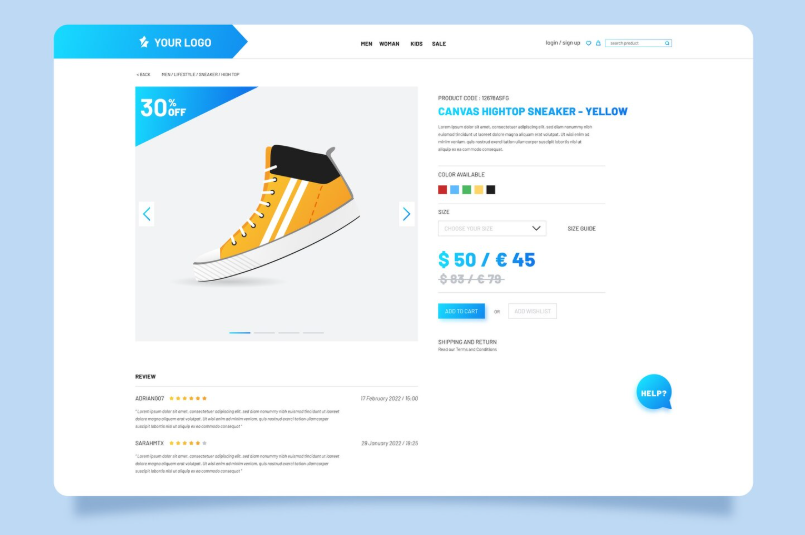
AOV starts building before the customer even opens the cart. If the product page shows just one item, the store misses a chance to offer something extra. This page can show related products, a bundle, a bigger quantity, or a pricier version.
But it’s easy to overdo it here. The customer doesn’t need ten different offers. They need to see which option fits what they actually want. So a good product page doesn’t just show more products. It helps the customer see why buying more might be the better move.
A Bigger Order Doesn’t Always Mean More Profit
Here’s something worth keeping in mind: don’t judge success by AOV alone. A store might push up its average order value with a big discount, but if that discount eats into the margin, the win isn’t as good as it looks. Aggressive upselling can work the same way – more items in the cart, but a lower conversion rate.
So it’s worth looking at AOV alongside other numbers: conversion rate, margin, customer acquisition cost, returns, and repeat purchases.
Test Every Change
Now a couple of words on a part store are often overlooked. To the owner, a new bundle or free shipping threshold might look like an obvious win for AOV. But real customers can act completely differently. One offer might run fine on desktop and cause problems on mobile.
Don’t just look at a change and think it’s fine – go test it yourself. Walk through it step by step: open the product page, add an item to the cart, use a discount, check the shipping cost, and finish checkout.
This way you find problems before real customers do. It also tells you if a new feature really helps, or just adds more stuff to the store.