Unsecured cloud ecosystems are the fastest route to a devastating enterprise data breach. While you might explore how AI simplifies decision making to boost efficiency, ensuring airtight security and seamless deployment requires adhering to core SaaS best practices right from the initial planning stages.
Recent industry data reveals that nearly one in four organizations experienced a cloud-related breach in the past year, with a staggering 99% encountering at least one AI-driven security incident recently. The modern challenge is no longer just securing individual applications. It involves gaining total visibility over identities, permissions, data flows, and integrations.
This comprehensive guide explores the critical challenges of modern cloud environments, detailing the ultimate software as a service best practices to strengthen security, optimize deployment, and maintain operational agility.
Eduma – Education WordPress Theme
We provide an amazing WordPress theme with fast and responsive designs. Let’s find out!
Core Concepts & Strategies
| Focus Area | Key Challenge | Recommended Strategy |
| Strategy Formulation | Lack of structured rollouts | Develop a comprehensive SaaS implementation plan. |
| Identity Management | Access and token sprawl | Enforce Zero Trust and continuous identity governance. |
| Threat Detection | Delayed breach discovery | Utilize AI-driven real-time monitoring and UEBA. |
| Compliance | Cross-border data processing | Implement centralized data residency mapping and DSPM. |
| Vendor Risk | Unvetted third-party apps | Automate vendor security assessments and block risky OAuth scopes. |
Part 1: The Critical Need for a SaaS Implementation Methodology
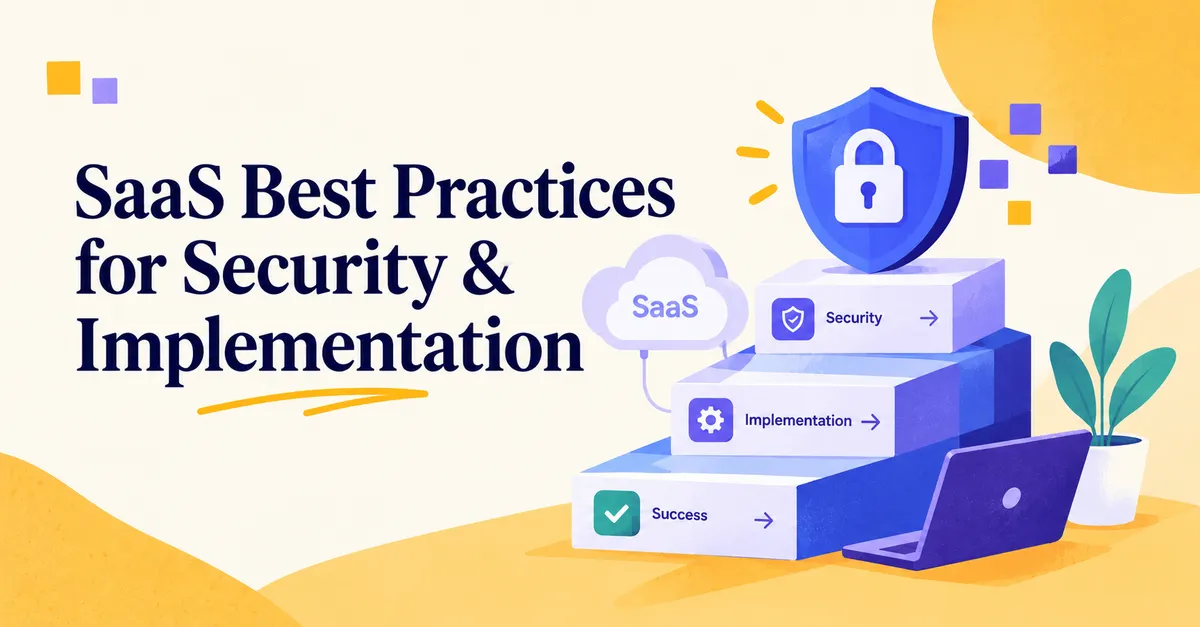
A robust SaaS implementation plan acts as the blueprint for integrating new software into the existing enterprise architecture. This plan must cover the entire lifecycle of the application:
- Discovery and Auditing: Assess the exact business requirement. Determine if an existing tool already fulfills this need to prevent application bloat.
- Vendor Assessment: Evaluate the vendor’s security posture, compliance certifications, and data handling policies before signing contracts.
- Configuration and Integration: Avoid default settings. Configure role-based access control (RBAC), set up Single Sign-On (SSO), and map data flow architectures.
- User Onboarding: A key component of SaaS implementation best practices is ensuring employees understand how to use the software securely without resorting to unauthorized workarounds.
- Continuous Optimization: Post-launch, the software must enter a cycle of continuous monitoring and periodic auditing.
By prioritizing a systematic SaaS implementation, organizations close the security gaps that typically arise during rushed deployments.
Part 2: The SaaS Security Challenges You Cannot Afford to Ignore
As environments become more interconnected, traditional perimeter defenses fail. Understanding the specific threats is the first step toward effective mitigation.
Challenge 1: Shadow AI and Unmonitored Usage
The biggest internal threat is often employees integrating unvetted AI tools. Browser-based copilots, AI automation tools, AI writing assistants, and analytics extensions bypass standard procurement and security reviews.
These applications frequently store sensitive data, including personally identifiable information (PII), proprietary source code, and financial records in external, uncontrolled systems.
These tools thrive on ingesting exactly the data enterprises need to protect. For instance, misconfigured AI storage has led to massive exposures of internal corporate communications and credentials at major tech firms.
The business risks include severe compliance violations, intellectual property theft, and trust erosion.
Challenge 2: Access and Identity Sprawl
In most enterprises, users possess far more access than their roles require. Every approved application adds new roles, admin rights, and access tokens.
Over time, dormant superusers remain active, and permissions pile up quietly.
A single compromised account with excessive privileges can derail compliance efforts and trigger massive financial losses. Because identity sprawl happens silently, organizations rarely receive warnings before an exploitation occurs.
Challenge 3: OAuth Token Sprawl
OAuth simplifies access but has become a massively overlooked risk. Whenever a user connects a third-party application—such as a calendar plugin, an AI productivity tool, or a best CRM software extension—an OAuth token is issued.
These tokens frequently carry broad, persistent permissions and rarely expire automatically. Tied to inactive users or forgotten applications, these credentials operate outside the primary identity provider.
Consequently, they remain active even after employee offboarding. Modern breaches unfold quietly through these unmonitored tokens, leading to persistent exposure and a loss of control over core tools.
Challenge 4: Compliance and Data Residency
Generative AI and automated cloud processing turn compliance into a moving target. Sensitive inputs are processed across global data centers and logged by third-party engines without clear visibility into data residency policies.
Global regulators enforce strict rules around consent, transparency, and cross-border transfers. Organizations cannot prove compliance without knowing exactly where data flows.
A single tool processing data outside approved geographies can result in crippling fines, contract terminations, and customer churn.
Challenge 5: The Lack of Real-Time Monitoring
Breaches are rarely discovered in real-time. Attackers blend in using legitimate credentials, moving laterally through systems over weeks or months.
Without real-time behavioral analytics, distinguishing routine actions from malicious activity is nearly impossible.
New threat vectors, such as ransomware-in-the-browser, target applications directly, bypassing traditional endpoint security.
Without anomaly detection, these attacks remain unnoticed until critical systems are encrypted or data is exfiltrated. Static logs and weekly audit reviews are vastly insufficient for modern threat landscapes.
Part 3: 11 Proven SaaS Best Practices
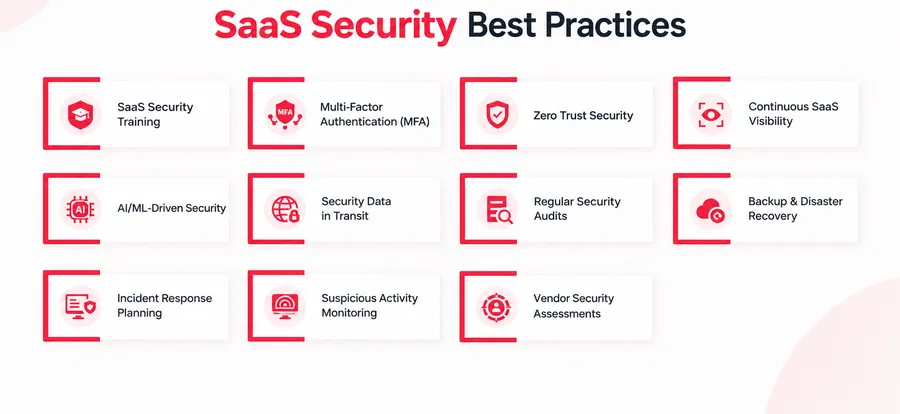
Securing cloud environments requires shifting from reactive patching to proactive operational controls. Implementing these SaaS best practices ensures robust defense mechanisms across the entire enterprise ecosystem.
1. Establish Continuous Security Awareness Training
Human error remains a primary vulnerability. Security awareness training eliminates this threat by educating teams on identifying unsafe integrations and managing credentials responsibly.
- Role-Based Modules: Tailor training to specific departments (e.g., developers receive secure coding training; HR receives phishing awareness). You can even leverage the best LMS for employee training to standardize and scale these educational modules effectively.
- Phishing Simulations: Run regular simulations reflecting modern social engineering tactics.
- Integration Policies: Educate employees strictly on OAuth approvals and the dangers of unvetted third-party plugins.
- Credential Hygiene: Enforce the use of password managers and strictly prohibit password reuse.
2. Enforce Advanced Multi-Factor Authentication (MFA)
Enabling MFA provides an immediate, measurable upgrade to account security. Even if credentials leak, attackers are blocked by the secondary verification requirement.
- Universal Enforcement: Apply MFA across all user accounts, prioritizing privileged administrators.
- Phishing-Resistant MFA: Transition toward hardware keys, FIDO2 protocols, and passkeys rather than vulnerable SMS-based codes.
- Identity Provider Integration: Link MFA directly with the SSO platform to centralize authentication logs.
- Adaptive Authentication: Utilize context-aware MFA that triggers based on risk signals like unusual geographic locations, unrecognized devices, or abnormal login times.
3. Adopt a Strict Zero Trust Architecture
Zero Trust eliminates the concept of implicit trust. Every user, device, and network request must be continuously validated, regardless of origin.
- Continuous Verification: Validate device posture and user identity for every single session.
- Restrict Lateral Movement: Segment environments so a breach in one application does not grant access to the entire ecosystem.
- Least Privilege: Ensure users only possess the exact permissions required to perform their current tasks. Implement Role-Based Access Control (RBAC) and Attribute-Based Access Control (ABAC).
4. Ensure Continuous SaaS Visibility (SSPM)
Visibility must be a continuous, active function. SaaS Security Posture Management (SSPM) platforms connect to identity systems like Azure AD, Google Workspace, or Okta to expose shadow IT and risky plugins.
- Active Enforceability: SSPM must do more than observe; it must auto-quarantine applications requesting excessively high-risk OAuth scopes.
- Automated Expiration: Automatically revoke access for third-party tools that remain unused for 30 days.
- Signal Routing: Push risk signals directly into Security Information and Event Management (SIEM) or Security Orchestration, Automation, and Response (SOAR) platforms for immediate triage.
5. Integrate AI and ML for Threat Detection
Understanding the capabilities and distinctions between machine learning vs AI is mandatory for defending environments where manual log reviews cannot match the speed of modern attacks.
- Behavioral Analytics (UEBA): Establish baseline patterns for normal user behavior. Flag deviations that indicate insider threats or compromised accounts.
- Risk Scoring: Utilize ML-based risk scoring to automate responses, such as suspending suspicious sessions or forcing step-up authentication.
- Automated Revocation: Connect AI insights directly to SOAR to automatically revoke compromised tokens instantly.
6. Secure Data in Transit, at Rest, and in Use
Data protection requires an “assume-breach” mindset.
- Comprehensive Encryption: Encrypt all data in transit using TLS 1.3 (it’s crucial to know what is an SSL certificate and how it secures connections), and at rest using strong AES standards. Where feasible, apply field-level encryption for highly sensitive attributes.
- Cryptographic Control: Utilize Bring Your Own Key (BYOK) or Hold Your Own Key (HYOK) models so the enterprise retains ultimate control over decryption.
- Tokenization: Tokenize PII within APIs to keep raw sensitive data out of analytics pipelines and logs.
- Data Security Posture Management (DSPM): Continuously scan environments to locate and classify sensitive data resting in unauthorized or risky locations.
7. Execute Regular Security Assessments
Annual audits are obsolete. Security assessments must match the agility of cloud-native development.
- Continuous Testing: Embed Dynamic Application Security Testing (DAST) and configuration-drift checks directly into the CI/CD pipeline.
- Red Teaming: Conduct periodic red-team exercises against production-like environments to map how real-world attackers would navigate the stack.
- Vulnerability Prioritization: Align remediation efforts with sprint cycles, prioritizing fixes based on active threat intelligence rather than static CVSS scores.
8. Build a Comprehensive Disaster Recovery Protocol
A flawless SaaS implementation must include a disaster recovery (DR) strategy designed to withstand ransomware, cloud provider outages, and operator errors.
- RTO and RPO Targets: Define strict Recovery Time Objectives and Recovery Point Objectives for every critical application.
- Immutable Backups: Utilize versioned, immutable storage to ensure backups cannot be encrypted or deleted by ransomware.
- Testing and Validation: Regularly test full environment restorations to guarantee the DR runbooks function correctly under pressure.
9. Formalize Incident Response Procedures
When implementing SaaS solutions, an incident response (IR) plan prevents chaotic reactions during a breach, turning them into structured, time-boxed operations.
- Clear Categorization: Define severity levels and specific criteria for what constitutes a critical incident.
- Role Assignment: Establish an on-call rotation featuring technical leads, incident commanders, communications directors, and legal compliance officers.
- Standardized Playbooks: Develop specific response playbooks for data leakage, credential theft, and vendor compromise.
- Simulations: Conduct frequent tabletop exercises to refine communication and operational speed.
10. Monitor User Behavior and Suspicious Activity
Modern SIEM capabilities must focus on intent and behavior rather than simple rule violations.
- Contextual Alerts: Enrich security alerts with device, location, and role context to reduce alert fatigue for the Security Operations Center (SOC).
- Automated Triage: Route high-fidelity anomalies to SOAR systems for instant containment actions, such as locking an account pending investigation.
- Focus on Exfiltration: Monitor specifically for mass download events, abnormal API calls, and unauthorized sharing of internal documents to external domains.
11. Strengthen Vendor Security Assessment Processes
Because software ecosystems rely heavily on integrations, vendors are often the most exposed entry point.
- Continuous Due Diligence: Abandon spreadsheet-based questionnaires. Use automated risk-tracking platforms to monitor vendor security postures in real-time.
- Contractual Enforcement: Include strict security clauses detailing breach notification timelines, right-to-audit clauses, and joint incident handling protocols.
- Scope Blocking: Block integrations from any vendor that fails to maintain up-to-date compliance documentation (e.g., SOC 2 Type II, ISO 27001).
Part 4: Mastering the SaaS Implementation Plan
Adhering to strict SaaS implementation best practices is the only way to ensure the security configurations mentioned above are deployed correctly. A rushed deployment undermines every security tool in the arsenal.
When establishing your SaaS implementation methodology, follow these structural pillars:
- Phase 1: Architecture Mapping. Before provisioning a single account, map exactly how the new software will interact with existing databases. Will it require API access? Will it sync with the central HR platform? Documenting this prevents uncontrolled data sprawl.
- Phase 2: Security Profiling. Apply the principle of least privilege during the initial setup. Create custom user roles rather than relying on the vendor’s default “Admin” and “User” templates.
- Phase 3: Pilot Testing. Never roll out enterprise-wide immediately. Select a small, technically proficient team to pilot the application. This uncovers workflow bottlenecks, integration errors, and unforeseen security warnings.
- Phase 4: Phased Rollout and Change Management. Communication is vital when implementing SaaS solutions. Users must understand why the tool is being deployed and how to use it securely. Provide comprehensive documentation, focusing heavily on data handling rules.
A structured SaaS implementation plan prevents the chaos of shadow IT, ensures compliance from day one, and aligns the software directly with the organization’s overarching Zero Trust strategy.
Conclusion: Securing the Future of Your Enterprise Ecosystem
Navigating the complexities of modern cloud environments demands more than just reacting to threats as they appear. It requires building security, visibility, and governance directly into your operational DNA.
Whether you are migrating to a new platform or evaluating a content management system for your organization, a well-structured SaaS implementation plan ensures that every new tool adds business value rather than unmonitored risk.
Frequently Asked Questions
Q: How often should enterprises conduct security audits after implementing SaaS solutions?
A: At an absolute minimum, enterprises should execute a comprehensive security audit every six months. However, modern software as a service best practices dictate that this is insufficient on its own. Continuous monitoring, monthly mini-audits, and automated configuration drift checks are essential. Real-time threat detection platforms should operate 24/7 to identify anomalies instantly, bridging the gap between major biannual audits.
Q: What key security questions should be asked to vendors during the SaaS implementation methodology phase?
A: Properly vetting vendors is a cornerstone of SaaS implementation best practices. Always demand transparency by asking:
– How is customer data encrypted in transit and at rest?
– Can you provide recent SOC 2 Type II or ISO 27001 audit reports?
– What native authentication controls (SSO, MFA) are supported?
– How do you isolate tenant data in a multi-tenant architecture?
– What are your guaranteed SLAs for incident response and breach notification?
– What happens to enterprise data upon contract termination?
– If a vendor evades these questions, it indicates a high-risk integration.Q: How do AI-driven threats impact modern cloud security, and how can enterprises defend against them?
A: AI equips threat actors to launch attacks faster and with higher sophistication. Attackers utilize AI to automate credential stuffing, bypass basic authentication, generate flawless phishing emails, and write adaptive malware. Defending against this requires fighting AI with AI. Organizations must deploy machine learning-driven anomaly detection, enforce strict Zero Trust access policies, utilize AI-powered email filtering to block deepfakes/phishing, and continuously monitor API traffic for automated abuse.
Q: Why are SaaS best practices different from general Cloud Infrastructure security?
A: Infrastructure-as-a-Service (IaaS) security focuses heavily on securing virtual machines, network perimeters, and backend server configurations. SaaS security focuses almost entirely on identity, access governance, data flows, and application integrations. Because the vendor controls the underlying backend infrastructure, the enterprise’s primary responsibility shifts to managing who gets access, what they are allowed to do, and which third-party applications are permitted to connect.
Q: How do you create an effective and scalable SaaS implementation plan checklist?
A: A strong checklist ensures standardization across all deployments as the business scales. Core components must include:
– Identity & Access: Enforce SSO, phishing-resistant MFA, and strictly scoped RBAC.
– Visibility & Discovery: Connect SSPM tools to monitor for shadow IT.
– Integration Governance: Audit and restrict OAuth permissions and API keys.
– Data Protection: Configure field-level encryption, DLP policies, and restrict external sharing.
– Vendor Risk: Validate compliance certificates and implement continuous vendor monitoring.
Read more: 10 Best SaaS Business Intelligence Tools For Ecommerce
Contact US | ThimPress:
Website: https://thimpress.com/
Fanpage: https://www.facebook.com/ThimPress
YouTube: https://www.youtube.com/c/ThimPressDesign
Twitter (X): https://x.com/thimpress_com