Automation software has evolved far beyond basic scheduling applications. Modern artificial intelligence platforms function as autonomous pair programmers, persistent researchers, and uninterrupted background workers. Choosing the correct platform dictates the efficiency of daily professional tasks. The ongoing discussion of OpenClaw vs Claude reveals two distinct operational philosophies: an enterprise-grade reasoning engine built for specific sessions versus an open-source, continuously active background system.
This comprehensive breakdown analyzes both platforms, utilizing simple formal language and structured comparisons to clarify the ideal choice for distinct workflow requirements.
Eduma – Education WordPress Theme
We provide an amazing WordPress theme with fast and responsive designs. Let’s find out!
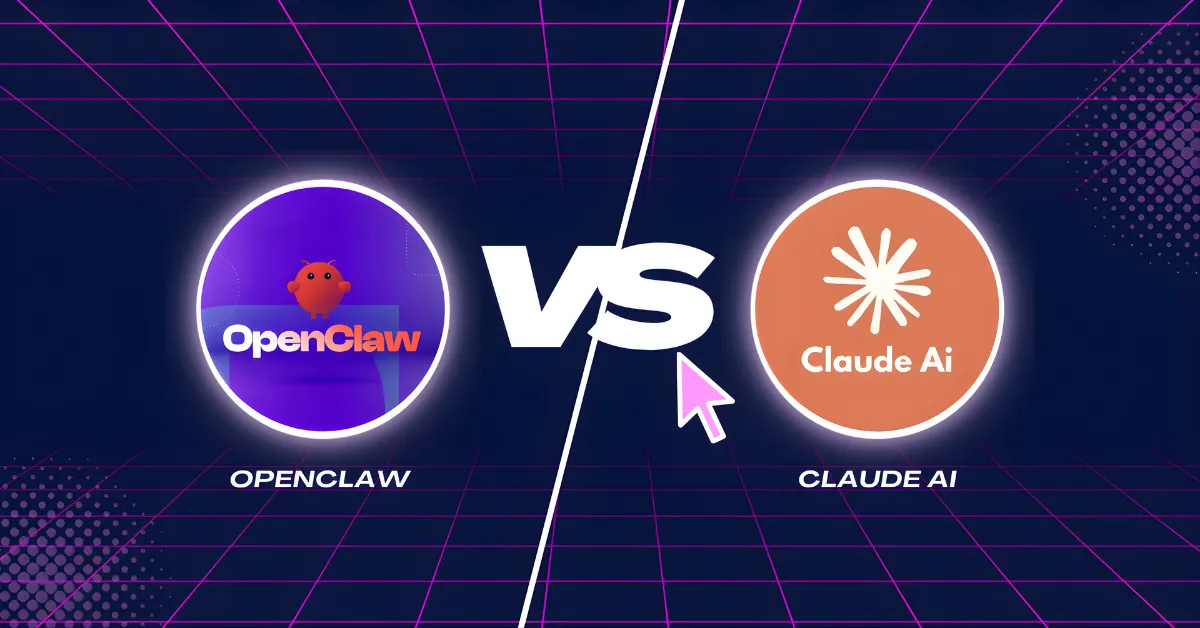
Summary: OpenClaw vs Claude
Before diving into the detailed analysis, the following table provides a clear overview of the core differences between OpenClaw and Claude to help guide your decision.
| Feature Category | Claude (Anthropic Ecosystem) | OpenClaw (Open-Source Ecosystem) |
| Primary Focus | Software engineering, complex coding, enterprise reasoning. | General-purpose personal assistance, daily workflow automation. |
| Operational State | Session-based (terminates when the application/terminal closes). | 24/7 continuous background operation (daemon). |
| Model Ecosystem | Closed system (Claude Opus 4.6, Sonnet 4.6). | Model agnostic (Runs Anthropic, OpenAI, local models via Ollama). |
| Memory Capacity | Temporary session memory (utilizes context compaction). | Long-term persistent memory (retains context over weeks and months). |
| Connectivity | Terminal, local files, Git, API via MCP. | WhatsApp, Slack, Telegram, Email, full desktop automation. |
| Security Posture | Enterprise-grade, SOC 2 compliant. | High risk out-of-the-box, requires manual user sandboxing. |
| Pricing Structure | Premium subscription ($20/month) or pay-per-token API. | Free software (user pays for third-party APIs or runs local models). |
Understanding the Anthropic Ecosystem
The Anthropic ecosystem operates as a specialized suite of interfaces rather than a single application. It prioritizes deep logic, secure environments, and complex problem-solving.
Key Components
- The Web Interface: Provides a traditional chat experience featuring a massive 200K standard context window. This allows the system to analyze hundreds of pages of documentation simultaneously.
- The Developer Interface: When evaluating OpenClaw vs Claude Code, the latter emerges as a dedicated, terminal-native programming tool. It reads entire software repositories, executes shell commands, runs tests, and submits pull requests independently.
- Context Compaction: Long-running programming tasks often exceed memory limits. The system automatically monitors token usage and injects summary prompts to compress conversation history, ensuring seamless task continuation.
- Extended Thinking: For complicated logic problems, the models pause to formulate step-by-step implementation plans before generating any code.
- Model Context Protocol (MCP): Functions as a universal connector, linking the models securely to external enterprise tools like Google Drive, GitHub, and over 5,700 community-built servers.
Anthropic Ecosystem Overview
| Feature | Description |
| Core Strength | Best-in-class reasoning and safe code execution. |
| Operational State | Session-based (terminates when the window closes). |
| Target User | Professional software engineers and enterprise teams. |
| Pricing Model | Premium subscription ($20/month) or token usage fees. |
Exploring the Open-Source Alternative
In direct contrast to session-based applications, the open-source alternative functions as a persistent daemon. Reviewing an OpenClaw AI agent vs Claude requires understanding the power of continuous, unattended background operation.
Key Components
- Uninterrupted Operation: The software runs 24/7. It does not pause or terminate when a computer screen turns off.
- Messaging Integration: The system connects natively to fifteen communication platforms, including WhatsApp, Telegram, Discord, and Slack. Users communicate with the system directly through their preferred mobile messaging application.
- Model Agnostic Architecture: The software is not locked to a single provider. It runs Anthropic models, OpenAI APIs, or completely free local hardware models like Llama and Kimi 2.5 via the Ollama framework.
- Persistent Context: The daemon retains long-term memory across all interactions. It learns user preferences, project details, and daily habits over weeks and months of continuous use.
Real-World Automation Capabilities
Because the software runs continuously, users deploy it for complex, multi-day lifestyle and business operations:
- Automated Negotiations: Scraping dealer inventories and exchanging PDF quotes via email to negotiate vehicle purchases autonomously.
- Morning Briefings: Pulling data from calendars, email accounts, and news feeds at dawn to deliver a formatted summary to a mobile device before the workday begins.
- Inbox Management: Reading, categorizing, and clearing thousands of backlogged emails automatically.
- Content Management: Generating and scheduling weekly drafts directly into a WordPress database based on trending industry topics.
Open-Source Daemon Overview
| Feature | Description |
| Core Strength | Always-on workflow automation and communication. |
| Operational State | Continuous 24/7 background process. |
| Target User | Power users seeking comprehensive lifestyle automation. |
| Pricing Model | Free software; costs depend on chosen third-party APIs. |
Head-to-Head Feature Comparison: OpenClaw vs Claude AI
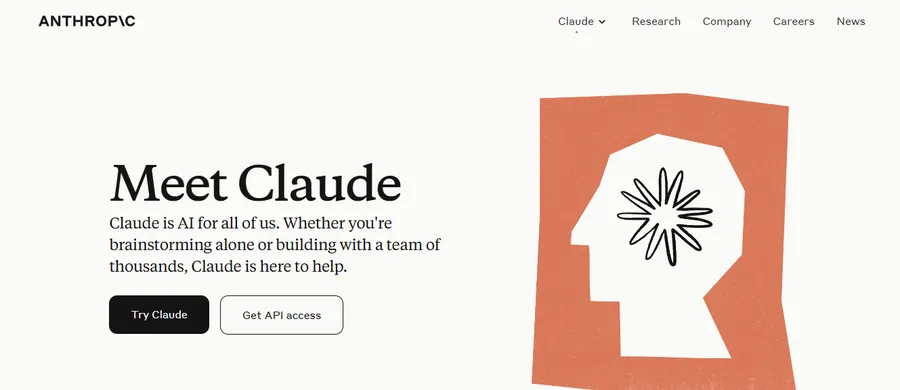
To accurately assess the difference between OpenClaw and Claude, professionals must evaluate how each system handles specific daily requirements.
1. Software Engineering and Refactoring
For pure code generation and repository management, the Anthropic ecosystem is superior. Its terminal integration understands file structures and dependencies flawlessly. It features strict self-correction loops, meaning it rarely hallucinates non-existent code libraries. The open-source system can write code via API routing but lacks the specialized, zero-configuration terminal environment.
2. Workflow and Scheduling
The open-source daemon easily wins regarding daily task management. Session-based tools cannot trigger actions on a schedule or monitor a Slack channel while the user sleeps. The daemon’s ability to operate asynchronously makes it the only viable choice for true lifestyle and business automation.
3. Memory Retention
Anthropic tools reset their primary memory buffers between active sessions to maintain privacy and reduce token costs. The background daemon uses local markdown and YAML files to store long-term, persistent memory, allowing it to reference a conversation from three months prior instantly.
Security and Privacy Standards
Security protocols form a critical part of the OpenClaw vs Claude AI conversation. The approach to data protection is fundamentally different.
| Security Aspect | Anthropic Platform | Open-Source Daemon |
| Compliance | SOC 2 compliant, HIPAA eligible. | None (requires user management). |
| Data Retention | Zero-data-retention options available. | Local storage (user controls the data). |
| Risk Profile | Extremely low (enterprise safety guardrails). | High risk (vulnerable to prompt injection). |
| Sandboxing | Built-in secure cloud environment. | Requires manual Docker or VM isolation. |
Anthropic builds software for corporate trust. The company enforces strict abuse checks and does not train models on commercial API data by default.
The open-source system presents significant operational risks if installed incorrectly. Because the community uploads third-party skills, malicious scripts can infiltrate the system. Giving an AI tool root access to a computer and connecting it to public messaging apps creates vulnerabilities. Security experts mandate running the daemon inside isolated virtual machines to prevent data exfiltration.
The Hybrid Solution: Combining Both Systems
The most effective strategy often avoids treating this as a strict OpenClaw vs Claude choice. Advanced professionals routinely merge both architectures to create an optimal automated environment.
The Setup Process
- Establish the open-source software on a secure local machine or a rented cloud server.
- Connect an active Anthropic subscription to the daemon utilizing OAuth profiles.
- Configure a priority chain that routes complex tasks to the premium model while routing basic text requests to a free local model.
The Strategic Advantage
This hybrid configuration delivers the best features of both ecosystems. The daemon provides the necessary continuous operation, WhatsApp connectivity, and persistent memory. Simultaneously, the premium API provides best-in-class reasoning, a massive context window, and advanced logical planning. The system automatically rotates authentication profiles to manage rate limits efficiently, ensuring the background worker never stalls.
Final Recommendations OpenClaw vs Claude
Choosing the correct platform depends entirely on the intended application.
- For Software Teams: Select the Anthropic ecosystem. The command-line tools offer unmatched reliability for complex software architecture without requiring tedious configuration.
- For General Automation: Select the open-source daemon. It remains the best choice for users who require an asynchronous assistant to manage communications, scheduling, and repetitive digital chores.
- For Maximum Power: Combine the platforms. Utilizing an open-source framework powered by an enterprise-grade reasoning engine creates the most capable digital assistant currently available on the market.
Frequently Asked Questions: OpenClaw vs Claude
Does the terminal-based AI tool work without an internet connection?
No. The command-line software must connect to cloud-based language models to process commands, analyze repositories, and generate accurate code.
How can I run the open-source background assistant safely?
Cybersecurity professionals advise against installing the software directly onto a primary operating system. It must be isolated within a restricted Docker container or a dedicated virtual machine to protect personal files from potential prompt injection attacks.
Is it possible to use the background daemon without paying monthly fees?
Yes. The daemon itself is open-source and free. By connecting the software to a local framework like Ollama, users with adequate computer hardware can process all AI requests locally, eliminating the need for paid cloud APIs.
Will the session-based tools remember my preferences from yesterday?
Session-based systems utilize context compaction to maintain memory during a single continuous task. However, once the application is completely closed, the conversational memory resets to optimize performance and privacy for the next session.
OpenClaw vs Claude, Which platform is easier for a beginner to install and use?
The corporate platform is significantly easier to deploy, offering simple plug-and-play installation suitable for immediate use. The open-source alternative features a steep learning curve, requiring familiarity with terminal commands, dependency management, and secure network setups.
Read more: 9 Best Personal AI Assistants for Task Automation
Contact US | ThimPress:
Website: https://thimpress.com/
Fanpage: https://www.facebook.com/ThimPress
YouTube: https://www.youtube.com/c/ThimPressDesign
Twitter (X): https://x.com/thimpress_com