The conversation around artificial intelligence has shifted dramatically from simply generating text to executing complex professional workflows. Social media feeds are currently filled with demonstrations of systems independently managing schedules, processing communications, and deploying code without human intervention. Naturally, the debate regarding OpenClaw vs ChatGPT is gaining significant traction among professionals looking to optimize their daily operations.
However, deciding which platform merits attention requires a deeper look beyond viral screenshots. The reality of implementing these systems involves distinct advantages, noticeable learning curves, and specific operational tradeoffs.
Eduma – Education WordPress Theme
We provide an amazing WordPress theme with fast and responsive designs. Let’s find out!
Content Summary
| Feature | ChatGPT | OpenClaw |
| Primary Function | Conversational intelligence and active collaboration. | Autonomous task execution and workflow orchestration. |
| Operation Mode | Reactive (requires direct, continuous human prompts). | Proactive (runs continuously in the background). |
| Setup Process | Zero friction; immediate access upon opening the application. | Requires careful upfront configuration using text files. |
| System Ecosystem | Highly mature with extensive community resources. | Emerging ecosystem demanding a strategic, systems-thinking approach. |
| Ideal Use Case | Brainstorming, drafting articles, and coding assistance. | Inbox triage, background research, and complex scheduling. |
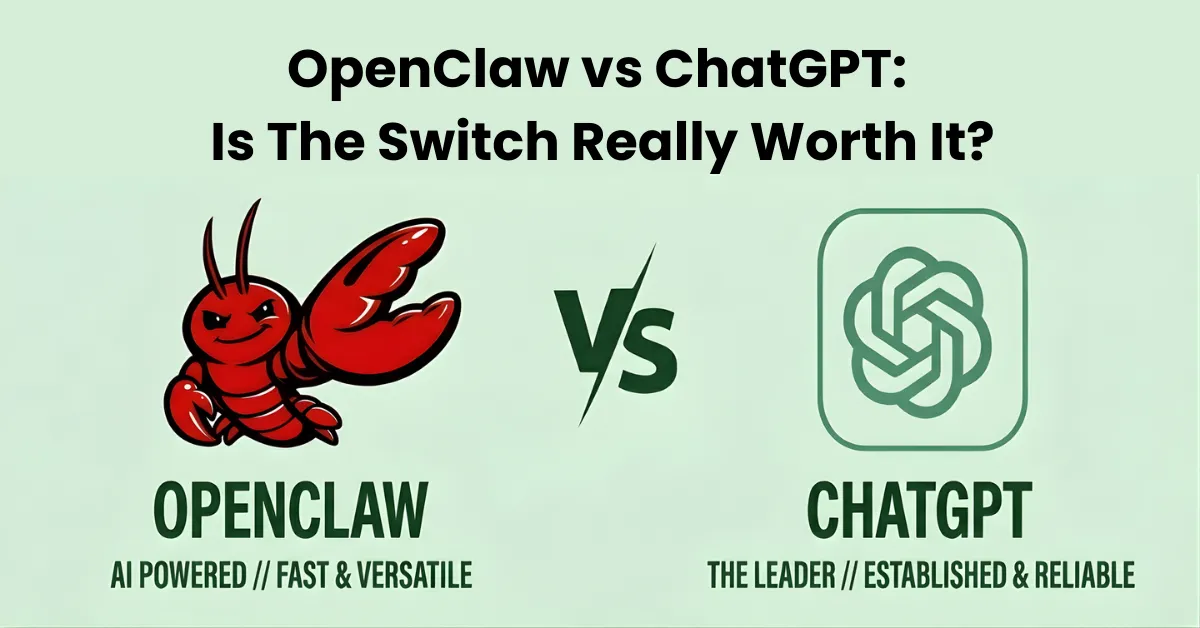
The Power of Conversational Intelligence
ChatGPT thrives on minimal friction. Users open a window, enter a prompt, and immediately receive comprehensive answers. There is no intricate setup, no server configuration, and no need to monitor complex billing structures.

Chat GPT Logo
For pure conversational interaction, this platform provides unmatched immediacy. Key benefits include:
- Cognitive Task Optimization: The interface is specifically designed to facilitate tasks like refining blog drafts, exploring new concepts, or analyzing extensive documents.
- Real-Time Iteration: With features that allow real-time document editing, the system processes large amounts of text effortlessly, serving as an excellent sounding board for structuring an article or a code editor tool.
- Robust Ecosystem: Supported by a massive user base, the platform offers immense reliability.
While many professionals attempt to piece together ChatGPT automation tools using third-party extensions, the platform’s core strength remains its ability to act as a highly responsive, synchronous collaborator. Users do not need specialized management skills to extract value; they simply ask, and the system delivers. This straightforward dynamic is highly valued by those who want immediate results without the burden of designing complex operational systems.
The Shift Toward Autonomous Execution
Despite its immense power, conversational AI has a strict limitation: it ceases to function the moment the user stops providing prompts. This reactive nature highlights the primary distinction in the OpenClaw AI vs ChatGPT discussion. OpenClaw introduces capabilities that were previously unattainable because it is engineered specifically for autonomous delegation.
To understand the practical difference between an AI agent vs ChatGPT, consider a standard daily scenario. While a professional is away from their desk attending meetings, an OpenClaw AI agent can independently execute the following tasks:
- Actively monitor incoming vendor emails.
- Cross-reference sender details against a database.
- Extract relevant pricing and format the data into a structured spreadsheet.
- Send a prioritized summary via a messaging application.
The professional returns to a fully prepared briefing, bypassing the tedious filtering process entirely. This represents a shift toward continuous, reliable operation. It extends beyond merely summarizing an inbox upon request; it involves constant monitoring, automated drafting, and intelligent prioritization.
Furthermore, web research occurs independently. An agent can navigate a competitor’s website, analyze pricing updates, and issue alerts if notable changes happen. It can even execute background commands to manage digital environments, such as safely updating a WordPress theme or scheduling a database backup, based entirely on predefined logic and conditions.
Designing the Personalization Layer
The defining feature of an OpenClaw AI agent is its deep personalization architecture. Rather than relying on repetitive instructions for every single interaction, the system utilizes simple markdown text files to build a persistent operational memory.
This approach creates a highly customized and intelligent framework tailored to specific business needs. The core configuration files include:
- soul.md: Establishes the core operating style. It dictates how decisions are made, ensuring the system prioritizes urgent matters.
Example: # personality (Direct and concise, default to action over asking permission). - memory.md: Functions as the context layer, storing crucial details regarding professional responsibilities, team hierarchies, and communication preferences.
Example: # work preferences (Blocks deep work time 2-5 PM daily, values data over opinions). - goals.md: Aligns daily actions with broader objectives. By clearly outlining monthly, weekly, and daily targets, the system intelligently filters out distractions.
Example: # current targets (Launch beta version, finalize pricing model). - agents.md: Establishes specialized operational modes. A research mode might prioritize deep data analysis, while an operations mode focuses strictly on scheduling.
- knowledge.md: Serves as an accessible reference library, housing standard operating procedures, formatting rules for publication, or criteria for lead qualification.
Properly configuring these parameters requires initial effort, but the resulting efficiency is substantial. The system transitions from a basic digital assistant to a proactive entity that anticipates operational requirements.
Navigating the Tradeoffs
While the potential for automation is immense, adopting these systems introduces specific challenges that require careful evaluation. Relying on basic ChatGPT automation tools involves a completely different risk profile compared to managing a fully autonomous ecosystem.
- The Learning Curve: Operating an autonomous platform demands a logical, systems-thinking approach. Users must clearly define operational boundaries, anticipate potential edge cases, and structure tasks meticulously.
- Financial Structure: Conversational platforms generally offer predictable, flat-rate subscriptions (typically around NT$640 per month). In contrast, autonomous systems incur variable costs based on API usage and computing power, which can escalate rapidly during periods of heavy, continuous operation.
- System Reliability: This is a critical factor in the OpenClaw vs ChatGPT debate. Autonomous systems can fail in unexpected ways, such as misclassifying an important client email or organizing essential files into the wrong directories. Because the system operates independently, the stakes are higher, necessitating diligent monitoring and structured error handling.
Effective delegation is paramount; if a user cannot clearly articulate success criteria, the automated system will struggle to deliver accurate, helpful results.
Strategic Implementation and Final Thoughts
Ultimately, choosing between an AI agent vs ChatGPT requires a thorough assessment of daily professional workflows and long-term efficiency goals.
Maintaining a traditional conversational platform is highly recommended for individuals who primarily need assistance with drafting, coding, or exploring complex ideas. It provides immediate value without the friction of setup and is ideal for those who prefer active, synchronous collaboration.
Conversely, an OpenClaw AI agent is perfectly suited for professionals burdened by repetitive, process-driven tasks. If a significant portion of the day is consumed by email management, data organization, routine research, or monitoring performance metrics, investing the time to configure an autonomous system yields substantial long-term benefits.
Many professionals find success by adopting a hybrid strategy. They utilize conversational models as intellectual partners for creative problem-solving while deploying autonomous systems to handle tedious operational duties. The central issue is not determining which platform is objectively superior, but rather identifying the exact level of autonomy required to elevate the workflow and reclaim valuable time.
Frequently Asked Questions (FAQs): OpenClaw vs ChatGPT
1. What is the core distinction between OpenClaw and ChatGPT?
ChatGPT is a conversational AI designed to respond directly to human prompts for immediate tasks like drafting and brainstorming. OpenClaw is an autonomous agent platform designed to execute complex, multi-step workflows in the background without requiring constant human supervision.
2. Can an OpenClaw AI agent completely replace ChatGPT?
Not necessarily. While OpenClaw excels at automating background tasks and managing structured workflows, ChatGPT remains superior for real-time, interactive collaboration, rapid content generation, and immediate problem-solving.
3. Are ChatGPT automation tools as effective as OpenClaw for daily tasks?
ChatGPT automation tools and plugins are highly useful but generally remain reactive to user inputs. OpenClaw is built specifically for continuous, proactive operation, making it significantly more effective for tasks that need to run independently around the clock.
4. Does OpenClaw require advanced coding knowledge to configure?
No advanced coding knowledge is strictly required. The platform relies heavily on simple Markdown text files to configure the agent’s behavior, memory, and goals. However, a logical, systems-thinking approach is highly beneficial for effective setup.
5. Which platform is more cost-effective for a standard workflow?
ChatGPT typically operates on a predictable, flat-rate monthly subscription (around NT$640). OpenClaw’s costs depend heavily on API usage and compute resources; it can be cheaper for light use, but expenses can escalate quickly if complex autonomous workflows run continuously without proper monitoring.
Read more: What Is OpenClaw AI? (Formerly Clawdbot and Moltbot)
Contact US | ThimPress:
Website: https://thimpress.com/
Fanpage: https://www.facebook.com/ThimPress
YouTube: https://www.youtube.com/c/ThimPressDesign
Twitter (X): https://x.com/thimpress_com