Selecting the right software for search engine optimization (SEO) requires moving beyond marketing claims and looking directly at verifiable data. For webmasters and marketing teams, the choice of platform dictates how effectively they can track search performance, discover keyword opportunities, and audit technical website health. Making decisions based on delayed or inaccurate data can lead to wasted budgets and missed traffic opportunities. Consequently, a persistent and critical question dominates the search marketing industry: is Ahrefs more reliable than Moz for daily optimization tasks?
To answer this question accurately, it is impossible to rely solely on the proprietary metrics provided by the tools themselves. The platforms must be measured against objective ground-truth data, such as manual search engine results page (SERP) checks, actual Google Keyword Planner statistics, and verified link outreach records.
This comprehensive guide analyzes a structured evaluation of both platforms across multiple live websites. The objective is to determine which software provides the most accurate data for technical audits, keyword research, and link tracking in competitive environments, ultimately helping you decide when you compare Moz and Ahrefs which is better for your specific workflow.
Eduma – Education WordPress Theme
We provide an amazing WordPress theme with fast and responsive designs. Let’s find out!
Summary: A Quick Comparison Overview
Before diving deeply into the complex data, the following table provides a high-level summary of how the two platforms compare across essential performance categories. This snapshot helps clarify the Moz vs Ahrefs debate based on primary software functions.
| Feature Category | Ahrefs Performance | Moz Pro Performance | Winner |
| Backlink Discovery | Exceptional (Identifies ~92% of live links) | Adequate (Identifies ~69% of live links) | Ahrefs |
| Keyword Volume Accuracy | High (±18% variance from Google data) | Moderate (±31% variance from Google data) | Ahrefs |
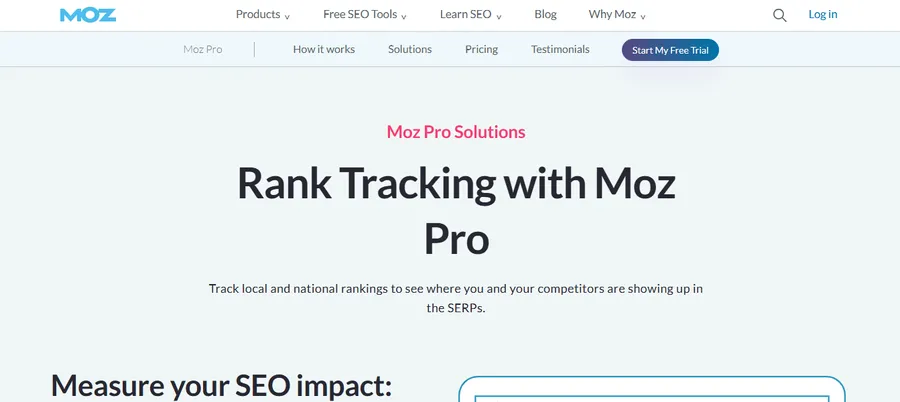
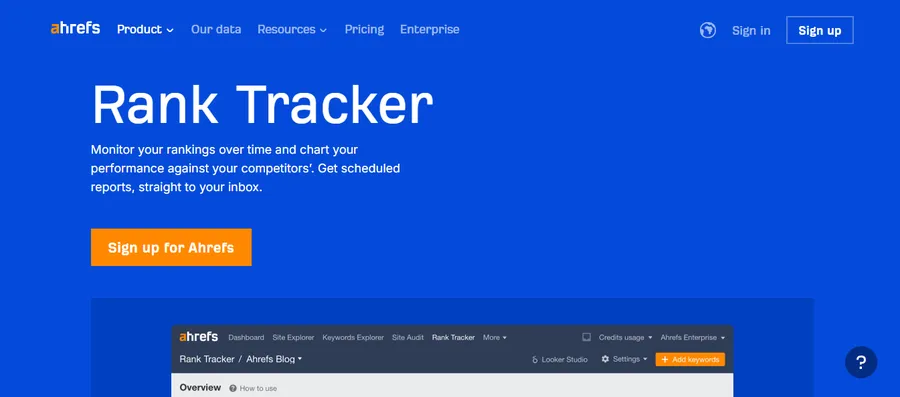
| Rank Tracking Precision | Excellent (Daily updates, exact position matches) | Good (Weekly updates by default) | Ahrefs |
| Technical Site Auditing | Advanced (Renders JavaScript fully) | Basic (Struggles with JS-heavy websites) | Ahrefs |
| Proprietary Metrics | Uses Domain Rating (DR) | Invented Domain Authority (DA) | Tie (Different Use Cases) |
| User Experience | Complex, requires advanced technical knowledge | Highly intuitive, beginner-friendly interface | Moz Pro |
Defining Accuracy in Search Engine Optimization Software
Before analyzing the numbers, it is vital to establish what “accuracy” actually means in the context of search analytics.
Third-party software providers do not possess direct access to Google’s internal algorithms or complete databases. Instead, they rely on deploying massive web crawlers, aggregating clickstream data from third-party applications, and conducting continuous SERP sampling to estimate metrics.
Therefore, measuring true accuracy requires comparing the tool outputs against verified external benchmarks. The following standards apply:
- Backlink Accuracy: How closely does the platform’s link index match a manually verified list of acquired links pointing to a specific domain?
- Keyword Volume Accuracy: How close are the monthly search volume estimates to the figures provided directly by Google Keyword Planner, which is the closest available source to Google’s actual search data?
- Rank Tracking Accuracy: Does the reported keyword position align precisely with a manual, localized, incognito browser search conducted at the exact same moment?
- Site Audit Accuracy: Does the website crawler correctly flag real technical errors without generating excessive false positives that waste developer time?
Both platforms can be deemed accurate on different dimensions, but a rigorous test reveals significant performance gaps.
How the Data Was Gathered (Test Ahrefs vs Moz)
To properly test Ahrefs vs Moz, a structured experiment was conducted across twelve active websites. These websites represented a diverse array of industries, including Software as a Service (SaaS), e-commerce platforms, local service providers, digital agencies, and content publishers.
The test parameters were defined as follows to ensure a comprehensive evaluation:
- Traffic Scope: The selected websites ranged from 5,000 to over 2.4 million organic visitors per month.
- Domain Age and Profile Size: Domains varied from two to seventeen years old. The backlink profiles ranged from a few hundred referring domains to massive enterprise profiles with over 18,000 referring domains.
- Verification Methods: Backlink accuracy was verified against manual outreach records and client link-building reports. Keyword volumes were checked against an active, paid Google Ads Keyword Planner account targeted to the US market. Rankings were cross-referenced with manual incognito searches from localized US IP addresses. Technical audits were compared against detailed crawls performed with standard desktop crawler software.
This methodology guarantees that the findings reflect real-world applications and genuine performance, rather than theoretical capabilities.
Deep Dive: Moz vs Ahrefs
Backlink Analysis and Link Discovery
When professionals ask whether they should use Moz or Ahrefs for backlinks, the data reveals the most significant performance gap between the two platforms. Backlink discovery is a foundational element of search optimization, directly influencing competitive analysis, digital PR, and outreach strategies.
In the controlled test, a known list of 50 manually verified backlinks was established for each of the twelve sites. These were links known to exist because they were built through direct outreach. The platforms were then tasked with finding these specific links within their respective indexes.
- Discovery Rate and Recall: Ahrefs successfully located an average of 46.2 out of the 50 known backlinks per site, which translates to an impressive 92% recall rate. In contrast, Moz Pro identified an average of 34.7 links, achieving an approximate 69% recall rate. This represents a substantial 33% performance gap in link discovery capability.
- Total Index Size and Speed: Across all test domains, Moz reported an average of 42% fewer total referring domains and 48% fewer total backlinks compared to the baseline established by Ahrefs. Furthermore, the link discovery speed varied drastically. New, live links typically appeared in the Ahrefs dashboard within 15 to 30 minutes. Conversely, Moz required anywhere from one to fourteen days to index and report the same URLs.
- Data Aggregation Strategies: It is critical to note that Moz employs an aggressive deduplication strategy. If a website receives multiple links from a single external domain (such as a sidebar or footer link), Moz often groups these and reports them as a smaller number of “unique” links to simplify the user interface. Ahrefs, conversely, reports every single URL independently. While Moz’s approach declutters the interface for beginners, it obscures granular data that is absolutely necessary for meticulous link audits, competitor analysis, and toxic link removal campaigns.
The conclusion in this category is definitive: for marketing professionals requiring an exhaustive, rapidly updated link database, Ahrefs is more reliable than Moz. If the decision hinges entirely on off-page analysis, the choice of Moz or Ahrefs for backlinks strongly favors Ahrefs.
Keyword Research and Search Volume Estimation
Keyword planning dictates the entire trajectory of a content marketing strategy. If a platform provides wildly inaccurate search volumes, businesses risk investing significant financial resources into producing content that nobody is searching for, or conversely, ignoring highly lucrative search terms.
To determine the accuracy of keyword metrics, twenty tracked keywords per site were analyzed. The monthly search volumes reported by both platforms were compared against exact-match data extracted from Google Keyword Planner in the US market. Using reliable keyword research tools is paramount for content success.
- Variance from Ground Truth: The reported volumes from Ahrefs showed an average variance of ±18% from the Google Keyword Planner data. Moz Pro exhibited a much wider average variance of ±31%.
- Precision Thresholds: Ahrefs successfully estimated search volumes within a strict ±10% margin of Google’s actual numbers for 52% of the tested keywords. Moz achieved this high level of precision for only 31% of the terms.
- The Zero-Volume Discrepancy: A prevalent issue in search analysis is the misreporting of long-tail queries as having zero search volume, leading content creators to abandon potentially valuable topics. Moz reported zero volume for nearly 15.8% of the verified keyword list. Ahrefs proved far more sensitive to low-volume terms, missing only 1.7% of the list.
- International Data Coverage: For search queries originating outside the United States, such as in the United Kingdom, Canada, or Australia, Ahrefs maintained strong data consistency. Moz’s data fidelity degraded significantly in international markets, demonstrating a clear US-centric bias in their clickstream data.
When attempting to answer is Ahrefs more reliable than Moz for content planning, the data indicates that Ahrefs provides volume estimates that align much more closely with Google’s actual search landscape.
Rank Tracking and SERP Feature Detection
Tracking keyword positions accurately allows webmasters to measure the direct impact of their optimization efforts and quickly diagnose algorithm penalties. During the evaluation, 600 total keywords were monitored across the twelve domains. Tracking these shifts effectively often requires the integration of dedicated SEO reporting tools for client communication.
- Exact Position Matching: Ahrefs matched the manual, incognito SERP check precisely 78% of the time. This performance outpaced Moz, which achieved a 71% exact match rate.
- Acceptable Variance: Natural search results fluctuate minute-by-minute based on data center synchronization and user personalization. When the accuracy threshold was expanded to allow a variance of up to three ranking positions, both platforms performed exceptionally well, scoring 97% for Ahrefs and 96% for Moz.
- SERP Feature Detection: Modern search results consist of much more than just traditional blue links. They now include featured snippets, ‘People Also Ask’ accordions, local map packs, and image carousels. Ahrefs detected these specialized SERP features with a 94% success rate, compared to 82% for Moz.
- Update Frequency: For tactical adjustments in competitive industries, data freshness is a strict requirement. Ahrefs provides daily ranking updates by default on standard plans, allowing professionals to spot immediate trends. Moz limits updates to a weekly schedule unless additional upgrades are purchased.
Both tools are highly capable of indicating broad, long-term ranking trends. However, Ahrefs provides the daily granularity and feature detection necessary for aggressive, highly competitive campaigns.
Technical Site Auditing Capabilities
A comprehensive technical site audit identifies foundational infrastructure issues that prevent search engine bots from crawling and indexing a website properly. The tools were tested against a manual desktop crawl to identify their thoroughness and evaluate their false-positive rates. Reliable SEO audit tools ensure that structural barriers do not hinder content performance.
- Issue Identification Rates: Ahrefs successfully identified 94% of the confirmed technical issues across the test sites, while maintaining a low false-positive rate of just 6%. Moz identified 81% of the issues but presented a higher false-positive rate of 11%, occasionally flagging non-issues that could distract developers.
- JavaScript Rendering: The technological architecture of a website drastically affects crawler accuracy. For standard HTML websites or traditional content management systems, both tools performed admirably with negligible differences. However, for modern websites utilizing heavy client-side JavaScript (such as React, Vue, or Next.js applications), Moz struggled considerably. Because Moz’s crawler does not natively render client-side JavaScript to the same depth, it missed roughly 30% to 40% of the structural issues on those specific domains. Ahrefs, equipped with robust JavaScript rendering capabilities, parsed these complex sites without difficulty.
- Core Web Vitals Integration: Ahrefs integrates Google’s Core Web Vitals directly into its main audit reports, providing seamless technical context alongside traditional SEO metrics. Moz offers this data, but it is siloed in separate modules, making the diagnostic workflow slightly less intuitive for the user.
For enterprise environments, complex e-commerce platforms, or modern web applications, the technical auditing suite in Ahrefs is markedly more reliable.
Understanding Proprietary Metrics: Domain Authority vs. Domain Rating
One of the most frequent areas of confusion for marketing professionals involves proprietary domain metrics. Because Moz popularized the concept of scoring domain strength, many users constantly search for the Ahrefs domain authority equivalent to compare link profiles accurately across different platforms. It is crucial to understand that these metrics measure different things.
- Moz Domain Authority (DA): Moz invented the Domain Authority metric. DA is a complex, predictive algorithm designed specifically to calculate how well a website will rank on search engine result pages compared to other sites. It analyzes multiple factors, including linking root domains, the total number of links, and spam scores, to generate a logarithmic score from 1 to 100. If an organization requires a strict Domain Authority report for executive stakeholders, Moz is the only platform that is 100% accurate, as they own and control the algorithm.
- Ahrefs Domain Rating (DR): This is widely considered the Ahrefs domain authority equivalent, but it operates on a fundamentally different premise. Domain Rating (DR) evaluates the strength of a website’s backlink profile exclusively. It does not attempt to predict overall ranking potential based on on-page factors, traffic, or site structure; it simply measures raw link equity on a scale from 0 to 100.
Because Ahrefs DR is strictly tied to backlink quantity and quality, many technical link-building professionals find it a more consistent and actionable metric for evaluating link acquisition targets. However, Moz DA remains a highly respected, legacy standard for broad industry reporting. If you are trying to understand how search engines work and evaluate site strength, utilizing both metrics can provide a balanced perspective.
Where Moz Outperforms the Competition
While the raw data leans heavily toward Ahrefs in technical categories, Moz Pro holds distinct and undeniable advantages in specific scenarios, proving that in the Moz vs Ahrefs debate, context matters.
First, Moz remains the undisputed authority for Domain Authority (DA) metrics. Thousands of marketing agencies and internal departments have built their historical reporting frameworks entirely around DA. For these organizations, Moz is an indispensable tool that ensures reporting continuity.
Second, evaluating Keyword Difficulty (KD) for commercial search terms in the US market often yields different results between the platforms. In qualitative assessments, Moz’s difficulty scores often align more realistically with the actual human effort required to rank for highly competitive terms. Ahrefs calculates difficulty purely based on backlink profiles, which occasionally leads it to assign low difficulty scores to highly commercial keywords that are practically monopolized by massive, authoritative brands. Moz’s broader calculation often provides a more realistic difficulty assessment for these specific commercial queries.
Finally, Moz Pro excels in usability and user interface design. The platform is meticulously designed for beginners, small business owners, and generalist marketers. It provides clear, guided recommendations and avoids overwhelming the user with massive, complex data tables. For marketing teams that do not require enterprise-level data depth, Moz offers a streamlined, highly effective workflow at a generally lower entry price point.
Pricing and Return on Investment
When evaluating software, pricing structures significantly impact the final decision. Ahrefs and Moz Pro follow different monetization strategies that appeal to different user bases.
Moz Pro is generally more accessible at the entry level. Its pricing focuses on providing essential features with generous limits that suit smaller teams or freelance consultants. The dashboard is less intimidating, meaning less time is spent training new staff to use the software.
Ahrefs operates on a premium pricing model. While they offer starter plans, full access to historical data, advanced filtering, and large-scale export capabilities requires higher-tier subscriptions. Furthermore, Ahrefs utilizes a credit-based system for data usage, which can increase costs for power users who run hundreds of reports daily. However, for agencies managing multiple high-budget clients, the depth of data provided by Ahrefs justifies the higher cost, delivering a stronger Return on Investment (ROI) through superior competitive intelligence. If you are also considering other tools in the market, reading a dedicated Ahrefs vs Semrush vs Moz comparison can further clarify budget allocations.
Mutual Limitations: Where Both Tools Fall Short
No software platform is completely without blind spots. During the rigorous test Ahrefs vs Moz process, both platforms demonstrated notable weaknesses in several emerging and specialized areas of search marketing:
- Artificial Intelligence Overviews: Search engines are rapidly integrating generative AI directly into the search results. While both platforms can successfully detect the presence of an AI Overview on a SERP, neither tool can currently parse the text to accurately report if a specific client’s website is cited as a source within that AI-generated response.
- Hyper-Local SEO Management: Neither platform is built to handle granular, multi-location local search tracking or robust citation management. Businesses requiring deep local analytics, such as tracking rankings across different postal codes or managing Google Business Profile reviews, must utilize specialized local marketing platforms instead. Integrating basic tracking can be aided by WordPress SEO plugins, but true local SEO requires dedicated local tools.
- Ultra Long-Tail and Zero-Volume Data: For incredibly obscure queries, hyper-niche business-to-business terms, or long-tail keywords in developing international markets, both tools struggle to provide accurate clickstream data. They often underestimate the true traffic potential of highly specific informational queries.
Final Verdict: Compare Moz and Ahrefs Which is Better?
Determining a definitive winner requires aligning the software’s capabilities with your specific organizational goals, technical expertise, and available budget.
Is Ahrefs more reliable than Moz? Based strictly on raw data accuracy, index size, update speed, and technical crawling capabilities, the answer is unequivocally yes.
Ahrefs provides a demonstrably larger and faster backlink database, tighter alignment with Google’s own keyword volume metrics, precise daily rank tracking, and superior auditing tools capable of handling complex modern website architectures. For dedicated search professionals, enterprise marketing departments, and digital agencies executing data-driven campaigns, Ahrefs is the superior analytical instrument.
However, Moz Pro remains a highly valuable and relevant tool. It is the perfect solution for smaller organizations, beginners learning the fundamentals of search optimization, and businesses that prioritize straightforward user interfaces and standard Domain Authority reporting over exhaustive data mining.
Ultimately, the choice depends on the maturity of your marketing strategy. Organizations seeking deep data manipulation, aggressive link building, and technical perfection will heavily favor Ahrefs. Conversely, those requiring an intuitive, guided approach to improving their digital presence without getting lost in spreadsheets will find Moz Pro perfectly suited to their needs.
Frequently Asked Questions: Is Ahrefs More Reliable Than Moz? (Ultimate Test)
1. Is Ahrefs more reliable than Moz for finding new backlinks?
Yes, extensive data analysis shows that Ahrefs possesses a significantly larger, faster, and more comprehensive link index. In controlled tests, it discovered approximately 33% more active links than Moz and updated its database with new links within minutes rather than days.
2. When evaluating Moz vs Ahrefs, which platform is easier for a beginner to learn?
Moz Pro is widely considered the more beginner-friendly platform. It features a simplified, intuitive dashboard, integrated educational resources, and clear, actionable recommendations that do not require extensive technical expertise or data analysis skills to understand and implement.
3. What exactly is the Ahrefs domain authority equivalent?
The equivalent metric in the Ahrefs ecosystem is called Domain Rating (DR). It is important to note that while Moz calculates Domain Authority (DA) as a prediction of overall ranking potential, Ahrefs calculates Domain Rating strictly to measure the overall strength and quality of a website’s backlink profile, ignoring on-page factors.
4. How do industry professionals test Ahrefs vs Moz to determine true accuracy?
Professionals conduct structured evaluations by comparing tool outputs against verified ground-truth data. This process involves checking reported keyword volumes against live Google Keyword Planner data, comparing reported backlinks against internal outreach records, and verifying rank tracking through manual, localized browser searches.
5. Should I choose Moz or Ahrefs for backlinks and technical website audits?
If your primary focus is comprehensive link building, competitor backlink analysis, and auditing modern, JavaScript-heavy websites, Ahrefs is the superior choice. It offers much deeper link analysis and a significantly more robust crawler. However, if you need a cost-effective, straightforward tool for basic HTML audits, Moz remains a highly capable option.
Read more: What are the 5 Top Search Engines? (Google Alternatives Included)
Contact US | ThimPress:
Website: https://thimpress.com/
Fanpage: https://www.facebook.com/ThimPress
YouTube: https://www.youtube.com/c/ThimPressDesign
Twitter (X): https://x.com/thimpress_com