If you have ever spent a Saturday afternoon copying URLs into a spreadsheet, sending the same outreach email twenty times, and still losing track of who replied, you already know why SEO link building tools exist.
Backlinks are still one of the strongest ranking signals Google uses, but manually finding, vetting, and pitching link opportunities does not scale past a handful of pages. The right software turns that grind into a repeatable weekly process instead of a one-off sprint before a launch.
This guide walks through the tools that actually earn their subscription cost in 2026, organized by what stage of the link building process they solve: research, outreach, and monitoring. You will also find a comparison table, pricing context, and a section on what to check on your own WordPress site before you start reaching out to anyone.
Eduma – Education WordPress Theme
We provide an amazing WordPress theme with fast and responsive designs. Let’s find out!
What link building software actually needs to do
Good link building software covers three distinct jobs, and almost no single platform does all three equally well. Understanding the split helps you avoid paying for features you will never open.
Finding link opportunities
This is the research layer: crawling backlink indexes, spotting gaps between your site and competitors, and surfacing pages that already rank for topics related to yours. A platform with a stale index is close to useless here, since you will end up chasing dead links or domains that dropped their content months ago.
Reaching out to site owners
Once you have a prospect list, someone has to email (or message) the person who controls that page. Outreach tools handle sequencing, follow-ups, and reply tracking so a link builder is not manually checking twenty inboxes every morning.
Tracking what you actually earned
After a link goes live, you need to know if it stays live, whether the referring page keeps its authority, and whether a disavow is ever necessary. Monitoring tools flag lost links and, on the enterprise end, help clean up a backlink profile after a manual action.
How we evaluated these tools
Every recommendation below is based on published pricing pages, documented features, and how each platform is actually used by SEO teams running live campaigns, not on affiliate copy. Where a tool claims a specific capability, such as daily index refreshes or CRM-style link tracking, that claim is checked against the vendor’s own product pages. Pricing reflects publicly listed rates as of mid-2026 and can shift, so treat the numbers here as a starting point for budgeting rather than a locked-in quote.
A few things separated a strong tool from a mediocre one during this review:
- Index freshness. Tools like Ahrefs and Semrush recrawl the web daily, which matters when you are trying to catch a competitor’s new backlink before three other agencies pitch the same site.
- Filtering depth. Domain Rating, Domain Authority, topical relevance, spam score, and traffic estimates all need to be filterable together, not just visible on a report.
- Outreach mechanics. Sequence builders, merge fields, and automatic follow-ups separate a real outreach platform from a glorified contact list.
- Integration. Tools that connect to Ahrefs, Semrush, or Moz for prospect enrichment save a step that otherwise means exporting and re-importing CSVs by hand.
Comparison table: 8+ best link building tools at a glance
| Tool | Best for | Starting price | Core strength |
|---|---|---|---|
| Ahrefs | Backlink research and content gaps | Around $129/month (Lite) | Large, daily-refreshed backlink index |
| Semrush | All-in-one SEO and link building | Around $139.95/month (Pro) | Backlink audit, outreach, and 55+ bundled tools |
| Moz Pro | Domain authority checks | Around $99–129/month (Starter) | Simple DA and spam score filtering |
| Majestic | Historical backlink data | Around $49.99/month | Deepest historical link index on the market |
| Pitchbox | Agency-scale outreach | Around $550/month (agency tier) | Full prospecting-to-reporting pipeline |
| BuzzStream | Relationship-based outreach | Around $24/month (Starter) | CRM-style contact and campaign history |
| Hunter.io | Finding verified email addresses | Around $34/month | Fast bulk email discovery |
| Respona | AI-assisted outreach campaigns | Custom pricing | Built-in campaign templates for guest posts and HARO-style pitches |
Some of these platforms started life as pure linkbuilding tools focused on backlink creation, while others grew out of broader SEO suites, which is part of why pricing and feature depth vary so much across the list. Pricing changes often enough that it is worth checking each vendor’s page before you commit to an annual plan. Many of these tools also offer a 14-day trial, so testing the workflow with your own site’s data before paying is usually possible.
8+ Best SEO link building tools for 2026
Ahrefs: the strongest research layer
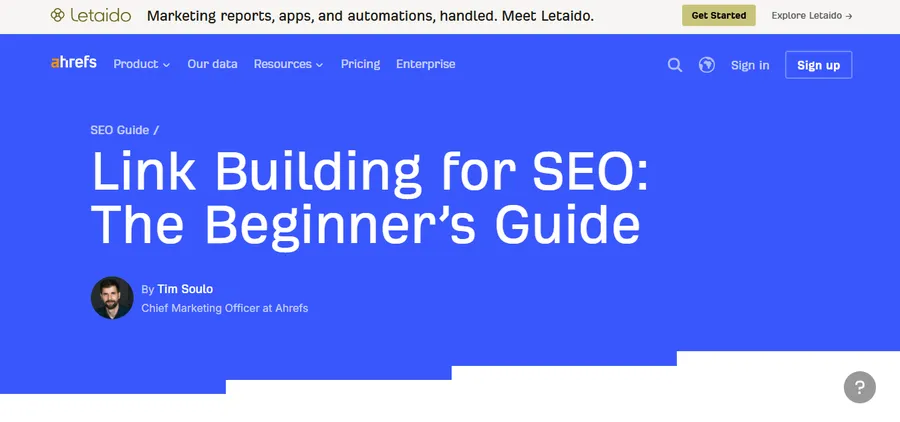
Ahrefs remains the tool most link builders open first. Its Site Explorer does more than count backlinks; it breaks down referring domains by authority, traffic, and first-seen date, so you can tell the difference between a link that has been live for three years and one that showed up last week. Content Explorer and Link Intersect are the two features that matter most for prospecting: Link Intersect shows you which domains link to two or three competitors but not to you, which is often the fastest way to build a target list that already has proof of concept.
Key features: Site Explorer, Content Explorer, Link Intersect, a free Ahrefs Webmaster Tools tier for verified site owners.
Pricing: Lite plans start around $129/month, with higher tiers scaling by crawl credits and report limits.
Best for: Teams that need research depth first and are willing to pair Ahrefs with a separate outreach tool.
Semrush: the all-in-one option for lean teams
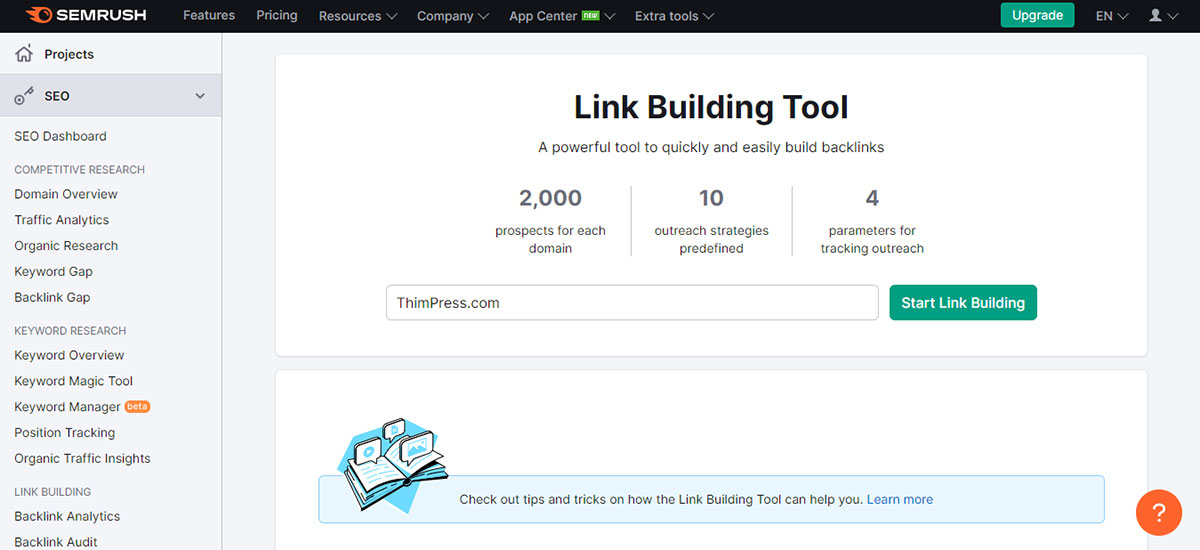
Semrush trades some of Ahrefs’ backlink-index depth for breadth. Beyond backlink research, it bundles a Backlink Audit tool that scores existing links by toxicity, which matters if you are recovering from a manual action or just cleaning up a profile inherited from a previous SEO. Because Semrush also covers keyword research, site audits, and rank tracking, in-house teams that do not want to stitch together five separate subscriptions often land here instead of assembling a specialist stack.
Key features: Backlink Analytics, Backlink Audit with toxicity scoring, built-in outreach module, competitor gap reports.
Pricing: Pro plans run about $139.95/month.
Best for: In-house marketers who want backlink research, auditing, and outreach without managing multiple logins.
Moz Pro: a straightforward authority check
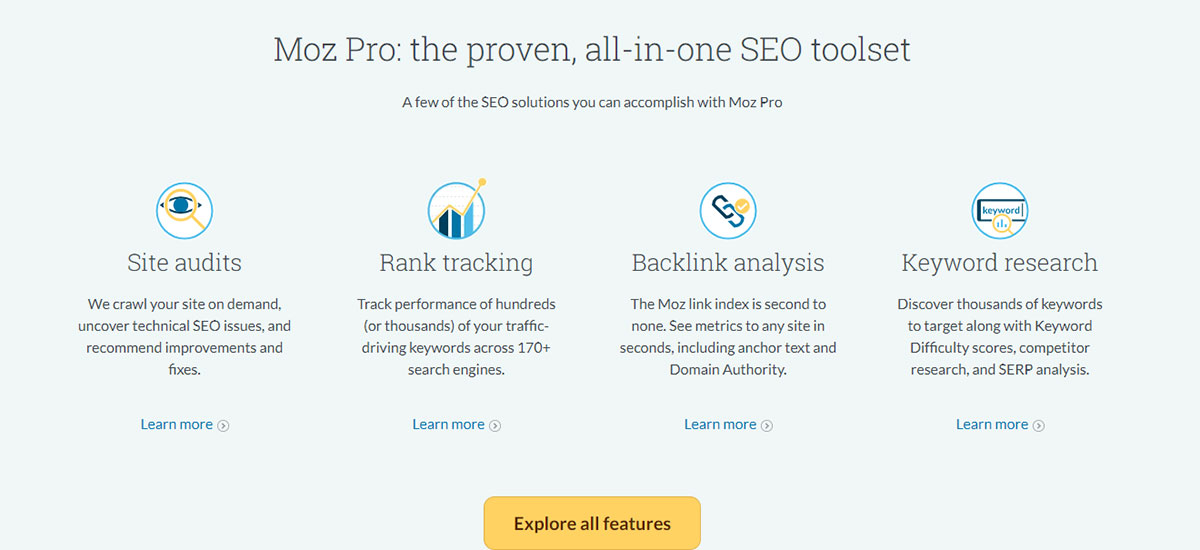
Moz is rarely the primary tool in a modern stack, but it still earns a place as a second opinion. Domain Authority and Page Authority scores are widely recognized shorthand, so when you are qualifying a prospect list built in Ahrefs or Semrush, running it past Moz’s spam score filter is a quick sanity check before outreach begins.
Key features: Domain Authority and Page Authority scoring, Link Explorer, spam score.
Pricing: Starter plans sit around $99 to $129/month.
Best for: Teams that want a fast, familiar authority metric layered on top of their main research tool.
Majestic: the deepest historical index
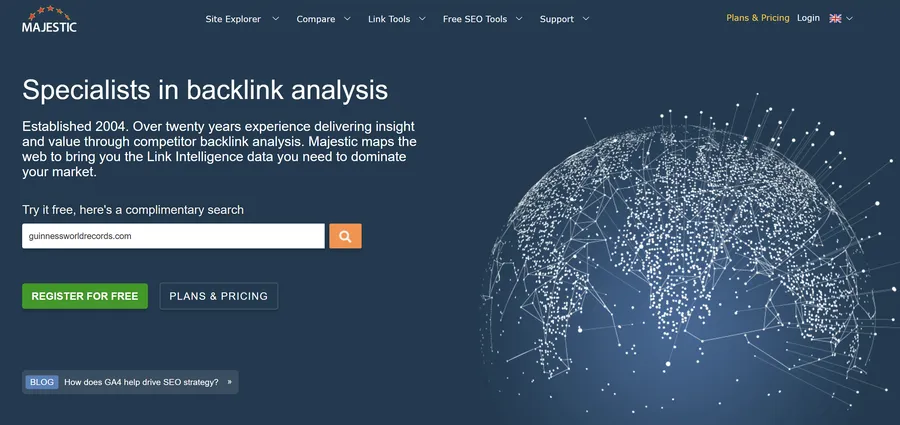
Majestic built its reputation on link history, and that has not changed. Its Historic Index goes back further than most competitors, which is useful when you need to see how a domain’s backlink profile has evolved, not just what it looks like today. It is a support tool rather than a full stack on its own.
Key features: Fresh Index and Historic Index, Trust Flow and Citation Flow metrics.
Pricing: Plans start around $49.99/month.
Best for: Analysts who need long-range backlink history for competitor or penalty investigations.
Pitchbox: built for agencies running outreach at scale
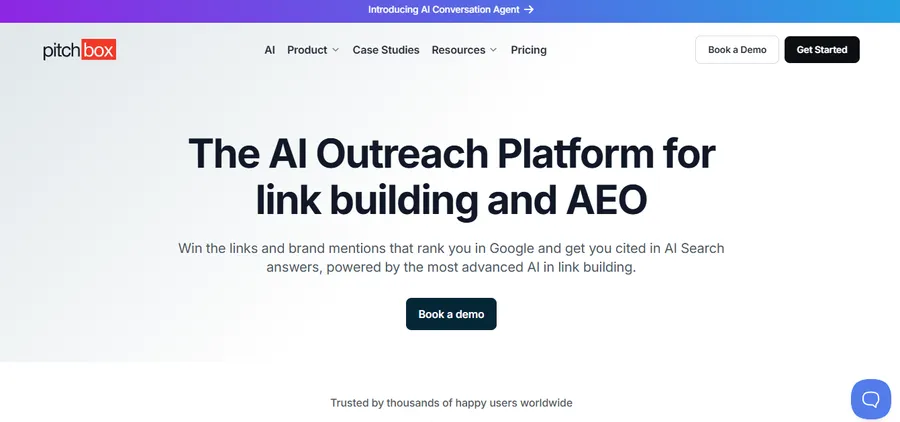
Pitchbox is the tool agencies reach for once a single link builder can no longer keep every campaign straight in a spreadsheet. It pulls prospects in directly from Ahrefs, Semrush, Moz, or Majestic exports, enriches them with contact data, and manages the entire pipeline from first email to placed link. The reporting layer is built for client-facing use, which is part of why agency plans carry a higher price tag than most outreach-only tools.
Key features: Prospect importer, email sequencing with automatic follow-ups, CRM-style pipeline tracking, SEO metric integration.
Pricing: Starter plans begin near $49 to $174/month depending on contact volume, with agency-tier plans reaching $550 or more per month.
Best for: Agencies or in-house teams running multiple concurrent outreach campaigns.
BuzzStream: relationship management without the agency price tag
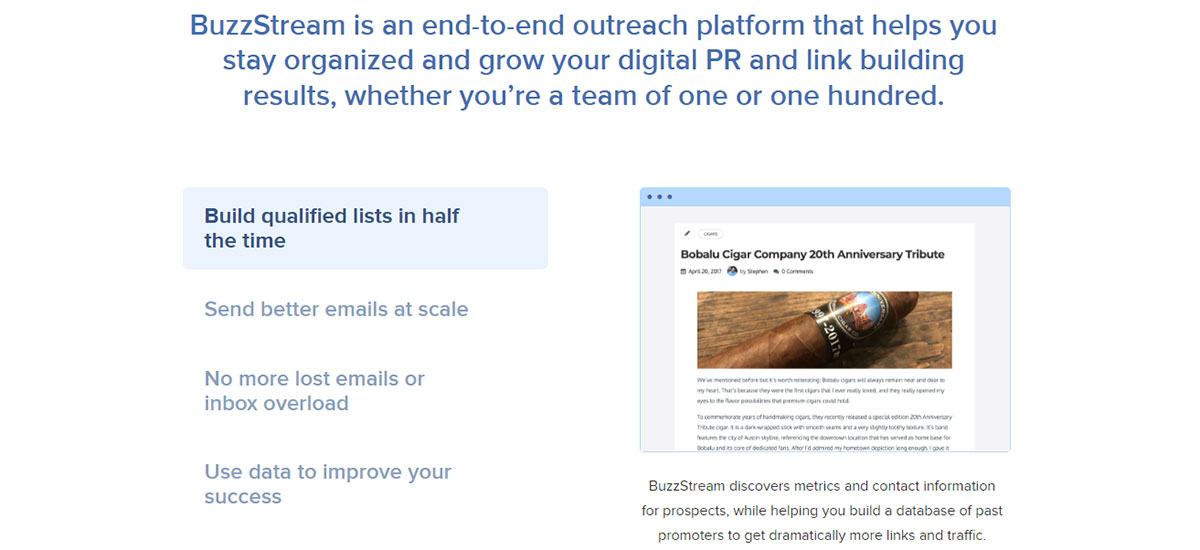
BuzzStream treats link building as a relationship, not a one-off email blast. It logs every email sent, reply received, and link acquired against a domain, so if a team member leaves, the history of that relationship does not leave with them. It imports prospect lists from Ahrefs or Semrush and enriches them with contact info, then lets you segment by campaign or domain type before launching a sequence.
Key features: CRM-style contact records, personalized email sequences with follow-ups, campaign segmentation.
Pricing: Starter plans begin around $24/month for one user and 1,000 contacts.
Best for: Small teams and freelancers who want outreach structure without agency-level pricing.
Hunter.io: fast, verified contact discovery
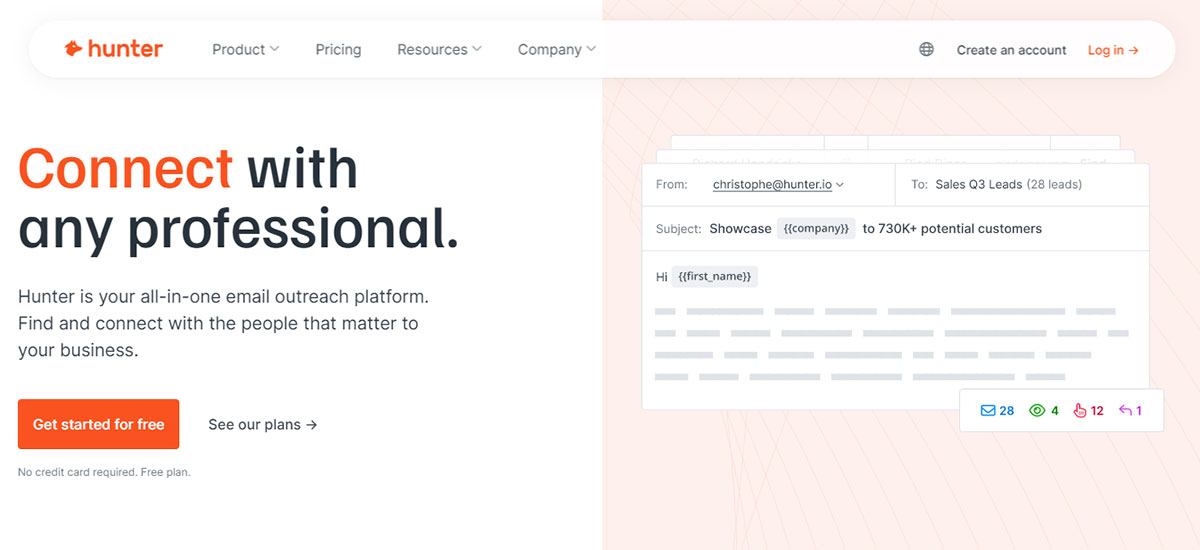
Sending a pitch to a generic info@ inbox rarely gets a reply. Hunter.io solves the specific problem of finding a real, verified email address tied to a domain or a named person, in bulk, without manual LinkedIn searching. It is not a link building platform on its own, but it plugs the contact-finding gap that almost every research tool leaves open.
Key features: Domain search, email verifier, bulk finding via CSV upload.
Pricing: Paid plans start around $34/month.
Best for: Any workflow that needs verified contact data feeding into Pitchbox, BuzzStream, or a manual outreach sheet.
Respona: AI-assisted campaigns for guest posts and digital PR
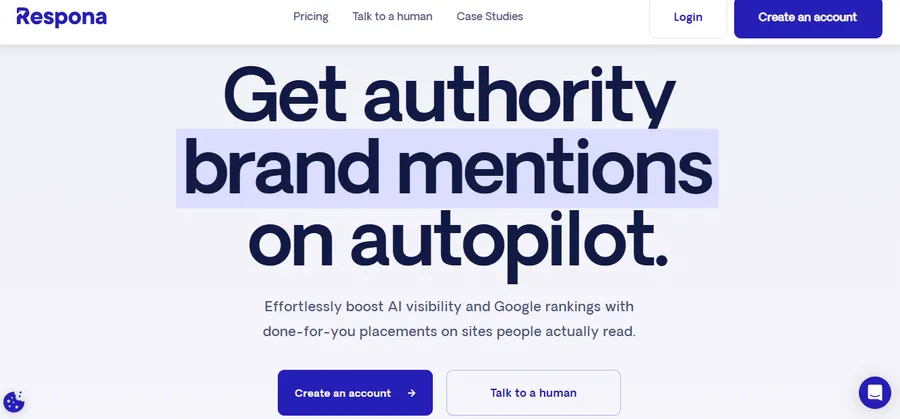
Respona leans into pre-built campaign types rather than a blank outreach canvas. It ships with templates for skyscraper-style link reclamation, guest post pitching, and product review outreach, where you feed in a competitor URL or domain and it returns a working prospect list. For teams without a dedicated link builder on staff, that structure cuts a lot of the guesswork out of getting started.
Key features: Pre-built campaign templates, built-in contact finder, SEO metric filtering during prospecting.
Pricing: Custom, quote-based.
Best for: Smaller teams that want guided campaigns instead of building outreach sequences from scratch.
Link building strategies that still work in 2026
Software only helps if it is pointed at a strategy that actually earns links. A few approaches keep producing results, and knowing which one fits your situation changes which tool matters most.
Digital PR
Digital PR means creating something newsworthy, usually original data or a survey, and pitching it to journalists and industry writers rather than site owners directly. It earns editorial links that are hard to get any other way, because the link is a byproduct of a story rather than a favor. This strategy leans hardest on outreach tools with press-style contact databases, since you are pitching reporters instead of bloggers.
Link insertions
A link insertion means finding an already-ranking page on a relevant topic and pitching your URL as a useful addition to the existing content, rather than asking someone to write a brand-new post. It is faster to execute than guest posting because the site owner only needs to add one line, not commission new content. Ahrefs’ Content Explorer or Semrush’s organic research report are the usual starting points for finding pages worth pitching.
Guest posting on topically relevant sites
Guest posting still works when it is done on sites that genuinely overlap with your niche, and it still fails when it is treated as a volume game on low-quality blogs that will publish almost anything for a fee. The vetting step matters more than the pitch here: check topical relevance, real traffic (not just a Domain Rating number), and whether the site has published anything in the last few months before reaching out.
Broken link building
This approach means finding dead links on relevant pages, usually via a browser extension or a crawler, and pitching your own content as a replacement. It works because you are solving a real problem for the site owner rather than asking for a favor, but it requires a piece of content that genuinely matches what the broken link used to point to.
Common mistakes that waste a link building budget
Even with the right software, a few habits quietly drain time and money without moving rankings.
- Chasing Domain Rating instead of relevance. A link from a high-authority site that has nothing to do with your niche passes less value than search marketers assume, and in some cases looks unnatural enough to draw scrutiny. Filtering by topical relevance alongside DR or DA catches this before outreach starts.
- Sending the same template to everyone. Outreach tools make personalization at scale possible through merge fields, but that only works if someone actually fills in specific, accurate details about each site. A pitch that clearly was not read by a human gets ignored, and reply rates on generic templates tend to sit far below personalized ones.
- Skipping the qualification step. Importing a raw list of one thousand domains from a backlink gap report and emailing all of them wastes both your time and the recipient’s. Running that list through a second filtering layer, whether that is Moz’s spam score or Majestic’s Trust Flow, before outreach begins saves far more hours than it costs.
- Never checking if a link actually goes live and stays live. Links get removed, pages get taken down, and content management systems occasionally strip outbound links during a redesign. Without a monitoring step, a team can spend months believing a campaign succeeded when half the placements quietly disappeared.
- Ignoring the destination page. A perfectly executed outreach campaign pointed at a slow, thin, or outdated page still underperforms. The tools on this list handle finding and earning the link; they do nothing for what happens after someone clicks it.
Get your site ready before you start outreach
No backlink software fixes a slow, cluttered, or poorly structured site, and a link earned to a page that takes six seconds to load will not do much for rankings. Before a single outreach email goes out, it is worth auditing the destination page itself: is it fast, does it answer the query it is trying to rank for, and does the theme render cleanly on mobile.
If you are running a course platform, membership site, or education business on WordPress, the theme underneath your content matters more than most people expect during a link campaign. Eduma, ThimPress’s dedicated LMS-ready WordPress theme, is built specifically for course sellers and online academies, with clean markup and LearnDash and Tutor LMS compatibility out of the box, which gives outreach targets a fast, professional page to actually link to instead of a generic template.
How to choose the right tool for your workflow
There is no single best set of tools for link building that works for every team, only the best fit for how your team actually works. A few questions narrow it down fast:
- Are you doing your own research, or importing lists from elsewhere? If you need to find opportunities from scratch, prioritize Ahrefs or Semrush. If research already happens somewhere else and you just need to manage the follow-through, an outreach-first tool like BuzzStream fits better.
- How many people touch each campaign? A solo SEO or freelancer rarely needs Pitchbox’s agency-tier pricing. A team of five running twelve client campaigns at once usually does, because the CRM-style tracking prevents dropped follow-ups.
- What is your monthly budget? A workable solo stack runs somewhere in the $150 to $200/month range: one research tool plus one lightweight outreach tool. An in-house team stack often lands between $500 and $700/month. Agencies running multiple client accounts through multiple platforms commonly spend $1,500/month or more.
- Do you need penalty recovery features? If you have ever received a manual action notice, Semrush’s Backlink Audit with toxicity scoring and disavow file export is worth prioritizing over a pure prospecting tool.
Measuring the success of your link building campaign
Successful link building is about more than simply increasing the number of backlinks pointing to your website. The real goal is to earn links that improve search visibility, attract relevant referral traffic, and strengthen your site’s authority over time. Instead of focusing only on metrics like Domain Rating or Domain Authority, track how your campaigns affect keyword rankings, organic traffic, indexed pages, and conversions. Quality links from trusted, topically relevant websites consistently outperform large numbers of low-value backlinks. Most SEO teams review their backlink profile monthly, remove or disavow harmful links when necessary, and refine outreach based on response rates and successful placements. By measuring meaningful business outcomes instead of vanity metrics, you can invest in the SEO link building tools that deliver long-term growth and a stronger return on investment.
FAQs
What is the best free link building tool?
Google Search Console is the strongest free option for monitoring your own backlinks and indexing status, and Ahrefs Webmaster Tools adds free backlink data for verified site owners. Neither replaces a paid research tool for competitor analysis, but together they cover basic monitoring at no cost.
How much does SEO link building software typically cost?
A single research tool like Ahrefs or Semrush runs roughly $99 to $140/month at the entry tier, while dedicated outreach platforms range from about $24/month for BuzzStream’s Starter plan up to $550/month or more for Pitchbox’s agency tier. Most teams combine one research tool with one outreach tool rather than buying an all-in-one suite.
Can link building tools replace manual outreach entirely?
No. These tools automate prospecting, sequencing, and tracking, but the actual pitch still needs a human touch to land well; templated emails sent without any personalization tend to get ignored or marked as spam. The tools remove the repetitive work so a link builder can spend more time writing pitches that actually get read.
Is Ahrefs or Semrush better for link building specifically?
Ahrefs generally has the edge for pure backlink research because of its larger, more frequently refreshed index and its Link Intersect feature for finding competitor gaps. Semrush is often the better pick when a team wants link building bundled with keyword research, site audits, and built-in outreach in one subscription rather than paying for multiple tools.
Final thoughts
The link building tools that matter most in 2026 are not the ones with the longest feature list, they are the ones that match the stage where your workflow actually breaks down. If prospecting is the bottleneck, start with Ahrefs or Semrush. If outreach is falling through the cracks, BuzzStream or Pitchbox will do more for your results than another research subscription. Most working stacks combine two or three tools rather than one, and that is fine. The goal is not to own every platform on this list; it is to build a repeatable process your team can run every single week without losing track of who replied.
Read more: What is a graphic designer? Role, education, and salary explained
Contact US | ThimPress:
Website: https://thimpress.com/
Fanpage: https://www.facebook.com/ThimPress
YouTube: https://www.youtube.com/c/ThimPressDesign
Twitter (X): https://x.com/thimpress_com