Are you looking to launch a professional online presence without spending months on development or hiring an elite team of developers?
As we move through 2026, business owners face a pivotal crossroads: should you utilize the lightning-fast efficiency of AI web design automation, or stick with the proven, granular control of custom WordPress development and traditional builders?
The stakes are high.
Your website is often the first point of contact for your brand. Whether you prioritize speed to market or long-term scalability, the choice between an AI website builder vs traditional website builder will dictate your digital trajectory for years to come.
With searches for AI-driven design tools increasing by over 500% in recent years, it is clear that the industry is shifting. However, “faster” does not always mean “better” for every business model.
Let’s get started!
Eduma – Education WordPress Theme
We provide an amazing WordPress theme with fast and responsive designs. Let’s find out!
Understanding the Contenders: Defining the Modern Web
To make an informed decision, we must first define what these platforms look like in the current year.
What is an AI Website Builder?
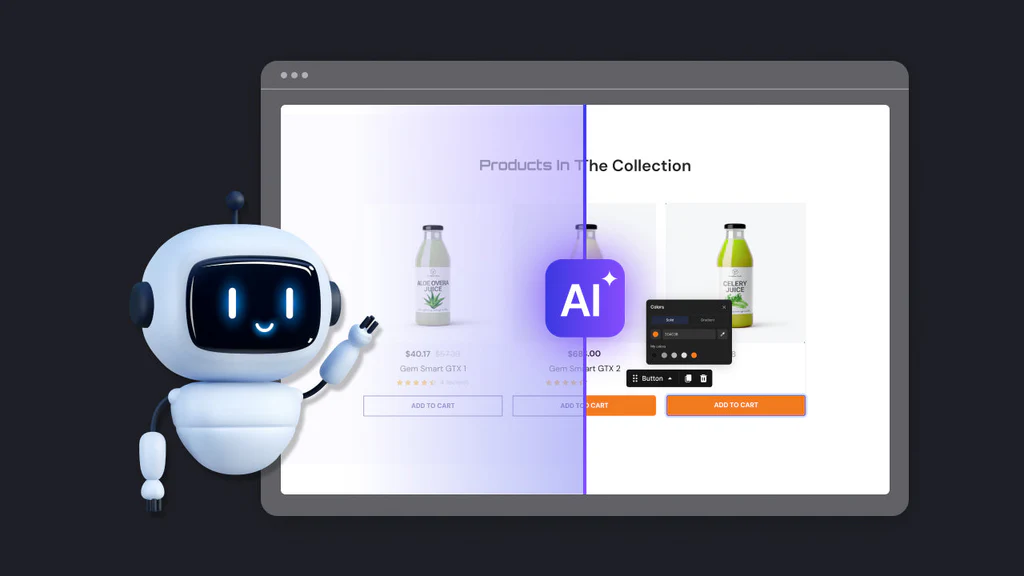
An AI website builder uses generative algorithms to create a functional site based on user prompts. By answering a few questions about your industry, preferred aesthetic, and business goals, the AI generates layouts, selects imagery, and drafts initial copy.
These tools have evolved beyond simple templates to include “vibe coding,” where the AI writes clean, deployable code in real-time.
What is a Traditional Website Builder?
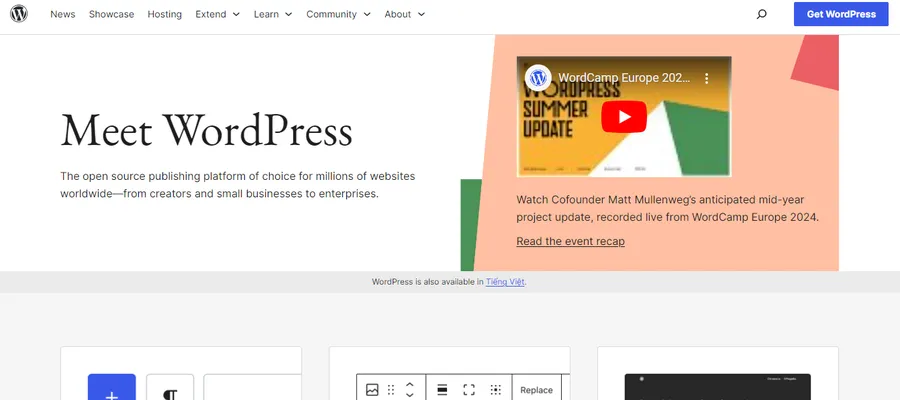
Traditional builders include platforms like WordPress (often paired with builders like Elementor), Wix, and Squarespace. These tools provide a “drag-and-drop” interface or a theme-based structure. They offer a blank canvas where the human user makes every design decision, from pixel-perfect alignment to complex plugin integrations.
The Case for AI Website Builders: Speed and Accessibility
For many entrepreneurs and small businesses, the primary hurdles to getting online are time and technical literacy. This is where AI web design automation shines.
1. Unmatched Launch Velocity
The most significant advantage of an AI builder is speed. While a traditional build might take anywhere from 10 to 40 hours for a basic setup, an AI can produce a multi-page, mobile-responsive site in under 15 minutes. For a freelancer or a local service provider needing a digital business card “yesterday,” this efficiency is a game-changer.
2. Lower Barrier to Entry
You do not need to understand HTML, CSS, or even basic design principles like “visual hierarchy.” The AI applies built-in best practices automatically. This democratization of design allows anyone to own a site that looks professional, even without a background in digital marketing.
3. Integrated Performance Standards
Modern AI builders are designed with SEO and mobile responsiveness as foundational elements. They typically generate clean code, optimize images for fast loading, and ensure that the site looks perfect on every device without manual tweaking.
The Case for Traditional Builders: Power and Ownership
While AI offers speed, traditional builders—particularly those in the best website builders 2026 category—offer something AI cannot yet replicate: absolute creative and functional sovereignty.
1. Granular Customization
If your brand requires a unique visual identity that breaks away from industry “norms,” a traditional builder is mandatory. AI tends to generate designs based on averages and existing patterns. Traditional platforms allow for “pixel-perfect” adjustments, enabling you to move every element exactly where it belongs to match your brand’s specific soul.
2. Scalability and Complex Functionality
Do you need a custom Learning Management System (LMS), a complex multi-vendor marketplace, or a unique customer portal? These require the deep plugin ecosystems found in custom WordPress development. Traditional builders allow you to integrate third-party APIs and custom scripts that AI tools often struggle to implement correctly.
3. Data Ownership and Portability
One of the hidden website building costs of many “all-in-one” AI platforms is “platform lock-in.” If you build on a proprietary AI tool, moving your site to a different host can be nearly impossible. With traditional, self-hosted platforms like WordPress, you own your database and files. You have the freedom to migrate your site whenever and wherever you choose.
Feature Comparison: Showdown
| Feature | AI Website Builder | Traditional Website Builder |
| Setup Time | 5–15 Minutes | 10–40+ Hours |
| Skill Required | Zero / Beginner | Intermediate / Professional |
| Customization | Limited to Framework | Unlimited / Code-level |
| Maintenance | Automated | Manual / User-managed |
| SEO Control | Basic / Automated | Deep / Manual Optimization |
| Scalability | Moderate | High (with Plugins/Code) |
| Cost | Predictable Monthly Fee | Variable (Hosting, Themes, Plugins) |
The Hidden Cost: Time vs. Marketing Effectiveness
When analyzing the AI website builder vs traditional website builder debate, we must look beyond the initial price tag.
A website that is built quickly but fails to convert visitors into customers is an expensive mistake. AI builders excel at creating “brochureware”—sites that look good but may lack the psychological nuances of high-converting sales funnels. Human designers understand how to use whitespace, typography, and “calls to action” (CTAs) to guide a user’s eyes toward a purchase.
Furthermore, website building costs in the traditional space often include the long-term benefit of better SEO rankings. While AI handles basic meta tags, a traditional builder allows an SEO specialist to optimize every detail, from schema markup to advanced internal linking structures, which is vital for competing in a crowded market.
The Rise of the Hybrid Approach
In 2026, the line between these two paths is blurring. Most of the best website builders 2026 now incorporate AI features. For example, professional page builders like Elementor now offer AI assistants that help write copy, generate custom CSS, or create unique images within a traditional framework.
This hybrid model—using AI for the “heavy lifting” while maintaining human control over the final output—is often the most effective strategy for growing businesses. It provides the efficiency of automation without sacrificing the unique brand identity that drives long-term success.
Decision Framework: Which Should You Choose?
Choose an AI Website Builder If:
- You need to launch a professional site in less than 24 hours.
- Your budget is strictly limited to a small monthly subscription.
- You have no interest in learning technical web management.
- Your site is primarily a portfolio or a simple informational page.
Choose a Traditional Website Builder If:
- You are building a long-term brand with a unique visual style.
- You require complex features (E-commerce, memberships, booking systems).
- You want full ownership of your site’s code and data.
- You have the time to invest in learning or the budget to hire a professional.
Conclusion
The choice between an AI website builder vs traditional website builder ultimately depends on your specific business stage. AI has matured into a reliable tool for speed and accessibility, making it the perfect entry point for new entrepreneurs. However, for those seeking to dominate their niche with a custom, high-performance digital asset, the depth and flexibility of traditional platforms remain the gold standard.
In 2026, the “winner” is the tool that matches your current resources with your future ambitions. Whether you choose the automated path or the bespoke one, ensure your site is built with the user in mind—because while AI can build a site, only human insight can build a community.
Frequently Asked Questions (FAQs)
1. Is AI-generated content bad for SEO?
Not necessarily. Search engines prioritize high-quality, helpful content regardless of how it was produced. However, to meet EEAT (Experience, Expertise, Authoritativeness, Trustworthiness) standards, AI-generated content should always be reviewed and edited by a human expert to ensure accuracy and unique insight.
2. Can I switch from an AI builder to WordPress later?
It is often difficult. Most AI builders are “closed systems,” meaning you cannot simply export the site to another platform. You would likely need to rebuild the site from scratch on the new platform, though you can copy your text and images over manually.
3. Which is cheaper in the long run?
AI builders have predictable monthly costs that include hosting and security. Traditional builders can be cheaper initially but may become more expensive as you add premium plugins, themes, or hire developers for maintenance.
4. Does an AI website builder produce unique designs?
AI tools use patterns from existing websites to generate new ones. While the combination of elements might be unique, the overall “feel” may resemble other sites created by the same AI. For a truly “one-of-a-kind” look, a traditional builder or custom code is preferred.
5. Are AI websites secure?
Generally, yes. Since AI builders are managed platforms, the provider handles security updates and SSL certificates. Traditional builders, like WordPress, require the user to actively manage security plugins and updates to stay protected.
Read more:How To Use ChatGPT in WordPress for Student Support?
Contact US | ThimPress:
Website: https://thimpress.com/
Fanpage: https://www.facebook.com/ThimPress
YouTube: https://www.youtube.com/c/ThimPressDesign
Twitter (X): https://x.com/thimpress_com