If you’re setting up a new website, one of the first numbers you’ll want to know is the domain name cost. It sounds like a simple question, but the answer depends on the extension you pick, the registrar you buy from, and whether you’re looking at the first-year promo price or the real renewal price a year later.
This guide breaks down what you’ll actually pay in 2026, why domain prices swing so much between sites, and how to keep your domain registration cost as low as possible without getting stuck in a renewal trap.
Eduma – Education WordPress Theme
We provide an amazing WordPress theme with fast and responsive designs. Let’s find out!
What determines domain cost
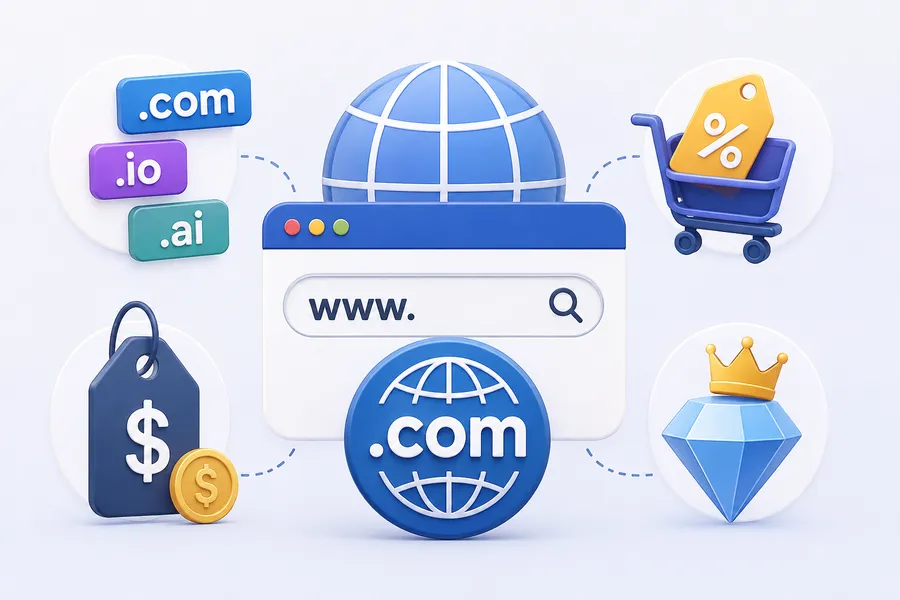
Domain prices are not set by one central authority. Each extension (called a TLD, or top-level domain) has its own registry that sets a wholesale price, and registrars add their own markup on top of that. That’s why the same .com name can cost $9.99 at one registrar and $17.99 at another, even though it’s technically the same product.
Domain extension (TLD)
The extension you choose is the single biggest factor in domain cost. A .com, .net, or .org usually sits in a predictable price band because the registries behind them have been stable for decades. Newer or more specialized extensions like .io, .ai, or .app tend to cost more because the registry charges a higher wholesale rate, often because of limited supply or a country-code association (.io is technically the British Indian Ocean Territory’s code, for example).
Registrar pricing and promotions
Every registrar, from GoDaddy to GoDaddy alternatives such as Namecheap to Cloudflare, sets its own retail price on top of the registry fee. Many run aggressive first-year discounts, sometimes as low as $0.99 or $1.99, to get you in the door. The catch is that renewal pricing is almost always higher, and registrars rarely advertise that number on the checkout page. It’s worth checking a registrar’s renewal price before you register, not just the sign-up price.
Premium vs. standard domains
A “premium” domain is a name the registry or a previous owner has flagged as high value, usually because it’s short, brandable, or contains a popular keyword. These can range from $50 to well into the thousands, separate from the standard registration fee. If you’re just buying a fresh, unregistered name for a new business or blog, you’ll almost always fall into the standard pricing tier.
How much does it cost to buy a domain name
For a typical, newly registered domain on a common extension, expect to pay somewhere between $10 and $20 for the first year, with renewal often landing between $15 and $40 depending on the registrar. Prices vary between registrars and are often lower for the first year. That gap between the first-year price and the renewal price is the single most common source of surprise on a hosting bill.
First-year price vs. renewal cost
Registrars use the first-year discount as a customer acquisition tool, similar to a subscription service offering a free trial. The real cost of a domain shows up at renewal, when the promotional rate expires and you’re billed at the standard rate. Before buying, look up the registrar’s renewal pricing page directly instead of relying on the checkout total, since that number tells you what you’ll actually pay in year two and beyond.
Domain prices by popular extension
Here’s a general breakdown of what to expect across common TLDs in 2026:
| Extension | Typical first-year price | Typical renewal price | Best for |
|---|---|---|---|
| .com | $10 – $20 | $15 – $25 | General business, blogs, most projects |
| .net | $12 – $22 | $15 – $25 | Tech, internet, and networking brands |
| .org | $12 – $20 | $15 – $25 | Nonprofits, communities, open-source projects |
| .io | $40 – $80 | $40 – $70 | Startups, SaaS, developer tools |
| .co | $25 – $35 | $25 – $35 | Startups, short brandable names |
| .store / .online | $2 – $30 | $20 – $40 | E-commerce and niche sites |
| .shop | $3 – $30 | $25 – $40 | Online stores |
Renewal prices are typically higher than sign-up prices across almost every extension, so treat the table above as a starting point and always confirm current numbers on the registrar’s own pricing page before you check out.
Domain cost vs. other website expenses
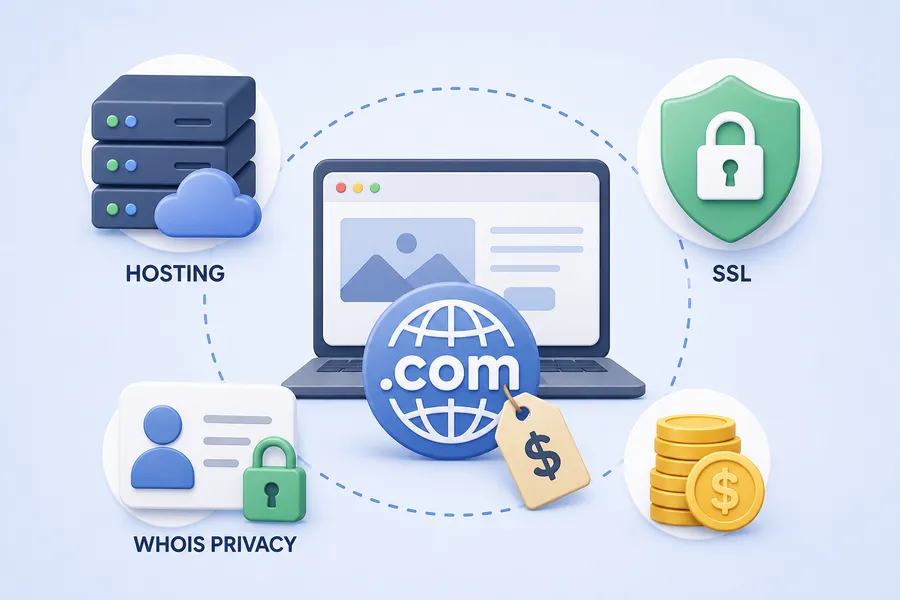
A domain is only one line item in the cost of running a website, and it’s usually the smallest one. Understanding where it fits next to hosting, SSL, and privacy add-ons helps you budget realistically instead of being surprised by the total.
Hosting
Hosting is where your site’s files actually live, and it’s billed separately from the domain in most setups. Shared hosting plans typically run anywhere from a few dollars a month for entry-level shared plans up to $30 or more for managed WordPress hosting with better performance and support. Many hosting providers throw in a free domain for the first year when you sign up for an annual plan, which is worth factoring in if you’re starting from scratch.
SSL certificates
An SSL certificate is what puts the padlock icon next to your URL and encrypts data between your site and its visitors. Most hosting companies and registrars now include a free SSL certificate (usually via Let’s Encrypt) by default, though some still charge $50 or more per year for an extended validation certificate aimed at businesses that need a higher level of verification.
WHOIS privacy protection
When you register a domain, ICANN rules require certain contact information to be collected, and without privacy protection, some of that can end up visible in public WHOIS lookups. Privacy protection masks your personal details behind the registrar’s information instead. Some registrars, like NameSilo, include free WHOIS privacy with every domain, while others charge $5 to $15 a year as an add-on. It’s worth checking whether it’s bundled in before you assume the sticker price is the final price.
Hidden domain costs to watch for
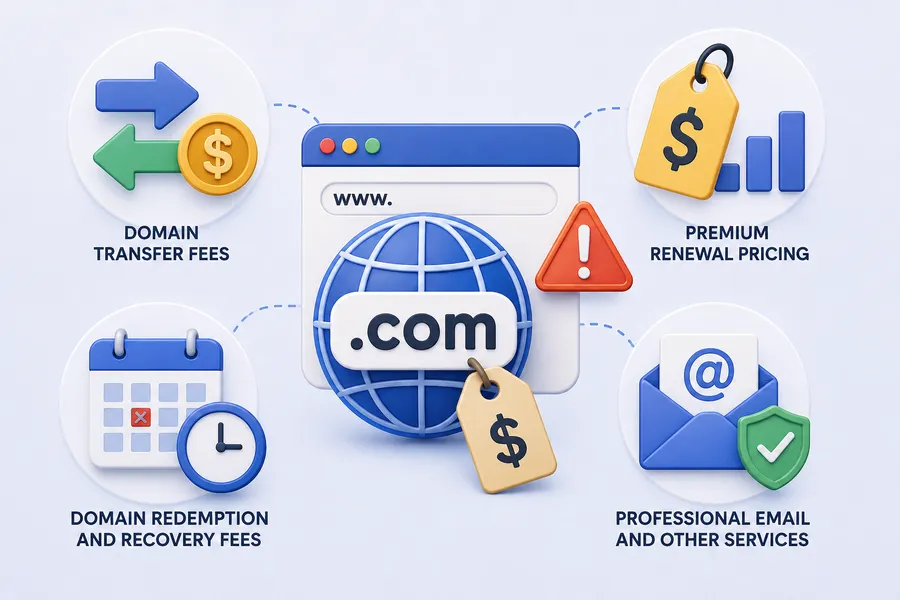
The advertised domain name cost is not always the full amount you will pay over the life of a website. Registration and renewal are the main expenses, but a few additional charges can appear depending on the registrar, domain extension, and situation. Knowing about these costs before registering a domain can help you avoid unexpected bills later.
Domain transfer fees
Moving a domain from one registrar to another may involve a transfer fee. In many cases, the fee is similar to the cost of renewing the domain for another year, and the transfer also extends the registration period by one year. However, the exact rules vary by TLD and registrar.
Before transferring a domain, check whether the new registrar includes the transfer cost in the first renewal payment. You should also confirm that the domain is eligible for transfer and that it is not within a restricted transfer period.
Premium renewal pricing
A domain can appear affordable when you first register it but become significantly more expensive later if it is classified as a premium domain. Premium domains are often short, memorable, or contain commercially valuable words.
The important thing is to check both the registration price and the renewal price. A domain that costs $20 in the first year but renews for hundreds of dollars may not be a good choice for a small business or personal project.
Domain redemption and recovery fees
Letting a domain expire can create another unexpected cost. After the normal expiration and grace periods, some domains enter a redemption period. Recovering a domain during this stage can involve a substantial redemption fee in addition to the normal renewal cost.
This is one reason to enable automatic renewal if you plan to keep the domain for several years. You should also make sure the payment method connected to your registrar account remains valid.
Professional email and other services
A domain itself does not automatically include a professional email service. If you want an address such as [email protected], you may need to purchase an email hosting plan separately.
Some registrars also offer optional services such as website builders, advanced DNS management, domain monitoring, or security products. These services can be useful, but they are not required for every website. Review your cart carefully so you only pay for services you actually need.
How to choose a domain registrar
The cheapest domain name is not necessarily the best deal. When comparing registrars, look beyond the first-year promotional price and consider the total cost of keeping the domain for several years.
Compare renewal prices
Renewal pricing should be one of the first things you check. A registrar offering a domain for $2 in the first year may cost considerably more than another registrar after the promotional period ends.
For a long-term website, calculate the approximate cost over three years rather than comparing only the first-year price. This gives you a better picture of the actual domain name cost.
Check privacy protection
Look for a registrar that includes WHOIS privacy protection at no additional charge when it is available for your chosen TLD. Paying extra for privacy every year can make a low introductory price much less attractive over time.
Privacy features can also make domain management simpler because you do not have to purchase and manage another optional service separately.
Look at the transfer policy
Even if you plan to stay with the same registrar, check how easy it is to transfer your domain elsewhere. A reputable registrar should provide clear information about domain locks, authorization codes, transfer requirements, and expiration policies.
This gives you more flexibility if the registrar raises its renewal prices or you later find a provider with better features.
Consider the total cost, not just the advertised price
When comparing registrars, look at the complete pricing picture:
| Cost to check | Why it matters |
|---|---|
| First-year registration | Shows the initial promotional cost |
| Renewal price | Determines your long-term expense |
| Transfer fee | Matters if you move the domain later |
| WHOIS privacy | May be free or charged separately |
| Premium pricing | Can make some domains much more expensive |
| Add-ons | Can increase the checkout total |
A good registrar should offer transparent pricing and make it easy to understand what you will pay today and what you will pay when the domain renews.
For most new websites, choosing a reliable registrar with reasonable renewal pricing is more important than finding the absolute cheapest introductory offer. A few dollars saved in the first year are not worth much if the domain becomes significantly more expensive every year afterward.
Ways to lower your domain registration cost
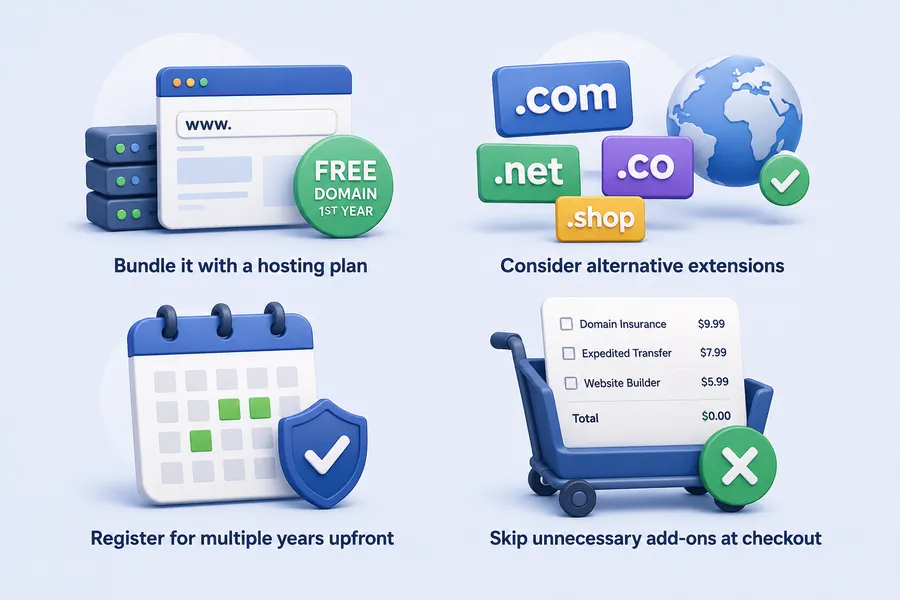
You don’t need to overpay for a domain just because the checkout page nudges you toward add-ons. A few practical habits keep the cost down without cutting corners on the parts that actually matter, like ownership and security.
Bundle it with a hosting plan
If you’re starting a brand-new site, buying hosting and a domain from the same provider often gets you a free first-year domain. This works well for straightforward blogs and small business sites, though it’s worth checking that the registrar transfer process is simple in case you want to move providers later without losing the name.
Consider alternative extensions
If your ideal .com is taken or priced as premium, a .co, .net, or a niche extension relevant to your industry (like .shop for a store or .dev for a developer portfolio) is often available for a fraction of the price and still reads as professional to visitors.
Register for multiple years upfront
Locking in 2 to 5 years of registration protects you from mid-cycle price increases and removes the risk of an accidental lapse, which matters more than it sounds like since an expired domain can sometimes be scooped up by someone else within days of expiring.
Skip unnecessary add-ons at checkout
Registrars routinely pre-select extras like domain insurance, expedited transfer protection, or “starter” website builders during checkout. Reading through the cart before paying can shave several dollars off the total without losing anything you actually need.
Choosing the right domain for a WordPress site
Once you’ve settled on a domain, the next decision is what you build on top of it. If your site is going to sell courses, run a membership program, or operate as an education platform, the theme you choose matters just as much as the domain itself. This is where a purpose-built WordPress theme like Eduma from ThimPress earns its keep: it’s designed specifically for online course and LMS sites, with built-in compatibility for course builders, quizzes, and student dashboards, so you’re not stitching together a dozen separate plugins to get a functional education site running on your new domain.
For most other site types, the priority is a theme that loads fast and pairs cleanly with your domain’s branding, whether that’s a simple blog, a portfolio, or a small business site. Whatever the use case, the domain is the foundation, but the theme and hosting stack determine how the site actually performs once visitors show up.
FAQs
Is it cheaper to buy a domain for multiple years at once?
Often, yes. Multi-year registration locks in the current rate and protects you from mid-term price increases, though the savings depend on the registrar. Compare the per-year cost of a 1-year registration against a 3 or 5-year block before committing, since some registrars apply the same annual rate either way.
Why did my domain renewal cost more than I paid to register it?
Registrars commonly use discounted first-year pricing to attract new customers, then bill at the standard rate once that promotional period ends. This is why it pays to check a registrar’s stated renewal price, not just the sign-up price, before registering a name you plan to keep long-term.
Can I get a domain name for free?
Some hosting providers include a free domain for the first year when you purchase an annual hosting plan, and a handful of newer extensions run limited-time free promotions. After the first year, though, nearly every domain reverts to a standard paid renewal.
Does a more expensive domain extension help SEO?
No. Search engines do not rank .com higher than .net, .org, or other standard extensions simply because of the price or extension type. What matters more for SEO is how relevant, memorable, and trusted the domain is to visitors, along with the content and technical setup of the site itself.
Conclusion
Domain name cost is one of the more predictable parts of launching a website: budget $10 to $20 for a standard extension in year one, expect renewal to run somewhat higher, and treat any offer under a few dollars as a first-year promo rather than the real long-term price. The bigger cost decisions usually sit elsewhere, in hosting, SSL, and the theme or platform you build on. Get the domain right, pair it with a hosting plan and theme suited to what you’re actually building, and the rest of the setup gets a lot easier to plan around.
Read more: How to make your website appear on Google search
Contact US | ThimPress:
Website: https://thimpress.com/
Fanpage: https://www.facebook.com/ThimPress
YouTube: https://www.youtube.com/c/ThimPressDesign
Twitter (X): https://x.com/thimpress_com