Are you still using the same search bar you were a decade ago?
Nowadays, we no longer just “search” for links; we converse with AI, protect our data from trackers, and seek specialized answers that a general web crawl can’t always provide.
While Google remains the titan of the industry, the rise of “Answer Engines” and privacy-focused platforms means you have more choices than ever before.
The best search engines today go beyond simple links; they offer AI answers, strict privacy protections, and specialized research tools.
Whether you are looking to escape the “filter bubble,” avoid aggressive advertising, or find deep academic data, choosing the right tool is essential for navigating the modern web.
In this guide, we explore the top 10 top search engines and beyond to help you find your perfect digital companion.
Whether you want better privacy, AI-powered answers, or unbiased results, these platforms offer powerful alternatives to Google.
For a deeper look at privacy-focused and modern browsing options, check out these alternative search engines that are changing how people search online.
Let’s get started!
Eduma – Education WordPress Theme
We provide an amazing WordPress theme with fast and responsive designs. Let’s find out!
What Are Search Engines?
A search engine is a software system designed to carry out web searches, which means searching the World Wide Web in a systematic way for particular information specified in a textual web search query.
Technically, these systems operate through three primary stages:
- Crawling: Using “spiders” to discover new and updated content on the web.
- Indexing: Organizing and storing that information in a massive database.
- Ranking: Using complex algorithms to decide which content is most relevant to your specific query.
Today, this process has evolved to include Semantic Search, where the engine understands the intent behind your words, not just the keywords themselves.
The Best Search Engines in the Traditional Space
Traditional search engines are the “librarians” of the internet. They index billions of pages and provide a list of links based on authority and relevance.
Google is the undisputed heavyweight, processing over 90% of global search queries. In 2026, Google has successfully integrated its Search Generative Experience (SGE), blending traditional links with AI-powered snapshots. It remains the best search engine for local intent (like “pizza near me”) and integrated services like Maps and Flights. However, the increasing density of “sponsored” results has led some users to seek alternatives.
Bing
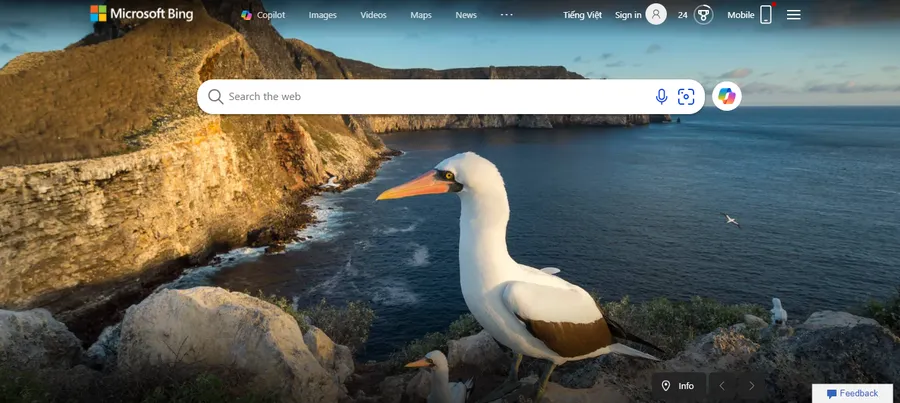
Microsoft’s Bing is no longer just “the thing you use to download Chrome.” It has carved out a massive niche by being the first to integrate GPT-4 technology. Bing shines in visual search and offers a robust “Rewards” program that literally pays you (in gift cards) to search. It is often less cluttered than Google for image and video-heavy queries.
Top AI Search Engines (Answer Engines)
The biggest trend now is the move from “Search Engines” to “Answer Engines.” These tools don’t just give you a list of websites; they read the websites for you and summarize the answer.
ChatGPT Search

OpenAI’s ChatGPT Search has revolutionized how we find information. It is conversational, meaning you can ask follow-up questions like, “That’s great, but can you explain it to me like I’m five?” It is the best search engine for synthesizing complex topics into easy-to-read summaries. If you want to learn how AI tools can improve online learning and engagement, explore how to use ChatGPT in WordPress for student support to create smarter educational experiences.
Perplexity
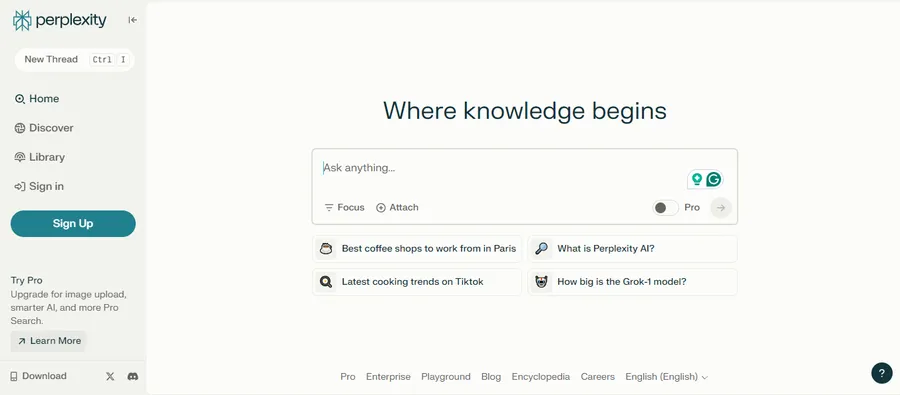
Perplexity has become the gold standard for accuracy in the AI space. Unlike some models that may “hallucinate” facts, Perplexity provides inline citations. Every sentence it writes is linked to a source, making it a favorite for journalists and researchers who need to verify where their information is coming from.
The Best Search Engine for Privacy
As data harvesting becomes more aggressive, the best search engine for privacy is no longer a niche requirement—it’s a necessity for many.
DuckDuckGo
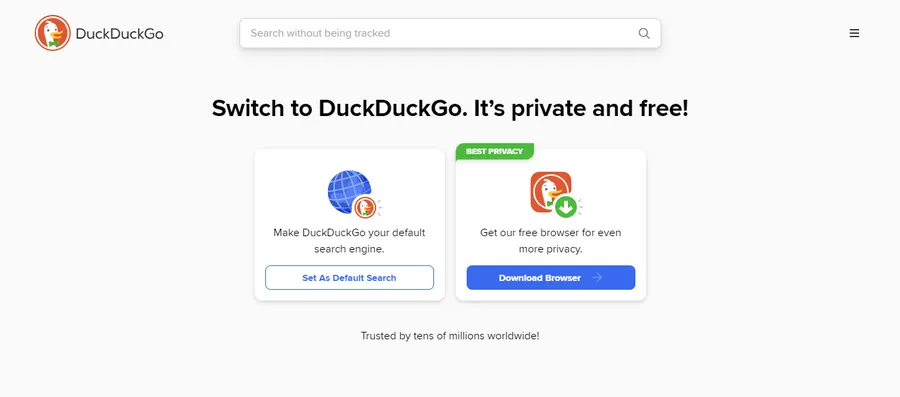
DuckDuckGo is the “original” privacy engine. It does not track your search history, does not store your IP address, and does not follow you around the internet with ads. It uses its own crawler alongside Bing’s index to provide high-quality results without the “creep factor.”
Brave Search engine
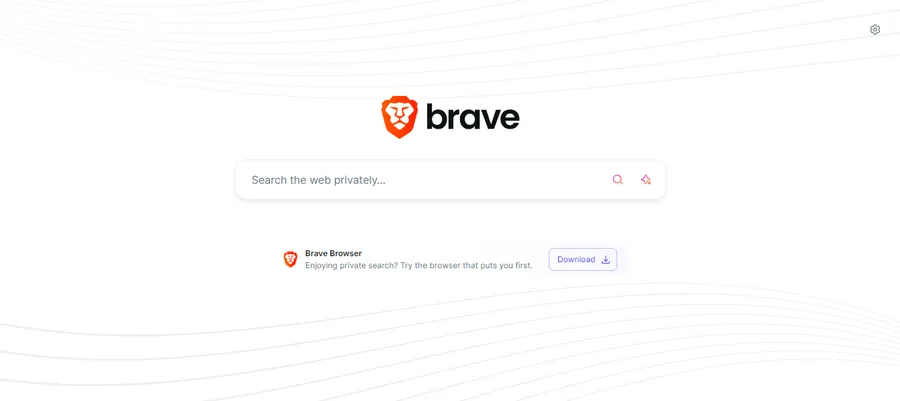
The Brave Search engine has quickly risen in the ranks because it is truly independent. While many privacy engines rely on Google or Bing for their results, Brave uses its own independent index. It also features “Goggles,” which allow users to apply their own filters to the algorithm, such as “only show results from independent blogs” or “hide all mainstream news.”
Leading Regional Search Engines
Search dominance is often a matter of geography. Depending on where you are in the world, the “best” engine might be one you’ve never heard of.
Baidu
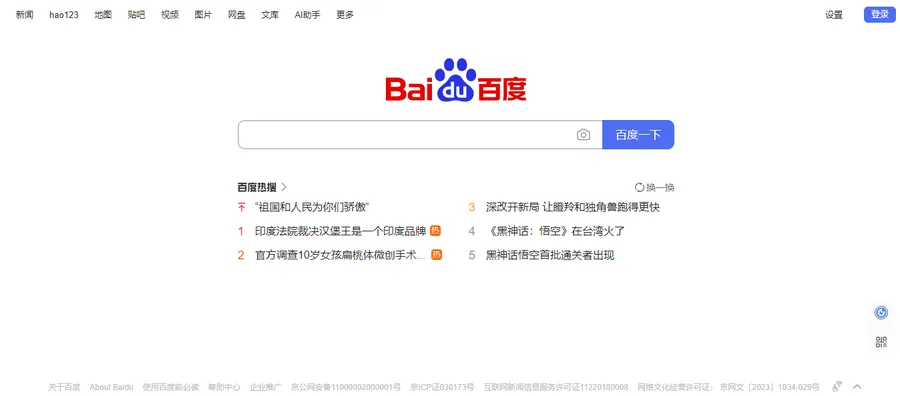
If you are searching within China, Baidu is the only name that matters. It is deeply integrated with the Chinese ecosystem, including Baike (similar to Wikipedia) and Tieba (a massive forum). It handles the nuances of the Chinese language far better than Western competitors.
Yandex

Yandex is the primary gateway to the internet in Russia and many CIS countries. It is more than just a search bar; it is a full ecosystem of mail, maps, and ride-sharing. Yandex is particularly strong at understanding the complex grammar of the Slavic languages.
Best Search Engine for Research and Specialized Tasks
Sometimes the general web is too noisy. When you need “hard” data or peer-reviewed evidence, you need specialized tools.
ResearchGate

For academics and scientists, ResearchGate is the best search engine for research. It doesn’t index the whole web; it indexes the world of scientific papers. It allows you to search by author, publication, or specific niche to find peer-reviewed data that Google might bury under news articles.
WolframAlpha
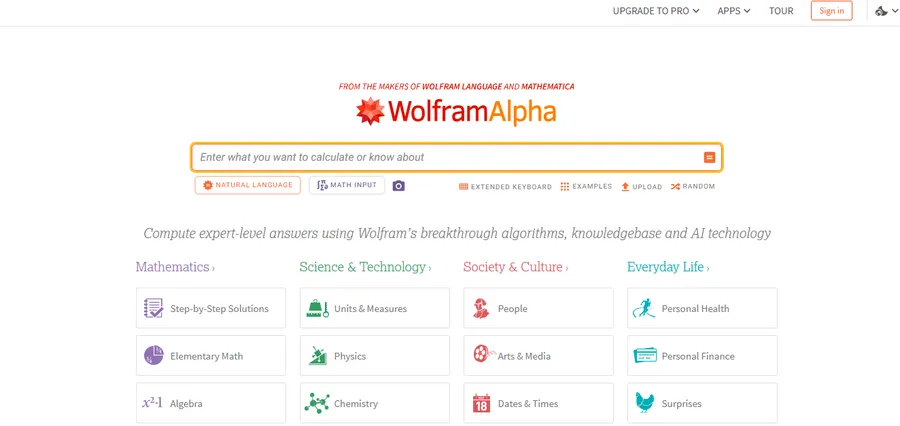
WolframAlpha is not a search engine in the traditional sense; it is a computational knowledge engine. If you ask it “what is the GDP of France divided by its population,” it won’t give you a link to a website—it will do the math for you. It is the ultimate tool for students, engineers, and data analysts.
Comparison of the Top Search Engines
| Search Engine | Primary Strength | Privacy Level | AI Features | Best For… |
| Ecosystem / Local | Low | High (SGE) | General daily use | |
| Bing | Visual / Rewards | Medium | High (Copilot) | Images & Video |
| DuckDuckGo | No Tracking | High | Minimal | Privacy purists |
| Brave Search | Independence | High | Optional | Fighting Big Tech bias |
| Perplexity | Verified Facts | Medium | Very High | Research & Citations |
| WolframAlpha | Computation | High | N/A | Math & Data |
How to Choose the Best Search Engine for Your Needs
With so many options, how do you decide? Most power users actually use a “multi-tool” approach. Here is a quick guide to choosing:
- For Privacy: Use DuckDuckGo or the Brave Search engine.
- For Academic Work: Use the best search engine for research, ResearchGate, or WolframAlpha.
- For Shopping & Local Info: Stick with Google or Bing.
- For Fast Learning: Use ChatGPT Search or Perplexity.
- Best search engines without AI: If you find AI summaries annoying, use Startpage or the “Web” filter on Google to see only traditional blue links.
While we often look at the top 10 best search engines, there are actually top 20 search engines worth exploring if you include niche tools like Million Short (which removes the top most popular sites) or Mojeek (the UK’s independent index).
FAQs About the Top Search Engines
What are the 5 top search engines?
The five most used search engines globally are:
Google (Global leader)
Bing (Microsoft’s AI-powered engine)
Baidu (China’s primary engine)
Yahoo (Powered by Bing, but with its own portal)
Yandex (Leader in Russia and CIS)
What are the best search engines reddit users recommend?
The best search engines reddit communities (like r/privacy and r/search) frequently recommend are Brave Search and DuckDuckGo for those who want to avoid tracking. For AI-driven research, Redditors often point toward Perplexity for its citation accuracy.
Why focus on the top 10 instead of the top 20 search engines?
Focusing on the top 10 is usually more efficient because these engines cover 99% of unique use cases. Moving into the top 20 search engines often leads to “meta-search” engines that simply scrape results from Google or Bing without adding unique features.
Is there a best search engine for privacy that doesn’t use Google?
Yes. The Brave Search engine is the best option for this, as it maintains its own independent index of the web rather than relying on Google’s API.
Conclusion: Start Using the Best Search Engines Today
The era of relying on a single search bar is over. To get the most out of the internet today, you should match your tool to your task.
Use Google for your local commute, Perplexity for your research project, and Brave for your private browsing sessions.
By diversifying how you find information, you break free from algorithmic bias and take control of your digital footprint. Which of these best search engines will you try today?
Whether you’re looking for the top 10 best search engines to streamline your life or a specific best search engine for research, the power is in your hands—and your keyboard.
Read more: AI Website Builder vs Traditional Website Builder: Which Wins?
Contact US | ThimPress:
Website: https://thimpress.com/
Fanpage: https://www.facebook.com/ThimPress
YouTube: https://www.youtube.com/c/ThimPressDesign
Twitter (X): https://x.com/thimpress_com