Organizations need concrete, validated data regarding which content formats and marketing channels bring visitors to rival domains before spending a single dollar on new marketing campaigns.
The immediate challenge is that direct access to first-party data through internal analytics platforms is restricted exclusively to site owners. However, utilizing specific must-have digital marketing tools and proven analytical methodologies bridges this data gap effectively. If businesses want to understand how to check competitor website traffic and use that intelligence to capture market share, they require a highly systematic approach.
This comprehensive guide explores the exact methods required to gather competitive intelligence, track market leaders, conduct competitor web traffic analysis, and translate raw data into actionable strategies for sustainable digital growth.
Eduma – Education WordPress Theme
We provide an amazing WordPress theme with fast and responsive designs. Let’s find out!
Identifying the Competition: Who Are My Competitors?
Before analyzing competitor website stats, you must define your target correctly. Many businesses fail by only monitoring companies that sell identical physical products.
However, answering “who are my competitors” requires a broader search focus. You need to look at the entire digital landscape to see who captures your audience’s attention.
There are two distinct categories of rivals you need to monitor and evaluate:
1. Direct Commercial Competitors
These are traditional businesses offering the exact same products, software, or services to the identical target audience. They fight for the same commercial deals, operate in the same pricing brackets, and compete for the exact same financial market share.
For example, two different software providers selling learning management systems (LMS) for WordPress are direct competitors.
Tracking these domains provides crucial insights into product positioning, pricing strategies, and direct market demand. When learning how to check competitor website metrics, this group forms the baseline of your tracking dashboard.
2. Organic Search Competitors
These are domains ranking for the exact search terms your business targets, even if their underlying business model is completely different.
A software company selling premium WordPress themes might find itself competing against a popular technology blog, a free educational forum, or an affiliate review site for top search engine rankings.
Because these domains occupy valuable digital real estate on the first page of search results, they steal potential customers at the top of the marketing funnel. If a user searches for “best website builders,” an informational blog holding the top spot is your primary search competitor, regardless of what that blog actually sells.
Next, leverage SEO software to look at organic research reports. Input your domain to discover other sites with a high percentage of keyword overlap. Pay close attention to domains sharing thirty to fifty percent of your target keywords, as these represent immediate, high-priority threats that require constant monitoring.
Essential Tools for Competitor Web Traffic Analysis
Executing a proper competitor web traffic analysis requires specialized software. Because first-party server data is private, third-party platforms use vast clickstream data, search volume estimates, global browser extensions, and ranking positions to calculate traffic. Below is a detailed breakdown of the most reliable options available on the market for analyzing competitor website stats.
Free Solutions for Initial Insights
For quick directional checks and fundamental research, free tools offer a solid starting point. They provide enough information to understand basic trends without requiring a financial commitment.
- Similarweb Free Tier: This platform offers a powerful website traffic checker that displays directional visits, geographical breakdowns, and basic channel distribution. It allows a limited number of daily searches, making it perfect for top-level overviews when you need to know how to analyze competitors website traffic quickly.
- Semrush Free Account: Users receive a restricted number of monthly reports. These reports show estimated traffic, domain authority, and basic keyword rankings, providing a glimpse into the platform’s vast capabilities.
- Ubersuggest: Provides limited daily queries for traffic estimates, top pages, and fundamental keyword data, ideal for smaller projects or quick daily checks.
While free tools work well for occasional reviews, they lack the historical depth, export capabilities, and granular data required for serious, enterprise-level market intelligence and long-term competitor web traffic analysis.
Premium Platforms for Deep Competitor Website Stats
To truly master how to check competitor website metrics and extract actionable intelligence, investing in premium software is mandatory. These platforms provide deep historical data, granular keyword insights, and highly reliable competitor website stats.
- Semrush: Offers comprehensive traffic analytics and market explorer features. It compares traffic share, audience overlap, and growth velocity across multiple domains simultaneously. The platform utilizes extensive clickstream data covering hundreds of millions of users. It is widely considered the industry standard for those seeking to find competitor traffic sources comprehensively.
- Ahrefs: Highly regarded globally for organic search intelligence and backlink analysis. It provides highly accurate estimates on search traffic, highlights top-performing pages, and updates its massive database frequently to reflect recent ranking changes. Ahrefs excels at showing exactly how to analyze competitors website traffic through an organic lens.
- SE Ranking: Delivers clear, visual breakdowns of organic and paid traffic alongside geographical distribution. The platform includes smart artificial intelligence algorithms to adjust click-through rates based on specific search result features, offering a highly accurate picture of competitor website stats.
Step-by-Step Guide: How To Analyze Competitors Website Traffic
Running a single, one-time check only provides a temporary snapshot of the market. Building a repeatable, structured process yields insights that directly improve marketing calendars and paid campaigns. Follow these precise, methodical steps to understand how to analyze competitors website traffic effectively and integrate those findings into your daily marketing operations.
Step 1: Establish a Tracking Baseline
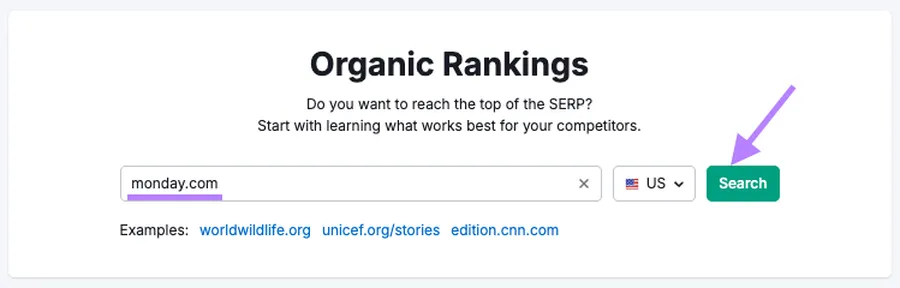
Open the Semrush Organic Research tool and type your competitor’s domain into the search bar. Begin by creating a centralized dashboard or an extensive spreadsheet. Without a solid baseline containing historical competitor website stats, it is impossible to measure whether a rival’s newly launched marketing campaign is actually moving the needle. Record their starting domain authority, total estimated traffic, and top five ranking keywords.
Step 2: Extract and Analyze the Channel Mix
Input each rival domain into your chosen analysis tool. Note the estimated monthly visits and the specific distribution across different channels. The channel mix reveals exactly where a company allocates its financial and human resources, which is the core of effective competitor web traffic analysis.
- Organic Search: Traffic originating from unpaid search engine results. High organic traffic indicates a strong foundation in content creation, excellent technical WordPress site structure, and high domain authority.
- Paid Search: Visitors arriving through pay-per-click advertising networks like Google Ads. This signals an active advertising budget and a focus on immediate, highly transactional conversions.
- Direct Traffic: Users typing the URL directly into their browser or utilizing bookmarks. Consistently high direct traffic reflects strong brand awareness, successful offline marketing, and intense customer loyalty.
- Referral Traffic: Visitors clicking links from external domains. This highlights successful public relations efforts, lucrative affiliate marketing networks, or highly authoritative backlink profiles.
- Social Traffic: Visits originating from platforms like LinkedIn, Facebook, or Instagram.
By closely analyzing this mix, broader strategic patterns emerge. If a rival receives mostly paid traffic, they face significantly higher customer acquisition costs and are highly vulnerable to ad platform pricing changes. If they dominate organic search, they have built a sustainable, long-term traffic moat that requires significant, sustained effort to disrupt. Understanding this split is critical when learning how to analyze competitors website traffic.
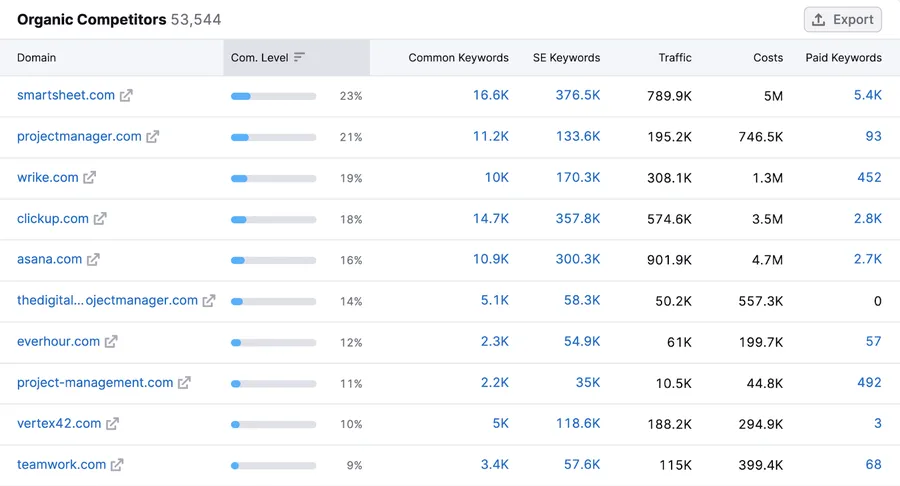
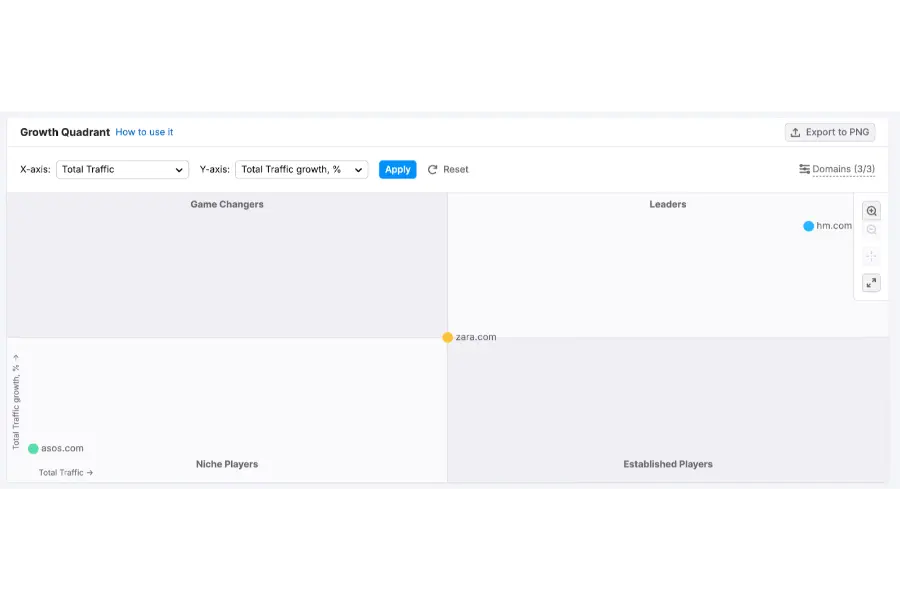
Step 3: Benchmark Market Share and Growth Trajectory
Look beyond absolute numbers. Gathering competitor website stats is fundamentally about understanding context and relativity. Evaluating traffic share percentages positions your business realistically within the wider market ecosystem.
For example, a marketing team might celebrate reaching one hundred thousand monthly visits. However, if the total addressable search volume for the industry is five million, and three major rivals capture five hundred thousand visits each, the perspective drastically changes.
Identifying that massive, unclaimed territory highlights the true growth opportunity available and proves that the current strategy, while successful in a vacuum, has barely scratched the surface of the market potential.
Step 4: Isolate Top Performing Pages
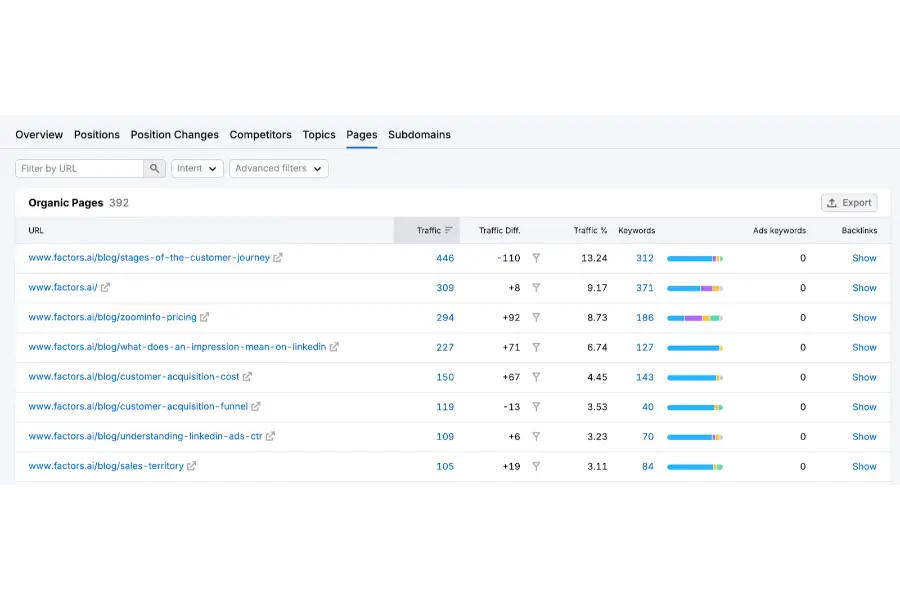
Overall domain traffic is a helpful vanity metric, but page-level data is highly actionable. Navigate to the top pages report in your SEO tools. This shows exactly which specific URLs drive the highest volume of visitors. This step is non-negotiable when attempting to find competitor traffic sources.
Look for repeatable content patterns among market leaders. Do they attract users with comprehensive long-form guides, comparative landing pages, interactive calculators, or highly detailed product feature pages? If the majority of top-ranking pages in your industry are “A vs. B” comparison guides, and your website lacks this exact content format, you have discovered a critical content gap that must be filled immediately.
Step 5: Monitor Changes and Technical Audits
The digital landscape is volatile, and search engine algorithms shift constantly. Competitors continuously update their strategies. Setting up weekly or monthly alerts to monitor changes in competitor traffic is vital. Log total visits, notable ranking shifts, and newly published content. Furthermore, understanding the technical health of competitors by conducting external technical audits can reveal if their traffic growth is due to superior content, or simply a faster, more optimized technical architecture.
Advanced Strategies to Find Competitor Traffic Sources and Keywords
Traffic volume numbers identify the “what.” Keyword data identifies the “how.” Knowing a rival domain receives immense traffic is only theoretically useful until you find competitor traffic sources and the exact, specific search terms driving those users to convert. This requires a deep dive into both organic and paid data sets.
Decoding Organic Keyword Strategies
Organic research reports show every single search term a domain ranks for, including its current position, monthly search volume, keyword difficulty score, and estimated traffic contribution. This is the cornerstone of competitor web traffic analysis.
To filter the overwhelming noise of millions of keywords, isolate terms ranking in positions one through ten with a monthly search volume above a meaningful threshold for your specific industry. Use keyword gap analysis features to compare your domain directly against rivals. This analytical process highlights three distinct categories:
- Shared Keywords: Valuable terms where both domains currently rank, revealing direct battlegrounds where minor on-page optimizations can yield major ranking shifts.
- Missing Keywords: Highly profitable terms where competitors rank on the first page, but your domain does not exist in the index. These represent immediate opportunities for new content creation.
- Weak Keywords: Terms where your site ranks poorly (e.g., page three or lower) compared to others dominating the top three spots. These pages require comprehensive content refreshes and backlink injections.
Understanding these exact keyword metrics reveals the specific content topics that attract potential customers. Furthermore, analyzing how competitors structure their site architecture can provide immense inspiration for developing a strong internal linking framework on your own domain to boost these weak keywords. Knowing how to check competitor website keyword profiles dictates the entire editorial calendar.
Uncovering Paid Advertising Keywords
Paid keywords provide an incredibly strong, undeniable signal of commercial intent. Companies simply do not consistently spend money month after month on keywords that do not generate a positive return on investment. If a competitor has bid on a specific phrase for over twelve months, that phrase converts.
Use tools specializing in paid intelligence to view the exact keywords competitors bid on, their estimated cost-per-click (CPC), their monthly budget estimations, and their historical ad copy. Look specifically for terms where multiple competitors are actively bidding against one another. High competition in paid search perfectly validates the immense commercial value of a keyword.
Analyzing Backlink Profiles as a Traffic Source
While keywords dictate search visibility, backlinks dictate domain authority. A crucial aspect of how to analyze competitors website traffic involves scrutinizing their referral sources. By examining a competitor’s backlink profile, you can discover which external domains are sending them direct referral traffic and boosting their search engine trust signals. If a competitor receives significant traffic from a specific industry directory, news outlet, or affiliate partner, securing a placement on that same referring domain should become an immediate marketing priority.
Translating Competitor Web Traffic Analysis Into Action
Raw data stored in a spreadsheet holds absolutely no value unless it is transformed into a strategic, executable plan. The ultimate goal of a competitor web traffic analysis is to build fundamentally superior marketing campaigns that actively steal market share.
Building a Superior, Data-Backed Content Strategy
Competitor analysis shows exactly what currently works in the market today. Instead of guessing what users want to read or what specific problems they need solved, use the gathered competitor website stats to validate demand.
Select one major competitor and export their top twenty ranking keywords. Compare these directly against your current content library. Identify the high-volume terms relevant to your business where no content currently exists on your site. This becomes the immediate content roadmap for the next quarter.
The objective is never to merely copy rival content, but to analyze their successful pages and create something significantly better, more comprehensive, more visually appealing, and more user-friendly. If their top page is a two-thousand-word guide, your objective is to create a three-thousand-word masterclass with custom graphics and superior formatting.
Adjusting Technical and User Experience Elements
Competitor web traffic analysis extends beyond words on a page. When you find competitor traffic sources that perform exceptionally well, analyze the user experience (UX) of those specific destination pages:
- Do they utilize sticky navigation?
- Do they place highly visible call-to-action buttons above the fold?
- Do their pages load in under two seconds?
Often, a competitor wins not because their content is drastically superior, but because their technical WordPress foundation provides a flawless user experience that prevents visitors from bouncing back to the search results.
Tracking Progress Over Time
After implementing sweeping changes based on competitive research, tracking the results is absolutely mandatory. Using a reliable rank tracking tool helps monitor whether the newly created content is actually successfully stealing market share from the competitors originally analyzed.
Watch for sudden spikes or drops in their traffic as well. If a competitor suddenly gains massive organic visibility, investigate the root cause immediately:
- Did they launch a heavily promoted resource hub?
- Did they drastically improve their mobile website loading speeds?
- Did they acquire high-authority backlinks from major news outlets?
Learning from their successful strategic adjustments—and meticulously avoiding the specific tactics that cause their traffic to drop—is a highly effective, low-risk way to manage long-term digital growth.
Understanding External Tool Limitations
While third-party tools are strictly vital for knowing how to check competitor website traffic, it is equally important to acknowledge their inherent limitations to avoid dangerous data misinterpretation.
External software cannot show exact, real-time internal analytics data. Metrics like exact bounce rates, precise time on page, internal email marketing traffic conversions, dark social shares, and exact transactional conversion rates remain completely hidden behind their private servers. The numbers provided by these tools are highly accurate estimates based on massive, complex data sets, but they remain estimates.
Focus firmly on the macro trends and the relative share of voice rather than stressing over exact, down-to-the-digit visit counts. If three different analytical tools indicate a competitor’s traffic is growing consistently over a six-month period, the trend is absolutely real and must be respected, even if the absolute raw numbers fluctuate slightly between platforms. Treat competitor website stats as a compass, not a GPS.
Integrating Third-Party Data with Internal Analytics
To maximize the value derived from knowing how to analyze competitors website traffic, businesses must fuse external intelligence with internal performance data. Once you find competitor traffic sources and identify high-value keywords, cross-reference these findings with your own Google Search Console and Google Analytics accounts.
If external tools show a rival dominating a keyword that currently drives low traffic to your site, check your internal data to see if that page suffers from a high bounce rate or poor click-through rates from the search results.
Conclusion
Mastering how to check competitor website traffic transitions a digital marketing strategy from being assumption-based to entirely data-driven. By consistently utilizing the right analytical tools, accurately answering the question of who are my competitors, and relentlessly studying the specific keywords that drive visibility, businesses can allocate resources with lethal precision.
The overall strategy is conceptually simple but requires immense, sustained dedication to execute properly: analyze the overall channel mix, find competitor traffic sources, rigorously evaluate content gaps, and execute digital campaigns that outshine the current market leaders.
Frequently Asked Questions
How do I know who my competitors are in search engines?
Search competitors are websites that rank for the exact same target keywords as your business, occupying the top positions on search engine result pages. You can easily identify them by entering your own domain into an SEO tool’s organic research feature and reviewing the domains with the highest percentage of keyword overlap.
What tools are fundamentally required to execute a complete competitor web traffic analysis?
A complete, professional-grade competitor web traffic analysis generally requires a synchronized mix of specialized premium tools. Platforms like Semrush or Ahrefs are considered absolutely essential for gathering deep organic search data, finding highly profitable keyword gaps, and analyzing complex backlink profiles. Similarweb is excellent for understanding the overall channel mix and directional traffic trends across various geographic regions, while SpyFu provides unparalleled deep insights into historical paid search data, advertising budgets, and active pay-per-click campaigns.
Are competitor website stats from third-party tools completely accurate?
Third-party tools provide highly educated, algorithm-driven estimates based on massive clickstream data, global user panels, and complex ranking algorithms, rather than exact internal server logs. While absolute raw numbers may vary slightly from a site’s actual internal analytics dashboard, the relative trends, growth trajectories, and market share percentages are highly reliable for strategic planning.
How can I find competitor traffic sources easily and accurately?
You can find accurate traffic sources by entering a rival domain into a platform like Similarweb or utilizing the Semrush Traffic Analytics module. These specialized tools provide a clear, visual breakdown of exactly where visitors originate, explicitly categorizing the incoming traffic into direct visits, organic search results, paid search advertising campaigns, social media networks, and external referring domains. This data allows you to reverse-engineer their most successful acquisition channels.
What is the very first step in how to analyze competitors website traffic effectively?
The most crucial first step is building a highly structured, comprehensively documented baseline. Compile a comprehensive list of both direct commercial competitors and organic search competitors. Document their current estimated traffic, outline their primary traffic channels, and identify their absolute top-performing pages in a centralized tracking dashboard.
Read more: What Is Rank Tracking? Dominate Your SEO Competitors
Contact US | ThimPress:
Website: https://thimpress.com/
Fanpage: https://www.facebook.com/ThimPress
YouTube: https://www.youtube.com/c/ThimPressDesign
Twitter (X): https://x.com/thimpress_com