Encountering a sudden system lockout that displays the exact notification “There has been a critical error on this website.” requires immediate, methodical action. This warning means a PHP error stopped the script. It prevents the CMS from loading the frontend or the admin dashboard.
Website downtime results in lost traffic, interrupted sales, and poor user experience. Restoring full functionality quickly requires you to understand how the system handles script failures.
It also requires you to isolate the broken component. Then neutralize the faulty code. Finally, return the server environment to a stable, functional state.
Eduma – Education WordPress Theme
We provide an amazing WordPress theme with fast and responsive designs. Let’s find out!
Diagnosing the Problem: The Anatomy of a System Failure
Understanding exactly what causes a system failure is the first step toward implementing a permanent fix. The system does not crash randomly; it halts precisely when it encounters instructions it cannot process.
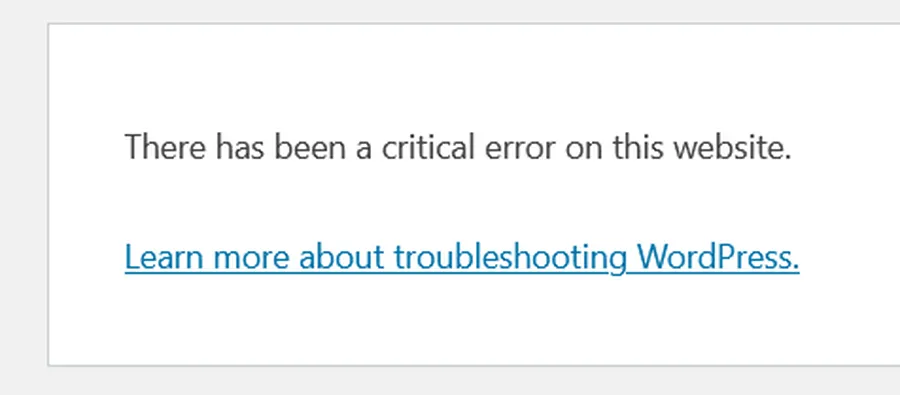
The Evolution of the Error Message
In older versions of the software, before version 5.2, a fatal PHP error caused a blank white screen. This phenomenon, widely known as the White Screen of Death (WSoD), offered zero context, making troubleshooting incredibly difficult. To improve the user experience and streamline the debugging process, developers introduced a built-in fatal error handler.
Now, when the system finds a script failure, it shows this alert: there has been a critical error on this website. Furthermore, the system automatically attempts to send a detailed diagnostic email to the primary administrator address. This evolution shifted the troubleshooting process from blind guessing to targeted resolution.
Core Triggers and Specific Scenarios
Several common culprits trigger the system to lock down. Identifying the specific trigger dictates the troubleshooting path.
1. Incompatible Plugins and Themes
Third-party extensions remain the most frequent cause of system downtime.
Developers often update their software. Sometimes, a new update conflicts with another active extension or an old system file. When two scripts try to call the same PHP function, or update the same database table at once, a fatal conflict occurs. This triggers a critical error.
2. Specific Extension Resource Conflicts
Certain complex extensions require substantial server resources and complex database queries. For instance, membership portals handle dynamic user roles and secure session data.
WordPress Ultimate Member commonly causes a critical error on the login page. This can block user access completely. This usually happens because of caching conflicts, expired user session tokens, or a clash with a security firewall plugin.
Similarly, eCommerce platforms handle highly sensitive and resource-heavy database queries during the checkout phase. Administrators frequently report that a Woocommerce cart page is throwing a critical error during peak traffic hours.
This issue often means there is a conflict with a third-party payment gateway extension. It may also be due to an outdated shipping calculator. Another cause is low server memory during order processing.
3. Exhausted PHP Memory Limits
Every script requires a specific amount of server memory (RAM) to execute successfully. By default, hosting environments allocate a strict limit to prevent a single website from consuming all resources and crashing an entire shared server.
When a heavy extension or a large media upload demands more memory than the server allows, the process is terminated immediately, resulting in the dreaded there has been a critical error on this website message.
4. Outdated PHP Versions
The underlying programming language, PHP, is constantly evolving to become faster and more secure. Running an outdated PHP version (such as version 7.3 or older) while using modern, recently updated extensions will inevitably lead to syntax conflicts.
When searching for solutions to “there has been a critical error on this website.”, administrators often discover that simply upgrading the server’s PHP handler in the hosting control panel resolves the issue instantly.
5. Corrupted Core Files
Occasionally, an automatic core update process might fail midway due to a brief network interruption or a server timeout. This leaves the core system files in a fragmented, incomplete state. A missing or partially overwritten core file will trigger a fatal halt the very next time a visitor requests a page or an administrator attempts to log in.
Step-by-Step Troubleshooting Guide
When facing a complete system lockout, follow these structured, technical steps to identify and eliminate the underlying issue safely without compromising the database.
Step 1: Utilize the Automated Debug Email
When the message “there has been a critical error on this website.” appears, the system attempts to send a diagnostic email.
Access the primary administration email inbox and look for a message titled “Your Site is Experiencing a Technical Issue.”
This email provides crucial technical data:
- The exact name of the problematic extension or visual theme.
- The specific file path and line of code that triggered the failure.
- A unique link to enter Recovery Mode.
Clicking the Recovery Mode link allows the administrator to bypass the broken frontend and access the dashboard safely. Once inside the dashboard, the system automatically pauses the specific extension causing the problem. The administrator can then permanently deactivate the faulty component, delete it, search for an alternative, or contact the original developer for a patch.
Step 2: Enable the Manual Debug Log
If the diagnostic email fails to arrive—which frequently happens due to server configuration issues or strict spam filters—the administrator must manually activate the debugging tool. This requires accessing the server directly via File Transfer Protocol (FTP) or a Secure Shell (SSH) connection.
- Connect to the hosting server using a secure FTP client.
- Navigate to the root directory (often named public_html or www).
- Locate the primary configuration file named wp-config.php.
- Download a backup copy of this file to the local computer before making any modifications.
- Open the file using a standard code text editor.
- Scroll down to locate the line that reads: define(‘WP_DEBUG’, false);
- Replace that single line with the following strict debugging configuration commands:
define( ‘WP_DEBUG’, true );
define( ‘WP_DEBUG_DISPLAY’, false );
define( ‘WP_DEBUG_LOG’, true );
- Save the file and upload it back to the server, overwriting the original file.
- Reload the broken website in the internet browser to trigger the script failure again.
- Navigate to the wp-content folder via FTP and locate the newly generated debug.log file.
Opening this text log file reveals the exact path and line of code responsible for the system failure, allowing for precise targeting of the culprit.
Step 3: Systematically Deactivate Plugins
If the debug log points toward a specific extension, or if the log is completely unavailable, a manual deactivation process is strictly required. Since dashboard access is blocked by the critical error, this procedure must be done directly through the server files.
- Access the server via FTP and open the wp-content directory.
- Locate the folder specifically named plugins.
- Right-click the folder and rename it to plugins_deactivated.
By renaming the directory folder, the system can no longer locate the active extensions, forcing it to load the core files without them. Reload the website. If the site loads successfully, an extension is definitively the cause of the failure.
To isolate the specific faulty extension:
- Rename the main folder back to plugins.
- Open the folder to view the individual extension directories.
- Rename the first individual directory (for example, changing elementor to elementor_off).
- Reload the website in the browser.
- Repeat this process one by one until renaming a specific folder causes the site to function correctly again. The last renamed folder is the direct source of the conflict causing the critical error.
Step 4: Revert to a Default Theme
If disabling all the extensions does not resolve the “there has been a critical error on this website.” issue, the visual theme itself may contain broken code or deprecated functions.
- Navigate to the wp-content/themes directory via FTP.
- Identify the folder of the currently active visual theme.
- Download a secure backup of this folder, then delete it from the server entirely.
- Ensure that a default fallback theme (such as Twenty Twenty-Four or Twenty Twenty-Three) is present in the themes directory.
The system architecture will automatically detect the missing active theme and revert to the default option. If the site loads successfully after this action, the previous theme requires an update or professional developer repair.
Step 5: Increase the Server Memory Limit
When a software application attempts to process massive amounts of data, it may exhaust the allocated RAM. Increasing this limit often resolves the issue immediately, especially for media-heavy or highly complex eCommerce installations.
- Open the wp-config.php file via FTP once again.
- Scroll to the section just above the line that says /That’s all, stop editing! Happy publishing./.
- Insert the following command parameter to force the system to request more memory from the server:
define(‘WP_MEMORY_LIMIT’, ‘256M’);
- Save the file and reload the website. If the strict memory limit was the bottleneck, normal functionality will resume immediately.
Step 6: Reinstall the Core System Files
If all third-party extensions and visual themes are ruled out, and the memory limit is sufficient, the core architecture itself may be corrupted. Reinstalling the core files manually will overwrite any corrupted data without affecting the database, media uploads, or active extensions.
- Download the latest official software package from the main WordPress repository.
- Extract the downloaded zip archive on the local computer.
- Delete the wp-content folder from the extracted files to ensure the live server’s content is not accidentally overwritten.
- Connect to the server via FTP.
- Upload the remaining extracted files and folders, deliberately choosing the “Overwrite” option when prompted by the FTP client.
This process completely refreshes the system architecture. Once the file upload is complete, reload the browser to confirm the restoration of the website.
Step 7: Verify and Upgrade the Server PHP Version
A persistent critical error may originate directly from the hosting environment itself. Modern content management systems require at least PHP version 7.4 to function securely, with PHP version 8.0 or higher heavily recommended for optimal performance and security.
Administrators should log into their hosting control panel (such as cPanel, Plesk, or a custom hosting dashboard) and locate the “Select PHP Version” or “MultiPHP Manager” tool. Ensure the environment is running a supported version. If the interface does not offer a direct upgrade option, contacting hosting support is necessary to resolve the “there has been a critical error on this website. WordPress” issue.
Step 8: Restore a Functional Database Backup
When manual troubleshooting proves ineffective, or when time is of the utmost essence due to lost revenue, rolling back the database and server files to a previous working state is the most efficient solution.
Reliable hosting providers take daily automatic backups. Access the hosting dashboard, locate the backup restoration tool, and select a timestamp prior to the occurrence of the failure. Be aware that any changes made to the database (such as new user registrations, recent sales, or recent article publications) between the backup timestamp and the present moment will be lost during the restoration process.
Conclusion
Encountering the message “there has been a critical error on this website.” is a stressful but highly solvable technical safeguard designed to prevent database corruption. Whether the root cause is a simple PHP memory limit exhaustion, a complex scenario where the woocommerce cart page is throwing a critical error, or a software conflict involving a WordPress ultimate member causing critical error on login page, the resolution logic remains identical.
Maintaining daily backups, utilizing secure staging environments, and enforcing strict update schedules will guarantee long-term server stability and successfully prevent future operational disruptions.
Frequently Asked Questions
What is the Recovery Mode feature and how long does the access link remain active?
Recovery Mode is an integrated diagnostic state that allows administrators to bypass fatal front-end errors by temporarily deactivating the specific code causing the issue. The unique access link provided in the automated diagnostic email remains active for precisely 24 hours. Once the link expires, a new error must be triggered on the frontend to generate a fresh security token and a new email.
Can utilizing a staging environment genuinely prevent website downtime?
Yes. A staging environment operates as a secure, private sandbox. By applying all software updates and configuration changes to the staging server first, administrators can safely observe how the code reacts. If an update causes a complete failure or triggers the critical error message, the live production site remains entirely unaffected, ensuring continuous uptime for all visitors and customers.
What specific tools are considered standard for safeguarding data against critical failures?
Professional administrators rely on redundant backup solutions to prevent data loss during a fatal crash. Standard tools include automated remote backup systems that schedule daily snapshots of the database and file directories. These archives should be immediately transferred to off-site cloud storage facilities to guarantee data survival even if the primary hosting server fails completely.
How does upgrading the server PHP version impact system stability?
PHP is the primary processing language running the WordPress server architecture. Older versions of PHP lack the processing efficiency and strict security patches required by modern applications. Upgrading to the latest stable PHP release ensures that complex queries are executed faster and that outdated, deprecated code functions do not trigger fatal syntax conflicts within the application.
Is there a method to definitively prove an extension is poorly coded before it causes a crash?
While absolute certainty requires manual developer code review, administrators can look for clear indicators of poor quality. Extensions that have not received an update from the developer in over six months, possess a high ratio of unresolved support tickets, or generate constant minor warnings in the server debug log are high-risk. Utilizing tools to monitor database query load can also highlight poorly optimized extensions before they exhaust server memory and trigger the there has been a critical error on this website notification.
Read more: How to fix error HTTP 451 (Unavailable for Legal Reasons)
Contact US | ThimPress:
Website: https://thimpress.com/
Fanpage: https://www.facebook.com/ThimPress
YouTube: https://www.youtube.com/c/ThimPressDesign
Twitter (X): https://x.com/thimpress_com