SEO is changing quickly, but its foundations have not disappeared. In 2026, successful optimization still depends on making pages easy to discover, understand, trust, and use. The difference is that content now competes across traditional organic listings, featured results, AI Overviews, AI Mode, image results, and video results. Publishing more articles, adding keywords, or installing another WordPress plugin will not improve rankings by itself. You need a connected system covering search intent, content quality, on-page optimization, technical performance, authority, and measurement.
Current results for terms such as top SEO tips and on-page SEO strategy favor practical guides that combine established website SEO best practices with advice for AI-driven search. Google’s guidance points in the same direction: create helpful content, use language searchers understand, make links crawlable, and keep important page elements clear.
So, how do you improve organic SEO without chasing every trend? Start with these ten SEO strategies and techniques.
Eduma – Education WordPress Theme
We provide an amazing WordPress theme with fast and responsive designs. Let’s find out!
1. Target Search Intent Before Search Volume
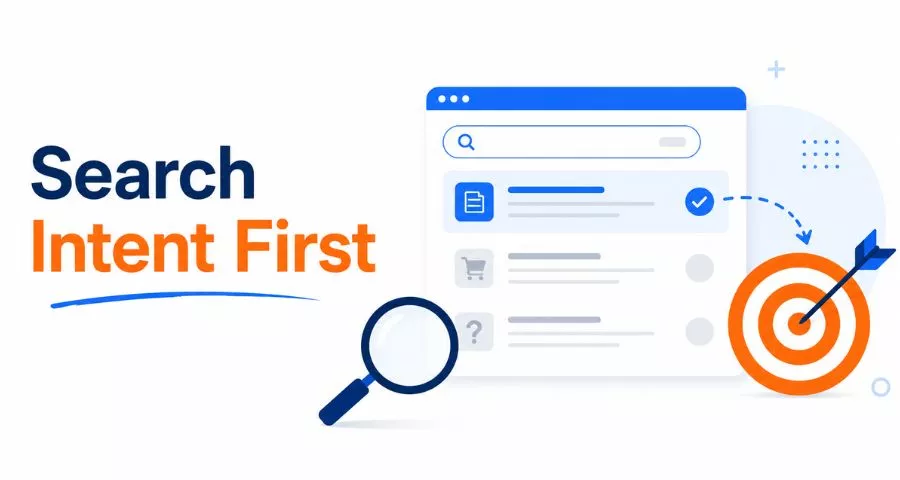
Effective SEO begins with understanding why someone searches, not simply how often a keyword is searched.
A high-volume keyword may generate many impressions but few useful visits. A smaller, specific query may attract users closer to subscribing, requesting a quote, or buying. Search intent should therefore guide your keyword, page format, and call to action.
Most queries are informational, navigational, commercial, or transactional. Before creating a page, review Google’s first page for the target keyword and compare it with the principles in Ahrefs’ search intent guide. Are the results guides, product pages, category pages, videos, tools, or comparisons? The dominant format reveals what currently satisfies the query.
Then review related searches, People Also Ask questions, competitor headings, forums, customer-support tickets, and Search Console queries. These sources reveal the problems users expect your page to solve.
Do not force one page to rank for every variation. Assign each meaningful intent to the page best suited to answer it. This reduces keyword cannibalization and gives every URL a clearer purpose.
2. Build Topic Clusters Instead of Isolated Posts
Publishing unrelated posts makes it difficult to establish authority around a subject. A stronger approach is to organize content into topic clusters.
A cluster contains a broad pillar page and supporting pages covering narrower questions. Supporting articles link to the pillar, while the pillar directs readers to detailed resources.
An ecommerce SEO cluster, for example, might include product-page optimization, category-page SEO, faceted navigation, schema markup, site speed, internal linking, and keyword research.
This structure creates logical user paths, helps search engines understand page relationships, distributes internal authority, and gives your site deeper topical coverage. It also makes editorial planning easier because each article has a defined role.
Choose topics connected to your products, services, and real expertise. Avoid building clusters around subjects that may attract traffic but have little business relevance.
Create a keyword map recording the target keyword, intent, URL, page type, funnel stage, supporting terms, and conversion goal. This prevents duplicate targeting and keeps writers and SEO specialists aligned.
Ten connected, high-quality pages can be more valuable than fifty shallow posts repeating information already available elsewhere.
3. Create Original, Experience-Led Content
Generic content is easy to produce and difficult to differentiate. Rewriting the same advice found on ranking pages is not a durable strategy.
Google’s current guidance emphasizes unique, useful, non-commodity content with a distinct point of view and first-hand experience. It advises site owners not to recycle information that already exists or produce large numbers of pages mainly to capture search variations.
To make a page harder to copy, include original data, real tests, screenshots, named expert commentary, specific examples, templates, calculations, or lessons from completed projects.
Experience-led content does not require a large research budget. A business can document customer questions, compare approaches used on recent work, publish before-and-after results, or explain mistakes its team corrected.
Add visible trust signals: accurate author information, editorial dates, citations where appropriate, transparent policies, and expert review for sensitive subjects. Credentials should support the content, not decorate it.
AI tools can help with outlining, organizing research, editing, and repurposing. The final article still needs human judgment, factual review, and original value. The useful question is not whether AI was involved, but whether the finished page is substantially more helpful than existing results.
4. Strengthen Your On-Page SEO Strategy
A reliable on-page SEO strategy helps search engines understand a page and makes the result easier for users to choose and navigate.
Write an accurate title tag that includes the primary topic naturally and gives users a reason to click. Avoid vague wording, repetitive boilerplate, and keyword stuffing. The visible H1 and page content should reinforce the same subject.
Use the meta description to summarize the page’s benefit. It is not a direct ranking factor, but it can affect whether users select your result.
Organize the page with one clear H1 and descriptive H2 and H3 headings. Include the primary keyword and related terms where they fit naturally, without repeating the same phrase in every section.
Keep URLs short and descriptive. /blog/top-seo-tips/ is clearer than a long address containing dates, filler words, and parameters.
Place the main topic in prominent areas such as the title, H1, introduction, relevant headings, image context, and internal anchor text. Google recommends using the words people search for in titles, main headings, alt text, and link text.
Finally, improve readability with short paragraphs, definitions, examples, tables, and scannable steps. On-page SEO is not merely keyword placement; it is making the page’s purpose unmistakable.
5. Write for Featured Results and AI Search
AI-driven search changes how information appears, but it does not require a separate SEO system. Google states that no special markup or additional optimization is required to appear in AI Overviews or AI Mode. Pages still need to be indexed, accessible, and useful.
Make important sections easy to retrieve and understand. Begin with a direct answer, then add explanation, evidence, examples, and exceptions. This answer-first structure serves users who need a quick response while preserving depth.
Use descriptive, question-based headings when appropriate, such as:
- How do you improve organic SEO?
- What is the best on-page SEO strategy?
- How often should old content be updated?
Cover the related subtopics a user will likely ask next. Google describes AI features as using related searches, sometimes called query fan-out, to gather information across several aspects of a question. Comprehensive coverage can therefore create visibility for multiple relevant searches without separate pages for every wording variation.
Use structured data only when it accurately represents visible content and matches a supported result type. It can improve eligibility for rich results but does not guarantee that Google will display them.
Add original images, diagrams, screenshots, or video when they improve understanding. Useful media creates discovery opportunities beyond the standard text result.
6. Improve Internal Linking and Site Architecture
Internal links help users discover related information and help search engines find, interpret, and prioritize pages.
Every important page should be reachable through crawlable links, not only through a search box, script, or XML sitemap. Pages with no internal links pointing to them are orphaned and may receive less attention.
Build links contextually. When an article mentions a topic covered elsewhere, link to that resource with descriptive anchor text. “Read our technical SEO checklist” is more informative than “click here.”
Use hub pages to organize large content libraries. Categories, service hubs, resource centers, and comparison indexes can reduce click depth and clarify the relationship between broad and specific pages.
Whenever you publish or refresh content, add links from established pages to the new resource and link the new page back to relevant high-value pages. Breadcrumbs can reinforce hierarchy on sites with several levels.
Avoid excessive sitewide links or repetitive exact-match anchors. Prioritize relevance and navigation.
A simple audit can ask:
- Which important pages have too few internal links?
- Which pages receive emphasis but no longer deserve it?
- Which groups of related pages remain disconnected?
Correcting these gaps can improve performance without publishing new content.
7. Protect Crawlability, Indexation, and Technical Health
Content cannot rank if search engines cannot access, render, understand, or index it. Technical SEO remains a core part of website SEO best practices.
Start in Google Search Console. Review indexing, sitemap status, manual actions, Core Web Vitals, and important page groups. Inspect individual URLs when a page is missing or Google selects an unexpected canonical.
Check robots.txt and noindex directives. Use canonical tags consistently when filters, tracking parameters, print pages, or variations create similar URLs. Maintain an XML sitemap containing canonical, indexable pages, but remember that a sitemap does not replace internal links.
Redirect moved or removed URLs to the closest relevant replacement. Fix redirect chains and update internal links to the final destination.
WordPress problems often come from plugin conflicts, duplicate archives, unnecessary tag pages, weak pagination, oversized databases, and themes that load key content through heavy scripts. Keep WordPress core, themes, and plugins updated, remove unused extensions, and test major changes in a staging environment.
Large sites should control crawl waste from parameter URLs, internal search pages, calendars, and faceted navigation.
Do not chase a perfect audit score. Prioritize issues that block indexing, confuse canonical signals, damage templates at scale, or affect revenue-generating pages.
8. Improve Core Web Vitals and Mobile Usability
Page experience supports both SEO and conversion. A slow, unstable, or unresponsive page can lose users even when its content is strong.
Core Web Vitals measure loading, responsiveness, and visual stability. Google recommends the following thresholds:
- Largest Contentful Paint within 2.5 seconds.
- Interaction to Next Paint below 200 milliseconds.
- Cumulative Layout Shift below 0.1.
Google also notes that good Core Web Vitals scores do not guarantee top rankings and that chasing a perfect score may not be the best use of resources.
Common WordPress improvements include compressing and sizing images correctly, using modern formats, limiting heavy page-builder elements, delaying nonessential scripts, removing unused code, improving server response time, and enabling effective caching.
Reserve dimensions for images, ads, and embeds so layouts do not jump. Avoid autoplay media and intrusive pop-ups that obstruct the main content.
Test templates on real mobile devices. Check tap targets, fonts, navigation, forms, filters, checkout steps, and sticky elements. A responsive theme can still provide a poor mobile experience.
Use PageSpeed Insights and Search Console for diagnosis, then verify improvements with field data when available. The objective is not merely passing a report; it is helping users reach information and complete actions with less friction.
9. Earn Relevant Links, Mentions, and Reputation
Backlinks remain useful for discovery and authority, but quality, relevance, and context matter more than volume.
Create resources worth referencing: original research, free tools, useful templates, industry statistics, expert surveys, detailed case studies, and strong visual assets. These are more likely to earn citations than generic posts.
Digital PR can extend this work. Pitch journalists with a specific finding, timely dataset, expert response, or useful local angle. The goal is to become a credible source, not to place a keyword-rich link in any available article.
Legitimate partnerships may also create visibility. Suppliers, associations, event organizers, integration partners, podcasts, universities, and community groups can offer relevant opportunities when a real relationship exists.
Avoid bulk link packages, thin guest posts, private networks, and artificial exchanges. They create risk without durable brand value.
Monitor unlinked brand mentions and request attribution when publishers use your company name, data, or visual assets. Keep company details consistent across authoritative profiles.
Reputation extends beyond links. Reviews, community participation, expert contributions, branded searches, and third-party references influence how people evaluate your business. Build a brand users recognize and trust instead of treating off-page SEO as a numbers exercise.
10. Refresh Content and Measure Business Results
SEO work should not stop when a page is published. Search intent, competitors, product details, links, and SERP features change. Updating existing content often produces faster gains than publishing another article.
Create a refresh schedule based on importance and volatility. Pricing comparisons may need frequent review, while evergreen definitions change less often.
A real update involves more than changing the year. Recheck the SERP, correct outdated claims, replace broken links, improve weak sections, add missing questions, update screenshots, strengthen internal links, and remove material that no longer helps.
Consolidate pages when several URLs target the same intent. Combine their strongest content into one resource and redirect weaker versions. This reduces cannibalization and concentrates relevance and links.
Measure impressions, clicks, click-through rate, organic landing-page sessions, conversions, assisted conversions, leads, and revenue. Segment by page type, intent, country, device, and branded versus non-branded searches.
Do not judge SEO only by rankings. Search layouts may reduce clicks while a page still supports discovery and conversions. Monitor conventional organic performance, generative AI visibility where reporting is available, and business outcomes. Google’s current guidance recommends using Search Console’s generative AI reporting rather than relying solely on third-party visibility claims.
Give every page a measurable purpose. The best SEO strategy improves qualified demand, leads, or sales—not merely traffic charts.
A Practical SEO Checklist
Use this checklist for every important page:
- Confirm one primary search intent.
- Assign a unique target in your keyword map.
- Add original experience, evidence, or examples.
- Optimize the title, H1, headings, URL, and metadata.
- Answer the main question clearly near the top.
- Cover useful follow-up questions.
- Add contextual internal links.
- Confirm crawlability, indexability, and canonicalization.
- Improve mobile usability and Core Web Vitals.
- Use accurate structured data where relevant.
- Add useful images or video.
- Promote the page to appropriate audiences.
- Track search performance and conversions.
- Refresh, consolidate, or remove it when necessary.
Top SEO Tips: FAQs
What is the most important SEO tips?
Create a page that fully satisfies a specific search intent while adding original value. Technical SEO, keywords, links, and schema support visibility, but they cannot compensate for generic, inaccurate, or poorly matched content.
How can I improve organic SEO on WordPress?
Start with a technical and content audit. Fix indexing problems, improve speed, remove unnecessary plugins, optimize titles and headings, strengthen internal links, and update pages already receiving impressions. Then build topic clusters around commercially relevant subjects.
Does AI-generated content rank in Google?
AI-assisted content is not automatically disqualified. The final page must comply with search policies and provide accurate, useful, people-first value. Mass-producing unoriginal pages mainly to manipulate rankings can create quality and spam risks.
How long do SEO changes take to work?
Results vary by website, competition, crawl frequency, and the size of the change. Some updates appear quickly, while broader improvements can take weeks or months. Google advises allowing at least several weeks to evaluate many SEO changes.
Final Thoughts
The top SEO tips form one connected process: understand intent, build topical depth, publish original content, optimize pages clearly, maintain technical accessibility, improve user experience, earn authority, and measure results. AI search makes these fundamentals more important, not less. Search systems need clear, credible, accessible information, while users need pages that provide more value than a generated summary.
When deciding how to improve organic SEO, prioritize work that improves both discovery and decision-making. Avoid shortcuts designed only for an algorithm. A useful page with a clear purpose, strong evidence, and a good experience remains the most durable foundation for organic growth.
Read More: Select How to Promote Your Website: A Complete Guide
Contact US | ThimPress:
Website: https://thimpress.com/
Fanpage: https://www.facebook.com/ThimPress
YouTube: https://www.youtube.com/c/ThimPressDesign
Twitter (X): https://x.com/thimpress_com