If your current training method involves a shared folder full of outdated PDF files and endless email threads chasing staff to complete tasks, finding the best LMS for employee training is likely your top priority to restore order and efficiency.
Employee development should not be an administrative burden; it should be a strategic advantage. However, with hundreds of software options on the market, the selection process can feel overwhelming. The wrong choice leads to wasted budget and low engagement, while the right choice can automate your workflows and empower your workforce.
Whether you require a robust employee training LMS for upskilling a global team or a flexible LMS for employee onboarding and training for a growing business, the platform you select dictates your success.
Eduma – Education WordPress Theme
We provide an amazing WordPress theme with fast and responsive designs. Let’s find out!
Understanding the Role of an LMS in Corporate Settings
A Learning Management System (LMS) is the technology used to manage, deliver, and track educational programs within an organization. It centralizes course content and automates the delivery process across different teams and locations.
For large enterprises and growing businesses, an employee training LMS is essential for onboarding, professional development, and internal upskilling. A strong system ensures consistent training delivery, no matter where an employee is located.
Key Features to Evaluate in a Learning Platform
The best eLearning platforms do more than just store content. They support business goals like skills development and compliance. When evaluating an LMS for employee onboarding and training, certain features are essential.
Role-Based Enrollment
Advanced systems allow administrators to assign training automatically based on job function, department, or location. This feature reduces manual work and ensures employees receive the correct content immediately.
Adaptive Learning Paths
A flexible system can structure programs based on skill gaps or individual progress. This personalization ensures that time is not wasted on material the employee already knows.
Multilingual Capabilities
For global organizations, the ability to support diverse teams with content in local languages is vital. This ensures that language barriers do not stop professional development.
Comprehensive Reporting
Integrated dashboards track training completion and performance at both the team and organizational levels. Clear data helps leaders make informed decisions about future training.
Version Control
Content must remain current. A good system ensures teams always access the latest materials while keeping a history of changes for auditing purposes.
Policy Tracking
Organizations often need confirmation that employees have read standard operating procedures (SOPs). Automated tracking is a key feature for compliance.
Multi-Audience Support
Many enterprises need to deliver training to employees, contractors, and partners. A versatile platform can manage these different groups from one interface.
System Integrations
Connecting with HR and analytics tools is essential to sync user data and performance metrics, creating a unified system.
SCORM and xAPI Compatibility
Support for standard formats like SCORM ensures the system can use third-party training materials and track detailed learner activity.
Scalable Administration
The platform must allow for efficient management of users and settings across different locations without becoming difficult to use.
AI-Driven Automation
Modern platforms use AI to send reminders or assign content based on learner behavior, reducing administrative tasks.
Best Employee Training Learning Management Systems: Comparison Table
Use this table to compare leading LMS platforms for employee training. Each row highlights the main use case, integration options, and support for standard content formats.
| LMS for employee training | Ideal use case | Key integrations | SCORM Support |
| LearnPress | Businesses seeking a flexible, self-hosted WordPress solution | WooCommerce, Zoom, Google Meet | SCORM 1.2, xAPI (via Add-ons) |
| 360Learning | Collaborative training created with internal expertise | Google Workspace, Slack, Salesforce | SCORM 1.2, SCORM 2004 |
| LearnUpon | Multi-audience training for employees, customers, partners | Salesforce, BambooHR, Zoom, Okta | SCORM 1.2, SCORM 2004 |
| Docebo | Organizations delivering training to internal/external audiences | Workday, Salesforce, Zoom | SCORM 1.2, xAPI |
| Knowledge Anywhere | SMBs building tailored training programs | SCORM Cloud, Zoom, Salesforce | SCORM 1.2, SCORM 2004 |
| Litmos | Fast rollout with prebuilt training content | ADP, BambooHR, Salesforce | SCORM 1.2, xAPI |
| TalentLMS | Budget-friendly internal training for small teams | Zapier, BambooHR, Salesforce | SCORM 1.2, xAPI |
| Absorb LMS | Mid-sized companies delivering ongoing internal training | ADP, Salesforce, Zoom | SCORM 1.2, xAPI |
| Moodle | Organizations needing full open-source control | Microsoft 365, BigBlueButton | SCORM 1.2 |
| Blackboard | Certification-based learning models | Microsoft Teams, SIS, LTI | SCORM 1.2, SCORM 2004 |
| Cornerstone | Compliance + performance integration at scale | SAP SuccessFactors, Oracle | SCORM 1.2, AI |
| Canvas LMS | Structured content with minimal admin complexity | Microsoft 365, Zoom, SIS | SCORM 1.2, SCORM 2004 |
Top 12 Platforms for Employee Development
The following list reviews 12 platforms selected based on their delivery, tracking, and administrative features.
1. LearnPress
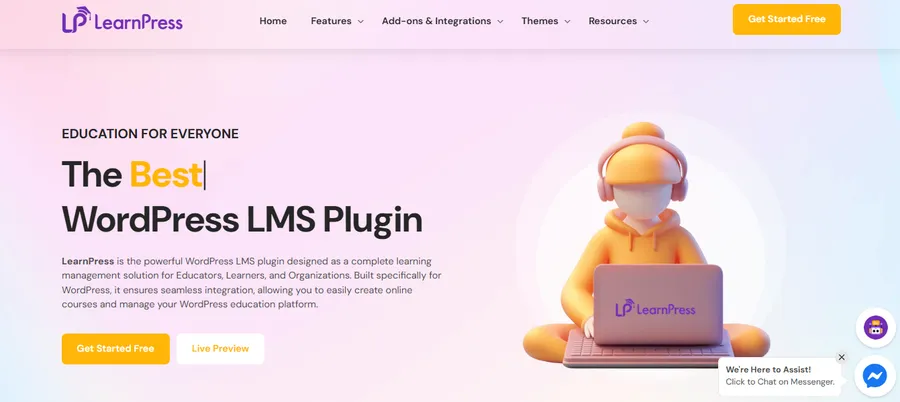
LearnPress is a complete WordPress LMS plugin designed for organizations that require full control over their training environment. It enables businesses to create online courses, manage employees, and track progress without relying on a third-party hosted platform like many SaaS competitors.
This solution is ideal for companies that want to build a branded training hub directly on their existing website using the power of WordPress. It supports essential tools for certificates and live meetings, making it a flexible and scalable choice for various training requirements. For those looking for a ready-made design, there are many best education WordPress themes specifically built to work seamlessly with LearnPress.
2. 360Learning
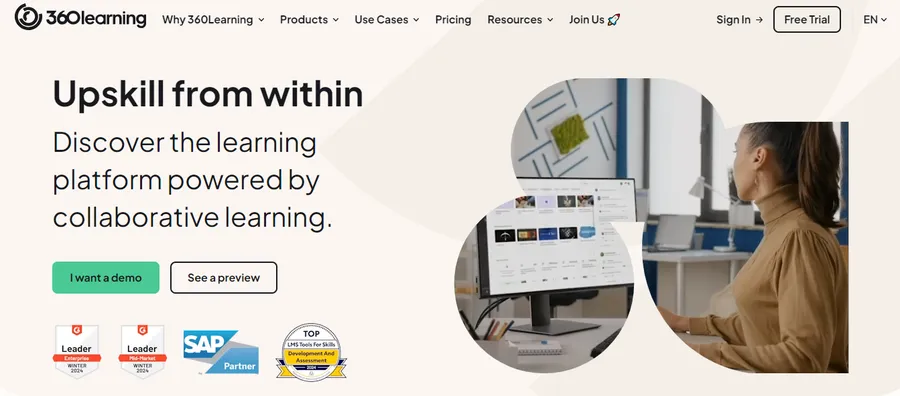
360Learning is designed for companies that prioritize rapid internal content creation. It focuses on collaborative learning, where internal experts contribute directly to the course creation process.
This platform is ideal for organizations focused on knowledge sharing. It functions as a lightweight employee training LMS that provides enough structure to track progress without complicating the delivery process. However, it may be less suitable for environments requiring strict compliance workflows.
3. LearnUpon
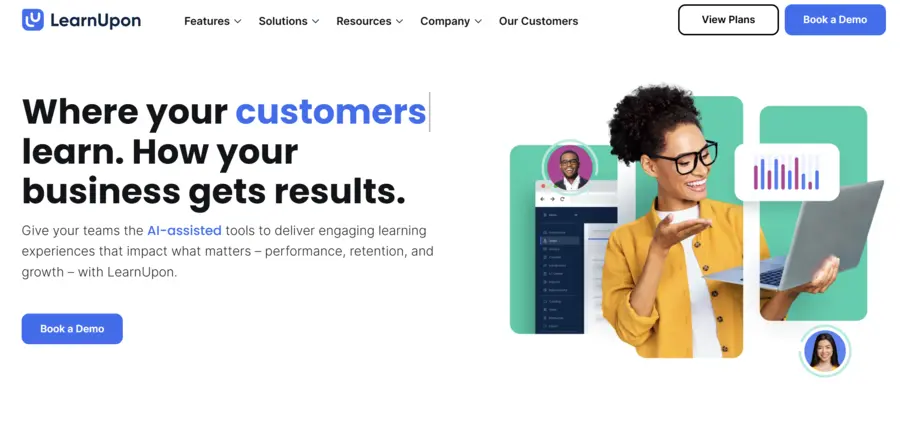
LearnUpon offers a simple solution for organizations needing to train employees, partners, and customers within a single system. It focuses on a clean user experience and scalable administrative workflows.
This platform is effective as an LMS for employee onboarding and training because of its multi-portal setup. Administrators can create distinct branded learning environments for different audiences while managing them from one location. It connects easily with webinar tools, making it a good choice for extended enterprise training.
4. Docebo
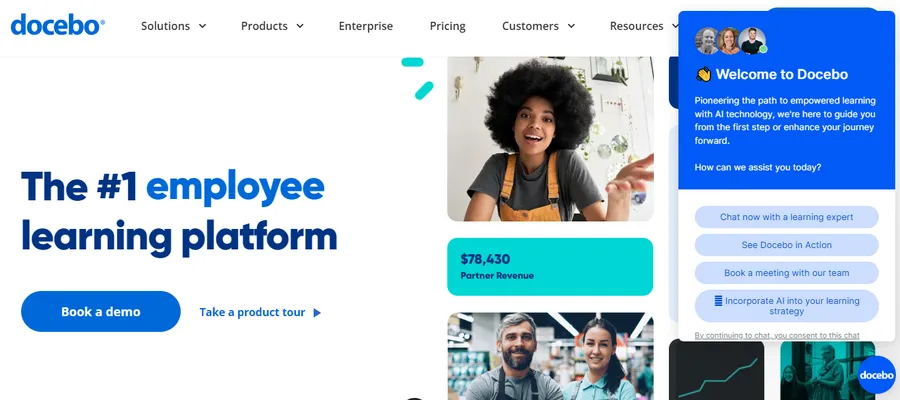
Docebo is built for organizations delivering training at scale to both internal teams and external audiences. It is known for its AI-driven content recommendations and modular design.
The platform allows for highly personalized training delivery. Organizations can use AI to show relevant content automatically, reducing search time for learners. While it offers great customization, this can sometimes add complexity during the setup phase.
5. Knowledge Anywhere
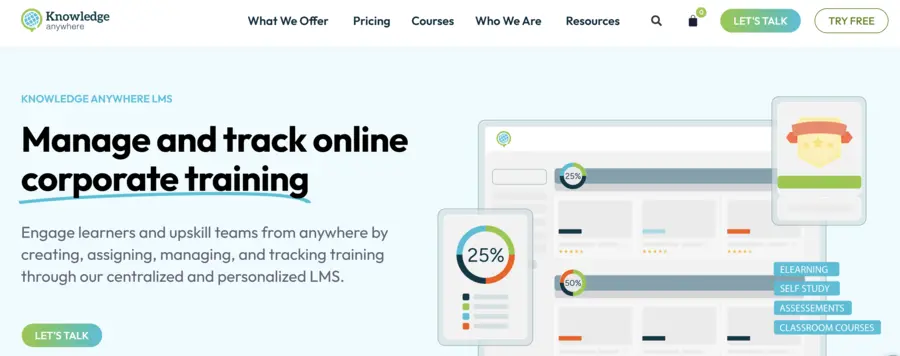
Knowledge Anywhere targets small to mid-sized businesses (SMBs) requiring a functional, simple platform. It is an excellent choice for companies with limited Learning and Development (L&D) resources that still need control over content.
The system supports basic tracking and SCORM-based training. It offers a clean learner portal and optional custom course development services. This makes it a practical option for focused training programs that do not require complex administrative structures.
6. Litmos
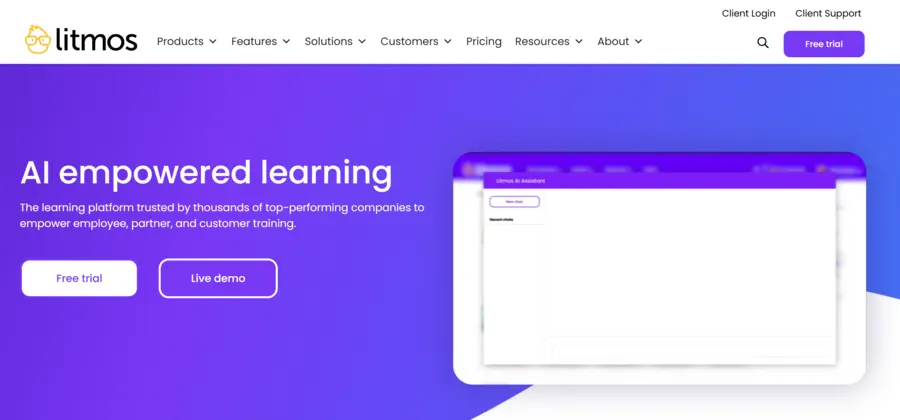
Litmos is designed for rapid deployment. It offers a large library of ready-made courses alongside its learning management system, making it a strong fit for companies needing to roll out compliance or soft skills training quickly.
As an LMS for employee onboarding and training, Litmos excels by providing immediate access to content. Its interface is user-friendly, and it includes automated assignment features. However, it may offer less flexibility regarding complex logic compared to larger enterprise tools.
7. TalentLMS
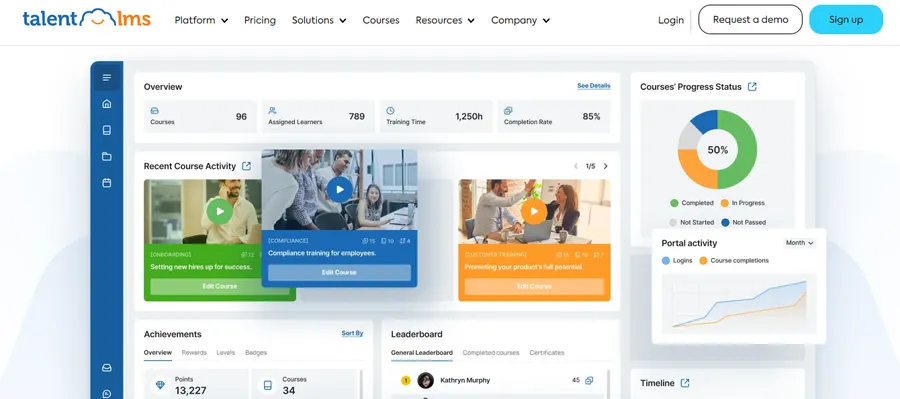
TalentLMS allows small to mid-sized teams to launch internal training programs very quickly. It prioritizes ease of use and affordability, offering a strong feature set for its price point.
The platform includes a drag-and-drop course builder and supports mobile learning. While it handles basic automation and SCORM content well, it is best suited for organizations with straightforward training needs rather than complex, multi-region enterprises.
8. Absorb LMS
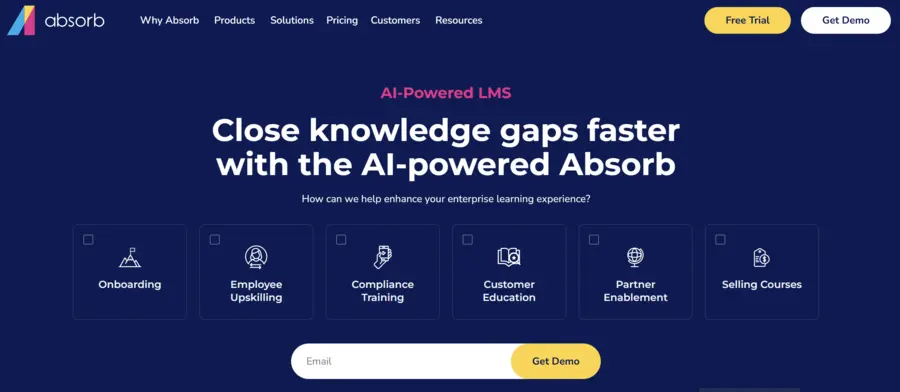
Absorb LMS serves mid-sized organizations that require core training functionality without a long implementation process. It emphasizes a smart, intuitive design for both administrators and learners.
Key features include smart scheduling and custom learner dashboards. It is a solid choice for teams needing an employee training LMS that scales well without requiring extensive customization. However, advanced features may require additional add-ons.
9. Moodle
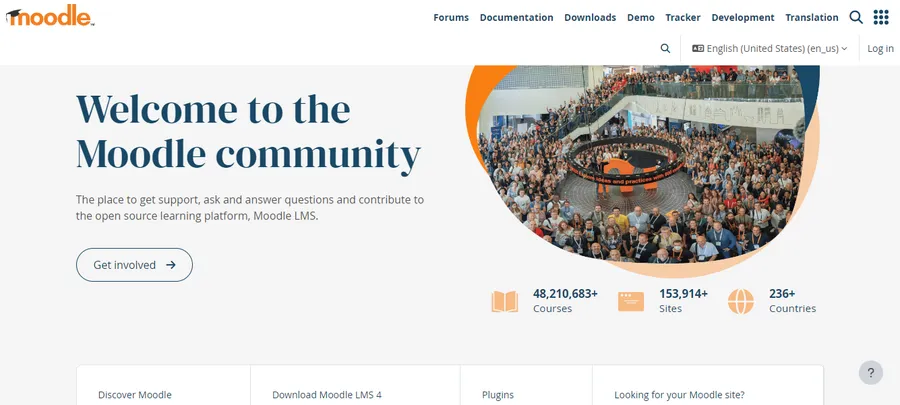
Moodle is a well-known open-source platform that provides organizations with full control over hosting and customization. It is best suited for teams with in-house technical resources.
Because it is open-source, Moodle offers a vast plugin ecosystem. This allows for niche customization that proprietary systems might not support. However, it requires internal expertise to deploy, maintain, and update securely.
10. Blackboard (Anthology)
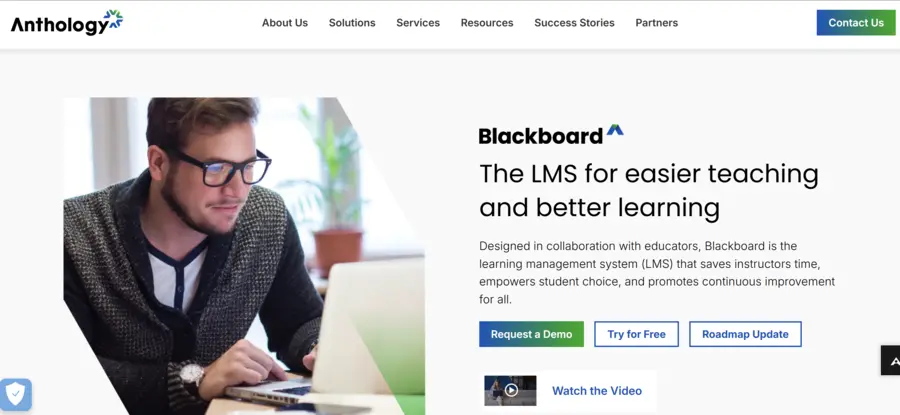
Blackboard is traditionally associated with academia but is also used by corporate training organizations that follow structured, certification-based models.
It offers detailed assessment tools and strong accessibility features. This makes it appropriate for organizations delivering formal, rigorous content, such as financial or medical training. It may include more educational tools than a standard corporation requires.
11. Cornerstone OnDemand
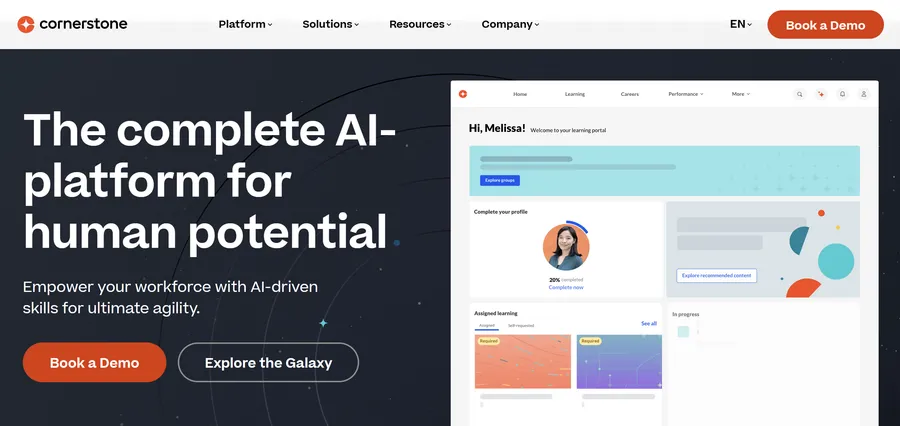
Cornerstone OnDemand is built for large enterprises. It aligns training with performance management and broader talent strategy.
This platform is effective for companies that view the best LMS for employee training as part of a total HR system. It offers advanced skills mapping and compliance tracking. Due to its complexity, it often requires dedicated support or specialized administrative training to operate effectively.
12. Canvas LMS
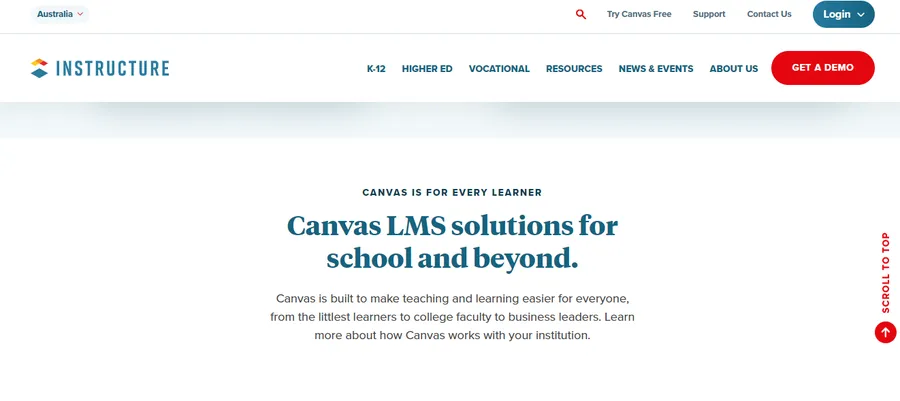
Canvas LMS is primarily known in the education sector but serves training organizations needing a clean, content-first experience. It is delivered as a hosted SaaS platform.
It provides a simple interface with a low learning curve, making it a clean choice for structured learning paths. While it excels at video delivery, it may lack the native enterprise integrations found in corporate-first platforms.
Selecting the Right System for Your Organization
Choosing the right platform depends on specific organizational needs. For businesses that value customization, cost-efficiency, and integration with an existing website, LearnPress is the superior choice. For enterprises requiring deep HR integration out of the box, platforms like Cornerstone may be preferred.
When searching for an LMS for employee onboarding and training, it is crucial to consider the user experience. A system that is difficult to navigate will result in low usage. Conversely, a platform with a mobile-optimized interface and intuitive navigation encourages continuous learning.
Furthermore, the technical aspect is important. Support for SCORM and xAPI ensures that the organization is not locked into a single content vendor. This flexibility allows businesses to select the best training materials from various sources while maintaining a centralized tracking system.
Conclusion
The market for learning technology is vast, but finding the best LMS for employee training comes down to matching features with business goals. Whether the priority is compliance, onboarding, or skills development, there is a tool available to meet those needs.
By prioritizing features such as customized learning paths, role-based access, and flexible integrations found in top contenders like LearnPress, organizations can build a training environment that drives real business results.
Investing in the right employee training LMS effectively transforms a manual administrative burden into a strategic advantage, allowing the workforce to adapt and grow.
Frequently Asked Questions (FAQs) about Best LMS for Employee Training
1. Is LearnPress suitable for corporate compliance training?
Yes, LearnPress is effective for compliance training. With the “Certificates” add-on and “Gradebook” features, administrators can track completion rates, assess employee understanding through quizzes, and automatically issue branded certificates upon successful completion.
2. Can these platforms integrate with existing HR software?
Yes, most enterprise platforms offer integrations. LearnPress, specifically, integrates with a wide range of tools including Zoom for meetings and various payment gateways, creating a unified technology system.
3. What makes a WordPress-based LMS different from a SaaS platform?
A WordPress-based LMS like LearnPress is a plugin that lives on your own website, giving you full ownership of data and unlimited customization potential. A SaaS platform is rented software hosted by a vendor. The former offers more control and often lower costs, while the latter handles all server maintenance.
4. How does an adaptive learning path benefit employees?
Adaptive learning paths customize the training experience based on an individual’s existing knowledge. Instead of forcing every employee to complete the same linear course, the system can assign modules based on skill gaps. This saves time and keeps learners engaged.
5. Is it possible to train external partners using the same system as internal staff?
Many modern systems support multi-audience delivery. With LearnPress, you can control access and restrict content based on user roles, effectively creating separate learning environments for internal employees and external partners within the same site.
Read more: 6 Best WordPress Poll Plugins for Instant Feedback
Contact US | ThimPress:
Website: https://thimpress.com/
Fanpage: https://www.facebook.com/ThimPress
YouTube: https://www.youtube.com/c/ThimPressDesign
Twitter (X): https://x.com/thimpress_com