Pricing is the most critical lever for software growth.
When a business deals with stagnant monthly recurring revenue, low free-to-paid conversions, or high user churn, the current billing structure is usually the bottleneck.
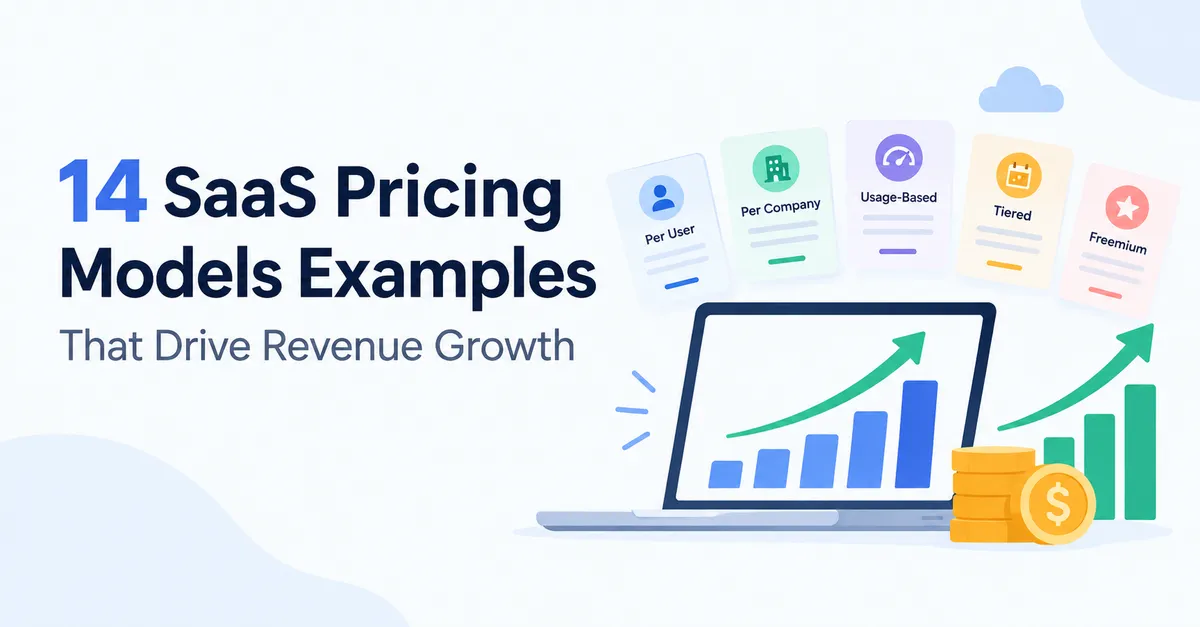
This guide cuts straight to 14 profitable SaaS subscription pricing models that can be applied today. By analyzing real-world SaaS pricing models examples from industry leaders like Slack, HubSpot, and Snowflake, it becomes clear how to perfectly align the price with customer value.
Mastering these frameworks is essential to optimize any eCommerce business model and start driving sustainable, long-term revenue.
Eduma – Education WordPress Theme
We provide an amazing WordPress theme with fast and responsive designs. Let’s find out!
Key Takeaways
- Strategic billing choices directly impact customer acquisition and long-term retention.
- Flat-rate and per-user billing remain foundational models for many software companies.
- Usage-based and outcome-based structures allow for more flexible, customer-aligned scaling.
- Freemium and tiered plans help capture diverse market segments effectively.
- Real-world data from brands like Dropbox, Canva, and HubSpot illustrates successful pricing implementation.
Why SaaS Pricing Models Shape Revenue Growth
Understanding how pricing affects customers is the foundation of growth. Many businesses view prices as fixed numbers, but pricing is actually a dynamic lever for success.
Choosing the right SaaS subscription pricing models helps meet financial goals and user needs, ensuring competitiveness while maximizing Customer Lifetime Value (CLV).
How Pricing Affects Acquisition, Conversion, Expansion, and Retention
The pricing page is often the first touchpoint for buyers. A clear, transparent model lowers the barrier to entry, boosting acquisition rates. When a prospect needs to align with the pricing structure, conversion becomes seamless.
Post-sale, the billing model should naturally drive expansion revenue through logical upgrades or increased usage. It is important to remember that price is a foundational pillar in the 7Ps of marketing, heavily influencing customer perception and long-term retention.
Patrick Campbell from ProfitWell emphasizes that pricing is the most powerful lever in business, yet it is often the most neglected part of the growth strategy.
Why Customer Value Should Guide Software Pricing Models
The most effective software as a service pricing models focus on customer value, not just operational costs. Charging based on the utility users receive encourages them to grow alongside the service. This value-based approach shifts the conversation from cost to ROI, building stronger relationships and justifying higher price points over time.
Balancing Predictable Revenue with Flexible Buying Options
Companies demand stable income, but buyers want choices. The best SaaS billing models offer a hybrid approach: predictable baseline plans combined with flexible add-ons. This mix secures steady cash flow while remaining adaptable enough to attract a broader audience, satisfying both customer needs and investor expectations.
SaaS Pricing Models Examples for Different Business Goals
Aligning the pricing framework with overarching business goals is critical. The right pricing approach bridges the product offering with what customers are willing to pay.
Matching Pricing Structures to Product Complexity
Simple, single-purpose products often thrive with flat-rate pricing, appealing directly to small businesses. Conversely, complex enterprise software requires tiered pricing to account for varying functionality and support levels.
Tailoring software as a service pricing models to specific user groups prevents revenue leakage.
Predictable Recurring Revenue vs. Usage-Based Expansion
Predictable recurring revenue (MRR/ARR) simplifies financial forecasting and suits tools that offer consistent, everyday value. However, products where usage varies wildly often benefit from consumption-based models.
Pricing is essentially the exchange rate on the value created for the customer. When costs are tied to consumption, incentives are perfectly aligned. This lowers the entry barrier for new users and generates significant expansion revenue as they scale.
Using Pricing Experiments Safely
Testing new price points optimizes revenue but must be executed carefully to avoid alienating current users. Run A/B tests in isolated cohorts and prioritize clear communication regarding the value provided at each tier.
Metrics to monitor during a pricing test:
| Metric | Primary Goal | Business Impact |
| Conversion Rate | Increase | Higher sign-up volume |
| Expansion Revenue | Increase | Higher Customer Lifetime Value (LTV) |
| Churn Rate | Decrease | Better long-term retention |
| CAC Efficiency | Optimize | Lower Customer Acquisition Cost |
Monitoring these indicators enables data-driven decisions and rapid adjustments to market changes. To track and interpret these metrics effectively, leveraging AI tools for data analysis can provide a significant competitive advantage.
1. Flat-Rate SaaS Subscription Pricing Models
Many businesses select flat-rate SaaS subscription pricing for its straightforward billing process. This method charges a single, fixed price for full access to the product suite.
How a Single Plan and Fixed Price Work
Every customer pays the exact same amount, regardless of team size or software utilization. There are no hidden tiers, usage limits, or complex feature gates. Simplicity is the core benefit here.
Best-Fit Products and Limitations
- Pros: Perfect for niche applications solving a single, specific problem. Sales teams can focus purely on product value rather than complicated billing math, leading to shorter sales cycles.
- Cons: As the customer base diversifies, flat rates leave money on the table. Heavy users get a bargain, while light users may find it too expensive. It also limits the ability to service enterprise clients with custom needs.
- Example: Basecamp famously utilizes a flat-rate pricing approach. They charge a single price for their project management platform, allowing teams to scale headcount without unexpected software bill increases. If a startup is just testing a flat-rate model for new software, exploring the best platforms to sell digital products helps easily manage distribution and billing.
2. Per-Seat and Per-User SaaS Billing Models
Per-user models provide highly predictable revenue streams. By charging for each individual using the software, earnings scale linearly with the team size of the customer.
Generating Recurring Revenue Through Collaboration
With per-user pricing, expansion revenue is built-in. When a client hires new employees, they purchase more seats. This model is exceptionally effective for team collaboration, communication, and project management tools.
Risks and Solutions
- The Account Sharing Risk: If seat prices are too high, users may share login credentials, hurting both the bottom line and account security.
- The Solution: Offer discounted viewer or guest roles for occasional users or contractors. This ensures the software remains integrated across the entire organization without breaking the client budget.
- Example: Slack employs a fair billing policy where they only charge for active users. If a team member stops using the platform, Slack automatically promotes the account and issues credits, building immense customer trust.
Comparing Seat-Based Strategies:
| Billing Strategy | Primary Benefit | Best For |
| Flat Per-Seat | Predictability | Standard internal teams |
| Tiered User Roles | Flexibility | Organizations working with guests/contractors |
| Active-User Billing | High Adoption | Large, fluctuating enterprise teams |
3. Usage-Based Pricing for Consumption-Driven Products
Also known as Pay-As-You-Go, usage-based billing is rapidly gaining popularity because it directly correlates costs with realized value.
Charging by API Calls, Storage, or Data
Instead of paying for access, customers pay strictly for consumption:
- API Calls: Ideal for developer infrastructure.
- Data Storage: Standard for cloud hosting and backup services.
- Processed Data: Common in analytics and marketing automation tools.
Managing Unpredictable Bills
The primary drawback of usage-based pricing is bill shock, where customers fear unexpected budget spikes. To solve this, providers must implement robust spending controls:
- Automated email alerts when usage reaches specific thresholds.
- Hard limits to pause services and prevent overages unless explicitly authorized.
- Customizable budget limits assigned to different team members.
Examples: Twilio and Snowflake are pioneers of consumption-based models. By offering granular controls, they let users start small and scale massive infrastructure seamlessly.
4. Tiered Pricing That Serves Multiple Customer Segments
Creating the right SaaS pricing tiers requires deep customer segmentation. Offering distinct levels allows a company to capture diverse markets without cannibalizing sales.
Creating Clear Plans and Upgrade Paths
A strong tiered model grows with the user. Startups require affordable basics, growing teams need collaboration tools, and enterprises demand advanced security and premium support.
Separate tiers by value, not arbitrary feature limits. Use descriptive plan names and utilize a middle-tier pricing anchor to steer prospects toward the most profitable package.
Example: HubSpot Segmented Plan Structure
| Tier Level | Target Audience | Primary Focus |
| Starter | Startups & Solopreneurs | Core inbound marketing functionality |
| Professional | Growing Teams | Marketing automation and CRM scaling |
| Enterprise | Large Organizations | Advanced security, reporting, and custom support |
5. Freemium SaaS Pricing Models That Convert Users
The freemium model operates as a powerful customer acquisition engine. It removes all barriers to entry, letting users experience the core value of the product immediately.
Freemium vs. Free Trial
- Free Trial: Creates urgency. Users must evaluate the product within a specific timeframe. Best for complex tools that demonstrate immediate ROI. Applying FOMO marketing tactics during this limited trial window can further accelerate free-to-paid conversion rates.
- Freemium: A permanent free tier. Builds long-term loyalty and relies on natural usage growth to trigger an upgrade.
Converting Free Users
To drive revenue, strategic friction points must be implemented. Limit storage, team members, or specific premium features. Monitor metrics like activation rates and free-to-paid conversion rates to ensure the free tier is not cannibalizing paid subscriptions.
Examples:
- Canva provides thousands of free templates to hook users, but gates brand kits and premium assets behind its Pro subscription.
- Dropbox limits free storage to 2GB, forcing users to upgrade once they become dependent on the file-sharing ecosystem.
6. Feature-Based and Add-On Pricing Strategies
This strategy separates essential tools from specialized capabilities, allowing companies to capture more value from power users.
Using Optional Add-Ons
Optional add-ons are flexible revenue drivers. They keep the core product interface clean while allowing customers to purchase specific modules. This keeps the base tier highly competitive.
Example: Salesforce, widely recognized as one of the best CRM software solutions on the market, masters this approach. They offer distinct core CRM editions for different business sizes, surrounded by a massive ecosystem of add-ons. Customers start with the basics and bolt on specialized tools as they mature.
7. Per-Active-User and Outcome-Based Pricing Models
Modern businesses increasingly seek software pricing models that align strictly with business outcomes and actual engagement.
- Active-User Billing: Unlike traditional per-seat pricing that charges for dormant accounts, this model only bills for users who actually log in. It reduces friction for businesses with seasonal or fluctuating team participation.
- Outcome-Based Pricing: This model ties fees directly to measurable KPIs. It heavily mitigates risk for enterprise clients. However, it requires flawless reporting and attribution tracking to maintain trust and prevent billing disputes.
Risk Assessment by Billing Model:
| Billing Model | Primary Driver | Best For | Risk Level to Provider |
| Per-Seat | Total Accounts | Stable Teams | Low |
| Active-User | Login Frequency | Fluctuating Teams | Medium |
| Outcome-Based | Business Results | High-Value ROI Tools | High |
8. Hybrid and Credit-Based SaaS Pricing Models
Because one pricing model rarely fits all, industry leaders often deploy hybrid models to maximize Annual Recurring Revenue (ARR).
Combining Subscriptions with Credits
Many platforms blend a base subscription fee with a usage-based credit system. Customers purchase prepaid credits to spend on various micro-services or API calls. This guarantees predictable cash flow for the SaaS company while providing consumption flexibility for the user.
Examples:
- OpenAI charges for API usage via a token-based credit system, ensuring high-volume users pay proportionally for compute power.
- AWS utilizes a highly complex hybrid model tailored to enterprise infrastructure scale.
Improving SaaS Pricing for Long-Term Revenue Growth
Treat pricing as a dynamic, evolving asset. As new features are shipped and software performance improves, pricing must reflect that heightened value.
- Audit Value Metrics: Ensure customers still clearly understand what they are paying for.
- Review Prices Annually: Gradually adjust pricing to capture the increased ROI customers are experiencing.
- Optimize Packaging: Use annual plan discounts strategically to improve upfront cash flow without permanently eroding the perceived value of the core offering.
- Monitor Core KPIs: Relentlessly track Gross Margin, Customer Acquisition Cost, Lifetime Value, and Churn.

Conclusion
View SaaS pricing models as a dynamic experiment. Continuously monitor expansion revenue, churn rates, and margins.
By keeping billing transparent and remaining responsive to user feedback, a pricing strategy that drives sustainable, long-term revenue growth can be built.
However, remember that even the best pricing page needs visibility; applying the right strategies for how to make your website appear on Google Search is essential to keep the sales funnel full.
Frequently Asked Questions (FAQs)
What are the most common SaaS pricing models examples used by industry leaders?
Industry leaders utilize a mix of strategies to drive growth: Basecamp uses flat-rate subscriptions, Slack charges per active user, Snowflake and Twilio rely on usage-based models, HubSpot thrives on tiered pricing, and Canva leverages freemium strategies.
How do SaaS subscription pricing models impact long-term revenue growth?
Pricing dictates the entire customer lifecycle. Clear pricing lowers acquisition costs and drives initial conversions. Strategically gated features drive expansion revenue, while fair, value-aligned billing strengthens long-term retention and reduces churn.
What is the difference between per-user and per-active-user SaaS billing models?
Standard per-user models charge a flat fee for every registered account, regardless of whether the individual logs in. Per-active-user models track login frequency and only bill for team members who actively utilize the platform during the billing cycle.
Why should a company consider usage-based software as a service pricing models?
Usage-based models are highly flexible and lower the barrier to entry for new customers. They allow users to start small and seamlessly scale costs as their infrastructure or consumption needs grow.
How does tiered SaaS pricing help in targeting different customer segments?
Tiered pricing breaks the product down into distinct packages. This allows a company to offer affordable basic features to startups while simultaneously charging premium rates to large enterprises needing advanced security, compliance, and custom support.
Read more: Online Marketing Automation: How it Works and The Best Tools to Use?
Contact US | ThimPress:
Website: https://thimpress.com/
Fanpage: https://www.facebook.com/ThimPress
YouTube: https://www.youtube.com/c/ThimPressDesign
Twitter (X): https://x.com/thimpress_com