A strong SaaS sales strategy gives a software company a clear way to find the right buyers, explain product value, move prospects through the sales process, and create repeatable revenue. Without that structure, sales can become a mix of weak targeting, unclear pricing, disconnected outreach, and long deal cycles.
The goal is not to use every sales tactic available. It is to build a system that fits the product, target market, price, and buying process. For a broader view of how product, pricing, promotion, and other factors work together, see this guide to the 7Ps of marketing. This guide explains how to create that system step by step.
Eduma – Education WordPress Theme
We provide an amazing WordPress theme with fast and responsive designs. Let’s find out!
SaaS Sales Strategy at a Glance
| Area | Main Question | Practical Goal |
| Ideal customer profile | Who is most likely to buy and stay? | Focus on qualified accounts |
| Positioning | Why should buyers choose the product? | Make value easy to understand |
| Pricing | How should the product be sold? | Match price with customer value |
| Sales model | Self-service, sales-led, or hybrid? | Use the right level of support |
| Distribution | Where can buyers discover and purchase? | Build efficient paths to market |
| Sales process | How does a lead become a customer? | Create repeatable steps |
| Metrics | What shows that the model works? | Find and fix weak points |
| Retention | What happens after the sale? | Support renewals and expansion |
What Is a SaaS Sales Strategy?
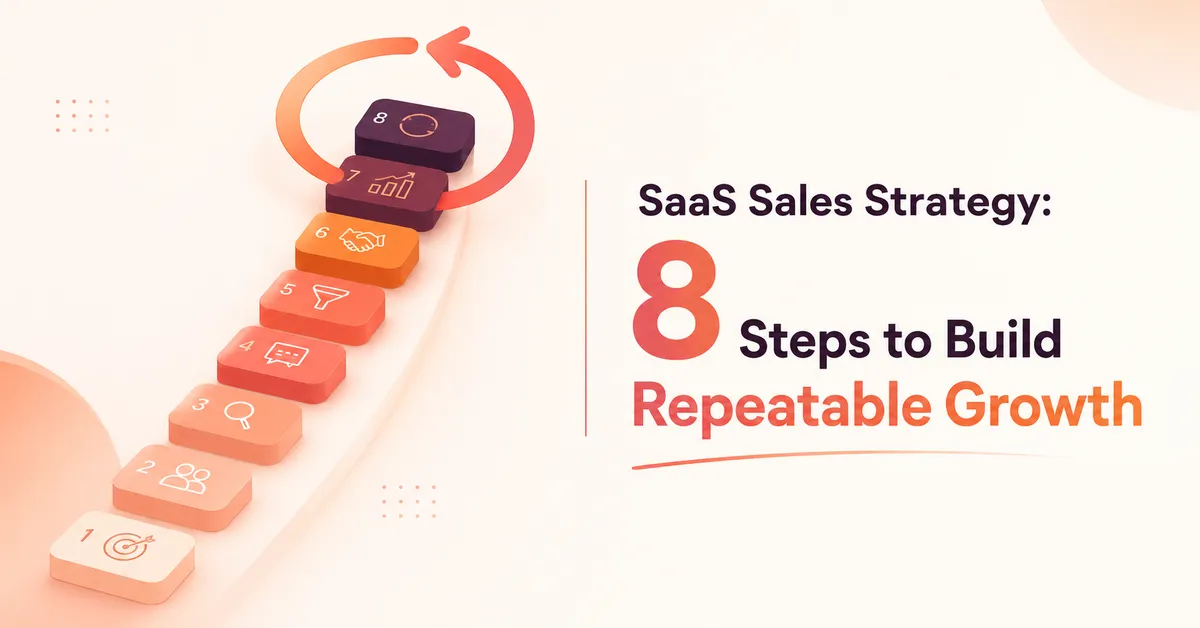
A SaaS sales strategy is a structured plan for turning potential buyers into paying software customers. It connects the target market, product positioning, pricing, sales channels, sales process, and performance measurement.
It should answer practical questions:
- Which customer segments have the strongest need?
- Who influences or approves the purchase?
- What problem does the software solve?
- Which pricing model fits the customer?
- Should the business use self-service, direct sales, partners, or several channels?
- Which steps must happen before a deal can close?
- Which metrics show whether the process is efficient?
One deal may involve a user, department leader, finance team, IT team, procurement team, or security team. Sales materials and processes should reduce uncertainty for each important stakeholder.
1. Define the Ideal Customer Profile
Every SaaS sales strategy should begin with a clear ideal customer profile, or ICP. It describes the type of company most likely to gain real value from the software and become a good long-term customer.
Useful criteria may include:
- Industry
- Company size
- Main operational problem
- Technology stack
- Budget range
- Buying authority
- Current software or workflow
- Required integrations
The ICP should be specific enough to guide sales decisions. A broad label such as “small businesses” gives little direction. A stronger profile identifies a clear industry or use case, typical company size, main pain point, and buyer role.
This is especially important in a SaaS startup sales strategy. Early-stage teams have limited time and budget. Trying to sell to everyone can make it harder to learn which customers convert and why. A focused ICP gives the team better data and faster feedback.
2. Build Clear Product Positioning
Good positioning explains what the software does, who it helps, and why it is a strong choice for a specific problem. It should not depend on a long list of features.
The sales plan becomes easier to execute when the value proposition is simple. Buyers should quickly understand:
- What problem the product solves
- What outcome it supports
- Why the problem matters
- How it differs from alternatives
- How it fits existing workflows
For example, “AI-powered reporting” describes a feature. “Reduce the time needed to prepare weekly client reports” describes a useful outcome. The second message gives the buyer a clearer reason to care.
Clear positioning also helps marketing, product, and customer success because every team can use the same core value message.
3. Choose the Right Sales Model
There is no single model that works for every SaaS product. The right choice depends on price, product complexity, buyer type, setup needs, and sales cycle.
Self-Service
Customers discover the product, sign up, test it, and purchase without speaking to a salesperson. This can work when the product is easy to understand and the buying decision is simple.
For companies that want to sell SaaS online, the path from product page to purchase should be short and clear. Pricing, onboarding, trials, demos, and checkout should answer the main questions that could stop a buyer. Businesses exploring other ways to sell software and downloadable products can also compare these platforms for selling digital products online.
Sales-Led
A sales team manages qualification, demonstrations, negotiation, procurement, and closing. This model is useful when a product has a higher price, more technical requirements, or several decision-makers.
Hybrid
A hybrid model combines product-led discovery with direct sales support. A user may start with a trial, while a larger account receives help from a sales representative.
A strong sales model matches the sales effort to the economics of the product. A high-touch process can be too expensive for a low-cost plan, while self-service may be too limited for a complex enterprise purchase.
Choosing the right model is an important part of a SaaS sales strategy because it affects acquisition cost, team structure, customer experience, and the amount of support needed before a purchase.
4. Create Pricing and Packaging That Support Sales
Pricing affects who can buy the product, how quickly they decide, and how the sales team explains value.
Common structures include:
- Flat monthly or annual subscriptions
- Per-user pricing
- Tiered plans
- Usage-based pricing
- Enterprise agreements
- Custom plans
A software sales strategy should make plans easy to compare. Too many options, unclear limits, or hidden differences create friction. Each plan should have a clear customer type and value level.
For a SaaS startup sales strategy, pricing may change as the company learns. However, frequent changes without clear evidence can make sales results difficult to judge. Use customer feedback, conversion data, usage patterns, and willingness to pay to guide changes.
Pricing should also match the sales model. A low-cost product may need a simple self-service path, while a higher-value product can support more direct sales involvement.
5. Select Sales and Distribution Channels
A SaaS sales strategy must define how customers discover, evaluate, and purchase the product.
Possible channels include:
- Direct outbound sales
- Inbound marketing
- Product-led sign-up
- Referral programs
- Technology partners
- Resellers
- Cloud marketplaces
- Industry events
- Online communities
Online communities can support product discovery, customer education, and direct interaction with potential users. Teams considering this channel can explore these online community platforms to understand the available options.
The best mix depends on the audience. A small business tool may rely on search, content, reviews, and self-service trials. Enterprise software may need direct sales, partnerships, technical review, and procurement support.
Cloud marketplaces can be useful for some B2B products when buyers prefer to purchase through their existing cloud ecosystem. They can become another route for reaching buyers and completing software purchases.
However, more channels do not automatically create more growth. Each channel needs clear ownership, a defined purpose, and measurable results.
A smaller number of well-managed channels may perform better than trying to be active everywhere. The right B2B SaaS sales strategy should focus resources where target customers actually research and purchase software.
6. Build a Repeatable Sales Process
A repeatable process turns strategy into daily execution. It gives the team a shared method for moving opportunities through the pipeline.
A typical process may include:
- Lead generation
- Qualification
- Discovery
- Product demonstration
- Technical or security review
- Proposal
- Negotiation
- Procurement
- Closing
- Onboarding handoff
The exact stages should match how customers actually buy.
When learning how to sell SaaS, a common mistake is to focus too much on the demo. A demonstration only works well when it connects product features to the buyer’s problem.
Discovery should come first so the seller understands:
- Business goals
- Current processes
- Main problems
- Decision criteria
- Budget
- Important stakeholders
- Expected timeline
The process should also set clear qualification rules. Sales teams need to know when an opportunity is worth pursuing and when it should be delayed or disqualified. This protects time and improves pipeline quality.
Consistency is important. A SaaS sales strategy becomes difficult to measure if every salesperson follows a completely different process.
7. Use Data to Improve the Sales Motion
A sales system becomes stronger when decisions are based on evidence instead of opinions.
| Metric | What It Helps Measure |
| Lead-to-opportunity rate | Lead quality and qualification |
| Opportunity-to-win rate | Ability to convert qualified deals |
| Sales cycle length | Time needed to close |
| Average contract value | Typical value of a new customer |
| Customer acquisition cost | Cost to acquire a customer |
| Churn rate | Share of customers who leave |
| Expansion revenue | Growth from current customers |
Metrics should be read together. A large number of leads is not useful if most are poorly matched. A high win rate may also be misleading if the team works on very few easy deals.
A good sales framework uses data to locate bottlenecks. If many qualified opportunities reach a demo but few move to proposal, the problem may involve positioning, product fit, pricing, or weak discovery.
The same approach applies when trying to sell SaaS online. Website traffic alone says little about sales performance. Sign-up rate, trial activation, paid conversion, retention, and acquisition cost provide a more complete picture.
Traffic data can still help identify changes at the top of the acquisition funnel. This guide explains how to perform a website traffic check before comparing them with deeper sales metrics.
A data-based SaaS sales strategy makes it easier to decide what should be improved first.
8. Connect Sales With Retention and Expansion
Selling software as a service is not a one-time transaction. Customer value continues after the first payment, so growth also depends on onboarding, product adoption, renewal, and expansion.
Sales teams should avoid promises the product cannot support. A poor fit may help close a short-term deal but increase the risk of churn later.
The handoff to customer success should include:
- Customer goals
- Main use case
- Key stakeholders
- Purchased plan
- Required integrations
- Important deadlines
- Major concerns raised during the sales process
This makes the strategy more complete because it connects acquisition with long-term customer outcomes.
Retention should therefore be considered when evaluating a SaaS sales strategy. A channel that produces many customers is not necessarily effective if those customers leave soon after purchase.
Tools That Support a SaaS Sales Strategy
Technology can improve sales execution, but tools do not replace a clear process.
Useful categories include:
- CRM systems for contacts, accounts, opportunities, and pipeline
- Sales intelligence tools for account research
- Conversation tools for reviewing calls
- Forecasting tools for pipeline visibility
- Marketing automation for lead nurturing
- Product analytics for usage data
- Customer success tools for onboarding and renewals
CRM software is particularly useful for keeping lead, account, deal, and pipeline data in one place. Teams comparing solutions can review these best CRM software options for managing customer relationships.
Before adding a new tool, define the problem it needs to solve. Too many systems can create duplicate data and make the process harder to manage.
Tools should support the SaaS sales strategy, not determine it. The process and customer needs should come first.
Common SaaS Sales Strategy Mistakes
Several mistakes can weaken an otherwise good plan.
Targeting Too Broadly
Trying to reach every possible buyer makes messages less relevant and wastes sales time. Clear segmentation improves focus and allows the team to understand which customers have the strongest need.
Treating Sales as a Separate Function
A B2B SaaS sales strategy works better when sales, marketing, product, partnerships, and customer success share information. Different definitions of a qualified customer create confusion and weaken execution.
Leading With Features
Features matter, but buyers first need to understand the business value. Product details should support the value proposition, not replace it.
A long feature list does not answer the buyer’s most important question: “Why does this matter?”
Using the Wrong Sales Motion
A complex sales team can make acquisition too expensive for a low-price product. A self-service flow can also fail when buyers need technical or procurement support.
The sales model should match the value and complexity of the product.
Ignoring the Buying Process
Selling software as a service may involve legal review, security checks, procurement, finance approval, and integration questions. Plan for these steps instead of treating them as unexpected delays.
For larger B2B deals, supporting these stakeholders can be just as important as convincing the main product user.
Changing Too Many Variables
If pricing, target audience, messaging, channels, and qualification rules all change at once, it becomes hard to know what caused better or worse results.
Test changes with a clear purpose and compare results before changing another major part of the sales process.
How to Build a SaaS Sales Strategy Step by Step
A practical order is:
- Define the ICP and buyer roles.
- Identify the main customer problem.
- Create a clear value proposition.
- Choose the sales model.
- Set pricing and packaging.
- Select a few priority channels.
- Document qualification and pipeline stages.
- Prepare sales materials for common buyer questions.
- Track conversion, sales cycle, cost, and retention.
- Review results and improve one part of the system at a time.
For teams asking how to sell SaaS in a competitive market, the answer is rarely one new tactic. Better results usually come from improving the connection between targeting, positioning, pricing, distribution, execution, and customer success.
The same principle applies to a SaaS startup sales strategy. Early growth should be treated as a learning process. The aim is to identify a repeatable pattern before adding more salespeople, channels, or tools.
Final Thoughts
An effective SaaS sales strategy is a repeatable system, not a collection of isolated sales activities. It starts with a clear customer profile, explains value in simple terms, uses suitable pricing and channels, and gives the sales team a consistent process.
For B2B products, the strategy should also reflect how organizations evaluate and approve software. Procurement, technical review, partnerships, and marketplace channels can all shape the buying path.
A practical SaaS sales strategy should be measured and improved over time. Use real customer feedback and performance data instead of copying a model that worked for another company.
Frequently Asked Questions
1. What is the main purpose of a SaaS sales strategy?
The main purpose of a SaaS sales strategy is to create a repeatable way to identify potential customers, explain product value, convert qualified opportunities, and support sustainable revenue growth.
It also helps sales teams decide which buyers deserve attention and which steps should be used to move opportunities toward a purchase.
2. What is the difference between a B2B SaaS sales strategy and a general sales plan?
A B2B SaaS sales strategy is designed around subscription software and organizational buying. It often includes several stakeholders, product demonstrations, technical checks, procurement steps, renewals, and expansion opportunities.
A general sales plan may not need to address all of these areas.
3. How should a SaaS startup sales strategy begin?
A SaaS startup sales strategy should begin with a focused ideal customer profile and a clear problem to solve.
Early teams should test positioning, pricing, and channels with a defined audience rather than trying to sell to everyone. This makes it easier to understand which customers have the strongest need and which sales approach can become repeatable.
4. How can a company sell SaaS online effectively?
To sell SaaS online, make the path from discovery to purchase clear. Explain the main value, show pricing when appropriate, reduce sign-up friction, provide useful product information, and offer the right level of sales support.
The buying path should answer common questions before they become reasons to leave.
5. How often should a SaaS sales strategy be reviewed?
Review the strategy regularly and whenever important signals change, such as conversion rates, customer feedback, pricing performance, sales cycle length, churn, or target-market behavior.
The goal is not to change the SaaS sales strategy constantly. The goal is to make steady improvements based on reliable evidence.
Read more: 15 Apps for Task Management to Organize Work Better
Contact US | ThimPress:
Website: https://thimpress.com/
Fanpage: https://www.facebook.com/ThimPress
YouTube: https://www.youtube.com/c/ThimPressDesign
Twitter (X): https://x.com/thimpress_com