Understanding SaaS financials and implementing SaaS best practices is the direct line between scaling successfully or running out of capital. Investors and founders cannot rely on traditional retail accounting to measure the health of a subscription-based software business.
Instead, analyzing the cash runway, predicting customer churn, and accurately forecasting subscription revenue dictates strategic decision-making. Navigating the complexities of recurring revenue requires a highly specific and disciplined framework.
This comprehensive guide breaks down the exact steps to build a robust financial framework. It outlines the critical metrics to monitor and explains how to structure a model that accurately reflects business reality.
Key Concepts
| Component | Description | Key Focus Area |
| Core Concept | Managing recurring revenue and predictable expenses. | Predictability and scalability. |
| Revenue Tracking | Forecasting subscription tiers, upgrades, and churn. | Monthly/Annual Recurring Revenue (MRR/ARR). |
| Cost Management | Balancing direct costs (hosting) with acquisition costs. | Customer Acquisition Cost (CAC). |
| Profitability | Measuring the long-term value of a customer versus cost. | LTV to CAC Ratio, Rule of 40. |
| Cash Flow | Monitoring the cash burn before reaching profitability. | Burn Rate and Capital Runway. |
Decoding the SaaS Revenue Model
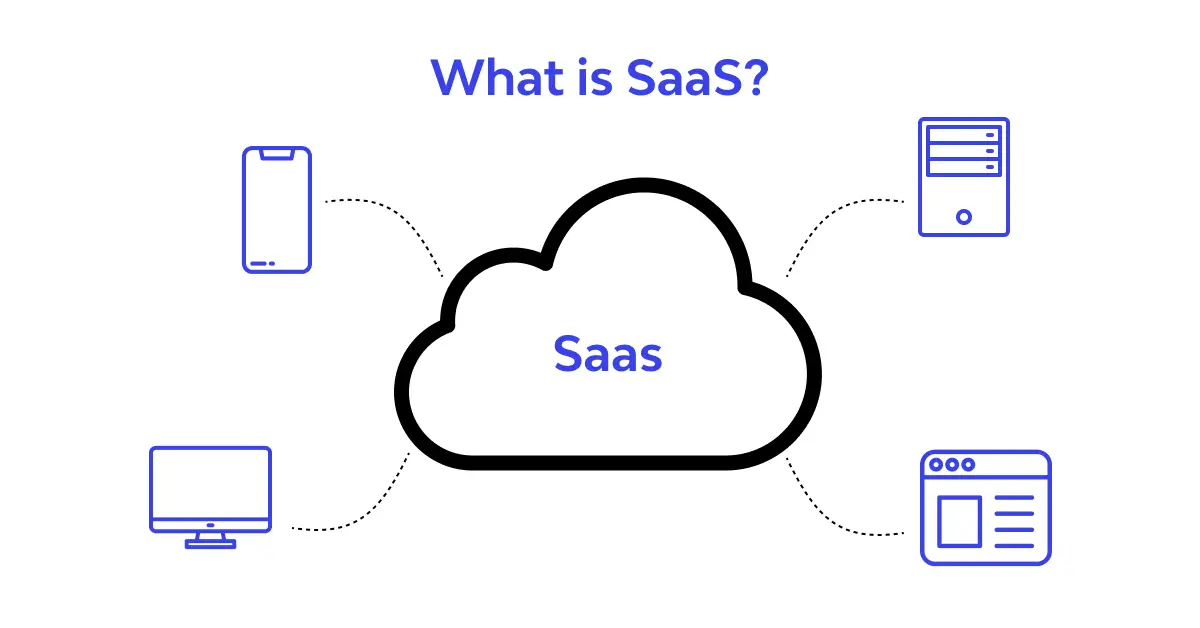
The Software as a Service (SaaS) distribution model fundamentally changes how businesses collect revenue. Instead of selling a product once for a large upfront fee, software applications are hosted entirely in the cloud.
Clients are then licensed to use these applications on a recurring subscription basis. This approach creates a highly predictable and stable cash flow over time.
However, the SaaS revenue model also introduces unique cash flow dynamics. A company must often spend a significant amount of capital upfront in sales and marketing just to acquire a new customer.
The revenue from that customer, meanwhile, is collected in small increments over months or years. Therefore, a standard income statement is not enough to capture the full picture of the company’s financial health.
A dedicated financial structure is required to account for the delayed payback period. It is the only mathematical way to measure whether the long-term value of the customer justifies the initial acquisition cost.
What is a SaaS Financial Model?
A SaaS financial model is a comprehensive mathematical representation of a software company’s historical performance and future projections. It is typically built within a highly structured spreadsheet environment.
This tool integrates the three core financial statements—the income statement, the balance sheet, and the cash flow statement. It combines these standard statements with industry-specific schedules and key performance indicators.
These models are indispensable tools in corporate finance for several critical reasons:
- Performance Monitoring: By comparing projected numbers against actual results, stakeholders can perform variance analysis to pinpoint operational inefficiencies.
- Resource Allocation: Models guide precise budgeting. They help leadership determine exactly how much capital should be allocated to engineering versus outbound sales.
- Valuation: Software companies are frequently valued based on multiples of their annual recurring revenue. A detailed SaaS company financial model provides the quantitative backing required to justify a high valuation multiple.
- Fundraising and Exit Strategy: Whether raising venture capital or preparing for an acquisition, this spreadsheet is a mandatory requirement. It demonstrates clear paths to profitability for prospective investors.
Key Components of a SaaS Company Financial Model
Fundamentally, building this financial architecture requires careful consideration of revenue, expenses, and cash movement. Each component must interact dynamically.
Revenue Projections
The absolute lifeblood of the software industry is recurring revenue. Projections must account for base subscription fees, clearly broken down by distinct customer segments or pricing tiers.
Furthermore, the model must isolate expansion revenue. This happens when existing users upgrade to higher tiers or purchase additional add-on features.
It must also subtract lost revenue from customer cancellations, commonly known as churn. Non-recurring revenue, such as one-time implementation or training fees, must be modeled on a separate schedule to avoid artificially inflating the recurring metrics.
Cost Structure
Expenses in the software industry fall into two main categories that must be tracked separately.
First is the Cost of Goods Sold (COGS). These are the direct costs required to keep the software running. This includes server hosting capacity, third-party software licenses, and the direct salaries of the customer support team.
Second is Operating Expenses (OpEx). These are the costs to run and grow the business globally. This encompasses sales commissions, investing in essential digital marketing tools for marketing campaigns, research and development, and general administrative overhead.
Cash Flow Dynamics
Because of the subscription format, cash flow forecasting is perhaps the most critical component of SaaS financials. When a customer signs an annual contract and pays upfront, the company receives a large influx of cash.
However, accounting rules dictate that this revenue must be recognized evenly over the entire 12-month period. The financial model must reconcile this crucial difference.
It must track the variance between cash collected (billings) and revenue recognized. This is the only way to accurately project the company’s true cash runway and avoid bankruptcy.
Building a Financial Model for SaaS Startup: Step-by-Step

Constructing an accurate forecast requires a logical, highly modular approach. Here is the exact sequence to follow to ensure accuracy.
Step 1: Architect the Revenue Schedule
Revenue modeling demands extreme granularity. Start by defining the specific customer segments being targeted.
Next, project new customer acquisitions based on expected marketing spend across various platforms to sell digital products and historical sales conversion rates. Apply an Average Revenue Per Account (ARPA) to these new customers to determine the new dollar figures.
Crucially, the model must calculate the Monthly Recurring Revenue (MRR) dynamically using a set formula. It should take the beginning MRR, add new MRR and expansion MRR, and subtract churned MRR to find the ending balance.
Step 2: Forecast Expenses
Accurate expense forecasting prevents unexpected cash shortfalls. Link the headcount forecast directly to the expense schedule.
Payroll is typically the largest expense for any software business, so it must be modeled down to the individual hire. Calculate sales commissions dynamically as a strict percentage of new bookings.
Tie hosting costs directly to the total number of active users. This ensures that as the software platform scales, the infrastructure costs scale proportionally in the spreadsheet.
Step 3: Integrate the Three Statements
With revenues and expenses calculated, flow the data into the income statement to determine net income.
Use this net income as the starting point for the cash flow statement. Adjust for non-cash expenses, like depreciation, and changes in working capital, such as deferred revenue from annual upfront payments.
Finally, link the ending cash balance and retained earnings directly to the balance sheet. This final step ensures the entire financial ecosystem balances perfectly.
Instead of assuming a generic month-over-month growth rate, the model should calculate exact conversion metrics. It must estimate how many website visitors are needed—you can perform a website traffic check to benchmark competitors and set realistic baselines—and what percentage will click a trial button.
Nuances of the B2B SaaS Financial Model
Selling software to other businesses, which is the core of any successful B2B business, involves entirely different mechanics than selling to individual consumers. A B2B SaaS financial model must reflect these specific market realities.
- Longer Sales Cycles: Enterprise deals can take six to twelve months to close. The model must account for the distinct lag between when marketing dollars are spent and when revenue is finally recognized.
- Sales Quotas and Capacity: Growth is often constrained by the number of active sales representatives. The forecast should calculate revenue based on sales capacity. This means tracking how many account executives are on staff, their ramp-up time, and their expected quota attainment.
- Annual Contracts: B2B companies heavily utilize annual or multi-year contracts paid upfront, which are often integrated securely through top-tier B2B commerce platforms. This creates a significant deferred revenue liability on the balance sheet. However, it also provides an immediate cash injection to fund further growth initiatives.
Crucial Metrics and KPIs to Track
A robust forecast is only as valuable as the output metrics it generates. The following Key Performance Indicators must be prominently displayed on a summary dashboard.
Monthly and Annual Recurring Revenue (MRR & ARR)
These metrics represent the foundational baseline of predictable revenue. ARR is simply the annualized run rate of the current MRR.
Customer Acquisition Cost (CAC)
This is calculated by taking the total sales and marketing expenses over a specific period. That number is then divided by the exact number of new customers acquired in that same time frame, a process easily monitored if you utilize the best CRM software to track lead conversions.
Customer Lifetime Value (LTV)
This metric represents the total gross profit a company can expect from a single customer. It measures the financial value generated over the entire duration of the customer relationship.
LTV to CAC Ratio
This ratio measures the return on investment for acquiring a new user. A healthy, sustainable ratio is widely considered to be 3:1. This means the customer brings in three times more value than it cost to acquire them.
Churn Rate
This is the percentage of customers, or revenue, lost during a given period. High churn acts as a leaky bucket, forcing the company to spend aggressively just to maintain its current revenue baseline.
Net Revenue Retention (NRR)
This metric measures the revenue retained from existing customers. It actively factors in upgrades, downgrades, and cancellations. An NRR above 100% means the company could stop acquiring new customers entirely and still grow its revenue through upselling.
Burn Rate
This is the speed at which a company consumes its cash reserves. It is carefully monitored to ensure the company does not run out of money before reaching positive cash flow.
The Rule of 40
This is a high-level health check utilized by private equity firms and venture capitalists. It states that a software company’s year-over-year revenue growth rate plus its profit margin should equal 40% or higher.
Challenges and Best Practices in Forecasting
Creating a highly accurate SaaS financial model is difficult due to rapidly changing market conditions and software trends.
Balancing Complexity
Financial analysts often fall into the trap of over-engineering the spreadsheet. While extreme detail seems beneficial, it can quickly make the document unwieldy.
Over-complicated models are prone to severe formula errors. They also become impossible for executive leadership to read and digest quickly during board meetings.
Scenario Planning
Future business performance is never guaranteed. Best practices dictate building dynamic toggles that allow users to switch between Base Case, Best Case, and Worst Case scenarios.
This sensitivity analysis shows exactly what happens to the cash runway if customer acquisition costs suddenly rise. It also shows the financial impact if the churn rate unexpectedly doubles.
Modularity and Maintenance
A static spreadsheet becomes useless within a single month. Always build the spreadsheet in a highly modular fashion to ensure longevity.
Separate the inputs, calculations, and outputs onto entirely different tabs. Document all hard-coded numbers clearly so external auditors or new hires can understand the logic immediately.
Conclusion: The Value of Precision
Navigating the complexities of SaaS financials requires far more than basic bookkeeping. It demands a strategic, forward-looking financial blueprint that guides the entire organization.
Whether a founding team is developing an early stage SaaS financial model to secure initial venture capital, or refining a highly complex B2B SaaS financial model to manage enterprise-level scaling, financial accuracy remains the ultimate competitive advantage.
A properly constructed financial model for SaaS startup operations provides absolute operational clarity. It is the only way to balance aggressive growth tactics with sustainable cash flow management.
Frequently Asked Questions
1. What makes a B2B SaaS financial model unique compared to other industries?
Unlike traditional retail or manufacturing models that rely on inventory and one-time sales, B2B software models focus entirely on recurring subscriptions. They must account for deferred revenue from annual upfront payments. They also heavily focus on calculating the long-term value of a client versus the immediate cost of sales commissions.
2. How do you accurately project revenue in an early stage SaaS financial model?
Since early-stage startups lack historical data, revenue must be projected using a strict bottom-up approach. This involves estimating top-of-funnel web traffic and applying a conversion rate for free trials. From there, analysts estimate the exact percentage of trials that convert to paid subscriptions.
3. Why is the LTV to CAC ratio so critical in SaaS financials?
The LTV to CAC ratio proves whether the business model is actually sustainable. If a company spends $100 to acquire a customer, but that customer only generates $50 in lifetime gross profit, the company will eventually go bankrupt. A ratio of 3:1 or higher indicates healthy, profitable scaling.
4. What is the difference between bookings, billings, and revenue?
Bookings represent the total expected value of a newly signed contract. Billings refer to the actual cash collected via invoices, which is often collected upfront for an entire year. Revenue is the accounting metric recognized gradually over the life of the subscription as the service is actually delivered.
5. How often should a financial model for SaaS startup be updated?
Startups operate in highly volatile environments where assumptions change rapidly. Therefore, the model should be updated monthly with actual accounting data to perform variance analysis. The core operational assumptions should be re-evaluated on a quarterly basis to ensure cash runway projections remain accurate.
Read more: 6 Best Hotel Reservation Software Options
Contact US | ThimPress:
Website: https://thimpress.com/
Fanpage: https://www.facebook.com/ThimPress
YouTube: https://www.youtube.com/c/ThimPressDesign
Twitter (X): https://x.com/thimpress_com