The right hotel reservation software does more than place a booking form on a website. It keeps availability accurate, records guest details, applies rates and restrictions, accepts payments, and gives staff a reliable view of upcoming stays. More advanced platforms also connect distribution channels, housekeeping, reporting, and revenue tools.
This comparison covers six different approaches, from a free WordPress plugin to cloud platforms for larger hotel operations. WP Hotel Booking comes first because it is a practical choice for a property that wants to own its WordPress setup. The remaining tools are hosted systems with broader operational or distribution capabilities. Together, they represent the main types of online hotel booking software buyers are likely to evaluate.
Eduma – Education WordPress Theme
We provide an amazing WordPress theme with fast and responsive designs. Let’s find out!
Hotel Reservation Software Compared
| Software | Best for | Type | Main advantage |
|---|---|---|---|
| WP Hotel Booking | WordPress-based independent properties | WordPress plugin | Control the booking flow inside your own site |
| Cloudbeds | Growing independent hotels and groups | Cloud hospitality platform | PMS, booking engine, and distribution in one ecosystem |
| Little Hotelier | Small hotels, B&Bs, and guesthouses | All-in-one cloud software | Approachable tools built for small properties |
| Hotelogix | Hotels needing operational depth | Cloud PMS | Front desk, reservations, housekeeping, and reporting |
| Sirvoy | Independent accommodation businesses | Cloud PMS and booking engine | Clear setup with direct booking and daily operations |
| SiteMinder | Hotels focused on distribution and direct sales | Hotel commerce platform | Strong booking engine and channel connectivity |
1. WP Hotel Booking: Best WordPress Hotel Reservation Software

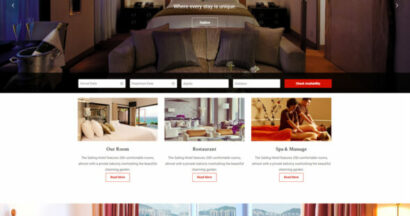
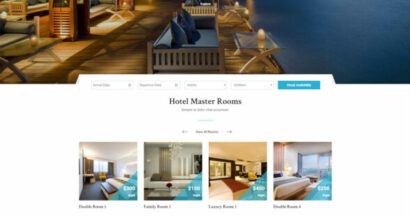
WP Hotel Booking is a free plugin developed by ThimPress for managing rooms and online reservations in WordPress. It is the most direct option in this list for a hotel that wants the booking experience to remain on its own website and prefers WordPress administration over a separate software dashboard.
The plugin supports room management, bookings, customers, pricing plans, coupons, extra packages, blocked dates, reports, taxes, and multiple payment methods. It can operate independently, while supported add-ons and compatible themes can extend the setup. ThimPress’s article about the WP Hotel Booking system provides a closer look at its reservation workflow.
- Best for: Small and midsize independent properties running WordPress.
- Why choose it: No separate hosted PMS is required for a straightforward room reservation site.
- Watch for: OTA synchronization, multi-property operations, and advanced front-desk workflows may require a broader platform or additional integration.
For a design built around the plugin, compare the Sailing hotel theme and LuxStay hotel and B&B theme. ThimPress also maintains a collection of hotel themes for different property styles.
2. Cloudbeds: Best All-in-One Platform for Growing Properties
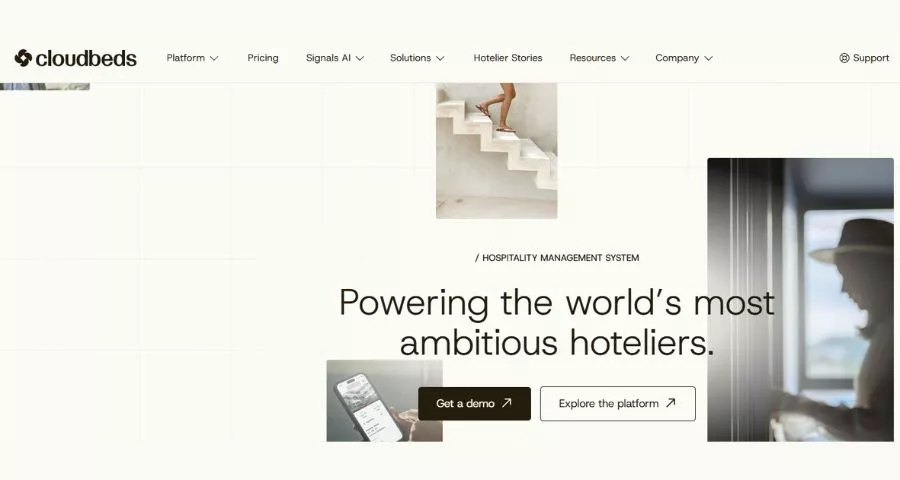
Cloudbeds combines a property management system, direct booking engine, channel management, payments, guest engagement, and other hospitality tools in a connected platform. It suits hotels and groups that have outgrown a basic booking calendar and need reservation data to move across front-desk and distribution workflows.
The booking engine can be embedded in a hotel website and display real-time availability and rates. Because it is controlled through the wider Cloudbeds platform, a direct reservation can feed the same operational system used for other channels. That reduces the need to copy booking details manually between tools.
- Best for: Independent hotels, hostels, and growing groups that want an integrated cloud stack.
- Why choose it: Strong connection between PMS, direct bookings, distribution, and guest management.
- Watch for: It may be more platform than a very small property needs, and pricing generally requires a tailored quote.
3. Little Hotelier: Best Hotel Booking Software for Small Properties
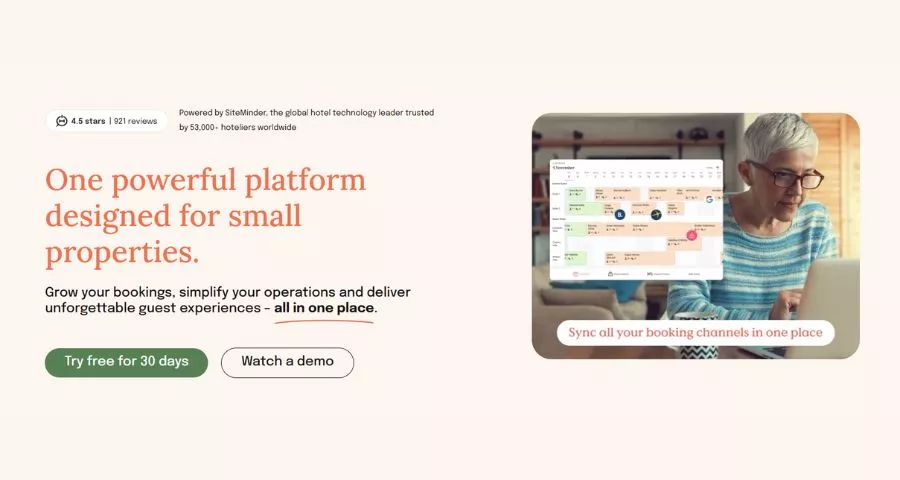
Little Hotelier is designed specifically for small accommodation businesses. It brings together a front-desk calendar, direct booking engine, channel manager, payments, website tools, reporting, and a mobile application without presenting the team with an enterprise-oriented interface.
This focus makes it a strong choice for an owner-operated hotel, motel, inn, guesthouse, or B&B. Staff can update reservations, room assignments, rates, and availability in one system, while integrations help reduce the risk of selling the same room twice across different channels.
- Best for: Small properties with limited staff and a need for simple daily administration.
- Why choose it: The feature set is shaped around smaller operators instead of being a reduced enterprise product.
- Watch for: Larger groups may eventually require deeper reporting, automation, or multi-property controls.
4. Hotelogix: Best for Front-Desk and Hotel Operations
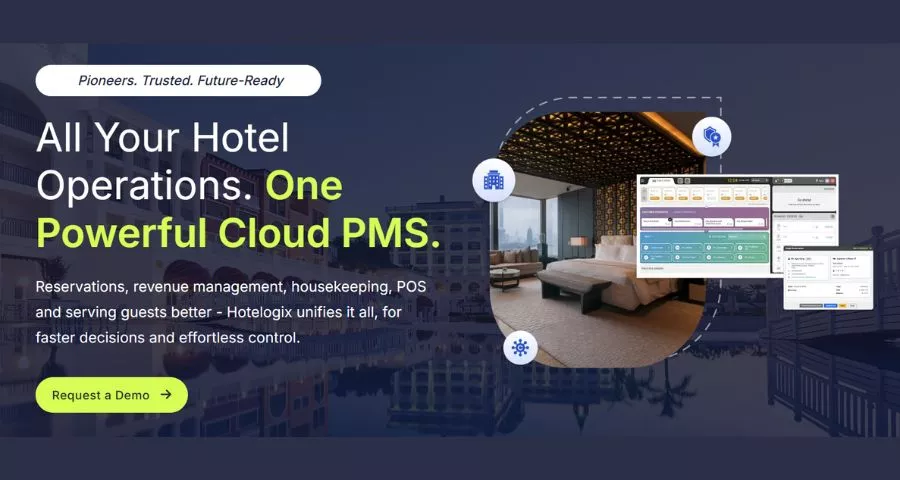
Hotelogix is a cloud-based hotel management platform that brings reservations together with front-desk tasks, room assignments, check-in and check-out, housekeeping, billing, and reports. It is a better match when the requirement extends beyond receiving reservations and into coordinating daily hotel operations.
For a property with several departments or more structured processes, this operational depth can be more valuable than a lightweight hotel room booking software tool. Cloud access also allows authorized staff to work from different devices and locations without maintaining an on-site server.
- Best for: Full-service hotels and multi-property businesses needing a central PMS.
- Why choose it: Reservations sit alongside front desk, housekeeping, billing, and management reporting.
- Watch for: Implementation and staff training will take more planning than installing a WordPress booking plugin.
5. Sirvoy: Best Straightforward PMS and Booking Engine
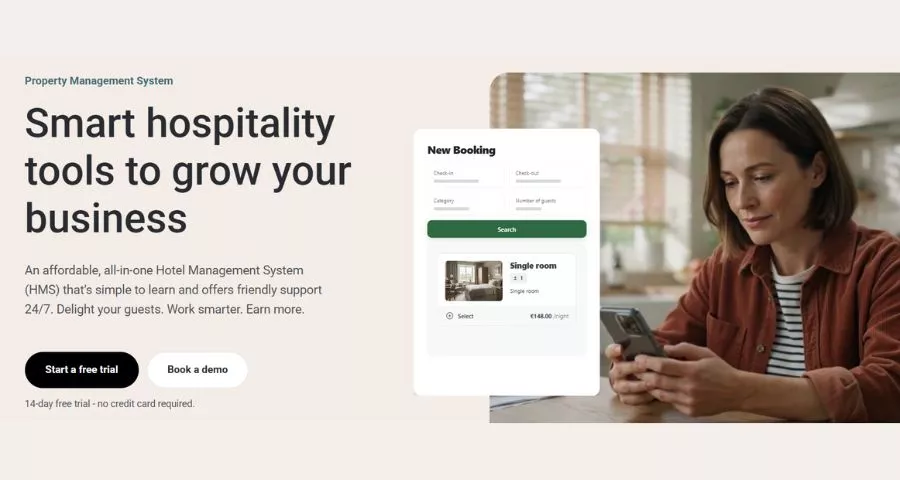
Sirvoy serves independent hotels, hostels, B&Bs, guesthouses, serviced apartments, campsites, and vacation rentals. Its system covers bookings, room and rate management, guest details, payments, housekeeping, reporting, automated communication, a booking engine, and channel connections.
It stands out for presenting these functions in a relatively direct package. A property can start with the essentials and still gain a shared operational view, rather than stitching together a calendar, form builder, payment plugin, and separate guest spreadsheet.
- Best for: Independent accommodation providers that want cloud convenience without unnecessary complexity.
- Why choose it: Booking engine and everyday PMS tools are available within the same system.
- Watch for: Confirm channel, payment, accounting, and regional compliance integrations for your market before migrating.
6. SiteMinder: Best for Distribution and Direct Booking Growth
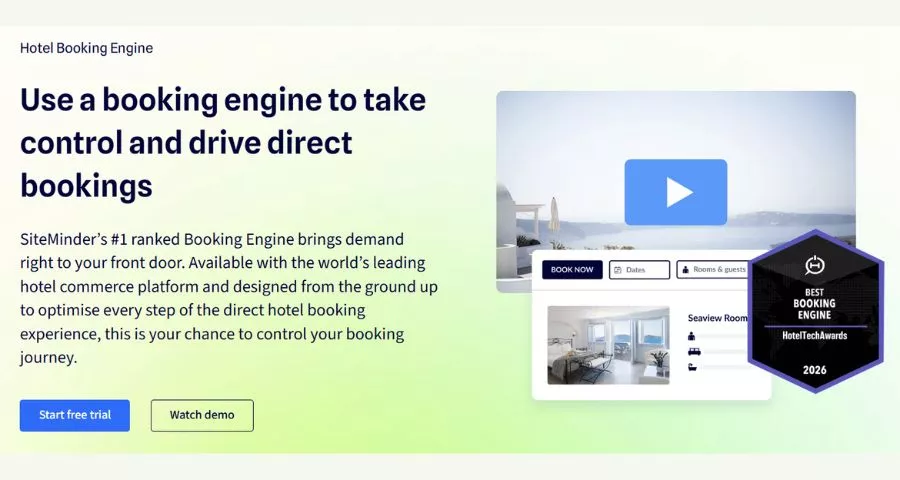
SiteMinder focuses on helping hotels distribute inventory and convert direct demand. Its booking engine can accept reservations through a hotel website, while its wider platform connects channels, rates, payments, and commercial tools. This makes it relevant to properties that want tighter control over both OTA distribution and direct sales.
The platform is particularly useful when the key problem is not simply recording a reservation, but keeping rates and availability synchronized across many places where guests shop. Hotels can use the booking engine with a direct website while managing broader distribution through the same ecosystem.
- Best for: Hotels that sell through several channels and want to grow direct bookings.
- Why choose it: Strong booking engine, distribution connectivity, and hotel commerce focus.
- Watch for: Check which PMS and regional payment integrations are included in the proposed setup.
Hotel Reservation System, Booking Engine, or PMS?
These terms are often used together, but they do not describe exactly the same thing. Some vendors also use broad labels such as hotel booking programs or hotel reservation application, so the feature scope matters more than the product category printed on the page.
- Booking engine: The guest-facing interface that shows availability, rates, rooms, extras, and checkout on your website.
- Hotel reservation system: The system that records and manages reservations, guest details, availability, rates, confirmations, changes, and cancellations.
- Property management system: A wider operational platform covering reservations plus front desk, room status, housekeeping, billing, reporting, and often integrations.
- Channel manager: The tool that synchronizes rates, availability, and reservations between the hotel and external distribution channels.
A small hotel may only need a WordPress booking engine and reservation dashboard. A larger property may need all four components working together. If you are building on WordPress, ThimPress’s comparison of booking calendar plugins explains when a simple calendar is enough and when a fuller system is justified.
Features to Look for in Online Hotel Reservation Software
Real-time room availability
The system should update availability as soon as a confirmed reservation, cancellation, or inventory change occurs. If you sell through OTAs, verify whether synchronization is real time and whether it is a two-way connection. This is the main defense against double bookings.
Flexible rates and restrictions
Look for seasonal rates, day-of-week pricing, occupancy-based charges, minimum stays, closed arrival or departure rules, promotional codes, packages, taxes, and fees. A system that cannot reflect your actual rate strategy will create manual work or confusing prices.
A mobile-friendly booking experience
The guest should be able to search dates, compare rooms, read policies, add extras, and pay from a phone. Test the entire flow rather than relying on a vendor’s “responsive” label. ThimPress’s hotel booking theme guide shows how booking functions and responsive design can be planned together.
Payments and confirmation
Confirm whether the software can take a deposit, full payment, card guarantee, or pay-at-property reservation. It should clearly handle failed payments, refunds, taxes, currencies, and automated confirmation messages. WordPress users who want broader gateway choice can consider a WooCommerce hotel booking setup.
Guest and staff workflows
For staff, check reservation editing, notes, room assignment, check-in, check-out, housekeeping status, exports, reports, and permission controls. For guests, review confirmation, modification, cancellation, pre-arrival information, and post-stay communication.
Support and documentation
Hotel systems are operational software. Ask what support is available during onboarding, weekends, and local business hours. WordPress users can refer to the ThimPress support ticket center, while each cloud vendor should provide its own onboarding and escalation process.
How to Choose Hotel Booking Software
- Map every sales channel. Include your website, phone, walk-ins, OTAs, travel agents, and corporate accounts.
- Document the reservation lifecycle. Follow one booking from search and payment through check-in, housekeeping, checkout, cancellation, and reporting.
- Separate required features from future wishes. A complicated system can slow a small team, while a basic plugin can limit a growing hotel.
- Check integrations before price. Confirm the PMS, channel, payment, accounting, email, lock, and analytics connections you actually need.
- Run a realistic trial or demo. Use real room types, rate rules, taxes, extras, and user roles instead of judging an empty account.
- Calculate total cost. Include setup, migration, training, payment fees, booking commissions, add-ons, support, and website development.
For a WordPress-first project, review the ThimPress plugin catalog and the company’s explanation of building a direct hotel booking site. If the website will redirect to an external engine, this guide to redirecting the Check Availability button illustrates one possible approach.
FAQs About Hotel Reservation Software
What is hotel reservation software?
Hotel reservation software manages room availability, rates, guest information, bookings, changes, cancellations, and confirmations. It may be a standalone reservation application, a WordPress plugin, or part of a larger cloud PMS.
What is the best hotel reservation software for a small hotel?
WP Hotel Booking is a practical choice for a small property that already uses WordPress and wants control over its website. Little Hotelier and Sirvoy are stronger candidates when the property also needs cloud-based front-desk, channel, and operational tools.
Can hotel reservation software prevent double bookings?
It can reduce double bookings when all active sales channels exchange availability and reservation data reliably. Confirm that the connection is two-way and close to real time. A calendar that only receives occasional imports is not equivalent to a connected channel manager.
Is free hotel booking software enough?
A free plugin can be enough for a small independent property with a simple booking model. Costs may still arise from hosting, development, themes, payment processing, premium add-ons, and maintenance. Compare the full operating setup rather than the initial license price alone.
Can I keep my WordPress website and use cloud reservation software?
Yes. Many cloud systems provide an embedded booking engine, widget, button, or hosted booking page that can be connected to WordPress. Check whether the integration preserves your branding, mobile experience, analytics, and conversion tracking.
If you prefer a tightly integrated WordPress experience, explore ThimPress’s Sailing hotel reservation design and its guide to hotel WordPress theme features before choosing a separate hosted engine.
Final Recommendation
Start with the operational problem, not the longest feature list. WP Hotel Booking is the best starting point for a WordPress property that wants a direct reservation system under its own control. Little Hotelier and Sirvoy suit smaller operators that prefer a hosted all-in-one service. Cloudbeds and Hotelogix provide more operational depth, while SiteMinder is especially relevant when distribution and direct booking growth are priorities.
Before signing a contract or rebuilding the website, test the complete reservation journey with your actual room types, rate rules, taxes, payment process, and staff roles. The best online hotel reservation system is the one that guests can complete confidently and the team can operate accurately every day.
Read More: Best Hotel Website Templates
Contact US | ThimPress:
Website: https://thimpress.com/
Fanpage: https://www.facebook.com/ThimPress
YouTube: https://www.youtube.com/c/ThimPressDesign
Twitter (X): https://x.com/thimpress_com