Selecting an educational platform often leads to unexpected software expenses. Understanding LMS pricing is critical to avoid exceeding the corporate training budget. Research indicates that 58% of organizations regret recent software purchases, with a significant portion citing higher-than-expected expenses.
Figuring out the true learning management system price involves looking beyond the initial subscription and analyzing hidden fees, user scaling rules, and integration charges.
This comprehensive guide breaks down various cost structures to help organizations identify the most suitable financial model for their training objectives.
Eduma – Education WordPress Theme
We provide an amazing WordPress theme with fast and responsive designs. Let’s find out!
Key Learning Management System Pricing Models
| Pricing Model | How It Operates | Ideal Organizational Profile | Cost Predictability |
| Pay Per Learner | Fixed flat rate for a specific number of registered users. | Organizations with mandatory training and stable employee counts. | High |
| Pay Per Active User | Billing occurs only for users who log in during the cycle. | Companies with fluctuating, seasonal, or irregular training demands. | Moderate |
| Pay As You Go | Transactional billing based on actual resource consumption. | Independent creators or businesses selling courses sporadically. | Low |
| License / Subscription | Periodic flat fee for tiered features and user limits. | Enterprises requiring predictable annual budgets and extensive features. | High |
| Freemium / Open Source | Free core software with optional paid add-ons or hosting. | Businesses seeking a low cost LMS with scalable WordPress integration. | Variable |
Breakdown of LMS Costs

Determining exactly how much an educational platform costs requires a multi-layered analysis. The cost of educational software is rarely a single fixed number; multiple expenditure categories continuously come into play. Proper budget allocation requires a deep understanding of these distinct financial components.
Onetime Expenses
Initial setup charges represent the first hurdle in the LMS pricing journey. These expenses typically include:
- Setup and Deployment Fees: Launching a robust platform requires configuration. Expenses may involve data migration from legacy systems, installation procedures for dedicated servers, and initial environment optimization.
- Customization and Development: Standard interfaces rarely match precise corporate branding. Modifying the user interface, creating custom learning paths, or building Application Programming Interfaces (APIs) to connect the platform with an existing Customer Relationship Management (CRM) tool usually incurs bespoke development charges.
Recurring Payments
Operational continuity requires consistent financial investment. The following recurring fees apply to most online training solutions:
- Subscription and Licensing: These represent the core learning management system price, billed on a monthly or annual basis. They secure access to the software environment.
- System Maintenance: Proprietary subscriptions generally cover security patches and feature updates. However, organizations utilizing complex self-hosted environments must allocate internal budgets for ongoing technical maintenance.
Possible Additional Costs
Hidden expenses often inflate the final learning management system pricing structure.
- Administrator Training: Complex administrative dashboards demand specialized training. To bypass this expense, organizations should select user-friendly platforms that provide complimentary tutorials, comprehensive documentation, and setup wizards.
- Technical Support Services: Basic packages usually include standard email ticketing. Premium support, featuring dedicated account managers or round-the-clock phone assistance, frequently requires a higher financial tier.
- Premium Add-ons: Core subscriptions might lack specific functionalities. Features such as gamification, advanced assignment grading, or specific payment gateways often require purchasing separate extensions. For example, extending LearnPress capabilities with specialized add-ons is detailed further below.
Factors That Influence LMS Pricing
Several structural elements determine final software expenditures. Evaluating these factors allows administrators to optimize the configuration of their chosen platform.
User Count
The total volume of individuals accessing the platform dictates server bandwidth, storage requirements, and customer support bandwidth. Higher user counts universally drive up software expenses.
Organization Size
Large enterprises orchestrating multiple departments demand advanced hierarchical capabilities, multi-branch management, and scalable infrastructure. These sophisticated requirements elevate the overall cost.
Customization Needs
Extensive white-labeling, bespoke reporting dashboards, and unique certification designs influence the necessity for premium software tiers or external developer intervention.
Features and Functionality
The scope of technical capabilities greatly impacts the final invoice. Platforms offering established artificial intelligence tools, interactive video quizzes, and advanced automation command higher rates than basic text-based delivery systems.
Hosting and Infrastructure
Modern Software-as-a-Service (SaaS) providers embed cloud hosting within the subscription. Conversely, deploying on-premise solutions requires substantial internal hardware investments. The choice between vendor-hosted and self-hosted environments drastically alters the financial blueprint. For instance, choosing between various hosting solutions is covered extensively in discussions on best web hosting for WordPress.
Support and Maintenance Levels
While standard technical support guarantees basic operational stability, complex corporate integrations necessitate advanced Service Level Agreements (SLAs). Upgraded support tiers significantly impact ongoing software budgets.
Tips for the Optimization of LMS Costs
Strategic planning ensures that organizations secure maximum value without unnecessary expenditures. Implement the following strategies to optimize budget allocation:
- Assess Training Requirements: Catalog current and future educational objectives before reviewing platforms. Ensure the software provides relevant features without forcing the purchase of redundant tools. For instance, mandatory compliance training requires robust certification tracking, while remote workforces demand flawless mobile compatibility.
- Compare Multiple Solutions: Utilize independent ratings, software demonstrations, and free trials to evaluate usability. Request detailed proposals and rigorously compare vendor contracts to understand exactly what the learning management system price includes. For educational sites, evaluating different best learning management software options is crucial.
- Leverage Vendor Discounts: Software providers frequently offer incentives for annual commitments over monthly billing. Furthermore, organizations can negotiate bulk user discounts or inquire about seasonal promotional bundles. Discover opportunities for coupons to enhance savings.
- Review System Usage Regularly: Continuous monitoring prevents paying for dormant capacity. Ensure the workforce actively utilizes the software to achieve expected outcomes. If platform engagement remains low, downgrading the subscription or migrating to a highly usable low cost LMS becomes necessary.
- Gather Stakeholder Feedback: Collect insights from administrators, instructors, and learners to identify operational bottlenecks and areas for financial optimization.
Detailed Analysis: Popular LMS Pricing Models

Understanding the mechanics of various billing structures is essential for selecting a sustainable platform. Below is a detailed exploration of the most prevalent market models.
1. Pay Per Learner
The pay-per-learner structure operates on a straightforward principle: organizations remit a fixed fee for a predefined number of registered accounts within the system. This model simplifies financial forecasting for annual budgets. Generally, these tiers follow a volume discount approach; as the volume of registered users increases, the individual unit cost decreases.
- Ideal Application: This approach benefits organizations with stable, permanent employee counts where ongoing education is a mandatory corporate requirement.
- Advantages: Financial predictability remains extremely high. Administrators know exactly what the software will cost for the entire fiscal year.
- Disadvantages: Organizations risk significant financial waste. The vendor charges for every registered account, regardless of whether the employee actively logs in or completes a module.
2. Pay Per Active User
Addressing the inefficiencies of the previous model, pay-per-active-user billing targets actual system engagement. Organizations only incur charges for individuals who authenticate and log into the portal during a specific billing cycle. It is crucial to note that vendors often bundle active users into predefined tiers (e.g., up to 250 active users). If only 200 users log in, the organization still pays for the 250-user tier.
- Ideal Application: Businesses managing fluctuating seasonal staff, rotating contractor groups, or sporadic compliance training cycles.
- Advantages: Eliminates financial waste associated with dormant “ghost” accounts. Administrators spend less time manually deleting inactive profiles to free up system seats.
- Disadvantages: Pre-paid tiered structures mean organizations must still pay the full tier price even if actual engagement falls slightly below the maximum threshold.
3. Pay As You Go
Operating strictly on consumption, this model ties the learning management system pricing directly to precise resource utilization. Organizations purchase functional “credits” and consume them only when learners access specific materials or complete transactions.
- Ideal Application: Commercial course creators, external training consultants, and organizations with highly unpredictable training demands.
- Advantages: Absolute financial control. Expenses scale in perfect alignment with training consumption or course revenue.
- Disadvantages: Budgetary unpredictability. A sudden surge in training requirements can result in an unexpectedly high monthly invoice, complicating corporate financial planning.
4. License Fee / Subscription
This structure represents the most traditional software billing format. Organizations purchase a periodic license (typically annual) granting access to the environment. Pricing depends heavily on the feature set included rather than individual user counts. Upgrading the subscription unlocks advanced integrations, automated reporting, and increased storage parameters.
- Ideal Application: Large enterprises requiring predictable flat-rate billing and access to comprehensive, enterprise-grade functionalities.
- Advantages: Zero billing surprises. Flat charges eliminate the need to constantly monitor active user quotas or purchase additional credits.
- Disadvantages: Lack of downward flexibility. Contracts mandate payment regardless of actual system utilization. Furthermore, securing one specific advanced feature often requires purchasing the most expensive premium package.
5. Open-Source and Freemium Models
Open-source and freemium architectures grant users access to the core software without mandatory upfront licensing fees. Organizations install the platform on their own infrastructure, maintaining total ownership of the environment. While the core code is free, the true learning management system price emerges through necessary hosting, security maintenance, and premium extensions.
- Ideal Application: Entities desiring absolute data sovereignty, high customization capabilities, and the ability to scale users infinitely without penalty.
- Advantages: Complete operational independence. Organizations can host unlimited users without incurring per-seat vendor penalties.
- Disadvantages: Requires substantial internal technical expertise. Organizations must manage their own server architecture, security protocols, and system updates.
Comprehensive LMS Pricing Examples (Updated)
To provide practical context regarding LMS pricing, the following section outlines the cost structures of prominent educational platforms currently dominating the market.
1. LearnPress LMS

LearnPress stands out as a highly flexible, widely adopted WordPress LMS plugin designed to transform any standard WordPress site into a comprehensive educational portal. With over 90,000 active installations, it represents the ultimate low cost LMS due to its scalable freemium architecture. Organizations can launch their academies without excessive upfront software licensing fees and expand functionality precisely as needed.
Instead of rigid per-user penalties, LearnPress operates on an add-on and bundle methodology, granting organizations total control over their user base and financial commitments. For a complete understanding of available integrations, check out the full list of LearnPress add-ons.
Pricing Structure:
- Free Plan ($0): Perfect for bloggers and solopreneurs. Includes the modern course builder, unlimited users (managed via WordPress), 8 free add-ons, and lifetime updates.
- Pro Bundle ($299 annually, previously $710): Tailored for agencies and professional academies. This tier unlocks all premium add-ons (including Assignments, Gradebook, WooCommerce integration, and advanced Quizzes), priority support, and 12 months of updates for a single site. Learn more about the comprehensive LearnPress Pro Bundle.
- Customize (Build Your Own): Starting from $19 per individual add-on. This allows administrators to pay exclusively for specific functionalities, such as Stripe integration or specific quiz types, ensuring precise budget optimization.
LearnPress also features LearnPress AI, an established, powerful assistant integrated into the platform to accelerate course generation, curriculum planning, and content description formatting, providing immense value for content creators.
“LearnPress is an extremely strong educational tool for the cost. It operates seamlessly on WordPress, completely bypassing the excessive per-user price tags of traditional platforms while providing every necessary feature to scale.”
— Senior Training Administrator, Healthcare Sector
2. LearnDash

LearnDash functions as a premium WordPress plugin. Rather than charging per user, the financial model revolves around the number of active website licenses an organization requires.
Pricing Structure:
- 1-site license: $199 per year
- 10-site license: $399 per year
- Unlimited site license: $799 per year (Includes automatic updates and standard technical support during the active subscription period).
3. Blackboard Learn

Dominating the higher education and university sectors, Blackboard Learn utilizes a complex cloud-based licensing structure. The financial commitment relies heavily on student enrollment numbers and institutional infrastructure requirements.
Pricing Structure:
Available exclusively via bespoke institutional requests.
4. Moodle
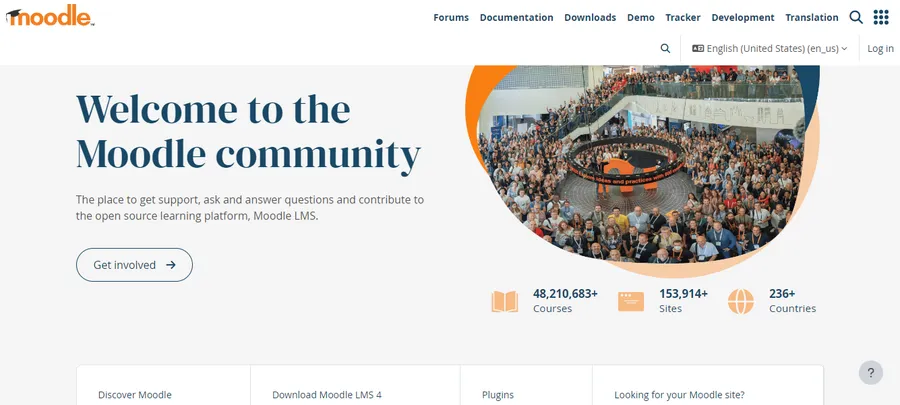
Moodle remains the most recognized open-source educational software globally. While the core repository is downloadable at no cost, institutions must allocate resources for specialized hosting, technical maintenance, and interface optimization. Alternatively, organizations can utilize managed cloud environments.
Pricing Structure (Moodle Cloud):
- Starter: $120/year (50 users)
- Mini: $210/year (100 users)
- Small: $390/year (200 users)
- Medium: $900/year (500 users)
- Large: $1,700/year (1,000 users)
5. Litmos
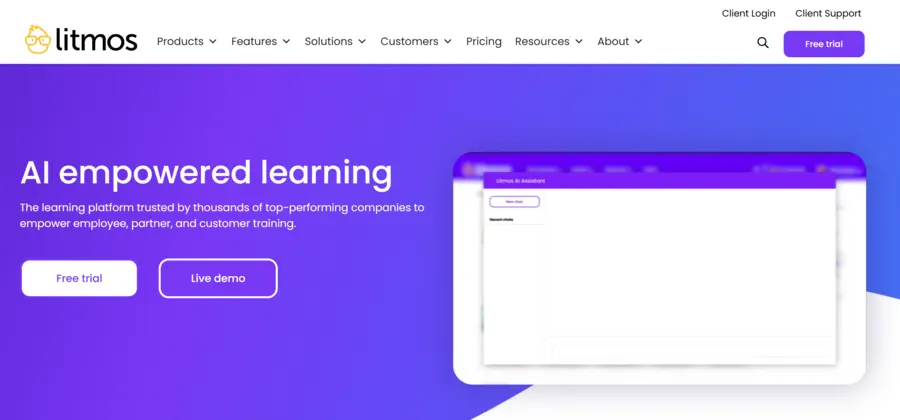
Litmos delivers corporate training through a tiered subscription model based on specific user brackets. The platform requires organizations to upgrade tiers to unlock advanced automated reporting and specialized integrations.
Pricing Structure:
Pricing brackets are obscured behind mandatory vendor consultation forms, tailored specifically to the requesting corporation’s scale.
6. Totara
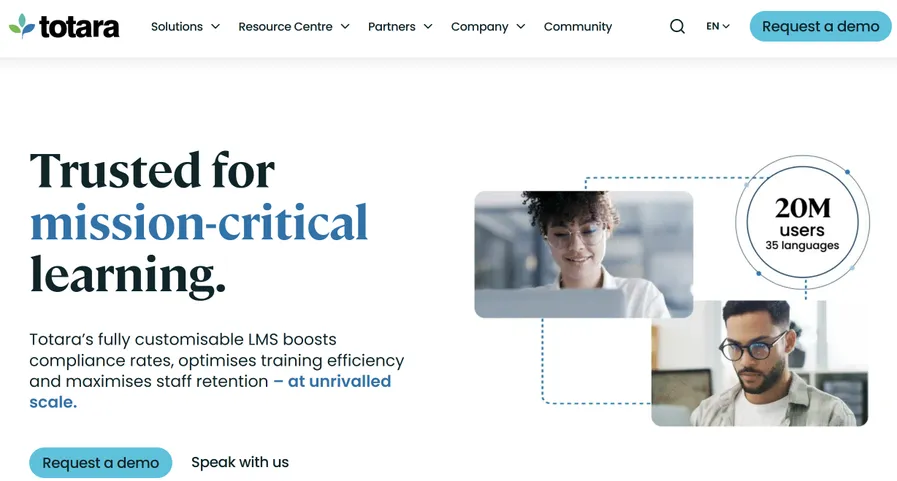
Developed as a corporate-focused offshoot of the Moodle framework, Totara provides open-source flexibility combined with advanced performance management and compliance tracking modules.
Pricing Structure:
As a highly customizable enterprise solution, exact deployment costs depend entirely on the chosen integration partner and required architectural modifications.
How to Choose the Best LMS Pricing Model
The vast array of software configurations can quickly overwhelm decision-makers. Prior to executing a software contract, follow these five sequential steps to identify the platform offering maximum operational value.
Step 1. Audit Precise User Metrics
Ascertain the exact number of individuals accessing the environment during a standard billing cycle. Determine whether this baseline figure will remain static or fluctuate significantly due to seasonal hiring or cyclical compliance mandates.
Step 2. Analyze the User Lifecycle
Evaluate the longevity of the average user profile. If the platform serves primarily as an onboarding tool, the total number of simultaneous active learners may remain stable, but the specific individuals will rotate continuously. This scenario heavily favors active-user or flat-rate models over strict per-seat licensing.
Step 3. Calculate Content Storage Requirements
Learning management system pricing occasionally relies on server storage capacities. Organizations utilizing heavy multimedia content, such as interactive video modules or extensive document libraries, must prioritize providers offering generous or unlimited data hosting to avoid constant storage overage penalties.
Step 4. Define Essential Capabilities
Establish a strict hierarchy of mandatory software features. This prioritization instantly eliminates vendors lacking critical functionalities. Understanding exactly which integrations (e.g., WooCommerce, Stripe, specific CRM links) are non-negotiable allows administrators to assess the true financial value of respective subscription tiers.
Step 5. Interrogate Hidden Financial Obligations
Achieving absolute clarity regarding LMS pricing requires investigating secondary financial layers.
- Unforeseen Ancillary Costs: Request a comprehensive invoice detailing implementation fees, data migration labor, premium technical support upgrades, and essential third-party add-ons. Documenting these elements prevents mid-deployment budget crises.
- Scaling Protocols: Clarify the exact financial mechanisms triggered when user limits are breached. Determine whether the software automatically blocks new registrations or if the vendor automatically upgrades the billing tier. Understand the contractual procedures for downgrading subscriptions during economic downturns.
- Exit Strategies: Review cancellation clauses and data extraction fees. Organizations must retain the ability to migrate their intellectual property and user databases seamlessly if the platform ceases to meet corporate objectives.
A Real-Life Example of Selecting an LMS Pricing Type
The Situation:
Oticon, a prominent hearing healthcare enterprise, mandated consistent educational standards across a distributed network of 250+ nationwide employees. Delivering uniform product messaging remained a critical operational objective. The enterprise required a platform to host a rigorous 10-week onboarding curriculum and an extensive library exceeding 300 technical product modules.
The non-negotiable technical requirements included:
- Offline mobile accessibility for field representatives traveling constantly.
- Granular analytics to monitor completion rates and compliance metrics.
- Automated learning paths to structure individualized progression tracks.
Estimating Options:
Selecting a rigid per-user model proved financially unviable, as the company required fluid access without paying for continuously inactive accounts. Furthermore, traditional flat-fee licensing platforms either lacked the necessary offline mobile capabilities in their basic tiers or demanded exorbitant enterprise fees for features the company did not need. Open-source raw deployments were also dismissed, as the organization lacked the internal IT bandwidth to configure and secure a bare-metal environment.
The Solution:
The enterprise strategically opted for a highly customizable WordPress-based solution utilizing LearnPress LMS. By leveraging a low cost LMS infrastructure via the LearnPress Pro Bundle, the company bypassed excessive per-user penalties completely. Because the software operates on WordPress, the organization retained total control over unlimited user generation and data storage. They acquired the necessary learning path functionalities and mobile-responsive capabilities via specific add-ons, ensuring a perfectly tailored environment that aligned flawlessly with their budgetary restrictions.
Conclusion
Mastering the complexities of LMS pricing requires diligence, foresight, and a thorough understanding of corporate educational objectives. No singular pricing model satisfies every organizational requirement. Whether an enterprise selects a predictable subscription tier, a consumption-based credit system, or a highly scalable WordPress solution like LearnPress, the decision must harmonize with long-term fiscal strategies.
By meticulously analyzing user lifecycles, demanding transparent vendor contracts, and leveraging modular software architectures to avoid unnecessary feature bloat, administrators can confidently secure a powerful, sustainable educational environment that drives workforce development without jeopardizing the corporate budget.
Frequently Asked Questions (FAQs)
1. What is the most significant factor affecting learning management system pricing?
The most substantial variables include total user volume, the choice between cloud-hosted and self-hosted infrastructure, and the necessity for complex third-party software integrations. Advanced support requirements also significantly inflate costs.
2. Can a low cost LMS effectively handle enterprise-level training requirements?
Absolutely. Platforms utilizing a freemium or modular add-on architecture, such as LearnPress on WordPress, allow large organizations to scale user counts infinitely without per-seat penalties, providing enterprise-grade functionality at a fraction of traditional corporate software costs.
3. Are there hidden fees associated with open-source educational software?
Yes. While the foundational code incurs no licensing fee, organizations must allocate substantial budgets for secure server hosting, ongoing technical maintenance, bespoke interface development, and the salaries of dedicated IT personnel required to manage the infrastructure.
4. How does the “pay per active user” model differ from “pay per learner”?
Pay per learner mandates a fixed fee for every individual registered in the database, regardless of activity. Pay per active user ensures the organization only incurs charges for employees who successfully log into the platform during that specific billing period, reducing financial waste.
5. Why is reviewing cancellation policies important when assessing an LMS price?
Organizations outgrow platforms or require shifts in technical strategies. Understanding exit costs, data extraction fees, and contract termination penalties ensures the business can migrate to a new system in the future without suffering severe financial losses or losing access to historical training records.
Read more: Online Course Platforms Comparison: 2026 Buyers Guide
Contact US | ThimPress:
Website: https://thimpress.com/
Fanpage: https://www.facebook.com/ThimPress
YouTube: https://www.youtube.com/c/ThimPressDesign
Twitter (X): https://x.com/thimpress_com