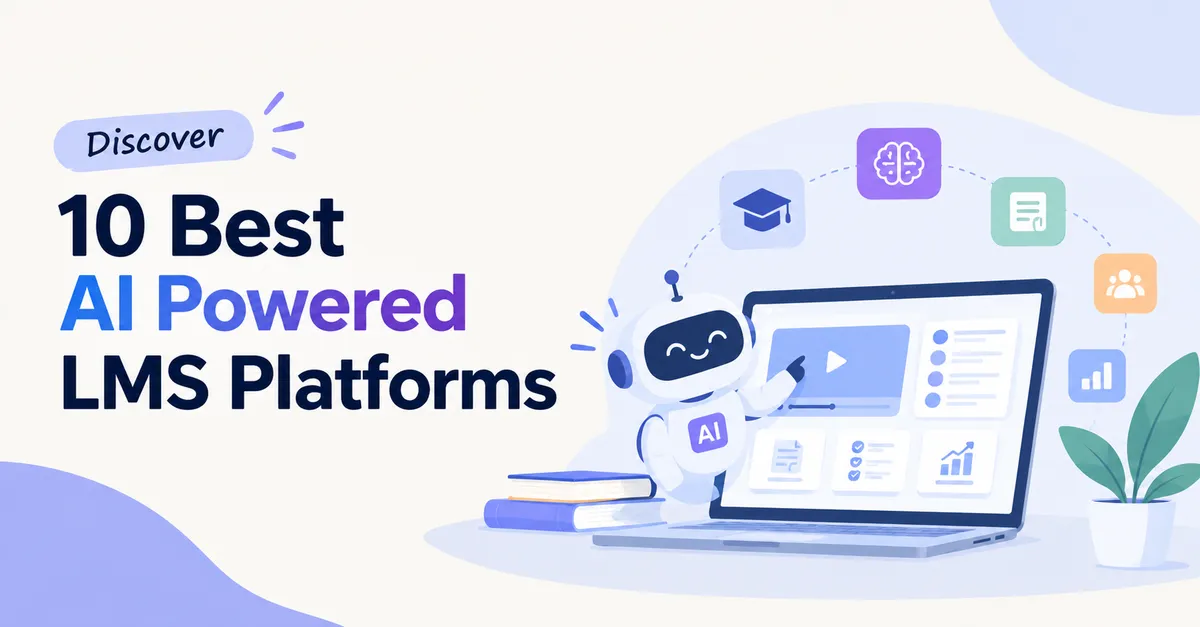
Building an online course from scratch often means staring at a blank screen while wrestling with slow, manual configuration settings. That frustration is exactly why educators and organizations are aggressively shifting toward an AI powered LMS.
An AI learning management system changes the workflow entirely. Often, these workflows were constrained by an outdated content management system that offered zero automation. Today, an AI based LMS automates these ordinary, repetitive tasks, freeing up human professionals to focus on higher-level strategies.
This guide evaluates the top smart platforms on the market right now, breaking down their actual content generation capabilities, practical use cases, and which tool fits specific training goals.
Eduma – Education WordPress Theme
We provide an amazing WordPress theme with fast and responsive designs. Let’s find out!
Top AI Learning Management Systems
Before we dive into the comprehensive and detailed reviews of each platform, here is a quick overview of the leading platforms currently available in the educational technology market.
This summary will help you identify which system might be the best starting point for your specific organizational requirements.
| Platform | Best For | Key AI Features | Deployment |
| LearnPress LMS | WordPress integration & full ownership | Instant course architecture, copywriting, seamless workflow | WordPress Plugin |
| Docebo | Enterprise scale training & onboarding | Deep search, skill-tagging, virtual coaching simulations | Cloud SaaS |
| 360Learning | Collaborative and peer-to-peer learning | AI companion, question generator, document transformation | Cloud SaaS |
| TalentLMS | Intuitive training creation for smaller teams | AI skills gap analysis, interactive practice sandbox | Cloud SaaS |
| Absorb LMS | High learner engagement & retention | Intelligent content recommendations, adaptive assessments | Cloud SaaS |
| Sana Learn | Comprehensive enterprise knowledge management | Real-time search queries, adaptive learning paths | Cloud SaaS |
| Thinkific | Independent creators and digital educators | AI outline generator, automated video captioning | Cloud SaaS |
| Continu | Advanced reporting and deep analytics | AI-powered learning paths, automated sequencing | Cloud SaaS |
| iSpring Learn | Global training localization & mobile access | Multilingual translation, on-the-job video enhancements | Cloud SaaS |
| SkyPrep | Streamlined content creation and testing | AI assessment builder, rapid content generation | Cloud SaaS |
Understanding the AI Based LMS Revolution
The algorithms behind modern natural language processing now allow these educational platforms to extract valuable insights from vast amounts of user data.
To better grasp the underlying mechanics of this technology, exploring the nuances of machine learning vs AI can provide a deeper understanding of how these systems predict user behavior. This underlying technology drives what is known as adaptive learning.
Adaptive learning is an innovative approach that uses artificial intelligence algorithms to deliver personalized educational experiences built directly on skills-based recommendations.
The shift here is monumental. Instead of merely delivering static, one-size-fits-all content to every single employee regardless of their background, an LMS with AI curates dynamic environments that respond to user behavior, quiz scores, and engagement metrics in real-time.
Core Benefits of an AI Learning Management System
Implementing the best AI LMS provides measurable and immediate advantages across multiple organizational levels, from the human resources department down to the individual learner.
Integrating these platforms alongside the best AI productivity tools can completely revolutionize your corporate workflow.
- Total Task Automation: Routine administrative functions such as test grading, new user enrollment, certificate generation, and compliance tracking are handled completely automatically.
- Rapid Course Creation: Generative artificial intelligence empowers subject matter experts to design and deploy complex training content at an unprecedented scale.
- Targeted Skill-Based Recommendations: By constantly analyzing learner interactions, test scores, and historical data, the system anticipates future learning needs. It proactively suggests relevant materials, videos, and articles to close specific knowledge gaps before they become critical performance issues on the job.
- Real-Time, Actionable Analytics: Advanced data preparation tools provide instant, visually appealing metrics on course completion rates, overall engagement levels, and assessment scores.
- Significant Cost Efficiency: Companies no longer need to hire expensive third-party agencies or freelance instructional designers to build standard, everyday training modules.
Detailed Reviews of the Best LMS Software With AI
In this section, we will thoroughly explore the leading platforms, breaking down exactly how they function, their standout capabilities, their ideal use cases, and who they serve best in the modern digital landscape.
1. LearnPress LMS (with LearnPress AI)
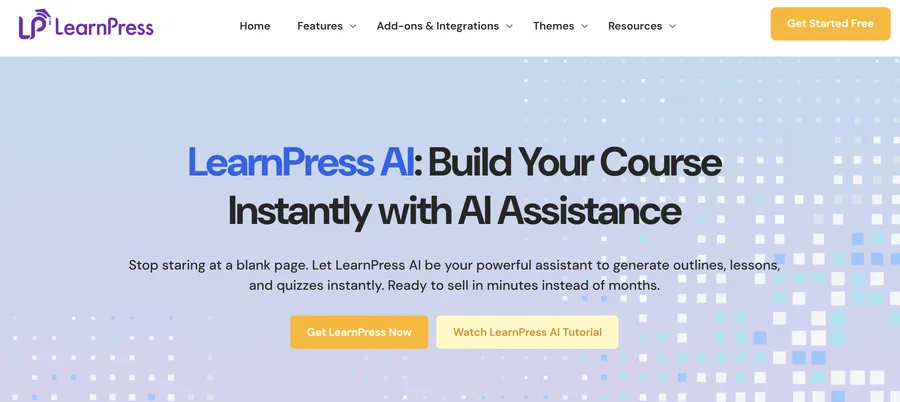
For organizations, freelance educators, and marketing agencies utilizing the WordPress content management system, LearnPress LMS stands out firmly as the premier AI powered LMS. Currently powering over 100,000 eLearning websites globally, it provides a seamless, native WordPress experience combined with cutting-edge content automation.
If your ultimate goal is to create a WordPress LMS website from scratch, this plugin is an absolute necessity.
How It Works:
LearnPress AI acts as an incredibly intelligent, tireless sidekick for course creators.
Users simply open their WordPress dashboard, enter a desired topic, specify the ultimate course goals, and define their target audience. In a matter of moments, the AI lesson generator delivers a fully structured, SEO-optimized curriculum directly into the editor.
This includes catchy lesson titles, clear learning outcomes, and persuasive marketing summaries designed to maximize student enrollment from the very first click.
Key Features:
- Instant Course Architecture: It entirely removes the stress of curriculum design by generating a logical, student-ready module hierarchy instantly. You do not have to worry about how to sequence your knowledge; the system securely maps it out for you.
- Conversion-Focused Copywriting: It does not just build the inside of the course; it writes high-converting summaries and promotional copy for your external landing pages, saving you hours of marketing effort and external agency fees.
- Full Data Ownership: Because it operates natively within your own WordPress installation, your organization retains complete control over all content, private student data, and financial revenue without paying a middleman.
- Exceptional Scalability: The open-source, lightweight nature of the plugin ensures a smooth user experience. Furthermore, it integrates flawlessly with the highly acclaimed Eduma education WordPress theme, providing a beautiful, professional frontend design instantly.
Pros & Cons:
- Pros: There is absolutely no third-party data hosting, making it highly secure. It is incredibly cost-effective and integrates perfectly with standard WordPress setups, popular page builders, and eCommerce themes.
- Cons: It strictly requires a functioning WordPress website to operate. Furthermore, users are entirely responsible for managing their own web hosting performance, core updates, and site security.
2. Docebo
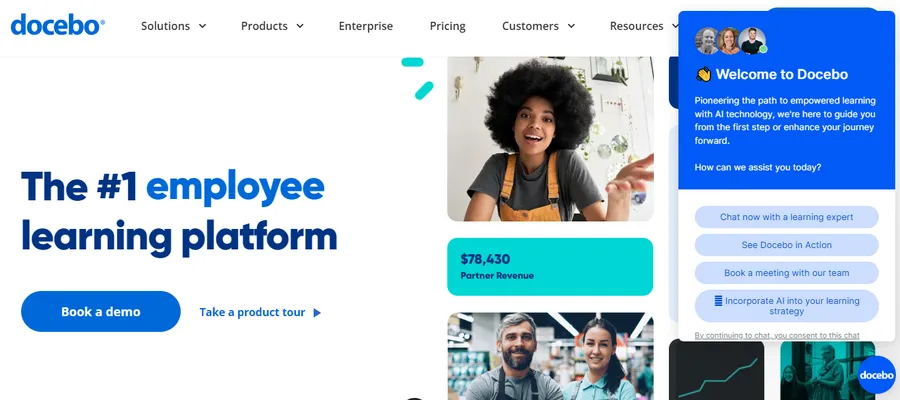
Docebo is a massive, highly robust, cloud-based AI learning management system tailored specifically for enterprise-level training and global corporate deployments.
It is widely considered the best LMS for employee training when dealing with thousands of users, highly complex organizational charts, and demanding compliance requirements.
How It Works:
Docebo focuses on making enterprise learning a continuous, seamlessly integrated experience rather than a one-off event. The platform utilizes advanced machine learning to precisely understand what each employee does on a daily basis and what critical skills they need to acquire to secure a promotion or improve their daily output.
Key Features:
- Deep Semantic Search: The system thoroughly analyzes learning content across multiple formats—including video transcripts, long-form PDFs, and slide decks—categorizing keywords to significantly improve discoverability when an employee searches for a specific operational procedure.
- Automated Skill-Tagging: It automatically identifies critical phrases within uploaded courses to generate highly relevant tags. This profoundly streamlines catalog management for administrators who previously had to tag thousands of assets manually.
- Virtual Coaching: Docebo offers simulated, role-based practice sessions powered by generative technology, delivering constructive, real-time feedback to users as they navigate complex workplace scenarios and delicate corporate negotiations.
Pros & Cons:
- Pros: Offers truly exceptional scalability for massive multinational corporations. It possesses a highly intuitive, Netflix-style user interface and provides incredibly strong multilingual support for diverse global workforces.
- Cons: The premium enterprise pricing structure can be highly prohibitive for small to medium businesses. Additionally, the initial setup and configuration process is quite complex and almost always requires a dedicated onboarding specialist.
3. 360Learning
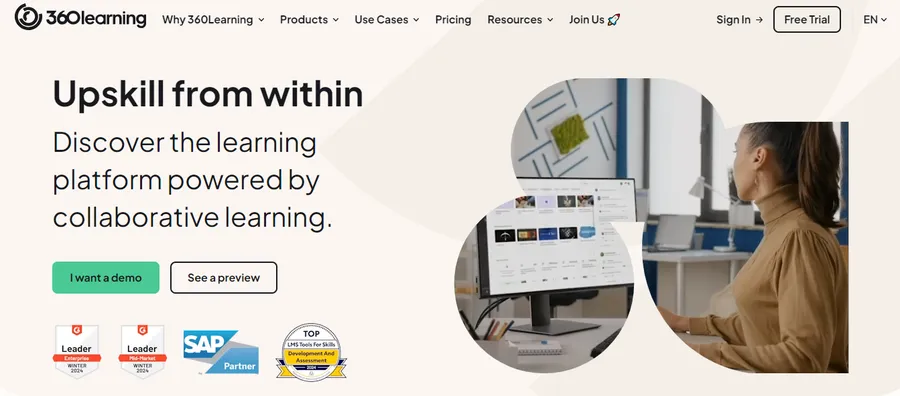
Ranked highly among collaborative and social educational platforms, 360Learning is an innovative AI based LMS designed specifically to extract internal expertise from your employees and turn it into structured, formal educational material quickly and efficiently.
How It Works:
Rather than relying solely on a top-down instructional approach where the HR department dictates all learning materials, 360Learning strongly encourages peer-to-peer knowledge sharing.
It allows your absolute top performers in sales, engineering, or customer service to easily document their winning strategies, record their workflows, and share them with the rest of the company in a structured format.
Key Features:
- Intelligent AI Companion: A built-in virtual assistant that provides highly personalized support to learners, aids in rapid content discovery, and offers automated coaching prompts to keep students actively engaged throughout their journey.
- Seamless Document Transformation: It takes static, potentially boring internal documents (such as lengthy PDF manuals or old PowerPoint presentations) and converts them into highly interactive, engaging digital courses automatically.
- Automated Question Generator: The platform can intelligently create varied multiple-choice and true/false assessments in various languages based directly on the provided text, ensuring that quizzes perfectly match the assigned reading material.
Pros & Cons:
- Pros: Excellent for crowdsourcing internal company knowledge and fostering a collaborative, modern corporate culture. It features a highly engaging, interactive user experience that employees actually enjoy logging into.
- Cons: The overall success of the platform is heavily reliant on internal subject matter experts actively participating in the content creation process. If your team is not highly engaged, the platform loses its primary competitive advantage.
4. TalentLMS
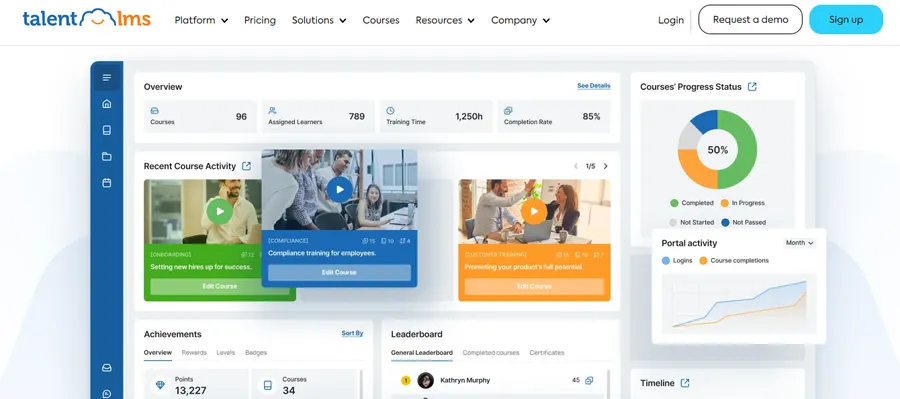
TalentLMS provides an exceptionally intuitive, all-in-one educational platform perfectly suitable for mid-sized organizations that currently lack dedicated instructional design teams. It effectively combines rapid course authoring with a unique, highly secure practice environment.
How It Works:
TalentLMS focuses exclusively on removing the technical barriers to digital course creation. It is intelligently designed so that anyone in the company, regardless of their prior technical background, can log in, outline a topic, and have the system build a comprehensive, polished learning module ready for immediate distribution.
Key Features:
- TalentCraft Studio: This feature generates complete, ready-to-publish learning modules—including interactive quizzes, highly relevant images, and accurate video captions—directly from a simple text prompt or an uploaded reference document.
- Interactive Learning Playground: This provides an automated, risk-free space where users can safely practice difficult role-plays, engage in complex branching simulations, and receive adaptive questioning outside of formal, strictly graded course structures.
- Automated Skills Gap Analysis: The system meticulously maps employee competencies against their required job roles and proactively suggests highly relevant training modules to address any identified professional deficiencies before they impact performance.
Pros & Cons:
- Pros: Extremely user-friendly with a very gentle, forgiving learning curve. The sandbox practice environments significantly enhance practical skill retention compared to passive video watching or reading.
- Cons: Advanced predictive analytics, highly customized reporting, and deep ROI modeling features are strictly restricted to the higher-tier, significantly more expensive pricing plans.
5. Absorb LMS
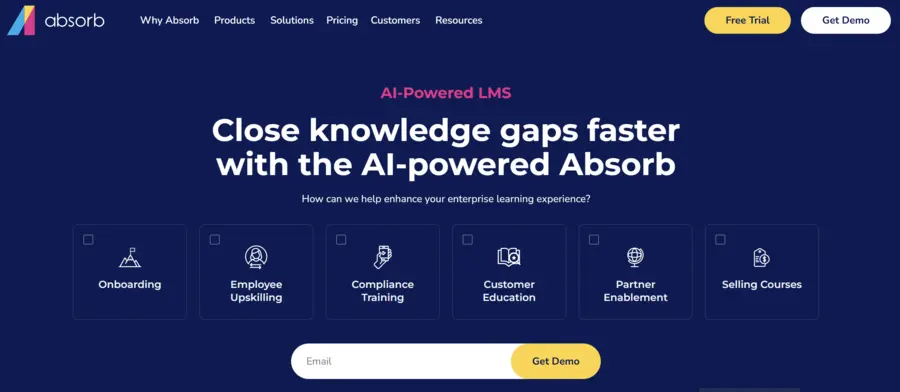
Absorb LMS is a widely recognized, highly respected LMS with AI that focuses heavily on maximizing learner engagement and dramatically streamlining administrative efficiency. It is highly popular in strictly regulated industries such as modern healthcare, software technology, and global finance.
How It Works:
Absorb LMS places the overall learner experience at the absolute forefront of its design philosophy. It uses artificial intelligence not just to rapidly build courses, but to ensure that the user interface feels alive, constantly updating with fresh new recommendations and tracking progress in a visually motivating way.
Key Features:
- Intelligent Content Recommendations: The system actively evaluates massive user datasets to automatically suggest highly relevant, timely content on the user’s dashboard via a dynamic trending ribbon, functioning much like a modern streaming service interface.
- Intelligent Administrative Assist: This feature drastically streamlines complex backend administrative tasks. Managers can simply use simple natural language commands to pull complex data reports, enroll massive cohorts of users, and configure complicated system settings.
- Highly Adaptive Assessments: It offers dynamic, constantly shifting quizzes that automatically adjust their level of difficulty based entirely on the accuracy of the user’s previous responses, ensuring the test is neither too easy nor impossibly hard.
Pros & Cons:
- Pros: Features a beautifully designed, highly mobile-friendly interface that learners love. It also boasts incredibly strong automated reporting capabilities that easily satisfy strict third-party compliance audits.
- Cons: Because the platform is so incredibly feature-rich, advanced backend configurations may require specialized technical training and a slightly longer implementation period for new administrators.
6. Sana Learn
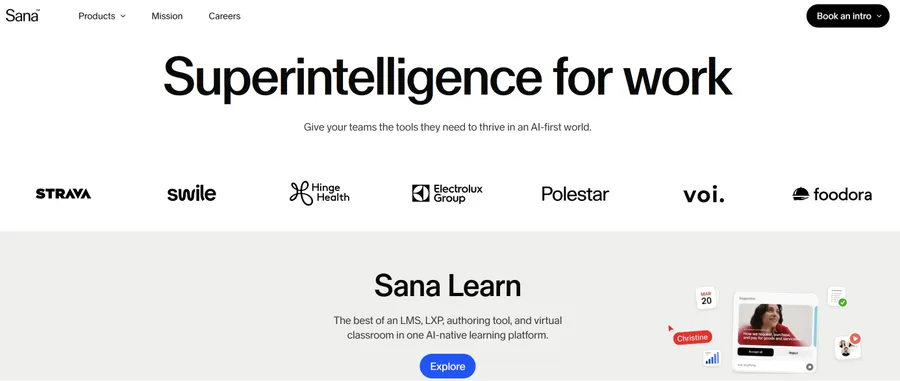
Sana Learn positions itself as a truly next-generation, knowledge-driven AI learning management system. It brilliantly combines traditional educational delivery with incredibly powerful enterprise-wide search functionalities, essentially acting as a central, highly intelligent brain for your entire company.
How It Works:
Sana Learn assumes that authentic learning happens everywhere, not just inside formal, scheduled courses. It continuously indexes your entire company’s digital footprint. When an employee needs to know how to perform a task, the platform retrieves the exact answer from a past training video, a Slack message, or a company handbook. In this regard, it functions much better than traditional public search engines because it exclusively targets your private internal data.
Key Features:
- Deep Enterprise Search: It securely connects to external company knowledge bases (like Slack, Salesforce, or Google Workspace) to instantly find highly relevant documents right alongside formal training materials.
- Real-Time Contextual Queries: Allows employees to ask complex, highly specific questions and receive immediate, context-aware answers derived strictly from internal company policies rather than generic, potentially inaccurate web data.
- Highly Adaptive Paths: The system automatically adjusts the educational journey in real-time, proactively skipping redundant material based on the individual’s profile data, past experience, and historical interactions within the system.
Pros & Cons:
- Pros: Absolutely brilliant for overarching corporate knowledge management. It provides a highly dynamic, intuitive, and remarkably modern user experience that saves busy employees hours of searching for information.
- Cons: By deliberately blurring the lines between a traditional LMS and an internal company intranet, it might not perfectly suit highly traditional organizations looking strictly for formal, isolated compliance tracking and rigid testing.
7. Thinkific
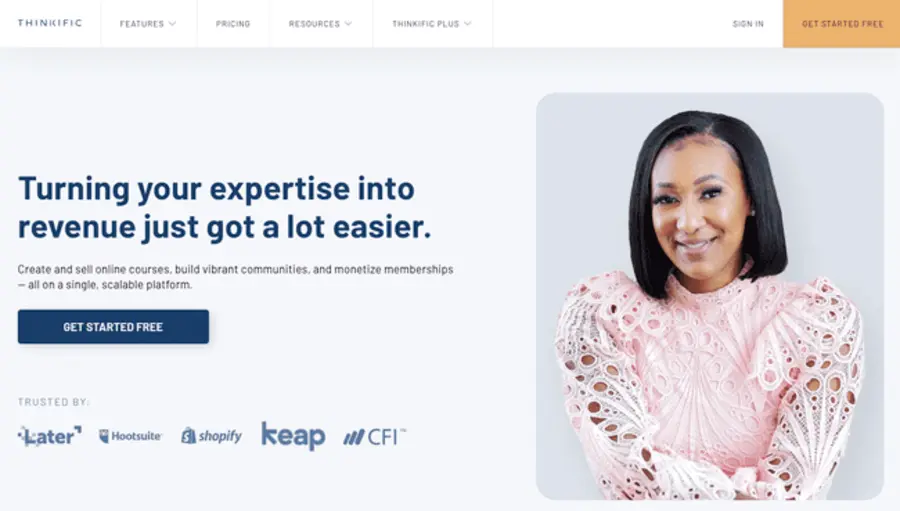
Thinkific is an undisputed digital powerhouse for independent creators, professional educators, and small businesses looking to aggressively monetize their unique expertise. As a highly creator-focused AI powered LMS, it expertly handles the heavy technical lifting associated with best video hosting, secure access, and reliable payment processing.
How It Works:
Thinkific is masterfully designed to help you sell exactly what you know. The integration of artificial intelligence is heavily focused on helping creators overcome writer’s block, structure their content professionally, and write highly compelling sales copy to attract paying students worldwide.
Key Features:
- Curriculum Outline Generator: This tool entirely solves the terrifying blank-page problem by automatically building a highly logical, pedagogically sound curriculum structure based purely on a chosen topic or specific niche.
- Automated Video Captioning: Crucial for meeting modern web accessibility standards and drastically improving global comprehension, it automatically generates highly accurate text transcripts for all uploaded video lessons.
- Customizable Design Templates: Offers a wide array of beautiful, conversion-optimized design options for landing pages that can be populated quickly using automated content generation and relevant image suggestions.
Pros & Cons:
- Pros: Provides a highly stable, incredibly secure hosting environment that rarely experiences downtime. It features excellent built-in eCommerce tools, seamless subscription management, and flawless integrations with popular email marketing platforms.
- Cons: Strict structural customization limits do exist; it is clearly not designed for massive corporate enterprises requiring complex, multi-tiered organizational hierarchies and deep departmental reporting.
8. SkyPrep
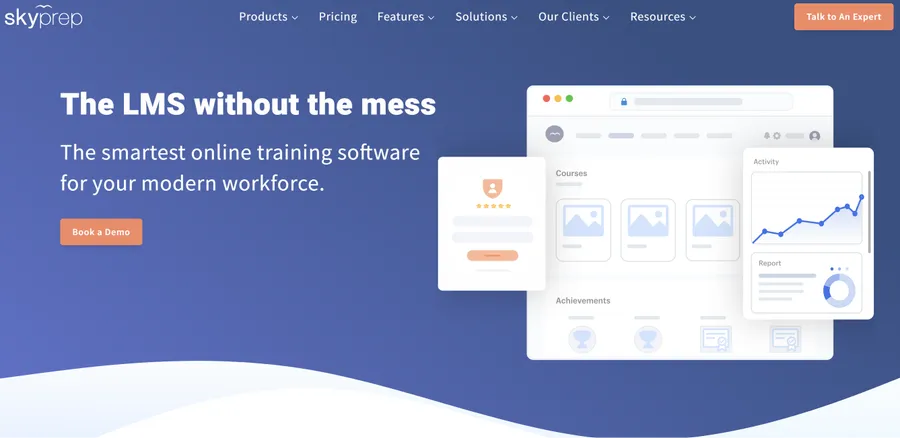
SkyPrep focuses heavily on detailed analytics, strict compliance tracking, and highly interactive content generation. This unique combination makes it an exceptionally strong LMS with AI for industries that require rigorous customer education, strict safety protocols, and continuous employee certification.
How It Works:
SkyPrep is built fundamentally for efficiency and speed. It allows training managers to quickly upload their existing PDF materials, use the system to automatically generate tests and interactive elements, and deploy the training to thousands of users with automated tracking and persistent reminders.
Key Features:
- Smart Assessment Builder: It intelligently creates highly customized, genuinely challenging tests based specifically on the uploaded materials. This ensures that the generated quizzes are perfectly aligned with the core training goals and are not just generic, easy-to-guess questions.
- Rapid Content Generation: The platform effortlessly develops interactive scenarios, real-world case studies, and reflection questions that fit diverse learning paths, completely preventing the course from becoming a passive, boring reading exercise.
- Real-Time Data Dashboards: Provides immediate, highly actionable insights into exact completion rates, average assessment scores, and long-term engagement trends across many different corporate departments.
Pros & Cons:
- Pros: Clever gamification elements like digital badges and competitive leaderboards dramatically increase user participation. It also features incredibly strong automated compliance tracking to ensure absolutely no certifications expire unnoticed.
- Cons: While the analytics provided are highly solid and reliable, the absolute depth of data visualization can sometimes feel a bit limited compared to dedicated, standalone business intelligence software like Tableau.
9. iSpring Learn
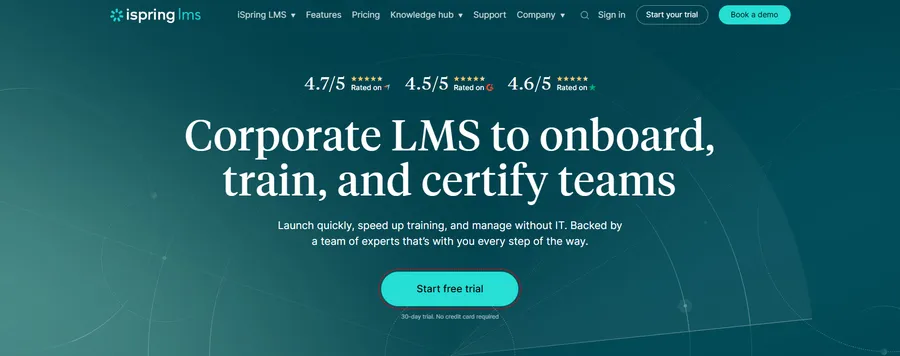
iSpring Learn is a highly recommended, robust solution for multinational organizations that strictly require extensive content localization and flawlessly executed, highly reliable mobile-ready training programs for diverse teams spread across many different global time zones.
How It Works:
iSpring Learn historically integrates exceptionally well with standard presentation software, allowing instructional designers to easily turn their standard slide decks into powerful, trackable courses. Now, with deeply integrated artificial intelligence, it rapidly scales this content for massive global audiences.
Key Features:
- Instant Multilingual Translation: It automatically and highly accurately translates training materials, video subtitles, and complex quizzes into multiple languages, ensuring absolute consistency across global teams without ever hiring expensive human translators.
- Visual Asset Generation: The advanced platform actively assists in creating compelling course text, highly relevant visual elements, and diverse assessment questions very quickly, significantly enhancing the aesthetic appeal of the training.
- On-The-Job Training Support: A highly unique feature that allows floor managers to log practical, observational assessments directly into the mobile system on the factory floor, which then automatically generates summary statistics and digital performance reviews.
Pros & Cons:
- Pros: Offers truly excellent mobile accessibility, including highly reliable offline viewing options. The robust AI translation tools save immense amounts of time and financial resources for massive global corporate rollouts.
- Cons: The visual branding customization of the main learning portal is somewhat rigid, giving administrators slightly fewer options to make the platform look exactly like their highly customized corporate website.
10. Continu
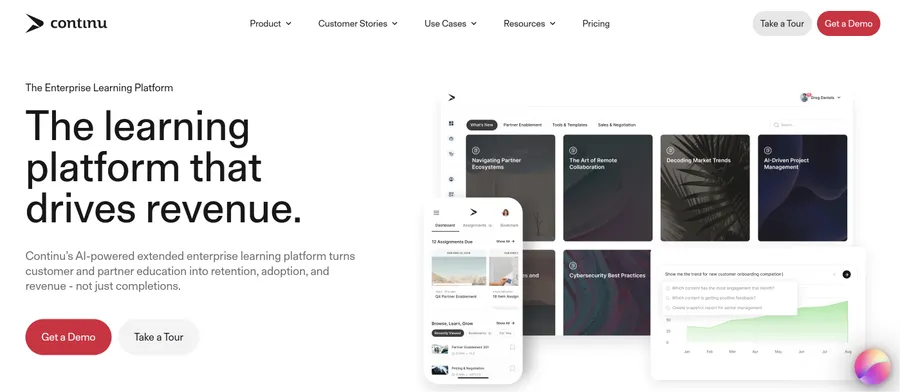
Continu appeals very strongly to mid-to-large enterprises seeking highly scalable, elegantly structured, and visually stunning learning platforms. It is widely praised throughout the industry for its highly advanced reporting and remarkably deep analytics capabilities.
How It Works:
Continu treats employee learning as a vital, highly measurable business metric. It is intelligently designed to integrate deeply with your existing HR software, automatically pulling user data to create highly personalized, mandatory, and elective training tracks based exactly on an employee’s exact position and seniority.
Key Features:
- Automated Content Sequencing: The intelligent system curates and carefully sequences educational content for each individual user based entirely on their specific role, declared skills, and past platform activity, ensuring no time is wasted on irrelevant material.
- Targeted Knowledge Reinforcement: To combat the natural forgetting curve, it automatically delivers targeted, bite-sized follow-up content and mini-quizzes weeks after a main course ends to ensure long-term retention of highly critical information.
- Custom Dashboard Builder: Allows executive leadership to effortlessly surface the exact performance metrics that matter most to them on a single, beautiful page, without ever needing to export raw data to external spreadsheet tools.
Pros & Cons:
- Pros: Exceptional platform scalability and a beautiful, highly modern user interface. It seamlessly handles complex, region-specific compliance assignments and automated reminder emails flawlessly.
- Cons: Highly advanced custom workflows and incredibly deep API integrations often require dedicated internal development support or premium onboarding packages to set up completely correctly.
How to Choose the Best AI LMS for Your Needs
Selecting the highly optimal, best AI LMS absolutely requires a highly strategic evaluation of your specific, highly unique organizational requirements, rather than simply purchasing the software with the longest, most impressive marketing feature list. If your goal is online monetization, comparing the best education WordPress themes for online courses will also dictate which LMS integrates best with your design.
To make the absolutely right investment, explicitly ensure your internal selection process thoroughly covers the following highly critical factors in detail:
1. Deeply Evaluate Content Generation Capabilities
Determine the exact, highly specific starting point of your educational materials. Organizations that already heavily possess extensive, historically accurate libraries of PDFs, highly technical manuals, or massive recorded webinars should explicitly prioritize platforms like TalentLMS or 360Learning. These platforms exceptionally excel at rapid, highly accurate document transformation.
Conversely, teams that are actively building fresh curriculums entirely from scratch will benefit immensely from LearnPress LMS, as its highly advanced generative technology reliably creates highly logical structures instantly from highly basic text prompts.
2. Assess Integration and Ecosystem Compatibility
A highly isolated educational system explicitly creates massive administrative bottlenecks and deeply frustrates users.
The meticulously chosen software must securely integrate fluidly and safely with your existing Human Resource Information Systems (HRIS) like Workday or BambooHR, daily communication tools like Slack, and Customer Relationship Management (CRM) software like Salesforce.
3. Prioritize Privacy and Data Ownership
With highly intelligent systems constantly, deeply analyzing highly proprietary company information, internal trade secrets, and highly sensitive employee performance metrics, absolute data governance must be a highly primary concern.
Investigate incredibly thoroughly exactly how the software vendor strictly utilizes your highly sensitive input data.
Systems installed securely directly on an organization’s own private servers, such as highly open-source WordPress solutions, reliably offer absolute maximum security. They meticulously ensure complete, truly unquestionable ownership of all vital intellectual property, highly sensitive financial revenue, and private user metrics.
4. Scrutinize the Learner Experience and Personalization
The ultimate, clearly defining goal of strategically adopting an LMS with AI is to drastically, measurably improve user engagement and long-term knowledge retention. Meticulously evaluate the platform’s user interface strictly and highly objectively from the learner’s perspective.
Does the intelligent system actually offer truly dynamic learning paths that accurately adjust automatically to a user’s unique pace and deep comprehension level?
Does it provide highly conversational search capabilities to genuinely help highly busy employees find highly precise answers exactly in the flow of their demanding daily work?
Using the best AI SEO tools for WordPress alongside these LMS options will further ensure your courses are discovered organically if they are public-facing.
Conclusion
By highly strategically and confidently adopting the best LMS software with AI, highly modern, forward-thinking organizations can fully automate highly tedious compliance tracking, eliminate the incredibly paralyzing blank-page syndrome during intensive content creation, and reliably deliver deeply personalized, engaging educational paths to many thousands of learners perfectly simultaneously.
Take the necessary time to evaluate your highly specific existing workflows, use best AI course creator WordPress tools which turn your static, hidden organizational knowledge into a highly dynamic and financially measurable corporate asset.
Frequently Asked Questions: Best AI Powered LMS Platforms
1. How exactly does an AI powered LMS measurably improve the user experience?
Highly traditional learning systems typically offer incredibly static, highly boring one-size-fits-all content that absolutely every single user must patiently navigate manually, entirely regardless of their highly specific prior knowledge.
2. Does actively using an AI based LMS require advanced technical coding skills?
No, absolutely not in any way. Highly intelligent platforms are meticulously designed with incredibly user-friendly, highly intuitive drag-and-drop interfaces intended perfectly for everyday, non-technical professionals.
3. Who actually owns the educational content created?
Exact data ownership depends entirely on the specific deployment model you choose to implement. Cloud-based, external SaaS platforms host absolutely all of your sensitive data on their proprietary servers, meaning you are legally bound by their specific restrictive terms of service. Conversely, utilizing a native, secure self-hosted WordPress solution exactly like LearnPress LMS ensures that all generated courses and sensitive private student data.
4. Can an advanced AI learning management system measure the precise financial return on investment (ROI) of corporate training?
Yes, accurately. These highly advanced, intelligent systems provide deeply integrated, precise real-time analytics that go incredibly far beyond highly basic, remarkably unhelpful simple completion tracking.
5. Will intelligent automation completely replace human?
No, this advanced technology acts as a powerful digital assistant rather than a complete human replacement. While artificial algorithms excel flawlessly at structuring massive curriculums, summarizing dense documents, and flawlessly generating reliable baseline assessments exactly at scale, experienced human oversight remains undeniably essential.
Read more: 14 Best Learning Management System Examples
Contact US | ThimPress:
Website: https://thimpress.com/
Fanpage: https://www.facebook.com/ThimPress
YouTube: https://www.youtube.com/c/ThimPressDesign
Twitter (X): https://x.com/thimpress_com