A strong link building strategy is the difference between random outreach and steady ranking growth. Many site owners new to link building SEO send a few emails, buy a few links, and then wonder why nothing changes.
This guide shows you how to plan, run, and measure link building in a way that is safe, repeatable, and built for long-term results. You will learn the exact steps, the tactics worth your time, the mistakes to avoid, and how to prepare a WordPress site so that other people want to link to it.
Eduma – Education WordPress Theme
We provide an amazing WordPress theme with fast and responsive designs. Let’s find out!
What is a link building strategy?
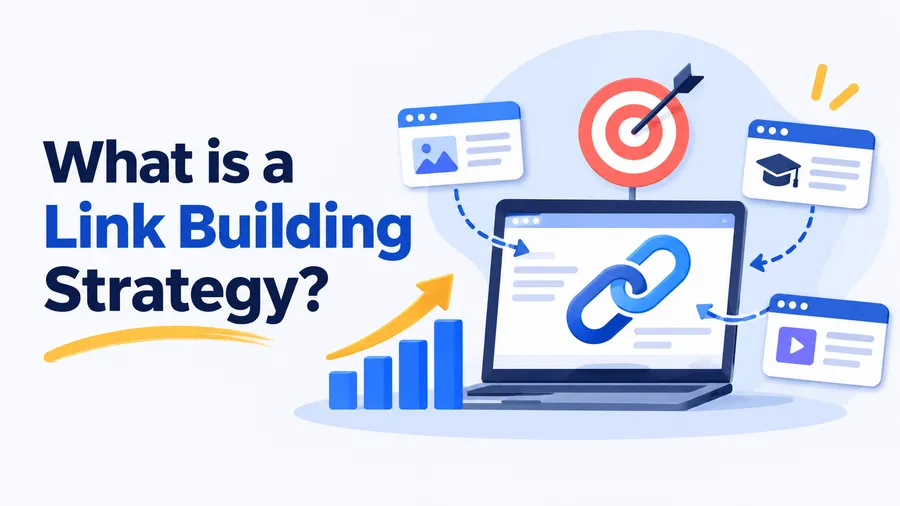
A link building strategy is a written plan for earning backlinks from other websites to your own. It sets your goals, the pages you want to promote, the tactics you will use, who does the work, and how you will measure success. A backlink is a link on another website that points to a page on your site.
Before you pick a tactic, it helps to understand the terms and see why links still matter for search.
Link building strategy vs link building tactics
A strategy is the plan. A tactic is a single action inside that plan. For example, your strategy might be “earn 30 links from relevant education blogs in six months to lift our course pages.” Your tactics would then be guest posting, resource page outreach, and publishing original research.
Many beginners skip the strategy and jump straight into tactics. The result is scattered effort and no clear way to tell what worked. A good link building guide always starts with the plan, because the plan tells you which tactics deserve your time.
Why backlinks still matter for SEO
Backlinks work as votes of trust. When a respected site links to your page, search engines treat that link as a signal that your content is useful and credible. Google has said publicly that links are among its most important ranking signals, and its Search Central documentation still describes links as a way it discovers pages and understands their relevance.
Links also bring direct benefits beyond rankings:
- Referral traffic: a link inside a good article sends real visitors, not only crawlers.
- Faster discovery: new pages that earn links are often crawled and indexed sooner.
- Brand visibility: repeated mentions on trusted sites make people remember your name.
- AI search visibility: AI Overviews and similar features usually draw from pages that already rank well, so the authority that links build helps you appear there as well.
In short, linkbuilding SEO is still one of the most reliable ways to separate your site from competitors who publish similar content.
How to build a link building strategy step by step
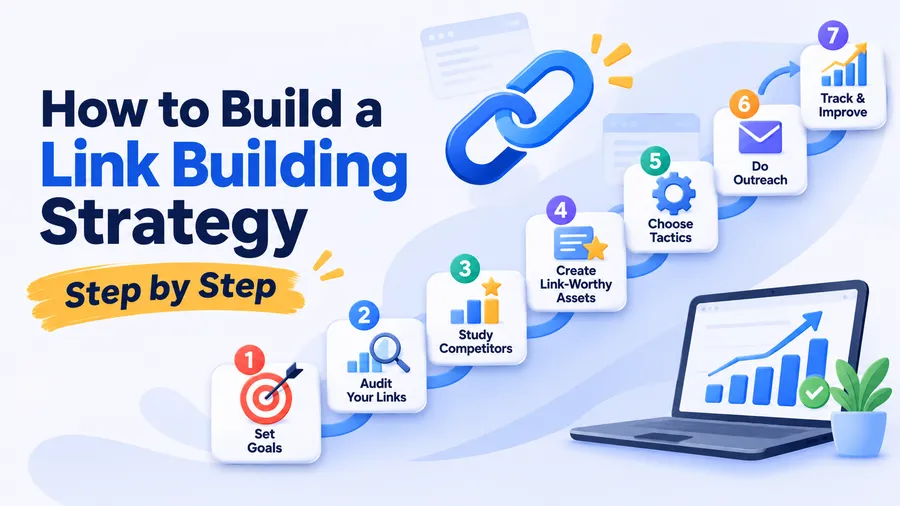
Follow these seven steps in order to create effective backlink building strategies of your own. Each one feeds the next, so skipping a step usually creates problems later.
Step 1: Set clear goals
Start with the business result you want, then work backwards. A goal such as “get more links” is too vague. A better goal is “earn 20 new referring domains to our top five service pages by the end of the quarter.”
Good goals have three parts: a number, a deadline, and a target page or group of pages. Link your goals to revenue where you can. If a page drives sign-ups or sales, it deserves links before a page that only gets casual traffic.
Step 2: Audit your current backlink profile
You cannot plan where to go until you know where you stand. Open the Links report in Google Search Console. It is free and shows your top linked pages, top linking sites, and most common anchor text. For deeper data, run your domain through Ahrefs or Semrush.
Check these points during the audit:
- How many unique referring domains you have, not only total links.
- Which pages already attract links, and why.
- The mix of anchor text. Too many exact-match anchors can look unnatural.
- Lost links, which often come from deleted pages or changed URLs.
- Spammy patterns, such as hundreds of links from unrelated foreign sites.
In most audits, the biggest quick win is reclaiming lost links. If a page that once had links now returns a 404 error, set up a 301 redirect to the closest live page. This can restore link value with almost no outreach.
Step 3: Study your competitors
Pick three to five competitors who rank for the keywords you want. Use a link gap or link intersect tool to find sites that link to two or more competitors but not to you. These sites already care about your topic, so they are warm prospects.
Do not just copy a list. Open a sample of the linking pages and ask what earned the link. Those patterns tell you which assets to create.
Step 4: Create assets worth linking to
People rarely link to a plain product page. They link to something that helps them make a point or save time. This is the core of any strong backlinking strategy: build the asset first, then promote it.
Assets that tend to earn links include:
- Original research, surveys, and industry statistics.
- Free tools and calculators.
- Templates, checklists, and swipe files.
- Detailed guides that explain a topic better than anything else on page one.
- Glossaries and definition pages that writers can cite.
- Case studies with real numbers.
Before you publish, ask: “Would a writer cite this page as a source?” If not, improve it.
Step 5: Choose link building tactics that fit your resources
Not every tactic suits every team. A solo blogger should not copy a digital PR campaign built for a large agency. Match your link building tactics to your time, skills, and budget, and pick two or three to start.
Step 6: Build a prospect list and run outreach
A prospect list is a spreadsheet of sites and contacts you plan to approach. Include the site name, the contact person, the page you want a link on, the reason it is a fit, and the date you contacted them.
Keep your outreach short and personal. Here is a simple structure:
Subject: Quick idea for your article on [topic]
Hi [Name], I read your article on [topic] and liked the section about [specific detail]. We recently published [asset], which covers [specific benefit]. It might be a useful addition for your readers. Happy to share more if that helps.
Send one polite follow-up after five to seven days. If there is still no reply, move on. Reply rates for cold outreach are usually low, so plan for volume and quality together, and do not take silence personally.
Step 7: Track results and refine your link building strategy
Review your results every month. Record new links, their source, the page they point to, and any change in rankings or traffic. Keep tactics that bring links at a reasonable cost. Drop the ones that eat time and return little. A link building strategy is a living document, and the best ones are updated every quarter.
Link building tactics that work
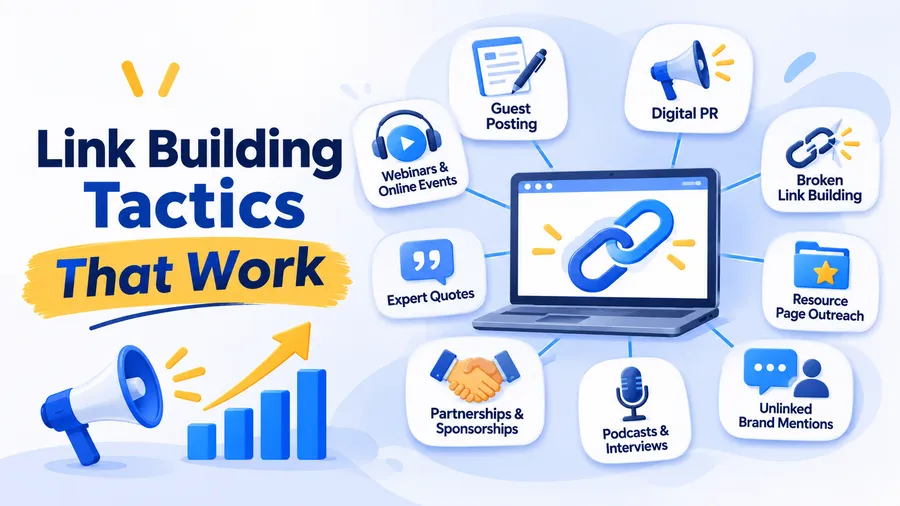
There is no single best method. The link building tactics below are the ones most teams use successfully, and each can fit inside a wider plan. Choose based on your niche, your skills, and how much risk you are willing to accept.
Guest posting
Guest posting means writing an article for another site in your niche, with a link back to yours. It still works when done properly. The key is to write for the host site’s audience, not for your own link. Choose blogs that have real readers, publish on a regular schedule, and accept only quality submissions. Avoid sites that advertise “write for us” with prices or that publish on every topic imaginable.
Digital PR and data-led content
Digital PR is the practice of creating newsworthy content and pitching it to journalists and editors. A survey, a data study, or a clear expert opinion on a trending topic can earn links from major publications. This tactic takes more effort than most, but a single successful campaign can bring dozens of high-authority links.
Broken link building
Broken link building starts with finding a dead link on another website, then suggesting your page as a replacement. Use a tool like Ahrefs to find broken outbound links on pages about your topic. Contact the site owner, point out the broken link, and offer your relevant page. Site owners usually appreciate the help because broken links hurt their user experience.
Resource page outreach
Many sites keep a page of useful links on a certain subject, such as “best free design tools” or “learning resources for teachers.” If you have a genuinely useful asset, you can ask to be added. Search for phrases such as “useful resources” or “recommended links” together with your topic, and check that the page is still updated.
Unlinked brand mentions
Sometimes a site mentions your brand or product without linking to it. These are some of the easiest links to earn because the writer already knows you. Set up alerts in Google Alerts, Ahrefs, or Semrush, then send a short, friendly email asking if they would add a link.
Expert quotes and journalist requests
Journalists often look for expert comments. Platforms such as Qwoted and Featured connect experts with reporters. If you answer quickly with a useful, specific quote, you can earn links from news and industry sites. Keep answers short and factual.
Podcasts, webinars, and interviews
Hosts usually link to their guests in the show notes. Pitch a specific topic rather than asking to be on the show in general.
Partnerships, sponsorships, and local links
Sponsoring a local event, joining an industry association, partnering with a supplier, or listing your business in trusted local directories can all produce legitimate links. They work best when the partner site is relevant to your business.
Comparison of link building tactics
The table below compares the main link building tactics by effort, cost, speed, and risk. Use it to choose a starting point that fits your team. The ratings are general guidelines, and results vary by niche.
| Tactic | Effort | Typical cost | Time to results | Risk level | Best for |
|---|---|---|---|---|---|
| Guest posting | Medium | Low to medium | 1 to 3 months | Low if the site is relevant | Blogs, agencies, SaaS |
| Digital PR | High | Medium to high | 2 to 6 months | Low | Brands with data or news |
| Broken link building | Medium | Low | 1 to 2 months | Low | Content-heavy sites |
| Resource page outreach | Low to medium | Low | 1 to 3 months | Low | Sites with useful tools or guides |
| Unlinked mentions | Low | Low | Days to weeks | Very low | Established brands |
| Expert quotes | Low to medium | Low | Weeks to months | Low | Consultants, founders |
| Podcasts and interviews | Medium | Low | 1 to 3 months | Low | Personal brands, experts |
| Local and partner links | Low | Low to medium | 1 to 2 months | Low | Local and service businesses |
| Paid or private network links | Low | High | Fast, then unstable | High | Not recommended |
As the table shows, the safest options are also the ones that rely on real value. The one row to avoid is paid or private network links, which we cover in the mistakes section.
Backlinking strategy for WordPress sites
A good backlinking strategy does not start with outreach. It starts with a website that deserves links. If your pages load slowly, break on mobile, or look untrustworthy, writers will hesitate to link to you, no matter how polished your email is.
Before you promote anything, check these basics:
- Speed and Core Web Vitals: aim for a Largest Contentful Paint under 2.5 seconds, as Google recommends. Use PageSpeed Insights to test your key pages.
- Clean structure: use one H1 per page, logical H2 and H3 headings, and readable URLs.
- Mobile layout: most readers and editors will open your page on a phone first.
- Trust signals: add an About page, author bios, and contact details.
- Technical setup: install an SEO plugin such as Yoast SEO or Rank Math, submit an XML sitemap, and fix broken links with redirects.
Your theme plays a bigger role in this than many owners expect. A lightweight, well-coded theme makes it easier to hit performance targets and to present your linkable assets cleanly.
Using ThimPress themes to support your link building
If you run an education, course, or training site, ThimPress offers tools that fit this approach. The Eduma theme, built for education websites, works with the LearnPress learning management plugin, so you can publish course pages, lesson content, and free learning resources on the same WordPress site. Those resources, such as free lessons, glossaries, and study guides, are exactly the kind of assets teachers, bloggers, and resource pages link to.
A practical workflow looks like this:
- Publish a free, useful resource on your course site, such as a beginner lesson or a printable checklist.
- Make sure the page is fast, mobile friendly, and clearly credited to a named author.
- Add the page to your prospect list and pitch it to education blogs and resource pages.
- Link from the new resource to your paid courses, so that earned authority flows to the pages that make money.
A theme will not earn links on its own. What it can do is remove technical friction, so that the content you promote loads quickly and looks professional. Before you choose any theme, check its documentation for SEO plugin compatibility and test the demo with PageSpeed Insights.
Link building mistakes to avoid
Even a well-planned link building strategy can fail if you fall into common traps. Google’s spam policies and its link spam updates, which rely on its SpamBrain system, are designed to ignore or penalize unnatural links. Avoid the following mistakes.
Buying links or using private blog networks
Paying for links that pass ranking credit goes against Google’s spam policies. Private blog networks are groups of sites built only to link out, and they are a common target. If you sponsor content or place an ad, ask the publisher to mark the link with rel=”sponsored”, as Google recommends. This keeps you in line with the rules.
Over-optimizing anchor text
If most of your links use the exact keyword, the pattern looks forced. Natural profiles contain a mix of brand names, page titles, plain URLs, and partial phrases. Do not try to control the anchor text in guest posts or outreach. Let editors choose wording that fits their sentence.
Chasing authority scores only
Metrics such as Domain Rating and Domain Authority are third-party estimates, not Google scores. A link from a small but highly relevant site often beats a link from a large, unrelated one. Look at topical fit, real traffic, and editorial quality before you decide.
Sending generic mass emails
Templates are fine as a starting point, but the same message sent to thousands of people lowers your reply rate. Always add one detail that proves you read the page.
Ignoring content quality
The best outreach cannot rescue a weak page. If your asset is thin, outdated, or copied from others, people will not link to it. Spend as much time on the quality of the page as on the outreach itself.
How to measure link building results
You need a handful of clear metrics to know whether your work pays off. Track these every month:
- New referring domains: the number of unique sites that link to you. This matters more than total link count.
- Link quality: relevance, traffic, and editorial standards of the linking sites.
- Rankings: positions for the target keywords of the pages you promoted.
- Organic traffic: clicks to those pages from Google, shown in Search Console.
- Referral traffic: visits that come directly from the links, shown in Google Analytics.
- Conversions: sign-ups, leads, or sales from the promoted pages.
Use a simple spreadsheet so you can compare month to month. If rankings do not move after three months of quality links, review the page itself. The problem may be search intent or content depth rather than links.
A simple 90-day plan
If you are not sure where to begin, use the plan below as a starting framework. Adjust the numbers to match your team size.
| Month | Focus | Key actions |
|---|---|---|
| Month 1 | Foundation | Set goals, audit backlinks, fix broken pages with redirects, analyze three competitors, choose two tactics |
| Month 2 | Assets and outreach | Publish one strong linkable asset, build a list of 100 prospects, send personalized outreach, claim unlinked mentions |
| Month 3 | Scale and review | Follow up, publish two guest posts or interviews, review new links and rankings, update the plan for the next quarter |
Keep the plan small enough to finish. Consistent effort beats an ambitious plan that is dropped after three weeks.
FAQs
How many backlinks do I need to rank on Google?
There is no fixed number. The right amount depends on how many links the pages already ranking for your keyword have. Check the top results in Ahrefs or Semrush and compare the number of referring domains. A page with similar content quality and a comparable number of relevant domains has a fair chance to compete.
How long does it take for backlinks to improve rankings?
Most sites see movement within three to six months, although the timing varies. Google needs to crawl and process the new links, and competitive keywords take longer. Pages that already sit on the edge of page one often respond faster than new pages.
Do nofollow links help SEO?
Yes, they can help indirectly. Google treats nofollow, sponsored, and UGC attributes as hints, so they may pass little or no ranking credit. They still send referral traffic, build brand awareness, and make your link profile look natural. A healthy profile contains both followed and nofollow links.
Can small businesses do link building without a big budget?
Yes. Small businesses can start with local directories, supplier and partner links, unlinked mentions, and expert quotes, which cost mostly time. Creating one genuinely helpful resource and promoting it to a small list of relevant sites also works well. Focus on relevance and quality instead of volume.
Conclusion
A reliable link building strategy comes down to a few habits: set clear goals, understand your current profile, study competitors, create content worth citing, and use tactics that match your resources. The best link building tactics and backlink building strategies are not shortcuts. They are ways of getting your useful work in front of the people who are likely to reference it.
Use this link building guide as a working document. Start with the audit, pick two tactics from the comparison table, publish one strong asset, and review your results every month. If you run a WordPress site, make sure the technical base is fast and clean, and consider tools such as Eduma and LearnPress from ThimPress if you want to publish course content and free resources that attract links. Stay patient, avoid risky shortcuts, and keep improving. Over time, a steady backlinking strategy builds the kind of authority that is hard for competitors to copy.
Read more: 12 Best Real Estate Websites for Realtors & Design Tips
Contact US | ThimPress:
Website: https://thimpress.com/
Fanpage: https://www.facebook.com/ThimPress
YouTube: https://www.youtube.com/c/ThimPressDesign
Twitter (X): https://x.com/thimpress_com