Nearly half of today’s homebuyers start searching for properties online before ever speaking with an agent. Understanding how real estate agents benefit from digital marketing makes it clear why a fast, trustworthy online presence is essential for modern brokerages and solo practitioners.
Without an organized digital platform, potential buyers, sellers, and landlords quickly move on to competing firms that make property discovery easier. Exploring proven real estate websites for realtors provides a clear blueprint for turning casual online visitors into qualified, long-term clients.
Effective realtor website design goes far beyond displaying attractive property photography on a homepage. A high-performing platform combines intuitive search filters, comprehensive neighborhood details, responsive mobile layouts, and accessible inquiry forms that reduce friction at every step of the customer journey.
Eduma – Education WordPress Theme
We provide an amazing WordPress theme with fast and responsive designs. Let’s find out!
Whether launching a brand-new agency portal or refreshing an existing portfolio, studying real estate agent website examples and specialized themes helps clarify which structural features actually drive inquiries and close transactions.
Quick Overview of Top 10 Real Estate Website Examples
Before diving into the detailed breakdown, the table below summarizes the ten live website models covered in this guide, highlighting their primary audience, visual approach, and standout functionality.
| Website Name | Primary Business Focus | Design & Layout Approach | Standout Feature |
| Key Home Real Estate | Full-service residential brokerage | Search-driven multi-page portal | Integrated home valuation tool and mortgage calculator |
| Green Ray | Real estate investment firm | Minimalist layout with generous white space | High-contrast cash-offer calls to action and fast contact options |
| Tristan Buys Houses | Investor group and fast home sales | Clean top navigation with educational content | Transparent team profiles and flexible financing highlights |
| Parrot Real Estate | Growing residential agency | Mission-led homepage with guided steps | Step-by-step homebuying roadmap and advanced property search |
| Room Real Estate | Landlord and rental management | Fast-loading single-page website | Clear landlord value proposition and single point of contact |
| Top Rated Real Estate | Residential sales and lead capture | Symmetrical alternating content blocks | Client reviews and footer newsletter subscription capture |
| Anasuya Engel | Solo real estate broker | Compact digital business card layout | Direct phone and email visibility without visual clutter |
| Gold Peach Realty | Luxury residential market | Refined gold-and-white upscale branding | Direct in-person tour scheduling and remote virtual tours |
| Baylor Bubble Real Estate | Hyper-local university market | Niche geographic landing experience | “First to Know” listing alerts and $50B+ career sales proof |
| DRS Real Estate | Luxury international consulting | Prestigious black-and-gold visual styling | Streamlined navigation tailored for luxury property investors |
Top 10 Real Estate Websites for Realtors
Examining real-world platforms across residential sales, property management, luxury consulting, and real estate investing shows how different business models translate into effective online experiences. The ten examples below demonstrate practical ways to structure navigation, present property data, and capture qualified leads.
1. Key Home Real Estate
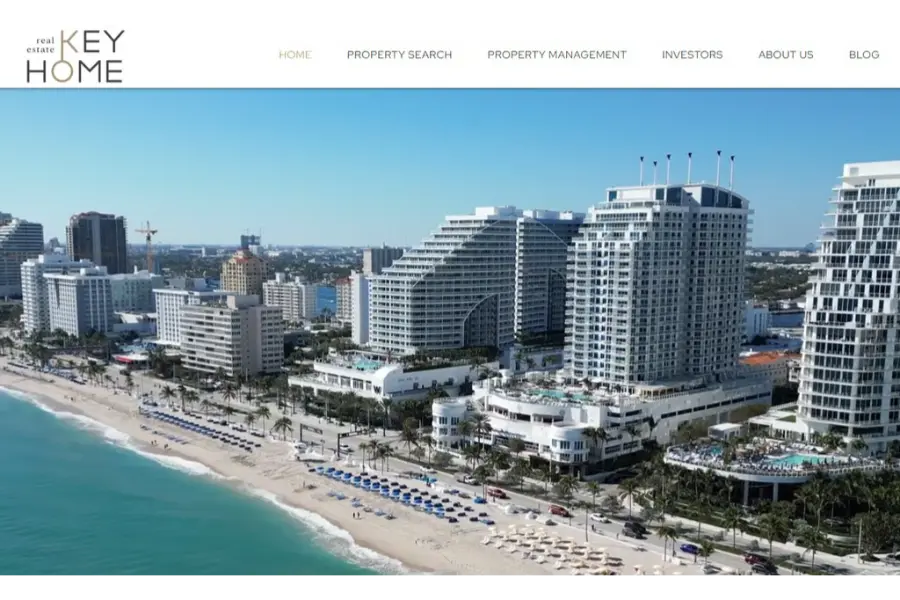
Key Home Real Estate sets a strong benchmark for functional real estate websites for realtors by prioritizing practical buyer and seller tools right from the homepage. Rather than relying solely on decorative visuals, the platform actively assists visitors at every stage of a residential transaction.
Homeowners considering a sale can visit a dedicated valuation page to estimate how much their property is worth in the current market. Meanwhile, prospective buyers can locate suitable homes through an intuitive property search bar by entering a desired location, adjusting search filters, and browsing matching options.
Selecting any listing opens a comprehensive detail page featuring interior and exterior specifications, pricing, neighborhood points of interest, and exact map placement. Each listing page also integrates a monthly mortgage calculator for budget planning alongside a virtual tour option so buyers can inspect rooms remotely from home.
2. Green Ray
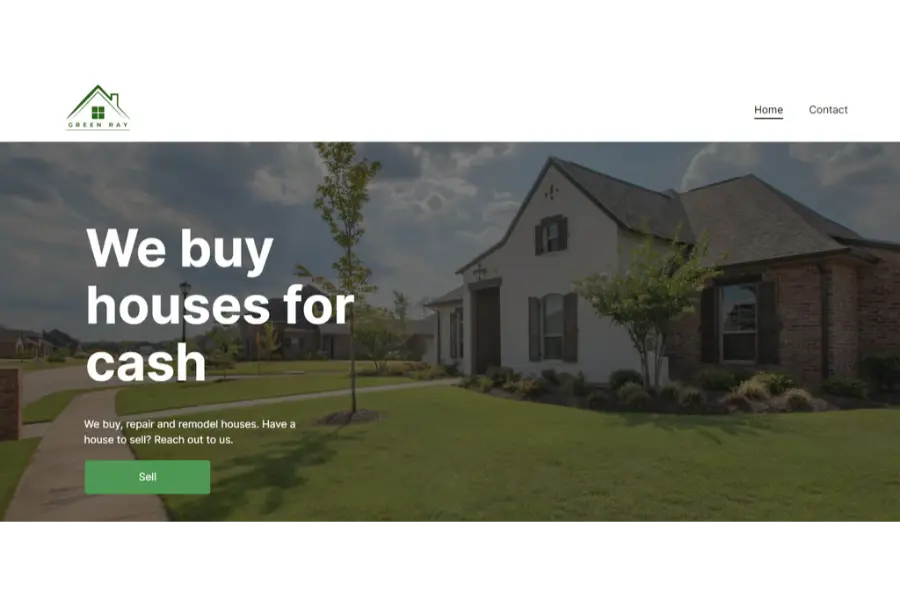
Operating in the property investment sector, Green Ray demonstrates how deliberate minimalism improves message clarity and conversion focus. Instead of crowding the screen with complex menus or competing banners, the homepage relies on generous white space, a focused background visual, and a direct headline explaining that the company buys houses for cash.
Visitors immediately understand the company’s core value proposition within seconds of arriving on the page. Just beneath the main headline, a high-contrast green call-to-action button stands out against the clean background, inviting homeowners to request an offer without confusion.
On the Contact page, Green Ray removes communication barriers by offering multiple convenient ways for motivated sellers to connect, including a simple inquiry form, direct email address, and phone number.
3. Tristan Buys Houses
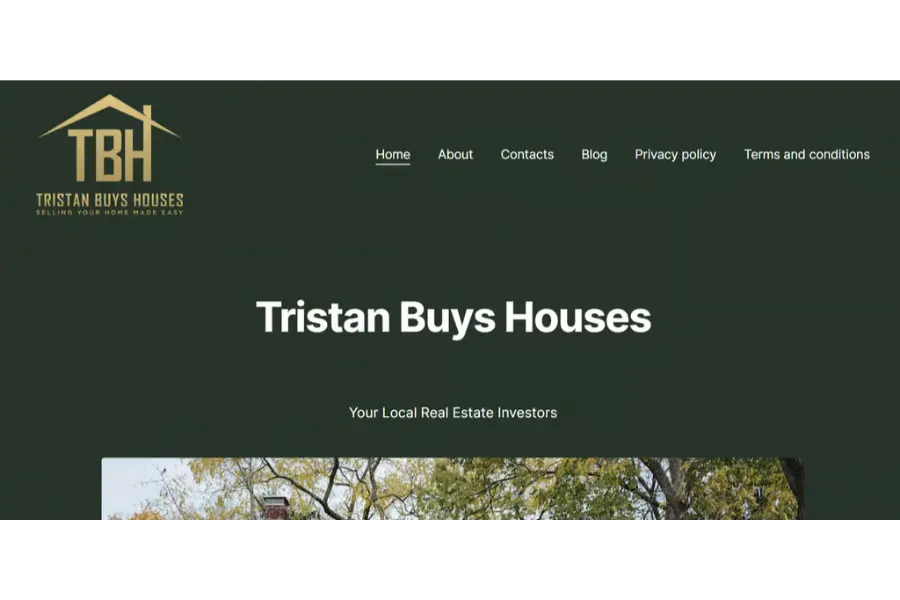
Tristan Buys Houses brings together a group of real estate investors focused on helping homeowners sell properties quickly while offering buyers flexible financing options. Every element of the platform reinforces those core strengths, from a self-explanatory domain name to educational blog articles that answer common questions about fast home sales and financing.
Site navigation remains simple and predictable through a clean top menu linking to essential pages: Home, About, Contacts, Blog, Privacy Policy, and Terms and Conditions. This structure ensures visitors can find legal disclosures, company background, or contact details effortlessly.
On the About page, concise service descriptions appear in an easy-to-read layout paired with photographs, names, and job titles for each team member, building personal trust with prospective clients.
4. Parrot Real Estate
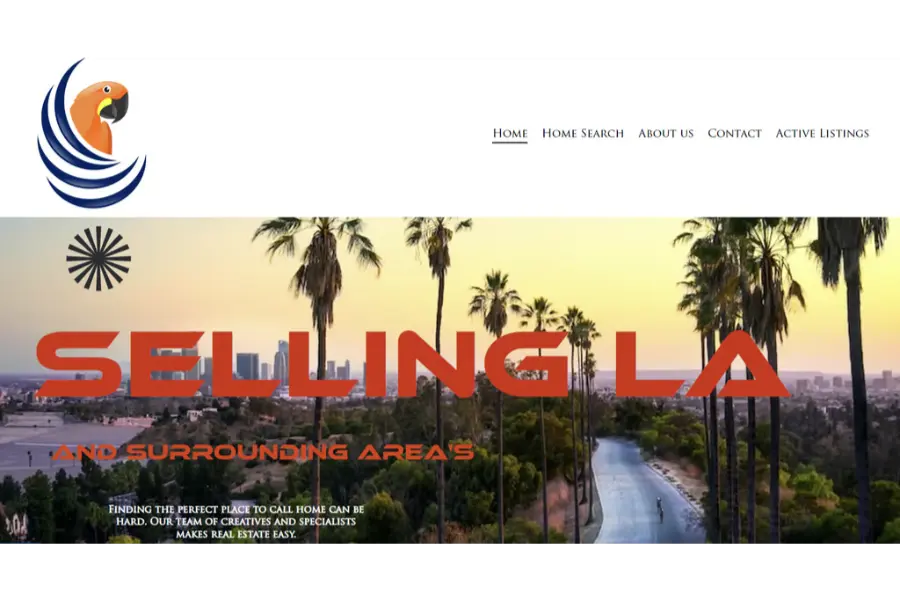
Parrot Real Estate centers its brand messaging on consistent client satisfaction and ongoing agent development, placing its core mission prominently on the homepage. This immediate clarity reassures prospective buyers that experienced and reliable professionals will manage their property search from start to finish.
As visitors scroll down the homepage, they encounter a clear, step-by-step outline explaining how to view a house, negotiate terms, and close a real estate deal. Breaking a complex legal and financial transaction into simple, manageable stages encourages hesitant first-time buyers to take action.
An advanced search tool lets users filter available homes by property type, price range, and preferred neighborhood, while a thoughtfully placed contact form at the bottom of the homepage makes reaching out for inquiries effortless.
5. Room Real Estate
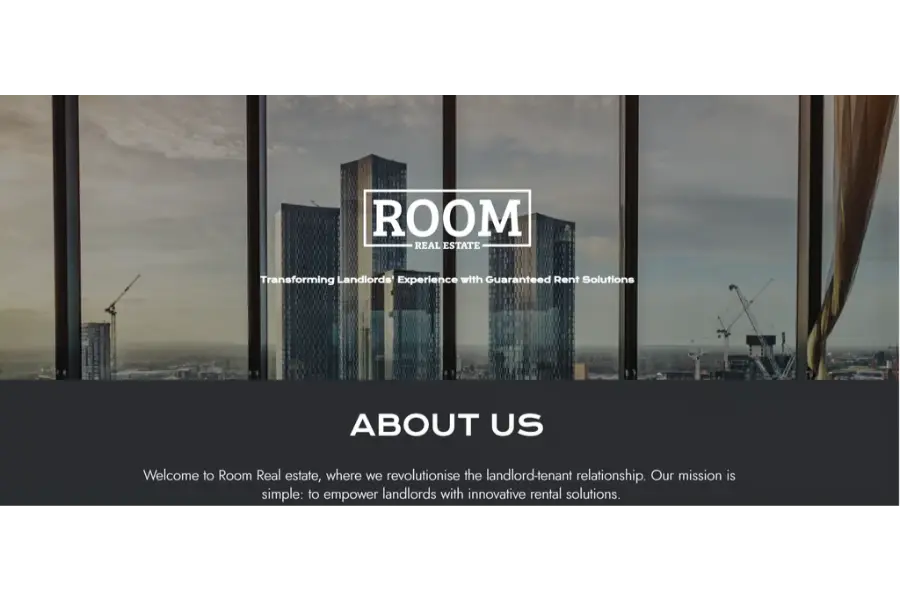
For professionals researching property management website examples, Room Real Estate illustrates the effectiveness of a focused single-page structure. Because all essential content resides on one continuous page, landlords can scroll smoothly through the company’s service model without waiting for multiple subpages to load.
The site opens with a clear mission statement: helping property owners find reliable tenants and earn steady rental income without dealing with daily maintenance tasks. Subsequent sections break down specific landlord benefits, including reduced maintenance costs and a single dedicated point of contact rather than managing multiple tenants individually.
Beyond improving visitor focus, a compact single-page layout also supports fast page loading speeds, which strengthens user satisfaction and search engine rankings.
6. Top Rated Real Estate
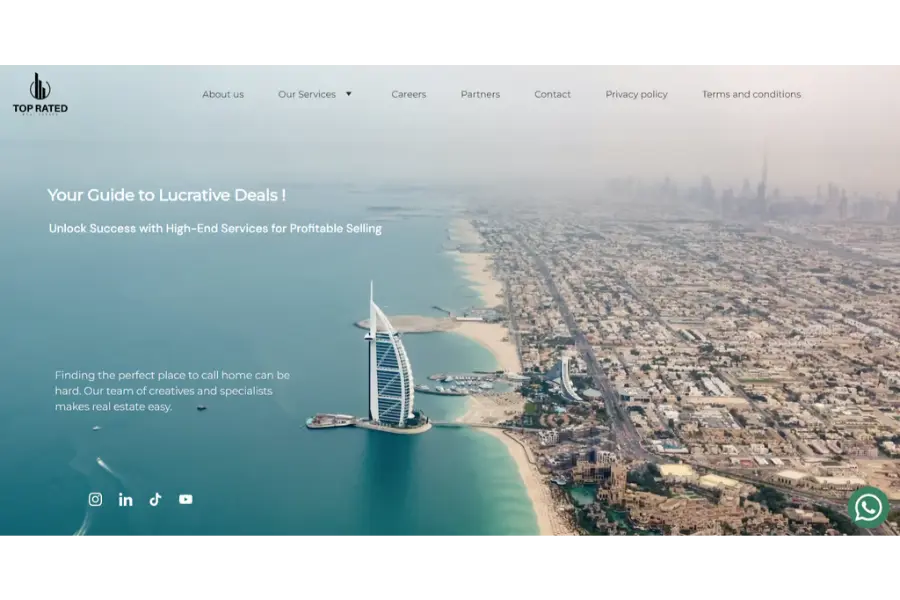
Top Rated Real Estate serves as a practical model for clean real estate site design and balanced visual hierarchy. Its top navigation menu avoids unnecessary clutter, guiding visitors directly to core service information and property resources without distraction.
Carefully chosen typography paired with an inviting hero banner communicates professionalism from the very first glance. Further down the homepage, a symmetrical alternating layout places descriptive service text alongside supporting imagery, making detailed offerings easy to scan.
Verified client testimonials reinforce the company’s industry track record, while a newsletter subscription form in the footer provides an ongoing lead-capture channel for visitors who are still researching the market.
7. Anasuya Engel
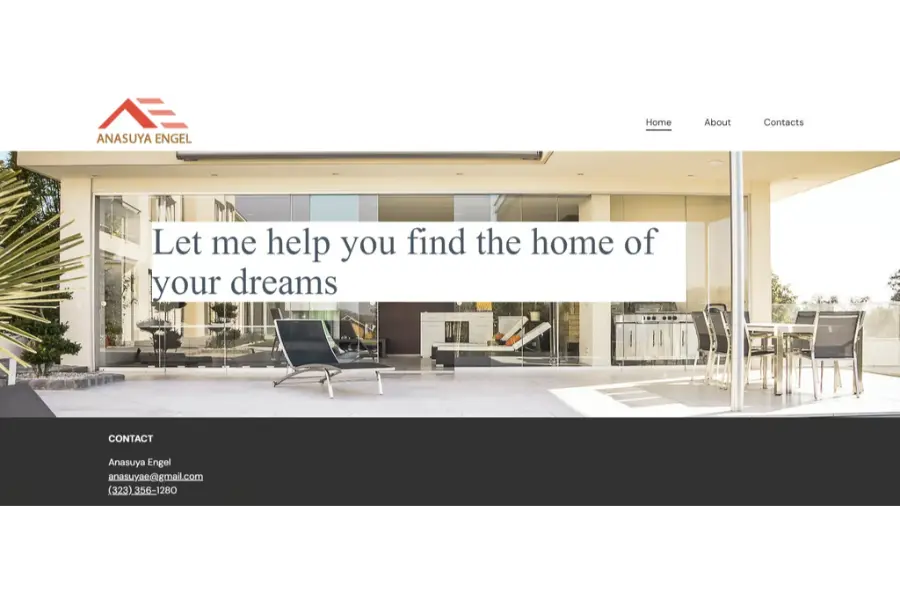
Independent professionals looking for straightforward real estate agent website examples can draw valuable inspiration from Anasuya Engel‘s digital presence. Rather than building an oversized listing portal that requires constant inventory updates, this site functions as a polished digital business card that can be shared instantly via email or social media links.
The homepage communicates the broker’s services clearly and concisely without overwhelming visitors with pop-ups or excessive widgets. Direct contact information—including an email address and phone number—appears right below the main heading so prospects can initiate a conversation immediately.
A dedicated About page complements the homepage with a professional photograph and brief career background, fostering personal rapport before the first meeting.
8. Gold Peach Realty
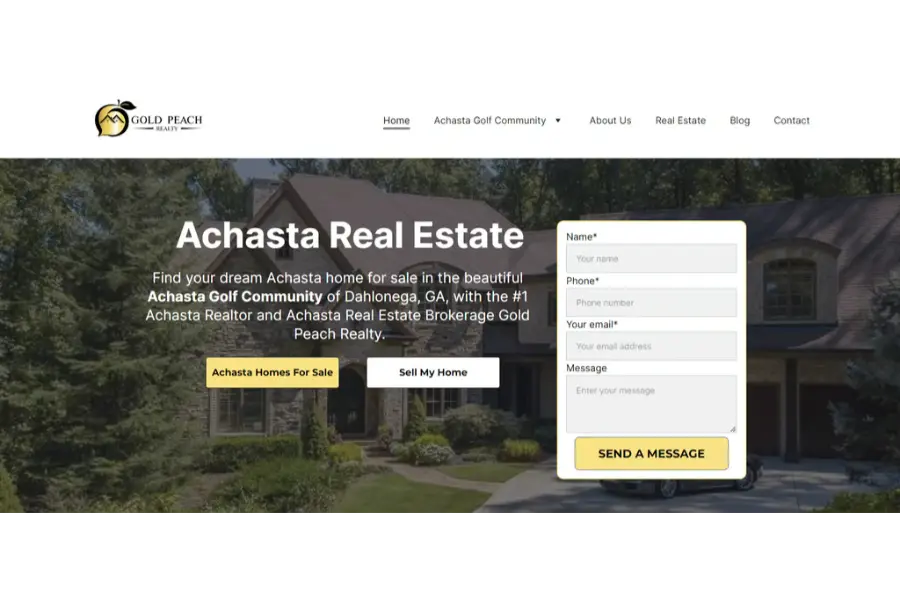
Specializing in upscale residential properties, Gold Peach Realty aligns its realty website design with the expectations of discerning luxury buyers. A refined gold-and-white color palette, sophisticated typography, and generous white space work together to convey exclusivity and high-end service.
High-resolution photography highlights architectural details across every listing, supported by thorough property specifications that help buyers evaluate price, square footage, features, and overall appeal against competing homes.
When a listing catches a buyer’s interest, scheduling an in-person house tour takes only a few clicks directly on the property page. For out-of-town buyers unable to visit immediately, an integrated virtual tour offers a realistic preview of the living space.
9. Baylor Bubble Real Estate Alerts

Baylor Bubble Real Estate Alerts focuses exclusively on properties surrounding Baylor University, demonstrating the power of hyper-local positioning. Its homepage hero section communicates this geographic specialization immediately, filtering out irrelevant traffic and retaining high-intent local buyers, parents, and property investors.
The agency highlights a distinct value proposition called the “First to Know Program,” inviting subscribers to receive automated email alerts whenever new listings enter the local market. To build immediate credibility with first-time visitors, the site spotlights the lead professional behind the platform, emphasizing a proven career sales track record exceeding $50 billion in volume.
10. DRS Real Estate
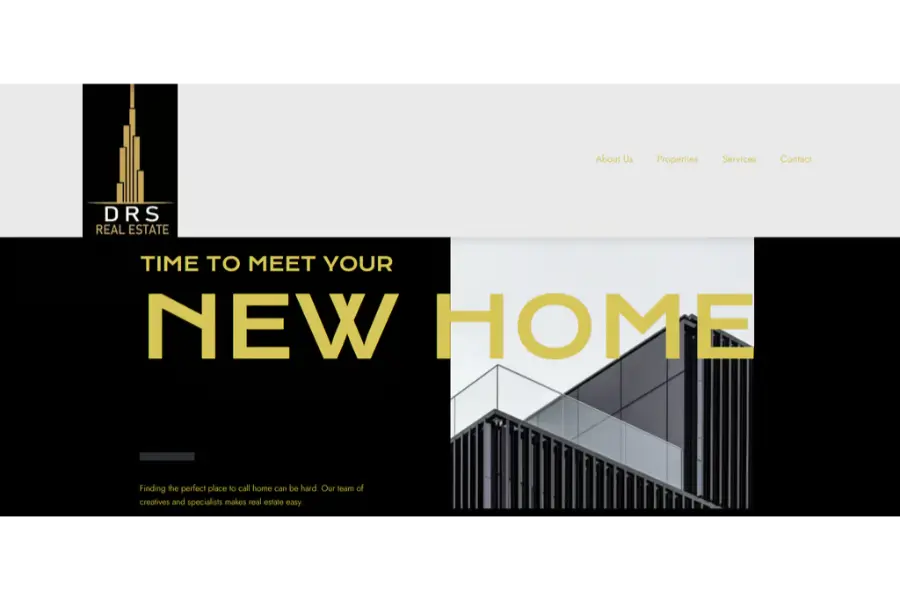
Operating in Dubai’s competitive luxury property market, DRS Real Estate uses bold black-and-gold styling and strong typography to project prestige, elegance, and authority. Despite its dramatic color scheme, the underlying layout remains clean and uncluttered so high-end property visuals stay at the center of attention.
The browsing experience prioritizes straightforward navigation through a well-organized top menu featuring About Us, Properties, Services, and Contact sections. This predictable structure ensures international and local investors can locate relevant listings, review advisory services, or request a private consultation without friction.
Essential Tips for Building Real Estate Websites for Realtors
Reviewing the best real estate website designs reveals a clear pattern: high-performing platforms balance visual polish with practical utility. Applying the following best practices helps ensure a new or redesigned property site attracts steady organic search traffic and converts online visitors into active clients.
Use a Dedicated Real Estate WordPress Theme for an Attractive, Functional Design
The underlying technical foundation determines how easily an agent can publish new listings, customize layouts, and maintain fast loading speeds. Generic business templates often lack essential property capabilities such as interactive map integration, mortgage calculators, and structured listing taxonomies.
Choosing from specialized real estate WordPress themes built on WordPress provides ready-made property search filters, agent profile templates, and schema markup out of the box, saving substantial development time while ensuring a polished visual presentation.
Two standout theme options designed specifically for property professionals include:
1. RealPress (WordPress Theme)

For agents, brokers, and agencies looking to launch a custom platform without building code from scratch, RealPress offers a comprehensive WordPress foundation tailored for property sales, rentals, and real estate brokerages. It pairs clean visual layouts with practical property management tools that make browsing effortless for prospective buyers and tenants.
- Pre-Built Demos and Customization: RealPress includes 14 pre-built website demos suited for different property business models, from local agencies to luxury property showcases. Site owners can adjust page layouts, colors, typography, and content sections visually using Elementor‘s drag-and-drop editor without touching code.
- Advanced Property Discovery: Visitors can narrow down listings quickly using Ajax search for instant filtering, switch smoothly between grid and list views, and explore surrounding neighborhoods through Google Maps or OpenStreetMap integration, including nearby property discovery.
- Detailed Listing Tools: Each individual property page supports organized high-resolution image galleries, 360° virtual tours, energy class indicators, similar property recommendations, and a built-in mortgage calculator so buyers can estimate monthly financing costs on the spot.
- Buyer Engagement and Plugin Compatibility: Prospective buyers can save favorite homes to a personal wishlist and compare multiple properties side by side. The theme also provides dedicated agent profile pages, agency pages, a registration flow for new agents, and seamless compatibility with WooCommerce, Contact Form 7, WPML, and popular SEO plugins such as Rank Math and Yoast SEO.
2. RealPro (WordPress Theme)

RealPro is a dedicated real estate WordPress theme engineered for independent agents, property managers, agencies, and rental or subleasing businesses. Powered by the core functionality of the RealPress plugin, it streamlines listing management, agent profile customization, and location mapping while keeping setup straightforward for non-technical users.
- Rapid Setup and Ready-Made Assets: With a one-click demo import feature, agents can launch a structured site in minutes rather than building layouts from the ground up. The package includes more than 10 ready-made pages—covering property listings, agent profiles, contact forms, and blog layouts—alongside over 100 pre-built elements such as interactive maps, dynamic search filters, and customized listing cards.
- Built-In Listing SEO: incorporates RealEstateListing schema directly into its architecture, helping search engines interpret structured property data and display listings more prominently in relevant search results.
- Flexible Realty Website Design: The theme adapts smoothly across desktop, tablet, and smartphone screens so visitors experience uninterrupted browsing on any device. Seamless compatibility with Elementor, Rank Math, MailChimp, WooCommerce, and Contact Form 7 allows professionals to manage lead forms, email marketing automation, and page customization from a single WordPress dashboard.
Prioritize Clean Layouts and Intuitive Navigation
Prospective buyers leave quickly when navigation menus feel crowded or page text is difficult to scan. A disciplined approach to realtor website design relies on three visual fundamentals that keep visitors engaged:
- Restrained Color Palette: Stick to two or three primary brand colors paired with neutral white or light gray backgrounds, drawing inspiration from modern website color schemes so property photography stands out naturally without visual clashes.
- Legible Typography: Select clean, modern fonts for headings and body copy, avoiding overly decorative scripts that strain readability on smaller smartphone screens.
- Predictable Menu Structure: Keep top-level navigation focused on core destinations such as Listings, Services, About, Blog, and Contact so visitors never have to guess where information lives.
Showcase Listings with High-Resolution Visuals and Details
Property buyers make major financial and emotional decisions based on visual evidence. Blurry photos, dark interior shots, or vague descriptions erode trust immediately. Every listing page should display crisp, well-lit photography—ideally converted into lightweight WebP images to protect fast page load times—alongside structured facts that answer buyer questions upfront:
- Exact asking price, property tax estimates, and monthly mortgage payment calculations
- Total interior square footage, lot dimensions, and bedroom-to-bathroom count
- Key interior upgrades, outdoor amenities, parking capacity, and energy efficiency ratings
- Neighborhood context, including nearby schools, public transit access, and local points of interest
Place Contact Forms Strategically for Lead Capture
A motivated buyer or seller rarely clicks through multiple subpages just to hunt down an email address. Placing short, easy-to-complete inquiry forms across key decision points increases lead conversion rates without feeling intrusive.
Include a general consultation form on the homepage for broad inquiries, a property-specific tour request form on every individual listing page, and complete phone, email, and office details on a dedicated Contact page.
Optimize Every Page for Mobile Devices
Most homebuyers browse listings on smartphones during daily commutes, lunch breaks, or neighborhood drives.
Responsive real estate websites for realtors automatically adapt search bars, image galleries, interactive maps, and call-to-action buttons to fit vertical mobile screens cleanly. Testing every template on both smartphones and tablets ensures buttons remain easy to tap with a thumb and text stays legible without horizontal scrolling.
Build Trust with Verified Client Testimonials
Real estate transactions involve substantial financial commitments, making authentic social proof indispensable. Displaying genuine feedback from past homebuyers, sellers, or landlords—or embedding live client reviews using a Google reviews widget—reassures hesitant prospects that an agent delivers reliable communication and smooth closings.
Place short client quotes prominently on the homepage and service pages, or create a dedicated testimonials section highlighting specific client outcomes.
Connect Active Social Media Channels
Social networks like Instagram, Facebook, and YouTube play a major role in showcasing property video walkthroughs, neighborhood tours, and local market updates.
Adding recognizable social icons to the website header or footer allows visitors to follow ongoing activity across platforms, while sharing educational blog posts and new listings on social channels helps generate free Facebook traffic to your website and build long-term brand recognition.
Conclusion
A well-structured online presence works around the clock as both a digital storefront and an automated lead-generation engine. Studying top real estate agent website examples and best real estate website designs shows that clarity, speed, and helpful buyer tools consistently outperform cluttered layouts.
By combining a purpose-built WordPress foundation—such as the RealPress or RealPro themes—with intuitive navigation, high-resolution listing details, mobile optimization, and strategic contact forms, real estate websites for realtors can stand out in competitive local markets and convert online visitors into lasting clients.
Frequently Asked Questions
What features are most important on real estate websites for realtors?
The most valuable features include fast property search filters, high-resolution photo galleries, interactive location maps, mobile-responsive layouts, and accessible inquiry forms. Adding interactive tools such as a monthly mortgage calculator, 360° virtual tours, property comparison lists, and verified client testimonials further strengthens visitor engagement and improves lead conversion rates.
How many pages should a real estate agent website have?
The ideal page count depends on the brokerage’s business model and inventory size. Solo agents often succeed with a streamlined one-page site or a compact five-page structure covering Home, Listings, About, Testimonials, and Contact. Larger multi-agent brokerages typically benefit from additional dedicated pages for individual agent profiles, neighborhood market guides, and an educational real estate blog.
Why is real estate site design important for search engine optimization?
Clean site architecture, fast page loading speeds, mobile responsiveness, and structured property schema help search engines crawl and index individual listings accurately. When visitors can navigate intuitively and find detailed neighborhood information without frustration, bounce rates drop and organic visibility improves—especially when supported by reliable local SEO tools.
Should realtors use a single-page or multi-page website?
A single-page website works well for independent brokers, niche cash-buying investors, or property managers offering one focused service, because it loads quickly and guides visitors along a single, distraction-free conversion path. Agencies managing dozens of active listings across multiple neighborhoods should use a multi-page website so each property page and area guide can rank independently in search engine results.
How can a new real estate website generate leads without a large portfolio?
New agents can establish local authority by publishing helpful neighborhood spotlights, market trend summaries, and step-by-step homebuying or selling checklists. Pairing practical educational blog posts with clear newsletter signup forms, instant listing alerts, and home valuation tools attracts local prospects even before an agent accumulates a large portfolio of closed transactions.
Read more: Travel Template Guide: How To Choose The Right One for Your Tour Website
Contact US | ThimPress:
Website: https://thimpress.com/
Fanpage: https://www.facebook.com/ThimPress
YouTube: https://www.youtube.com/c/ThimPressDesign
Twitter (X): https://x.com/thimpress_com