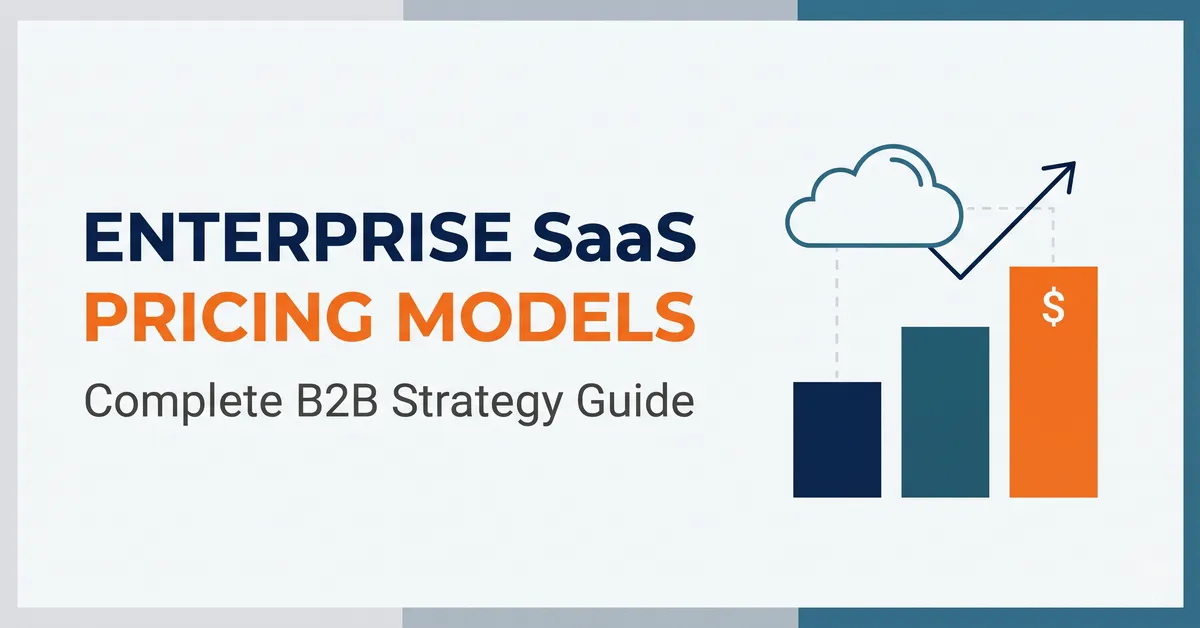
Choosing the right enterprise SaaS pricing models directly determines whether a software vendor captures maximum contract value or loses corporate deals to billing friction. Setting pricing for SaaS at the enterprise level requires aligning product value, buyer consumption habits, and technical license enforcement. Understanding a B2B business and how corporate procurement operates is essential before finalizing these billing structures.
This guide breaks down core software billing structures, evaluates specific monetization frameworks, and explains how technical entitlement systems turn a theoretical pricing strategy into operational reality.
Eduma – Education WordPress Theme
We provide an amazing WordPress theme with fast and responsive designs. Let’s find out!
What is a Software Pricing Model?
A software pricing model is the structural framework that defines how much a customer pays to acquire a software license and access specific product capabilities.
Rather than representing a static price tag, the model dictates the rules of the commercial transaction—whether a buyer pays a single upfront fee, a recurring monthly charge based on active team members, or a variable rate tied to server consumption.
Teams learning how to build a SaaS application must establish this monetization architecture early so the software’s technical boundaries match its revenue goals.
3 Core Factors When Evaluating SaaS Enterprise Pricing
Selecting sustainable SaaS enterprise pricing impacts recurring revenue growth, net dollar retention, and long-term business viability. Before locking in a billing framework, monetization teams must evaluate three foundational pillars.
1. Target Market and Industry Dynamics
The specific industry and business size a software vendor serves heavily dictate which billing structures will succeed. Monetization leaders must assess the financial profile of their ideal customer, potential market expansion, and regional purchasing habits.
Going beyond basic firmographics yields even stronger results. By identifying the exact buyer sub-segments that rely most heavily on the platform, product teams can uncover specific operational pain points.
Packaging features to solve those exact bottlenecks ensures the price feels justified to procurement teams. Evaluating proven marketing models can also help teams position these tailored packages effectively for each buyer persona.
2. Product Functionality and Value Proposition
Effective monetization requires pinpointing exactly where the software delivers its highest operational return and charging accordingly. Historically, software providers reserve advanced capabilities for higher-priced product tiers.
However, modern software companies also monetize raw resource consumption. Tying costs directly to data storage, API calls, or processing volume appeals strongly to corporate buyers who demand strict alignment between software expenditure and measurable business output.
3. Competitor Approaches and Market Shifts
Pricing never happens in a vacuum. Vendors must continuously monitor competitor structures, macroeconomic shifts, and emerging technological standards.
Conducting a thorough SWOT analysis and learning how to check a competitor website allows monetization teams to benchmark rival packages accurately before adjusting their own rates. Economic slowdowns or sudden shifts in buyer behavior often require agile adjustments to contract terms.
For instance, market research from IDC indicates that 55% of software buyers now expect artificial intelligence capabilities to be included in their standard plans at no additional cost.
Navigating these shifting expectations requires balancing innovation costs with transparent billing. Because no single formula works forever, growing vendors frequently manage multiple enterprise SaaS pricing models simultaneously—especially when expanding into corporate sales, partnering with third-party resellers, or evolving from a single-point tool into a multi-product platform.
Two Foundational Software Billing Structures
At the highest level, all software monetization falls into one of two categories: the perpetual license model or the recurring revenue model.
1. The Perpetual License Model
Under a perpetual structure, the customer pays a single upfront fee to gain indefinite access to a specific version of the software. This approach remains common in on-premises enterprise deployments and specialized industrial applications.
2. The Recurring Revenue Model
A recurring or subscription-based model charges customers a scheduled fee—typically monthly or annually—to maintain active access to the platform. Within this framework, vendors construct differentiated SaaS packages based on seat counts, feature sets, storage capacity, or other consumption metrics.
6 Common Enterprise SaaS Pricing Models Explained
Once a vendor commits to a recurring subscription framework, the next step is selecting the specific mechanism that calculates the buyer’s invoice. Below are the six primary frameworks used across the software industry, complete with practical SaaS pricing examples.
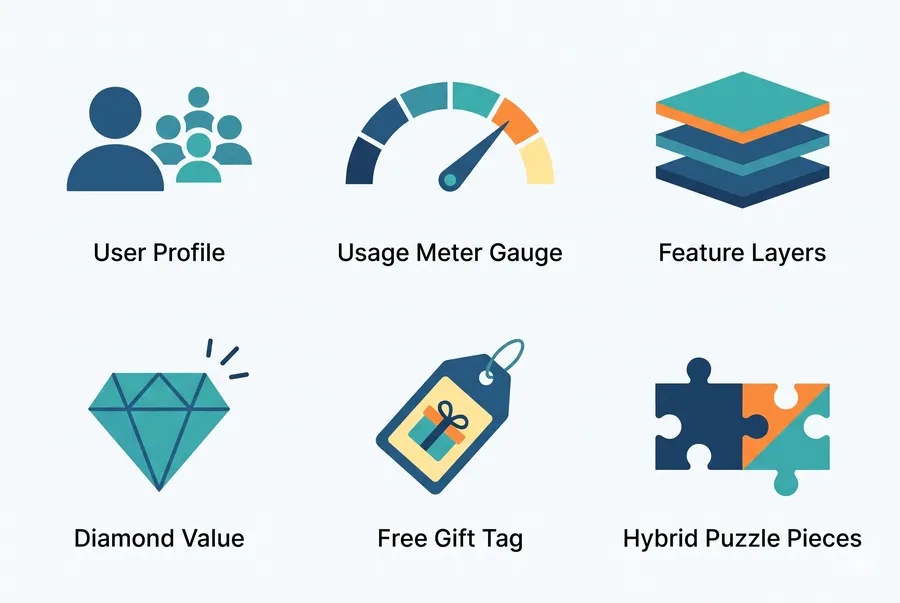
1. Per-User (Seat-Based) Pricing
Per-user pricing ties the total contract cost directly to the number of individual employees or “seats” granted access to the platform, which remains the standard billing approach for the best CRM software and corporate collaboration suites.
As an organization adds team members, the subscription fee scales proportionally. Many vendors use volume discounting to encourage company-wide rollouts. For example, a vendor might structure their seat tiers as follows:
- Tier 1 (1–50 licenses): $100 per user/month
- Tier 2 (51–100 licenses): $80 per user/month
- Tier 3 (101+ licenses): $60 per user/month
| Advantages | Disadvantages |
| Scales revenue naturally alongside the customer’s organizational growth. | Penalizes smaller businesses or teams with tight budget constraints. |
| Simplifies financial forecasting for both the software vendor and the corporate buyer. | Risks revenue leakage if users share login credentials intentionally or accidentally. |
| Encourages deep platform stickiness as more departments adopt the tool. | Discourages broad internal adoption if managers restrict seat distribution to cut costs. |
2. Usage-Based (Consumption) Pricing
Usage-based frameworks charge buyers based on the exact volume of resources they consume during a billing cycle.
Common metrics include gigabytes of data processed, API requests executed, gigabytes of cloud storage, or active compute hours across the best cloud hosting services. Customers automatically scale up to higher volume brackets as their operational activity expands.
| Advantages | Disadvantages |
| Aligns cost directly with utilization, making it highly attractive for startups or seasonal businesses. | Makes monthly revenue forecasting harder for the vendor due to fluctuating customer activity. |
| Allows vendor revenue to expand organically without requiring manual sales upsells for every growth spike. | Can trigger “bill shock” for high-volume enterprise customers if usage spikes unexpectedly. |
| Lowers the initial barrier to entry, enabling prospects to start small and scale seamlessly. | Requires sophisticated back-end metering and billing infrastructure to track consumption accurately. |
3. Feature-Based (Tiered) Pricing
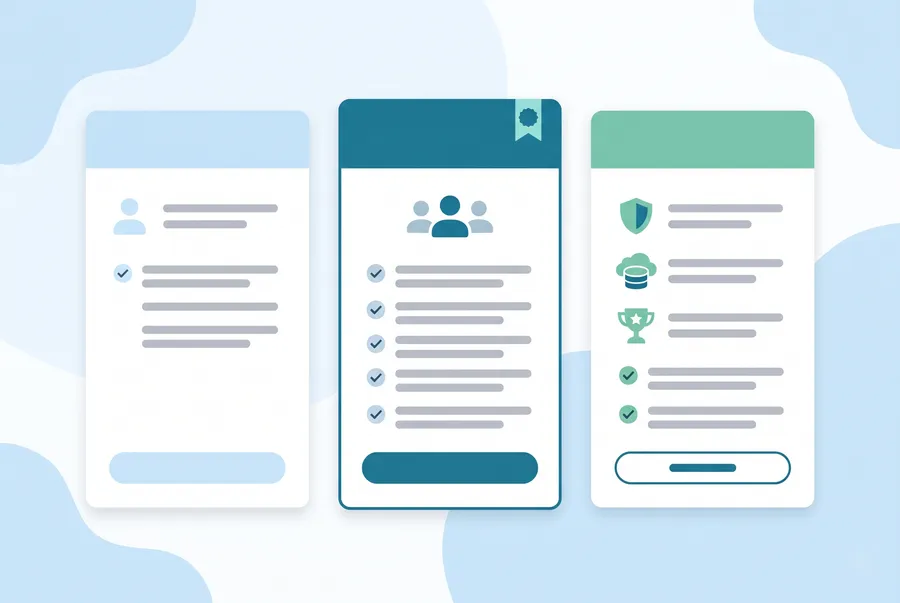
In a feature-based or tiered structure, SaaS prices are dictated by the number and sophistication of capabilities unlocked in each plan.
Vendors typically offer three to four distinct tiers (e.g., Standard, Professional, Enterprise), reserving advanced security, automation, or reporting tools for the highest brackets.
| Advantages | Disadvantages |
| Empowers buyers to select a package that matches their current operational maturity. | Complicates direct price comparisons against competing platforms with different tier structures. |
| Creates a clear upsell pathway as growing companies require more sophisticated tooling. | Risks frustrating buyers if they must upgrade to an expensive tier just to access one specific feature. |
| Gives budget-conscious buyers cost control by excluding complex features they do not need. | Requires reliable technical controls to activate and deactivate specific modules per account. |
4. Value-Based Pricing
Rather than calculating costs based on internal R&D expenses or standard market markups, value-based enterprise SaaS pricing models anchor the price directly to the quantifiable financial impact the software delivers to the buyer.
If a platform saves a logistics corporation $1 million annually in fuel routing, the vendor charges a proportionate fraction of that guaranteed return.
| Advantages | Disadvantages |
| Allows vendors to command premium contract values by focusing on return on investment (ROI). | Demands extensive market research and customer discovery to quantify exact financial outcomes. |
| Differentiates the software from competitors that compete solely on feature checklists or low rates. | Requires a highly skilled enterprise sales team capable of communicating complex ROI models to CFOs. |
| Decouples vendor revenue from raw seat counts or server volume, protecting profit margins. | Proves difficult to execute for horizontal software tools with broad appeal and low competitive differentiation. |
5. Freemium Acquisition Model
While frequently grouped with billing structures, freemium is technically a customer acquisition strategy rather than a standalone revenue model. The vendor offers a permanent, free-to-use version of the core product, relying on usage caps or feature gates to convert active users into paid subscribers over time.
A prime real-world illustration of this approach is how Canva pricing plans transition millions of casual design users into paid Pro and Enterprise teams.
| Advantages | Disadvantages |
| Eliminates adoption friction, allowing prospects to test the software risk-free before involving procurement. | Suffers from low conversion rates, as a small percentage of paid accounts must subsidize thousands of free users. |
| Builds massive top-of-funnel brand awareness and a large active user community. | Can strain engineering and customer support budgets if free infrastructure costs are not tightly capped. |
| Generates rich behavioral telemetry data showing which features drive the highest user engagement. | Requires heavy ongoing marketing investment to maintain a high volume of new user sign-ups. |
6. Hybrid Pricing
A hybrid model blends two or more distinct billing frameworks into a single contract. For example, a vendor might charge a base annual subscription fee covering a set number of user seats, while layering on usage-based overage fees for extra data storage or selling specialized add-on modules separately.
Many of the best marketing automation tools use this exact structure, pairing a baseline platform fee with variable charges tied to email send volume or active contact database size.
| Advantages | Disadvantages |
| Diversifies vendor revenue streams by capturing both predictable base fees and variable growth upside. | Increases operational overhead for finance, billing, and sales operations teams. |
| Maintains a baseline of predictable recurring cash flow while accommodating heavy enterprise users. | Can confuse prospective buyers if the pricing page includes too many overlapping variables. |
| Provides commercial flexibility to tailor custom agreements for complex corporate procurement needs. | Complicates contract administration and invoice reconciliation for both the vendor and the client. |
Comparison of Common SaaS Pricing Examples and Frameworks
| Pricing Model | Primary Billing Metric | Best Suited For | Main Operational Challenge |
| Per-User (Seat) | Number of active individual accounts | Collaboration, CRM, and workflow tools | Credential sharing and seat restriction |
| Usage-Based | Volume of data, API calls, or time | Cloud infrastructure, data, and AI platforms | Revenue unpredictability and metering complexity |
| Feature-Based | Access to specific software capabilities | Multi-module platforms serving diverse segments | Complex feature gating and tier confusion |
| Value-Based | Quantifiable financial ROI delivered | Specialized vertical or high-impact enterprise tools | Difficult value calculation and long sales cycles |
| Freemium | Free baseline with paid upgrades | Product-led growth (PLG) and viral applications | Supporting high volumes of non-paying users |
| Hybrid | Combination of seats, usage, and add-ons | Mature multi-product enterprise software suites | Billing complexity and buyer friction |
Turning Pricing Strategy into Operational Reality
Designing sophisticated enterprise SaaS pricing models on a spreadsheet is only half the battle. Delivering new billing structures rapidly, securely, and at scale requires a robust back-end software licensing and entitlement infrastructure.
- Authorized Services and Modules: Clearly defines and enforces which specific products or microservices a customer can launch, preventing unauthorized access to unpaid tools.
- Time Restrictions and Contract Terms: Governs the exact duration of software access, automating trial expirations, annual renewal windows, and grace periods.
- User Concurrency and Seat Caps: Monitors the exact number of active accounts or simultaneous logins to ensure the vendor is compensated accurately for every seat used.
- Geographic and Deployment Boundaries: Restricts where and how the software operates, enforcing rules around regional data sovereignty, cloud versus on-premises installations, or specific hardware bindings.
- Consumption Limits and Quotas: Tracks real-time usage metrics such as transaction volume, storage capacity, or API throughput, triggering automated alerts or overage billing when thresholds are crossed.
- Granular Feature Activation: Controls the real-time activation or deactivation of individual capabilities inside the application interface based on the buyer’s current tier.
Conclusion: The Shift from Basic Licensing to Granular Entitlements
In modern cloud environments—especially when managing complex SaaS enterprise pricing—traditional license keys are no longer sufficient. While a basic software license grants high-level permission to run an application, entitlements function as “Licensing 2.0.”
Entitlement management systems govern granular, real-time access privileges across cloud, hybrid, and on-premises environments. Instead of requiring engineering teams to hard-code pricing logic into the software every time the sales team creates a custom enterprise deal, an entitlement platform centralizes these rules.
This allows monetization teams to modify packages, launch usage-based add-ons, and enforce compliance dynamically without disrupting the underlying backend software architecture.
Frequently Asked Questions (FAQs): Enterprise SaaS Pricing Models
1. What is the difference between a software pricing model and a licensing model?
A pricing model is the commercial framework that dictates how much a customer pays for software (such as $50 per user per month). A licensing model—supported by entitlement management—is the technical and legal mechanism that enforces those terms, controlling which features, seat limits, and time durations the customer can actually access inside the application.
2. Why do many enterprise vendors use hybrid pricing?
Large corporate buyers rarely fit neatly into rigid, single-metric billing plans. Hybrid structures allow vendors to charge a predictable base subscription fee (often tied to seats or platform tiers) while layering on variable usage fees for high-consumption resources like data storage or API calls. This protects vendor margins while giving enterprise buyers contract flexibility.
3. How does artificial intelligence impact modern pricing for SaaS?
The rise of embedded AI features has complicated traditional seat-based billing because AI tools often consume significant cloud compute resources while reducing the number of human seats needed to complete tasks. As organizations evaluate automation vs AI across their workflows, over half of software buyers now expect AI capabilities to be included at no extra cost, prompting vendors to shift toward hybrid or usage-based models to cover infrastructure expenses while staying competitive.
4. Is freemium considered a true SaaS pricing model?
Technically, no. Freemium is a customer acquisition strategy rather than a revenue model. It provides permanent free access to a restricted version of the software to drive user adoption, relying on a separate tiered, seat-based, or usage-based pricing model to monetize users who eventually upgrade to paid plans.
5. How do software companies prevent revenue leakage in seat-based models?
In per-user pricing frameworks, revenue leakage typically occurs when multiple employees share a single login credential or when departed employees’ accounts are not properly deprovisioned. Vendors prevent this by implementing automated license and entitlement management systems that track concurrent logins, enforce single sign-on (SSO) authentication, and cap active user provisioning at the contracted limit.
Read more: Top 6 Mobile App Dev Frameworks for Cross-Platform Apps
Contact US | ThimPress:
Website: https://thimpress.com/
Fanpage: https://www.facebook.com/ThimPress
YouTube: https://www.youtube.com/c/ThimPressDesign
Twitter (X): https://x.com/thimpress_com