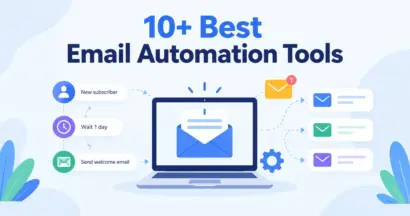
Choosing an enterprise-grade email and text marketing platform directly influences customer retention, engagement rates, and overall revenue. Unifying these critical channels into a single interface allows companies to synthesize user data, track behaviors in real time, and deliver cohesive promotions that turn casual visitors into loyal buyers. To build a strong foundation for this ecosystem, evaluating the best email marketing platforms is a crucial first step for any modern brand.
This comprehensive guide evaluates the leading software solutions available. Whether a business needs the best email platform for small businesses to nurture local leads, or the absolute best email newsletter platform for content monetization, this review provides detailed technical specifications, transparent pricing frameworks, and strategic insights to facilitate a confident decision.
Eduma – Education WordPress Theme
We provide an amazing WordPress theme with fast and responsive designs. Let’s find out!
Summary: 15 Top Email and Text Marketing Platforms at a Glance
Reviewing an aggregated comparative table allows digital marketing managers and business operators to evaluate systems quickly based on core operational criteria. In fact, understanding the broader ecosystem by exploring must-have digital marketing tools can help marketing managers evaluate these systems more effectively.
| Software Platform | Primary Strength & Best For | Free Tier / Trial Available | Starting Price (Monthly) | Built-In SMS Capabilities |
| Brevo | Multi-channel communication & CRM | Yes (Unlimited contacts) | $8.08 | Fully Integrated |
| ActiveCampaign | Advanced customer behavior automation | Yes (14-day trial) | $15.00 | Available via Add-On |
| MailerLite | Clean interface & beginner campaigns | Yes (1,000 contacts) | $9.00 | Integration Required |
| beehiiv | Newsletters and direct monetization | Yes (2,500 contacts) | $43.00 | No |
| Moosend | Budget-conscious behavioral tracking | Yes (30-day trial) | $7.00 | No |
| HubSpot | Extensive commercial CRM infrastructure | Yes (Robust free CRM) | $20.00 | Available in higher tiers |
| Mailjet | High-volume API & team collaboration | Yes (6,000 emails/month) | $9.00 | No |
| Omnisend | Turnkey eCommerce retail automation | Yes (500 contacts) | $16.00 | Fully Integrated |
| AWeber | Fast layouts and visual graphic design | Yes (500 contacts) | $12.50 | No |
| Kit | Digital product sales & creator networking | Yes (10,000 contacts) | $39.00 | No |
| Mailchimp | General inbound marketing tools | Yes (Strict limits) | $13.00 | Integration Required |
| Campaigner | High-volume corporate delivery | Yes (30-day trial) | $59.00 | Fully Integrated |
| GetResponse | Full conversion funnel building | Yes (500 contacts) | $19.00 | Available in Max Tiers |
| Constant Contact | Event coordination and social scheduling | Yes (14-day trial) | $12.00 | Available via Add-On |
| Benchmark Email | Rapid multilingual layout creation | Yes (500 contacts) | $13.00 | No |
Essential Requirements for an Omni-Channel System
Selecting a comprehensive communication system requires looking closely at technical capabilities. True digital agility relies on a specific matrix of email marketing software features designed to optimize user engagement, maintain deliverability compliance, and handle data securely.
Here are the critical components to evaluate:
- Visual Drag-and-Drop Builders: The primary mechanism for generating user interest is a functional, code-free visual editor. Modern applications must include intuitive HTML builders that allow marketing teams to craft flawless responsive campaigns rapidly. If your team is new to custom designs, learning what HTML is can help you better utilize these intuitive editors.
- Advanced Omnichannel Automation: Basic autoresponders are insufficient today. A high-performing Email and text marketing platform must possess visual workflow builders capable of managing multi-channel customer journeys based on real-time event triggers.
- Native Landing Pages and Sign-Up Forms: List acquisition requires functional lead capture frameworks directly embedded into the software environment. Top applications provide advanced form builders capable of deploying slide-ins, pop-ups, and embedded forms that minimize user friction. These capture elements must route subscriber inputs instantly into designated data segments.
- Granular Behavioral Segmentation: Broadcasting single static campaigns to an entire contact list decreases deliverability scores. High-tier email marketing software features mandate advanced contact filtering systems. Marketers must possess the capability to isolate distinct user groups using explicit criteria, including historical purchase values, localized geographical information, and detailed web interactions.
- Technical Deliverability Infrastructures: The design of an asset holds no commercial value if the delivery network routes messages directly into spam folders. Superior deliverability depends heavily on the technical infrastructure maintained by the service provider. For detailed guidelines on maintaining a healthy sender reputation, reviewing Google’s official documentation on email sender guidelines and deliverability compliance is highly recommended.
- Transparent and Scalable Pricing: Software overhead must remain predictable as consumer databases expand. The best email platform for small businesses typically utilizes transparent tier adjustments based on contact volume or monthly transmission limits. Comprehensive free trials or robust free tiers are vital to allow marketing departments to thoroughly test visual editors and evaluate delivery performance before entering long-term contracts.
15 Top Email and Text Marketing Platform Picks
Navigating the competitive software market requires analyzing specific platform structural designs, technical features, and operational limitations. The following comprehensive breakdowns evaluate the 15 primary platforms defining digital marketing today.
1. Brevo
Brevo serves as a versatile, cost-effective communication suite tailored to accommodate mid-market enterprises and expanding startups. It bridges the gap between traditional outbound marketing tools and corporate relationship databases by housing advanced CRM features alongside its native delivery infrastructure.
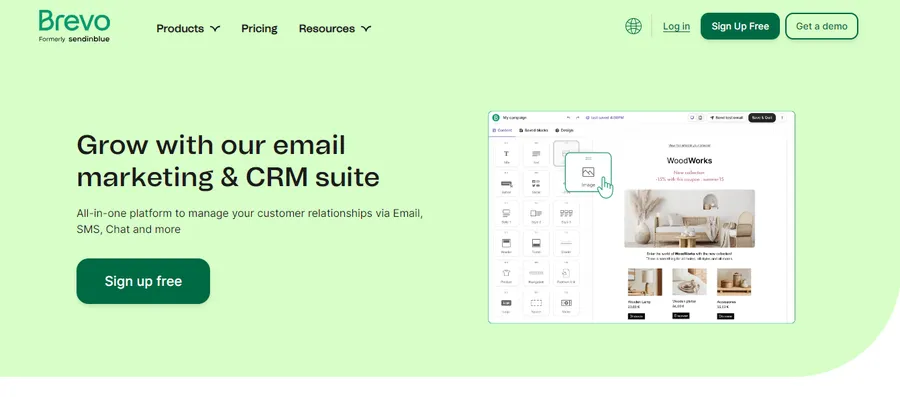
The platform provides users with clean, functional design interfaces to construct highly effective sign-up forms and transactional messaging tracks. Brevo is highly capable of running complex multi-channel automation streams where text dispatches are paired with traditional newsletters. Because it manages transactional emails (such as purchase confirmations and password resets) on dedicated high-deliverability servers, it guarantees exceptional inbox visibility.
- Pros: Exceptional free daily sending tier. Highly accessible layout controls. Integrated multi-channel communications (SMS and WhatsApp). Zero cost penalties for large contact storage.
- Cons: The library of pre-made templates is relatively small compared to older legacy platforms.
- Pricing: A free option permits up to 300 daily email dispatches to an unlimited number of contacts. Premium paid structures begin at $8.08 monthly, with scalable options as delivery volume grows.
2. ActiveCampaign
ActiveCampaign focuses extensively on complex customer lifecycle mapping, operating as a robust automation engine for organizations requiring advanced behavioral targeting. It bridges sales processes and promotional tracks through an integrated pipeline dashboard.
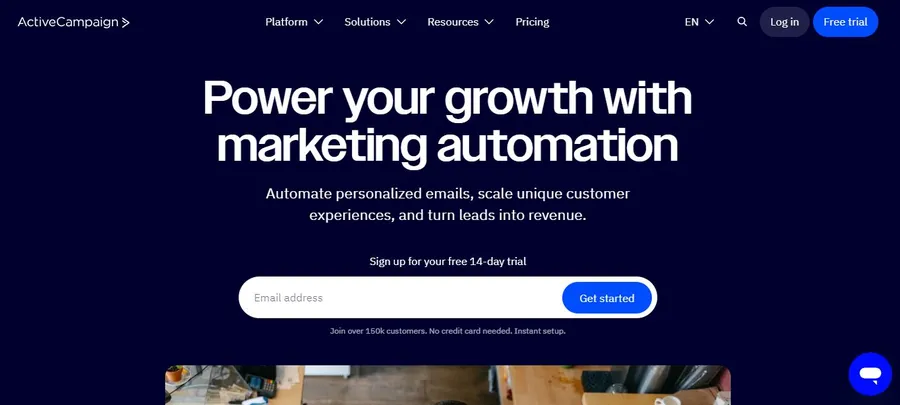
The visual workflow editor contains over 900 pre-configured automation recipes, allowing users to map out multi-step customer journeys with precise conditional parameters. When deployed as an Email and text marketing platform, it allows teams to inject text messaging stages directly into email nurturing sequences based on specific tags or lead scores. The contact management system tracks detailed individual behavioral profiles cleanly.
- Pros: Advanced multi-branch automation control. Highly sophisticated contact scoring systems. Deep CRM integration. Stellar technical deliverability ratings.
- Cons: The platform requires significant training to master due to the extreme complexity of its multi-layered logic paths.
- Pricing: Entry plans scale from $15.00 monthly for 1,000 contacts, backed by a comprehensive 14-day evaluation trial.
3. MailerLite
MailerLite champions functional minimalism, delivering highly clean and accessible tools for organizations establishing their initial outbound marketing workflows. It eliminates technical bloat while preserving critical analytical and delivery infrastructure.
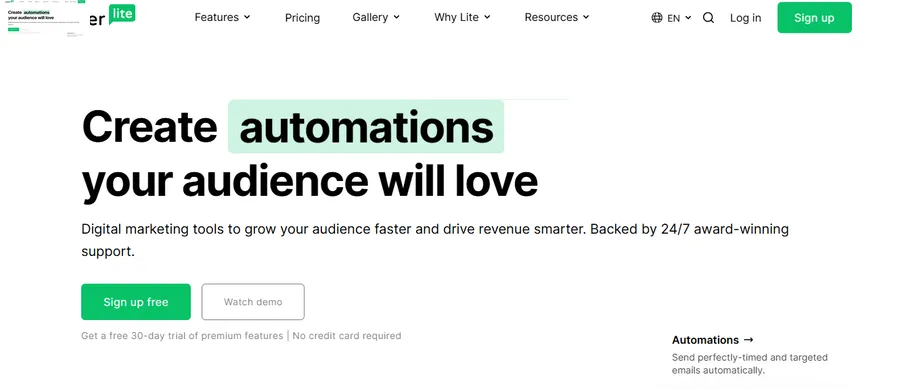
The drag-and-drop builder is recognized across the industry for its smooth, intuitive user interface, offering rapid access to over 90 professionally styled templates. Beyond simple email formulation, MailerLite includes robust utility tools for generating standalone landing pages and embedded registration forms. While it lacks native SMS management, it connects flawlessly with major cellular routing tools via pre-built API configurations.
- Pros: Minimalist, user-friendly experience. Highly competitive pricing metrics. Built-in landing page hosting. Fast, responsive customer support.
- Cons: Lacks advanced enterprise features such as predictive analytics or deep multi-variable testing matrices.
- Pricing: The free tier accommodates 1,000 subscribers and up to 12,000 monthly email dispatches. Premium structures commence at $9.00 monthly.
4. beehiiv
In the rapidly expanding digital media sector, beehiiv operates as the definitive best email newsletter platform for independent writers, publishing houses, and content networks. It intentionally departs from standard corporate B2B layouts, tailoring its environment entirely toward audience expansion and monetization.
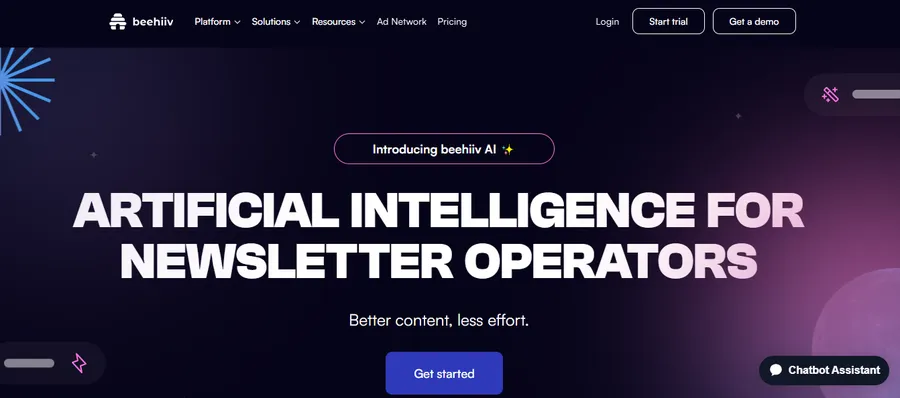
The content production environment functions like an optimized publishing suite, featuring distraction-free interfaces alongside robust generative AI writing support. beehiiv focuses heavily on list expansion through integrated organic growth features.
- Pros: Unmatched native content monetization engines. Built-in subscriber referral mechanics. Zero revenue-share cuts on paid structures. Deep editorial performance metrics.
- Cons: Lacks traditional conversion funnel elements, automated sales CRM pipelines, or native SMS broadcasting.
- Pricing: Offers an unmonetized free tier for up to 2,500 readers. Full monetization and advanced optimization plans scale from $43.00 monthly.
5. Moosend
Moosend balances advanced behavioral logic with accessible pricing, making it a compelling candidate for the title of the best email platform for small businesses. It provides modern data collection and automation features without requiring extensive corporate software budgets.
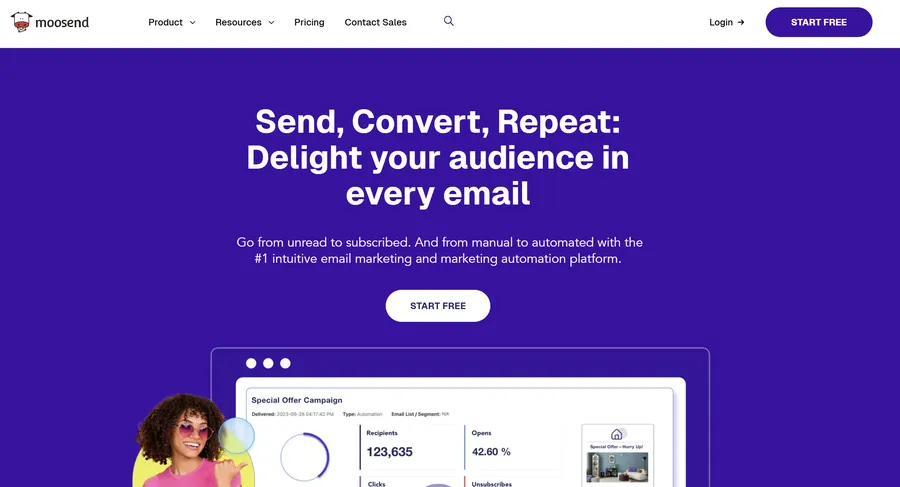
The software platform delivers a uniform visual interface for crafting newsletters, sign-up forms, and lead capture landing pages, ensuring team members can transition across design tasks effortlessly. Moosend incorporates advanced web-tracking nodes that log exact visitor activities across corporate websites.
- Pros: Premium behavioral tracking logic at entry-level prices. Unlimited email generation on paid structures. Streamlined workflow interface.
- Cons: The platform does not maintain a permanent free account tier, requiring immediate conversion after the trial phase.
- Pricing: Initiates a comprehensive, unthrottled 30-day trial evaluation, with paid subscription tiers starting at $7.00 monthly for 500 contacts.
6. HubSpot
HubSpot provides a monumental product ecosystem spanning marketing operations, inbound sales pipelines, and customer support ticket tracking. Its Marketing Hub utilizes a singular database model, ensuring customer data fields remain uniformly updated across all corporate departments.
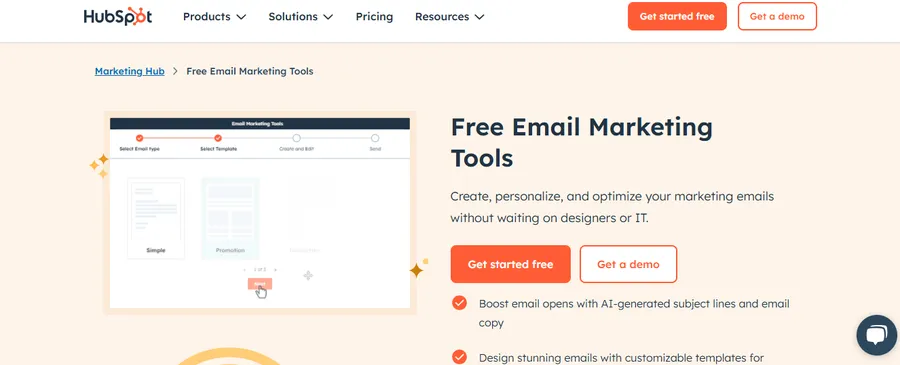
The application operates as an immensely powerful Email and text marketing platform by allowing teams to align mobile text messaging, paid search retargeting, and traditional email blasts within single customer profiles. This deep alignment allows automated workflows to shift messaging styles dynamically depending on an individual’s specific location inside a sales representative’s active pipeline.
For organizations looking to expand beyond email, evaluating the best CRM software ensures your entire sales pipeline remains connected.
- Pros: Monolithic data centralization. Seamless department alignment. Massive third-party application marketplaces. Enterprise security compliance protocols.
- Cons: Costs scale aggressively, making the transition from basic tiers to mid-market options financially challenging for smaller organizations.
- Pricing: Features a basic free CRM tool, while premium specialized marketing tiers start at $20.00 monthly.
7. Mailjet
Mailjet targets technical marketing teams, mid-market organizations, and development departments that prioritize high-volume transactional efficiency and flexible API configurations.
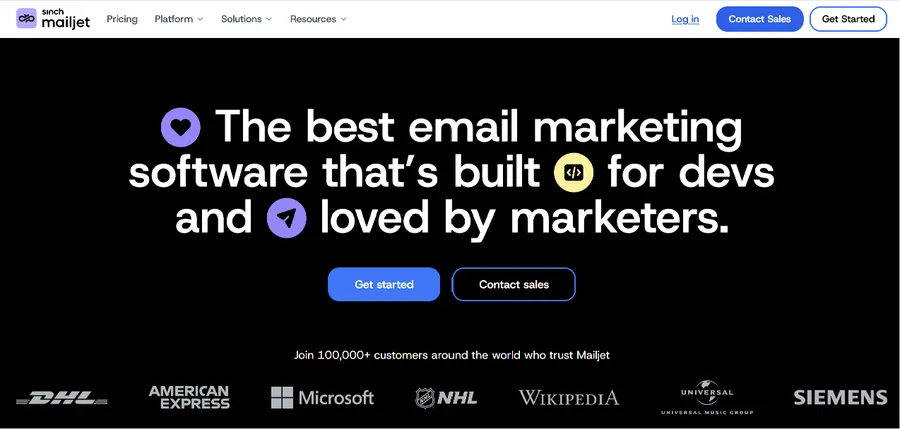
A primary differentiator within Mailjet’s foundational email marketing software features is its advanced real-time collaborative workspace. Multiple design and copy team members can edit a single campaign template simultaneously, tracking changes instantly and shortening editorial review loops. The system operates on volume-centric pricing structures rather than placing strict constraints on contact storage capacity.
- Pros: Pricing scales by email volume rather than contact limits. Real-time campaign co-editing features. Excellent SMTP relay performance.
- Cons: The visual automation builder is mathematically rigid, limiting the complexity of multi-layered conditional branches.
- Pricing: The free tier permits up to 6,000 monthly email dispatches. Pro plans unlock advanced variables starting at $9.00 monthly.
8. Omnisend
Omnisend specializes entirely in digital retail, serving as a highly optimized Email and text marketing platform built specifically to drive conversions for online storefronts and eCommerce operators.
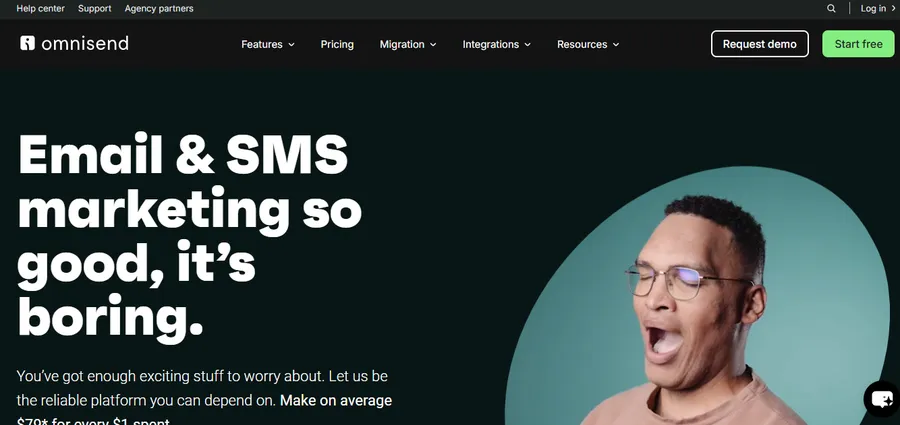
The software establishes direct, deep-level data connections with premium storefront solutions. It features an extensive collection of pre-configured retail automation paths, enabling companies to launch cart recovery sequences, browser abandonment reminders, and automated SMS order updates within minutes.
Omnisend’s built-in “Customer Lifecycle Map” breaks down contact groups based on frequency, recency, and monetary transaction data. Pairing this tool with the best eCommerce website templates can create a seamless shopping experience from the initial click to the final checkout.
- Pros: Turnkey eCommerce platform synchronization. Pre-packaged retail behavioral workflows. Built-in multi-channel messaging options. Clean analytics tracking.
- Cons: Highly optimized for retail environments, making it structurally ill-suited for B2B service firms or professional consultancies.
- Pricing: Features a basic free tier including core messaging tools. Paid data plans begin at $16.00 monthly.
9. AWeber
AWeber represents a foundational presence in the digital communications marketplace, leveraging decades of service delivery to provide exceptional stability, template variety, and graphic editing simplicity.
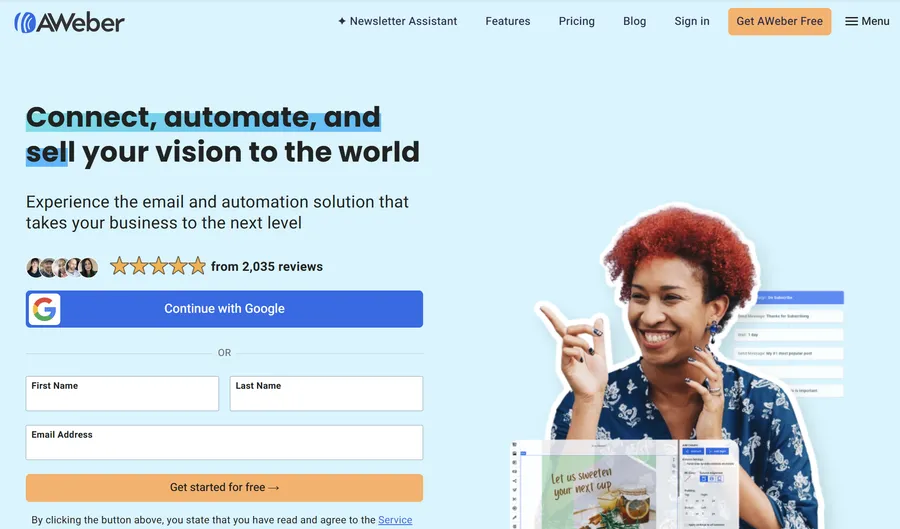
The platform includes an extensive design library housing over 600 mobile-responsive templates. Furthermore, it embeds a native Canva widget inside its template configuration dashboard. For beginners, mastering how to use Canva alongside this integration can elevate your campaign’s visual appeal effortlessly.
- Pros: Immense pre-made template repository. Direct in-platform graphic editing via Canva. Simple user onboarding process. Accessible customer phone support channels.
- Cons: The automation architecture lacks advanced behavioral tracking and complex branching filters.
- Pricing: Free plan accommodates up to 500 contacts and 3,000 monthly dispatches. Paid structures begin at $12.50 monthly.
10. Kit (Formerly ConvertKit)
Kit focuses its development efforts entirely on online creators, independent educators, podcasters, and digital media operators. It is designed to facilitate digital product sales, audience engagement, and creator collaboration.
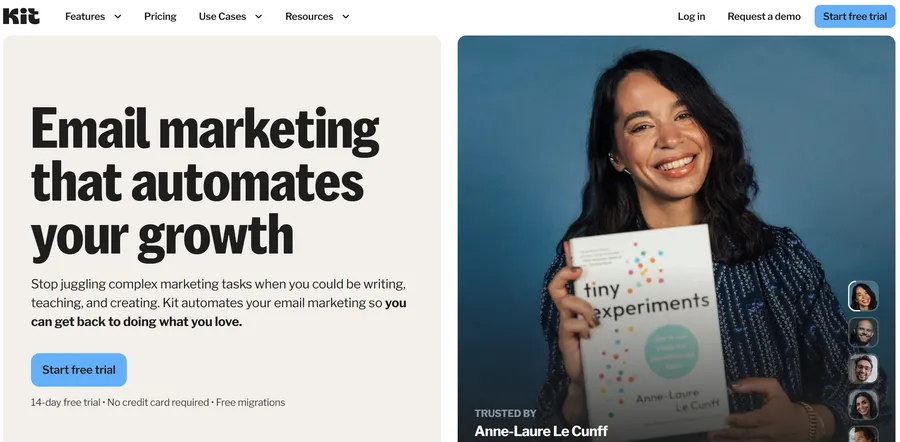
The platform ranks alongside beehiiv as a highly effective best email newsletter platform option for individual operators, utilizing a fluid contact-tagging framework rather than separate, static list directories. This tagging engine allows users to construct visual sales sequences that track product interest dynamically. Kit features a distinct “Creator Network,” allowing independent operators to set up co-promotion recommendations.
- Pros: Highly effective creator networking systems. Integrated digital download sales infrastructure. Flexible tag-based audience tracking.
- Cons: Visual template designs are intentionally text-heavy, which may not appeal to highly visual fashion or lifestyle brands.
- Pricing: A free option supports list management up to 10,000 subscribers. Premium feature sets unlock starting at $39.00 monthly.
11. Mailchimp
Mailchimp enjoys substantial market visibility and serves as a common entry-point tool across the digital marketing ecosystem. It provides general marketing features, newsletter tools, and website tracking mechanisms.
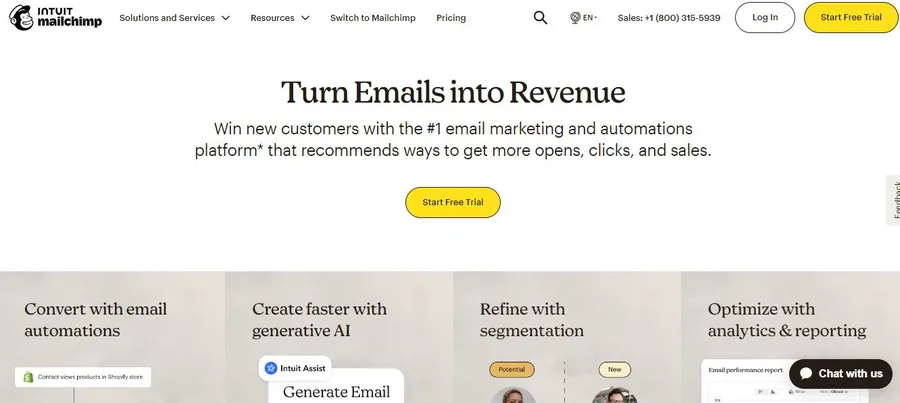
The user interface is highly accessible and connects with a vast library of third-party platforms. It provides basic automated welcome sequences and landing page hosting options. However, software operators often note that pricing shifts have reduced its competitive edge. Mailchimp applies strict account limits and enforces financial charges for storing unsubscribed contacts.
- Pros: Widespread software marketplace compatibility. Familiar, user-friendly experience. Decent template layouts.
- Cons: Pricing metrics penalize list maintenance oversights. Essential automation logic requires higher premium tier packages.
- Pricing: Paid commercial tiers begin at $13.00 monthly for a 500-contact threshold.
12. Campaigner
Campaigner is engineered specifically to handle the demands of heavy, enterprise-scale bulk delivery operations. It provides reliable infrastructure focused on security, deliverability, and data processing at scale.
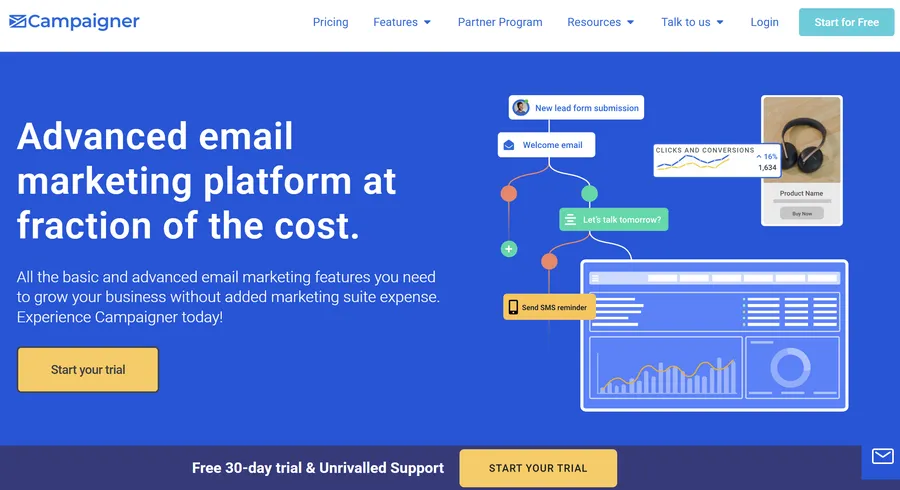
The platform enables marketing departments to embed advanced text messages directly into multi-stage promotional flows alongside standard newsletters. Campaigner’s primary asset is its “Reputation Defender” module. When managing extensive databases with high volume demands, keeping bounce rates low is critical to protect domain standing. This system automatically cleans data pipelines by scanning for toxic spam traps and invalid inputs.
- Pros: Enterprise-grade bulk deliverability framework. Proactive list cleaning technology. Advanced automated multi-channel sequences.
- Cons: High financial entry barriers make it a poor fit for small startups or micro-businesses.
- Pricing: Following a 30-day evaluation framework, premium specialized tiers begin at $59.00 monthly.
13. GetResponse
GetResponse functions as a comprehensive inbound conversion ecosystem, packaging webinar deployment dashboards, visual landing page creators, and funnel management tools inside a single dashboard.
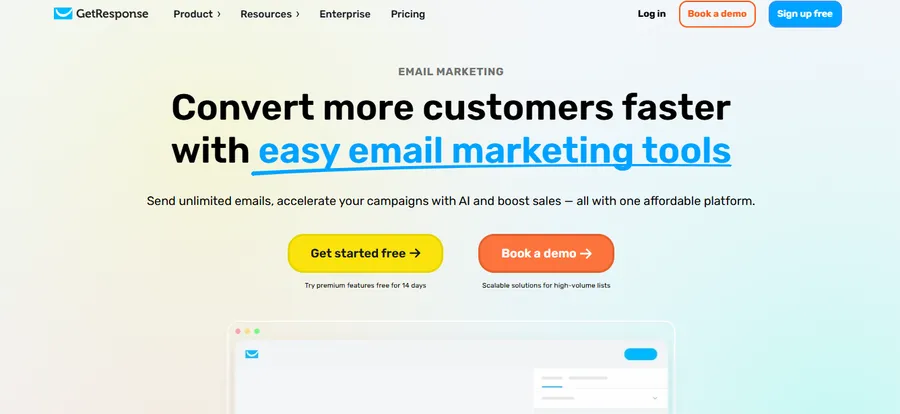
The application allows operators to map out complete visual sales funnels, tracking a lead from an initial sign-up form through educational welcome sequences down to a finalized digital purchase checkpoint. Because it features built-in webinar hosting, it serves as an incredibly effective best email platform for small businesses that rely on informational presentation funnels to sell coaching packages or digital memberships.
- Pros: Integrated end-to-end sales funnel structures. Native digital presentation dashboards. Flexible automated workflows.
- Cons: The interface can feel disjointed due to the large volume of independent features bundled together.
- Pricing: Provides a basic free tier for under 500 contacts, while advanced commercial tiers start at $19.00 monthly.
14. Constant Contact
Constant Contact serves local commerce, small business service firms, and non-profit entities that rely heavily on event tracking, physical workshops, and localized community building.
Beyond standard digital newsletter creation, the software features native event management engines. Users can draft professional event invitations, track digital registrations, manage attendee check-ins, and process ticket invoices natively.
Additionally, it bundles a social media monitoring module, allowing teams to schedule organic posts across networks from a single account dashboard.
- Pros: Built-in event management tools. Social media scheduling. Straightforward list management.
- Cons: Marketing automation remains basic, offering simple linear drips rather than complex behavioral branching logic.
- Pricing: Premium packages begin at $12.00 monthly, with zero permanent free structures offered.
15. Benchmark Email
Benchmark Email emphasizes production velocity and international accessibility, aiming to remove friction from the design process for small to mid-sized teams.
The visual builder relies heavily on pre-configured layout blocks, allowing marketing personnel to assemble clean layouts rapidly. Benchmark Email supports global outreach by housing over 200 fully responsive templates translated into multiple languages. Its automation dashboard utilizes clean, visual logic trees, making it easy for non-technical users to build functional customer journeys.
- Pros: Fast, block-based design tool. Translated multilingual layouts. A clean automation interface.
- Cons: Lacks advanced analytics tracking and complex lead scoring matrices.
- Pricing: Offers a basic free version, while premium plans unlock advanced optimization variables starting at $13.00 monthly.
Channel-Specific Integrations
While modern all-in-one software suites provide significant operational efficiency, certain organizations choose a modular configuration. This approach involves linking specialized standalone messaging systems with advanced email marketing tools via dedicated APIs.
- Klaviyo: While primarily celebrated for its advanced eCommerce segmentation, Klaviyo provides dedicated, native mobile text infrastructure deeply connected to individual store transactions. It ensures that text alerts are highly personalized.
- TextMagic: A dedicated cellular text platform that links with software such as ActiveCampaign to enable two-way operational communication. It allows customer service desks to manage text conversations from a web dashboard.
- SlickText: A prominent standalone text marketing engine that provides enterprise shortcodes, image-rich delivery, and interactive mobile voting modules. It connects with major inbound CRMs to keep user records updated cleanly.
Selecting the Right Email and Text Marketing Platform by Category
With countless platforms on the market, finding the perfect fit can be challenging. However, by analyzing expert reviews and insights from top industry blogs, we can highlight practical, data-backed recommendations tailored to specific business categories.
For Small Businesses and Startups
Emerging companies typically operate with limited resources and smaller teams. Therefore, they need platforms that provide essential marketing features without requiring deep technical knowledge or a large budget.
- Moosend: This platform is highly recommended for small businesses that want advanced tools at an affordable price. It goes beyond basic email delivery by offering powerful behavioral tracking and automated drip campaigns. Even with a modest budget, users can easily create engaging welcome series and re-engagement workflows.
- Brevo: Formerly known as Sendinblue, Brevo provides great financial flexibility. It functions as a complete email and text messaging hub. Its most attractive feature is a free tier offering unlimited contact storage, where users only pay based on the number of emails sent. This makes it perfect for startups focusing on building their audience before heavily monetizing.
For eCommerce Retailers
Online stores thrive on data. To succeed, they require deep integrations that track shopper behavior, recover lost sales, and increase the average order value.
- Omnisend: This platform dominates the retail space. It builds direct, seamless connections with major storefronts like Shopify. Thanks to this integration, merchants can easily set up automated, high-converting marketing flows. Whether sending a browse abandonment email or a quick SMS update about an order’s shipping status, Omnisend turns data into direct sales.
If you are just launching, starting with top free Shopify themes can keep initial costs low while maintaining a professional appearance.
For Digital Publishers and Media Creators
Today’s independent writers and content creators need distinct features. They prioritize a clean reading experience, full ownership of their audience, and built-in monetization strategies.
- beehiiv: Built specifically for newsletter growth, beehiiv excels at direct revenue generation. It empowers writers with built-in referral programs, allowing loyal subscribers to promote the content organically.
- Kit: Previously ConvertKit, this tool is ideal for educators and digital artists. It uses a flexible, tag-based system to organize subscribers based on their specific interests. Furthermore, its collaborative Creator Network allows users to partner with peers to rapidly expand their reach.
Quick Comparison:
| Business Category | Recommended Software | Ideal Audience | Key Standout Feature |
| Small Business | Moosend | Budget-conscious teams | Affordable behavioral tracking |
| Startups | Brevo | Early-stage list building | Unlimited contact storage on the free tier |
| eCommerce | Omnisend | Online storefronts (e.g., Shopify) | Cart abandonment & SMS workflows |
| Publishers | beehiiv | Independent newsletter writers | Built-in referrals & native monetization |
| Creators | Kit | Educators & digital artists | Tag-based segmentation & networking |
The Power of AI in Digital Marketing Platforms
The incorporation of Artificial Intelligence represents a massive shift in modern email marketing software features. Modern platforms leverage machine learning algorithms to automate complex optimization tasks, eliminating manual guesswork.
If your organization is fully embracing automation, exploring the best AI marketing tools can uncover new ways to scale your outreach.
- Predictive Behavioral Analytics: Machine learning engines analyze historical interaction data to forecast future actions. Systems can automatically group contacts based on their likelihood to purchase. This allows companies to target promotional offers exclusively at users who need an incentive to convert, protecting profit margins.
- Send-Time Optimization: Instead of broadcasting a campaign to an entire database at a single static hour, integrated AI modules analyze individual subscriber open patterns. The software then delivers the message to each user’s inbox at the exact time they are historically most likely to engage, boosting open rates. To maximize this potential, utilizing the best AI email assistant platforms ensures your copy is as optimized as your delivery schedule.
- Automated Channel Optimization: High-tier systems track channel engagement preferences across individual profiles. The automation engine can autonomously decide whether to deploy a specific promotion via an email newsletter, a mobile text message, or a web push notification.
Conclusion
Choosing the ideal email and text marketing platform is a foundational business decision that directly impacts an organization’s ability to engage audiences, retain customers, and drive long-term revenue. The digital landscape requires unified, omni-channel communication; platforms that successfully coordinate SMS and email workflows within a singular ecosystem provide a clear competitive advantage.
For cost-conscious operations looking to maximize returns, Brevo and Moosend stand out as exceptional choices, firmly establishing their positions as the best email platform for small businesses. Conversely, media publishers and independent creators focused on content monetization will find the most value in specialized infrastructure like beehiiv, which continues to excel as the best email newsletter platform.
Frequently Asked Questions: Top Email and Text Marketing Platform Picks
1. What exactly is an integrated email and text marketing platform?
An integrated platform is a unified software solution that allows marketing teams to design, execute, automate, and analyze promotional campaigns across both email and SMS channels from a single dashboard. This synchronization ensures that user behavior data is shared across channels, preventing redundant messaging, enabling highly complex behavioral triggers, and creating a cohesive customer journey.
2. Which software is currently considered the best email newsletter platform for monetization?
For publishers and independent creators focusing strictly on newsletter distribution and audience monetization, beehiiv and Kit are universally recognized as top choices. They provide specialized, native tools for managing premium subscriber paywalls, facilitating one-click referral programs, processing digital product sales, and integrating seamlessly with external advertising networks.
3. What are the most critical email marketing software features to prioritize during evaluation?
When evaluating software, prioritize platforms that offer an intuitive, glitch-free drag-and-drop HTML editor, visual automation workflow builders capable of conditional logic, granular behavioral segmentation tools, and highly reliable deliverability infrastructures. Additionally, modern platforms must include robust analytics dashboards and, increasingly, AI-driven predictive targeting capabilities.
4. What is the absolute best email platform for small businesses operating on a strict budget?
Moosend offers exceptional, enterprise-grade automation features and web tracking at a remarkably low entry price point, making it an incredible value. Alternatively, for businesses with zero initial budget, Brevo provides a highly functional free tier that allows unlimited contact storage and basic multi-channel marketing, enabling startups to build their audience before incurring ongoing software costs.
5. Does incorporating SMS marketing actually yield a measurable ROI?
Absolutely. SMS marketing continues to deliver unparalleled engagement metrics, boasting open rates that consistently exceed 90% within minutes of delivery. When intelligently synchronized with traditional email campaigns via a centralized platform, SMS serves as a highly effective, high-urgency channel specifically tailored for flash sales, critical event notifications, and immediate abandoned cart recovery, driving significant, measurable revenue.
Read more: What Is Search Engine Marketing? The Ultimate Guide
Contact US | ThimPress:
Website: https://thimpress.com/
Fanpage: https://www.facebook.com/ThimPress
YouTube: https://www.youtube.com/c/ThimPressDesign
Twitter (X): https://x.com/thimpress_com