Advertising a business online is no longer limited to placing banner ads on popular websites. A company can appear in search results, social feeds, professional networks, email inboxes, videos, online publications, maps, and communities. The challenge is not finding somewhere to advertise. It is choosing the channels that reach the right people and produce a measurable result.
This guide explains how to advertise your business online without spreading your budget across every available platform. You will learn how to prepare your website, choose an objective, compare advertising online services, create effective campaigns, and measure whether the investment contributes to sales or leads.
Eduma – Education WordPress Theme
We provide an amazing WordPress theme with fast and responsive designs. Let’s find out!
What Does It Mean to Advertise Your Business Online?
Online advertising is any digital activity used to introduce a company, product, or service to a target audience. It includes paid placements such as search ads and sponsored social posts. It can also work alongside owned channels such as your website and email list, as well as earned exposure from reviews, referrals, media coverage, and organic search.
These three categories have different roles:
- Paid media buys immediate access to an audience through search engines, social platforms, publications, apps, or advertising networks.
- Owned media includes the website, landing pages, blog, email list, and profiles your company controls.
- Earned media includes recommendations, reviews, backlinks, user-generated content, and unpaid mentions.
A strong strategy connects all three. Paid ads generate targeted visits, the website converts those visitors, and a useful customer experience can create reviews and referrals. Businesses that need access to an established WordPress and eCommerce audience can also review the advertising and guest-post opportunities at ThimPress.
Before You Advertise: Define the Goal
Do not begin by choosing Facebook, Google, or another platform. Begin by defining what the campaign must accomplish. An unclear goal produces unclear targeting, weak creative, and reporting that focuses on impressive-looking numbers rather than business value.
Common advertising goals include:
- Introduce a new company or product to a relevant audience.
- Generate qualified leads, calls, bookings, or demo requests.
- Sell products through an online store.
- Bring customers to a physical location.
- Promote an event, webinar, application, or limited offer.
- Encourage previous visitors or customers to return.
Choose one primary conversion for each campaign. For example, a service company may optimize for completed consultation forms, while an online store may optimize for purchases. A campaign can produce secondary benefits, but the platform needs a clear signal when deciding who should see the ad and how performance should be evaluated.
Audience research should happen at the same time. The U.S. Small Business Administration explains that market research helps businesses find customers, while competitive analysis helps identify a meaningful advantage. Document the audience’s location, needs, buying stage, objections, preferred platforms, and factors that influence a decision.
Prepare Your Website and Landing Pages
If an advertisement sends people to a slow, confusing, or untrustworthy website, buying more clicks only increases waste. Your destination must continue the promise made in the ad and make the next action obvious.
Before launching a campaign, check that the landing page:
- Matches the product, offer, and language used in the advertisement.
- Loads quickly and works correctly on mobile devices.
- Explains the main benefit near the top of the page.
- Includes evidence such as reviews, examples, policies, or credentials.
- Uses one clear primary call to action.
- Removes unnecessary navigation and distractions when appropriate.
- Has working analytics and conversion tracking.
A company without a suitable website can start with this guide to creating a small-business website with WordPress. Businesses comparing lower-cost options can also review these affordable website design packages.
Traffic is not the final objective. The page must convert an appropriate share of visitors into customers or leads. Learn how page clarity, forms, trust, and testing contribute to conversion rate optimization before increasing the media budget.
Where Can You Advertise Your Business Online?
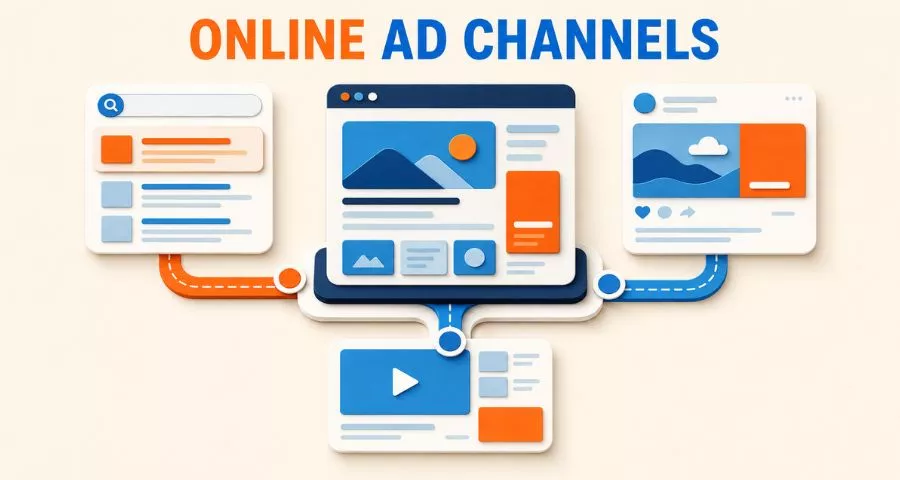
The best advertising website depends on what your customers are doing at that moment. Search ads reach people expressing a need. Social ads reach people based on interests, behavior, or known customer signals. Professional networks help companies reach job roles and industries. Publisher placements put a brand beside trusted content.
1. Search Engine Advertising
Search advertising places a sponsored result in front of people searching for related terms. It is especially useful when demand already exists and the query suggests a commercial need, such as “emergency plumber near me,” “accounting software for nonprofits,” or “buy office chair online.”
Google Ads allows an advertiser to choose a goal, provide campaign assets, select an audience and budget, and configure measurement. Google’s official setup guide recommends establishing conversion tracking before launching a campaign optimized for online conversions.
Create small, focused groups of closely related keywords. Write ads that address the specific need, and send each group to the most relevant page. Use negative keywords to reduce clicks from irrelevant searches. Monitor the actual search terms that trigger ads rather than assuming every keyword behaves as expected.
For a deeper explanation of paid search, keyword matching, campaign structure, and bidding, see what search engine marketing is.
2. Facebook and Instagram Advertising
Meta advertising is useful for visual products, local businesses, consumer services, events, content promotion, and remarketing. Ads can appear across Facebook and Instagram in feeds, Stories, Reels, and other eligible placements.
Choose the campaign objective that matches the outcome. Meta explains that its system uses the selected objective to find people who are more likely to take the related action. The official overview of Meta ad objectives covers awareness, traffic, leads, and sales-related goals.
Effective social advertising requires frequent creative testing. Try different benefits, product demonstrations, customer problems, formats, and calls to action. Avoid making five tiny changes at once; test one meaningful idea against another so the result teaches you something.
Organic publishing can support the paid campaign by building familiarity and providing content to promote. Teams managing several platforms may benefit from these social media marketing tools for businesses.
3. LinkedIn Advertising
LinkedIn is most relevant for B2B services, software, recruitment, professional education, and offers aimed at specific job functions or industries. Its value is not simply a large audience; it is the ability to describe a professional audience using attributes such as role, seniority, company, and industry.
The official LinkedIn advertising workflow moves from choosing an objective and targeting criteria to selecting a format, budget, schedule, and performance review. Available formats include Sponsored Content, Message Ads, Dynamic Ads, and Text Ads.
Because B2B sales often involve longer decisions, the first conversion may be a guide download, webinar registration, consultation, or product demonstration rather than an immediate purchase. The landing page should explain the business outcome, qualification criteria, and next step. The guide to B2B business and marketing provides useful context for value-driven professional campaigns.
4. YouTube and Video Advertising
Video advertising can demonstrate a product, show a transformation, answer an objection, or introduce a brand. It works best when the opening quickly establishes why the viewer should continue watching. Do not begin with a long logo animation or company history.
Create for the placement rather than cropping one television-style video for every platform. A short vertical ad for mobile viewing needs a different pace and composition from a longer educational video. Add captions when the message must remain understandable without sound.
5. Publisher Websites, Sponsored Content, and Display Ads
Relevant publications, industry blogs, newsletters, and niche communities can put a company in front of a concentrated audience. Options may include banner ads, newsletter placements, sponsored articles, product reviews, directories, or event sponsorships.
Evaluate the audience before paying for placement. Request information about geography, topic relevance, typical traffic, newsletter engagement, format, duration, and reporting. Large traffic numbers are not valuable if the visitors do not match your market.
Sponsored content should provide genuine editorial value and disclose the commercial relationship clearly. Companies interested in co-marketing, referrals, and industry relationships can also explore the ThimPress partner program.
6. Online Marketplaces and Business Directories
Marketplaces are useful when customers already visit them to compare products or providers. Depending on the business, this could include ecommerce marketplaces, software review platforms, travel sites, property portals, local service directories, or industry-specific catalogs.
These websites can provide immediate discovery, but the platform may control ranking, fees, customer data, and the buyer relationship. Keep product information accurate, answer reviews, and compare profit after commissions—not only gross sales. Whenever possible, build owned customer relationships within the platform’s rules.
7. Email Advertising and Sponsorships
Email can promote a business through its own permission-based list or through sponsorship in another publisher’s newsletter. Your own list is a long-term asset because it allows direct communication with people who chose to hear from the company.
Segment subscribers by interest, customer status, or behavior instead of sending every promotion to everyone. Useful automations include welcome sequences, lead nurturing, abandoned-cart reminders, and post-purchase education. Compare the capabilities of different email automation platforms, or review when it makes sense to work with an email campaign agency.
8. SEO and Content Promotion
Search engine optimization is not paid advertising, but it is an important way to advertise a website over the long term. Helpful articles, service pages, comparison guides, and product categories can attract people who are researching a problem without charging for every click.
SEO usually takes longer than paid media, but strong content can continue producing visits after the initial investment. Paid campaigns can also reveal which offers and search terms convert, helping the company prioritize organic content. Start with the fundamentals of SEO marketing and use these free Google SEO tools to research and monitor visibility.
How to Choose Websites to Advertise Your Business
Do not choose a platform because it is popular. Score each option against the campaign’s audience, objective, creative requirements, measurement capability, and expected economics.
- Audience fit: Does the platform reach the people who influence or make the purchase?
- Intent: Are users actively looking for a solution, researching options, or browsing casually?
- Format: Can the product be explained effectively with search copy, images, video, or a detailed sponsored article?
- Targeting: Can you reach the necessary locations, interests, job roles, or customer segments?
- Measurement: Can visits and conversions be tracked accurately?
- Economics: Can the expected customer value support the likely acquisition cost?
A local emergency service may prioritize search and map visibility. A fashion store may combine visual social ads, creator partnerships, email, and shopping campaigns. A B2B software company may use paid search for high-intent queries, LinkedIn for professional targeting, and educational content for longer research journeys.
Set a Practical Advertising Budget
There is no universal percentage that fits every company. The right budget depends on margin, average order value, customer lifetime value, sales capacity, seasonality, and the amount of reliable performance data already available.
Begin with a test budget large enough to produce meaningful activity without threatening essential operations. Divide it between media spend, creative production, landing-page work, tools, and management. A campaign with no budget for good creative or measurement is not fully funded.
Define limits before launch:
- Maximum total and daily spend.
- Target cost per lead or customer.
- Minimum acceptable conversion quality.
- Testing period and decision date.
- Conditions for increasing, changing, or stopping the campaign.
Do not judge a campaign after a handful of impressions, but do not let obvious problems spend indefinitely. Check tracking, search terms, placements, geographic delivery, lead quality, and landing-page behavior during the test.
Create Advertising That People Understand
An effective advertisement communicates one central idea. It identifies a relevant problem or desire, presents a credible benefit, and gives the viewer a clear next action.
Strong ad creative usually includes:
- A headline connected to the audience’s immediate need.
- A specific value proposition rather than a generic claim.
- Visuals that show the product, result, or situation clearly.
- Evidence that reduces risk, such as a review, demonstration, or guarantee.
- A call to action consistent with the landing page.
Avoid exaggerated claims, fake urgency, hidden conditions, and misleading before-and-after presentations. The U.S. Federal Trade Commission states that truth-in-advertising standards apply online and provides guidance on online advertising, disclosures, endorsements, and consumer protection. Businesses operating elsewhere must also check the rules that apply to their markets and industries.
Measure Results Beyond Clicks
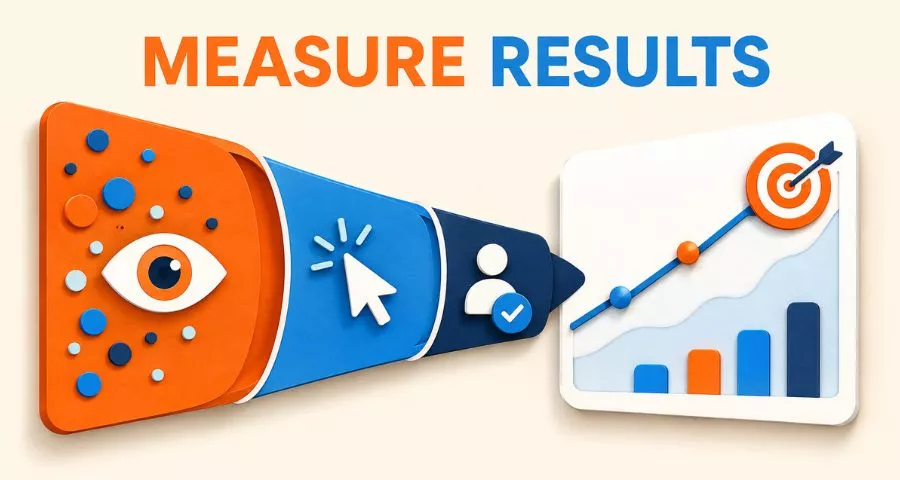
Clicks show that an ad attracted attention. They do not prove that it attracted profitable customers. Connect platform reporting with website analytics, CRM data, ecommerce transactions, phone tracking where lawful, and feedback from the sales team.
Useful metrics include:
- Click-through rate: the percentage of impressions that produce a click.
- Conversion rate: the percentage of visitors who complete the desired action.
- Cost per acquisition: advertising cost divided by acquired customers or qualified leads.
- Return on ad spend: attributed revenue divided by advertising spend.
- Customer lifetime value: the expected value of a customer relationship over time.
- Lead quality: whether leads match the target and progress through the sales process.
Review performance by audience, creative, placement, device, location, and landing page. Pause clear waste, but preserve enough data to distinguish a weak idea from normal short-term variation. When a campaign works, scale gradually and monitor whether acquisition cost rises as the audience expands.
Common Online Advertising Mistakes
- Advertising everywhere: too many small campaigns prevent meaningful learning.
- Optimizing for traffic only: cheap clicks can be expensive if nobody converts.
- Sending every ad to the homepage: visitors must search again for the promised offer.
- Ignoring existing customers: retention, referrals, and repeat purchases may produce better economics than constant acquisition.
- Using one creative forever: audiences become familiar with ads and performance can decline.
- Trusting platform attribution blindly: compare platform reports with business records and use consistent definitions.
- Making unsupported claims: misleading advertising creates legal and reputational risk.
FAQs About Advertise Your Business Online
How do I advertise online for the first time?
Choose one measurable goal, define the target audience, prepare a focused landing page, install conversion tracking, and test one platform that matches customer behavior. Start with a controlled budget and two or three meaningful creative variations. Evaluate conversions and customer quality, not clicks alone.
Where can you advertise your business for free?
A business can build free visibility through its website, organic search, social profiles, business listings, community participation, partnerships, email signatures, useful content, and customer referrals. These methods still require time and skill, but they do not charge for each impression or click.
What are the best websites to advertise your business?
There is no universal best website. Google is strong for active search demand, Meta for broad consumer discovery and remarketing, LinkedIn for professional audiences, and niche publishers or marketplaces for concentrated industry demand. Choose based on audience fit, intent, format, tracking, and acquisition economics.
Should I hire an advertising company?
An advertising company can help when campaigns require specialist strategy, creative production, tracking, or daily management that the internal team cannot provide. Before hiring, confirm account ownership, fee structure, reporting access, relevant experience, and how the agency defines qualified results.
How much should a small business spend on online advertising?
Set the budget from business economics rather than a generic benchmark. Estimate how much a customer is worth, what portion can support acquisition, and how many conversions the company can handle. Begin with a controlled test, then increase spending only when measurement is reliable and customer quality remains acceptable.
Final Thoughts
To advertise your business effectively, you do not need to appear on every website. You need a clear objective, a well-defined audience, a credible offer, a useful destination, and reliable measurement. Choose the platform that matches how customers discover and evaluate your type of business.
Start with one focused campaign, learn from real conversion data, and improve the weakest part of the journey. Over time, combine paid advertising with SEO, email, partnerships, reviews, and useful content. That balanced approach creates immediate reach while building marketing assets the company can continue using in the future.
Read More: SEO Step by Step: How to Build a Winning SEO Strategy
Contact US | ThimPress:
Website: https://thimpress.com/
Fanpage: https://www.facebook.com/ThimPress
YouTube: https://www.youtube.com/c/ThimPressDesign
Twitter (X): https://x.com/thimpress_com