AI search is changing how brands get discovered. Instead of just ranking on Google, you now need to appear inside answers from tools like ChatGPT, Perplexity, and Google AI Overviews. That shift is exactly why choosing the right AEO tool matters.
The challenge is that most AEO tools are still evolving. There’s no single source of truth for how AI engines decide which brands to mention, so the data you get is directional—not exact. Still, the right tools can reveal where your brand shows up, which prompts trigger mentions, and where competitors are winning.
This guide breaks down the best AEO tools available right now. You’ll learn how each platform helps with AI visibility, brand mentions, competitive intelligence, and content optimization—so you can build a practical AEO strategy that actually works.
AEO Tools: Quick Summary Table
| Tool name | Best for | Main strength | Pricing | Ideal user |
| Profound | Enterprise AI visibility | Deep analytics, crawler data, attribution | Starter $99/mo | Large brands and enterprise teams |
| Goodie | GEO management | Visibility, reputation, analytics in one place | Lite $29/mo | Marketing and analytics teams |
| Peec AI | Competitive intelligence | Source investigation and share of voice | Starter $95/mo | Strategists and agencies |
| OtterlyAI | Simple GEO monitoring | Easy prompt research and citation tracking | Lite $29/mo | Startups and SMBs |
| Ahrefs AI | SEO + AI search intelligence | Brand Radar and AI citations | Starter $129/mo | Existing Ahrefs users and SEOs |
| Semrush | Integrated SEO workflows | AI visibility inside a familiar suite | Starter $139.95/mo | Teams already using Semrush |
| Writesonic | AEO/GEO tracking + content | Visibility-first platform with optimization tools | Lite $79/mo | Teams that want monitoring and creation |
How to choose the right AEO stack?
Before diving into individual platforms, decide what problem you are solving.
If you need executive-level reporting and deep analysis, start with enterprise-grade tools.
If your job is to prove where competitors are winning in AI answers, choose competitive intelligence.
If your main goal is to understand prompts, citations, and brand tone, a simpler monitor may be enough.
And if your team also needs content production, look for a platform that connects visibility insights to creation.
The most practical setup is usually not one tool. It is one tool for monitoring, one for competitive context, and one for content execution.
Profound
Best for teams that need the deepest AEO analysis and attribution.
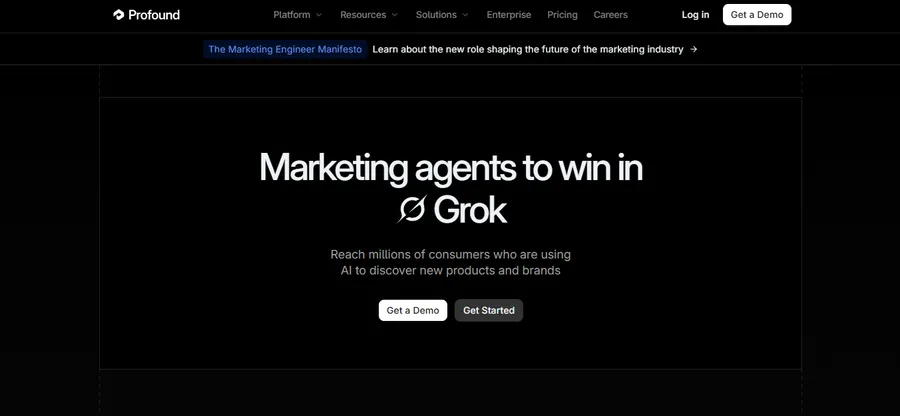
Profound is built for organizations that want a serious view into how AI platforms discover, surface, and cite their brand.
It goes beyond simple mention tracking and adds technical visibility data that can help larger teams understand what is happening under the hood.
The strongest reason to consider this AEO tool is depth: crawler analytics, prompt-level insight, competitive benchmarking, and traffic attribution all live in the same platform.
For enterprises, that combination matters. It helps answer questions like whether AI answers are sending traffic, which prompts trigger mentions, and how your share of voice compares with major competitors.
It is powerful, but it is also more than many smaller teams need. If your reporting needs are modest, this may feel like too much platform for too little day-to-day use.
Key features
- AI crawler analytics for technical insight
- Real-time search volume insights for prompts
- Traffic attribution tied to AI mentions
- Competitive analysis across AI search engine
- Shopping visibility optimization for e-commerce
- Cross-platform coverage in AI environments
Pricing
- Starter: $99/month
- Growth: $399/month
- Enterprise: Custom
Pros
- Deepest analytics in this group
- Strong for attribution and competitive benchmarking
- Good fit for large-scale reporting
Limitations
- Expensive for smaller teams
- Can feel complex if you only need monitoring
Best use cases
- Enterprise AEO reporting
- AI mention share tracking
- Revenue attribution from AI visibility
Goodie
Best for teams that want a complete GEO dashboard with reputation management.
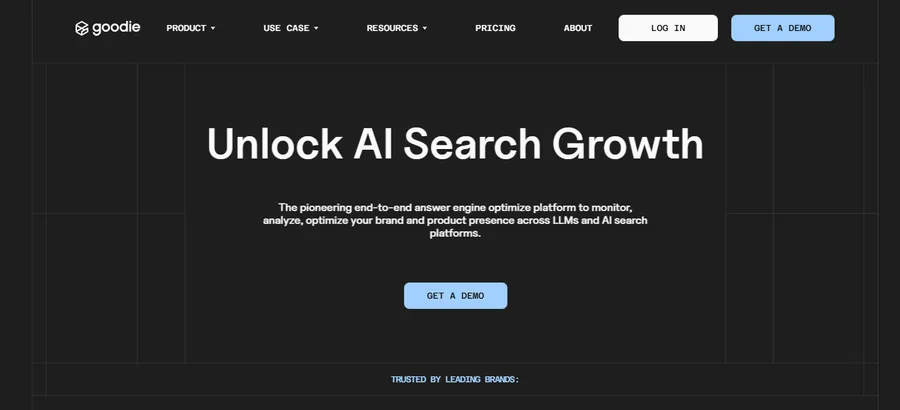
Goodie stands out because it tries to cover the full loop: visibility optimization, analytics, and reputation management.
That makes it a strong AEO tool for teams that care about both how they appear in AI answers and how those answers feel.
Its sentiment analysis is especially useful when brand tone matters, and its traffic and attribution module helps connect AI mentions to business impact.
Goodie also works well when multiple stakeholders need a shared view of AI search performance.
Marketers, analysts, and brand teams can all use the same platform without stitching together several separate tools.
That said, its breadth can be a drawback for teams that only want lightweight monitoring. It is robust, but not minimal.
Key features
- AI optimization hub for central management
- Traffic and attribution module
- Sentiment analysis for brand tone
- Competitor and industry benchmarks
- Cross-platform analysis across LLMs
- LLM answer engine optimization tools
Pricing
- Lite: $29/month
- Standard: $189/month
- Pro: $989/month
Pros
- Covers visibility, reputation, and analytics
- Strong for ROI conversations
- Intuitive for a full-featured platform
Limitations
- Can be too broad for simple monitoring needs
- Higher tiers are a serious investment
Best use cases
- Reputation-sensitive brands
- AEO reporting for leadership
- Cross-platform brand monitoring
Peec AI
Best for competitive intelligence and source-level investigation.
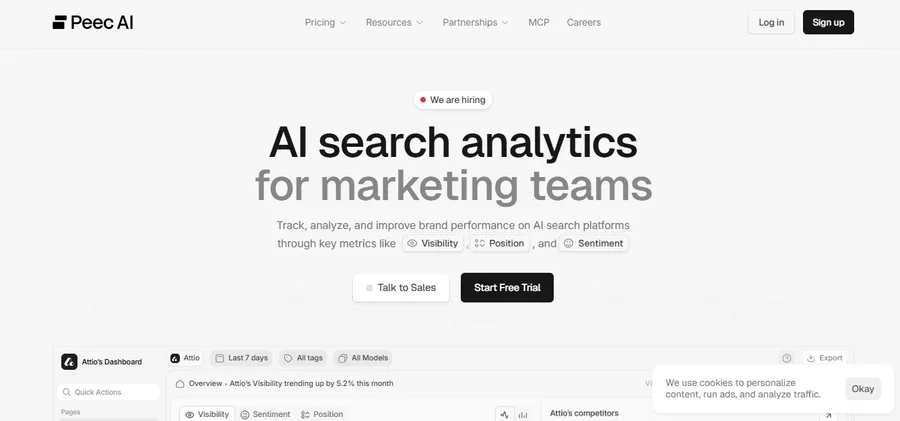
Peec AI is especially useful when you care less about your own dashboard and more about the competitive landscape around it.
This AEO tool focuses on who is being cited, which sources are shaping answers, and where your competitors are winning prompts that you are missing.
That makes it a strong choice for strategists, agencies, and teams building a content roadmap from market gaps.
Its prompt-level monitoring is useful because it lets you track the exact questions that matter most to your business.
The source investigation angle is the real differentiator. Instead of only showing what appears in AI answers, Peec AI helps you infer why those answers are formed the way they are.
As with all AEO platforms, the data should be treated as directional, not absolute.
Key features
- AI-powered competitor monitoring
- Content gap analysis
- Share of voice analysis
- Prompt-level tracking
- Auto-suggested prompts from site content
- Coverage across ChatGPT and Perplexity
Pricing
- Starter: $95/month
- Pro:$245/month
- Enterprise: Custom
Pros
- Best-in-class competitive framing
- Clear content gap discovery
- Strong for agency-style reporting
Limitations
- Built on estimated data
- Less focused on content marketing creation
Best use cases
- Competitive AEO audits
- Prompt research for new pages
- Share of voice tracking
OtterlyAI
Best for startups and SMBs that want simple AEO monitoring.
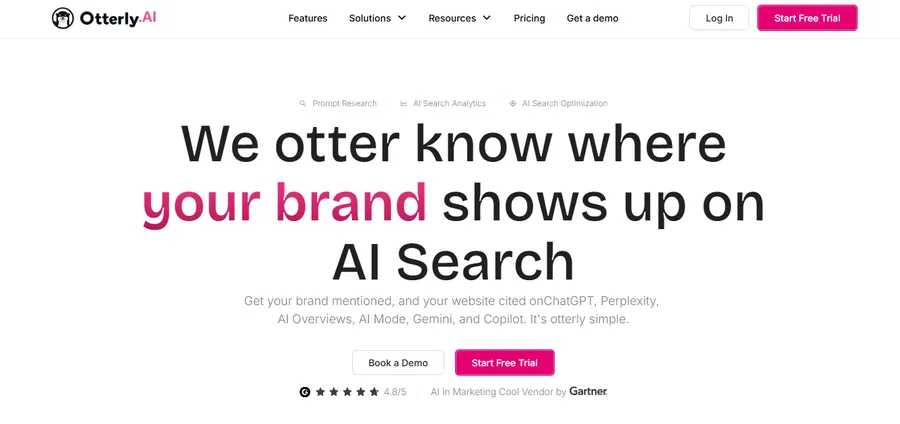
OtterlyAI is the easiest platform in this group to get moving with. It is designed for teams that want practical AI search insight without a steep learning curve.
If your priority is quick visibility into prompts, citations, and brand sentiment, this is a strong AEO tool for everyday use.
The value here is speed and clarity. You can run a GEO audit, research prompts, and see where your brand is cited without needing a dedicated analyst.
That makes it useful for lean marketing teams that want answers they can act on fast. It does not try to be a giant all-in-one suite, which is part of the appeal.
Key features
- GEO audits
- AI keyword and prompt research
- Citation analysis
- Sentiment and brand analysis
- AI search tracking across ChatGPT, Perplexity, and Google AI Overviews
Pricing
- Lite: $29/month
- Standard: $189/month
- Premium: $489/month
Pros
- Very easy to use
- Fast to implement
- Great for smaller teams
Limitations
- Less advanced analytics than enterprise tools
- More monitoring than creation
Best use cases
- SMB AI visibility tracking
- Prompt research
- Citation and sentiment monitoring
Ahrefs AI
Best for SEOs who want AI search insights inside a familiar platform.
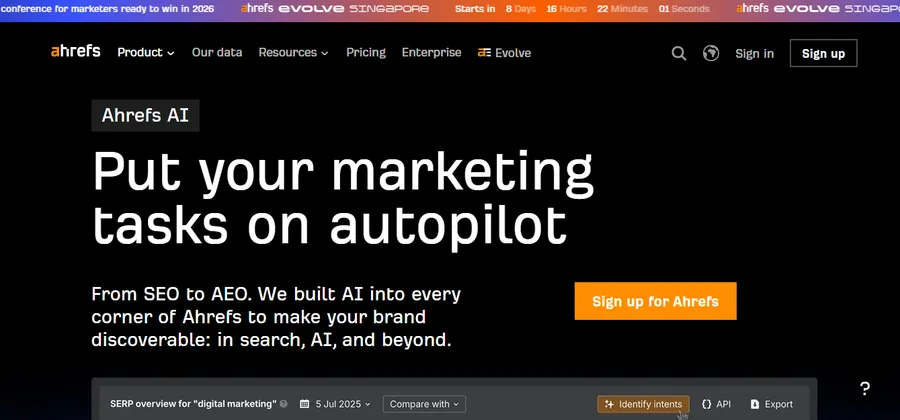
Ahrefs AI is a strong choice for teams that already trust Ahrefs for SEO and now want to extend that workflow into AI search.
This AEO tool is especially appealing because it builds on an established data foundation rather than starting from scratch.
Brand Radar monitors brand mentions in AI answers, while AI citations help show which keywords trigger AI summaries.
The biggest advantage is continuity. If your team already uses Ahrefs for keyword research, content discovery, or competitive analysis, adopting its AI-focused features feels like an extension of an existing process.
That makes it a good fit for SEO teams that want practical AI visibility without adding a separate standalone stack.
Key features
- Brand Radar for AI mentions
- AI citations for trigger keywords
- Keywords Explorer adapted for GEO
- Content Explorer for AEO/GEO research
- AI detector
- AI-powered translations
Pricing
- Starter: $29/month
- Lite: $129/month
- Standard: from $249/month
- Advanced: from $449/month
- Enterprise: $1,499/month billed annually
Pros
- Strong SEO foundation
- Great for existing Ahrefs users
- Useful competitive context
Limitations
- Newer AEO features are still maturing
- Can be overwhelming for beginners
Best use cases
- SEO teams expanding into AEO
- Brand mention monitoring
- Competitive content research
Semrush
Best for teams that want AI visibility inside a proven SEO suite.
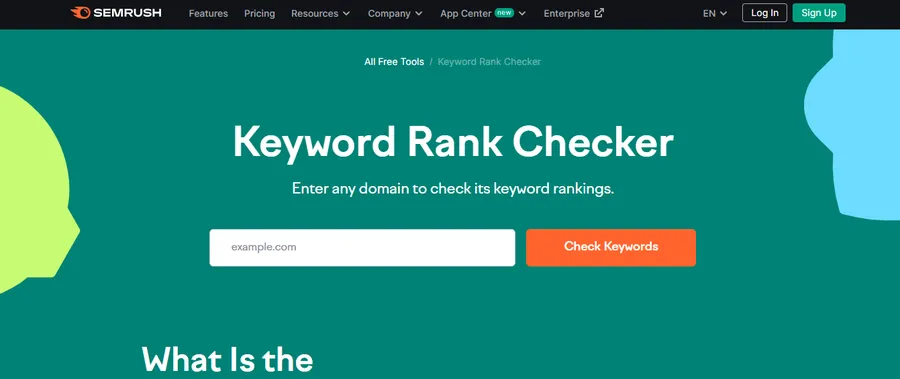
Semrush is the most natural fit for organizations that already live inside a broader SEO workflow.
This AEO tool brings AI search optimization into a platform many marketers already use for audits, competitor research, and content planning—especially if you’re already exploring tools beyond it in this guide to Semrush alternatives.
That lowers friction. Instead of forcing teams to adopt a new system, it adds AEO capabilities to a familiar one.
Its AI brand insights and AI visibility toolkit are the key features to watch.
For teams with separate SEO, content, and analytics workflows, Semrush can make AI search feel like an extension of existing work rather than a special project—similar to how it compares with other major platforms in this breakdown of Ahrefs vs Semrush vs Moz.
It is not the cheapest option, but it is one of the most operationally convenient.
Key features
- Competitor insights across Google and AI
- AI brand insights
- AI-ready site audit
- AI visibility toolkit
- Google + AI visibility tracking
Pricing
- Pro: $139.95/month
- Guru: $249.95/month
- Business: $499.95/month
Pros
- Easy for existing Semrush users
- Broad all-in-one marketing value
- Strong technical and competitive workflow
Limitations
- More expensive than newer niche tools
- Can be too feature-heavy for small teams
Best use cases
- Integrated SEO and AEO operations
- Technical site audits
- Cross-team reporting
Writesonic
Best for teams that want visibility tracking and content creation in one place.
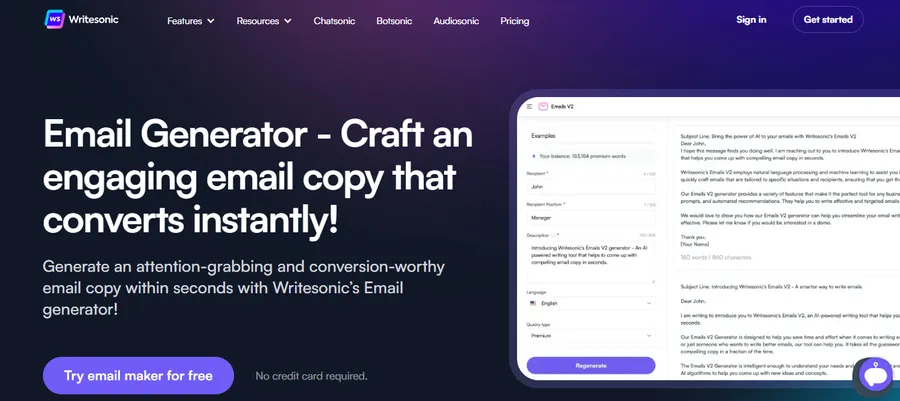
Writesonic has shifted from being mainly an AI writer to a more visibility-focused platform. For AEO, that matters.
The strongest part of this AEO tool is its GEO and AEO feature set, especially for teams that want to track how their brand shows up in AI search and also generate content within the same ecosystem.
The tradeoff is important: its writing workflow is fully AI-led, so content often needs heavy editing to remove robotic phrasing and add human insight.
That makes it better as a visibility-plus-drafting platform than a finished-content solution. Still, for teams that want one place to monitor, optimize, and create, it has a useful place in the stack.
Key features
- GEO tracking and optimization
- AEO features for cited-source visibility
- Chatsonic for marketing research
- Integrations with Google Search Console, Ahrefs, and Semrush
- SEO AI agent
- Sentiment analysis in the GEO dashboard
Pricing
- Starter: $99/month
- Basic: $249/month
- Growth: $499/month
Pros
- Strong AEO/GEO visibility features
- Useful integrations
- Combines monitoring and creation
Limitations
- AI writing quality may require heavy editing
- Can produce generic output without human input
Best use cases
- Fast-moving marketing teams
- AI visibility monitoring
- Drafting content around AEO insights
Conclusion
The best AEO tools are not the ones that promise perfect answers. They are the ones that help you make better decisions with imperfect but useful data. That means looking for platforms that show brand mentions, competitor gaps, prompt-level opportunities, and some version of attribution.
- For enterprise teams, Profound and Goodie offer the strongest depth.
- For competitive analysis, Peec AI is especially sharp.
- For lean teams, OtterlyAI is the simplest path to useful visibility.
- Ahrefs AI and Semrush are the best options for teams that already want AI search inside a mature SEO workflow.
- Writesonic is useful when you want monitoring and content creation in one place.
A practical stack is usually simple: one tool for AI visibility, one tool for competitive context, and one workflow for content execution. That is the clearest way to use an AEO tool today without overbuying or overcomplicating the process.
FAQs About AEO Tools
What is an AEO tool?
An AEO tool helps you optimize, monitor, and improve how your brand appears in AI-generated answers. Instead of focusing only on rankings, these tools track citations, brand mentions, and visibility in platforms like ChatGPT and Google AI Overviews.
In simple terms, SEO tools help you rank — AEO tools help you become the answer.
How are AEO tools different from traditional SEO tools?
Traditional SEO platforms focus on keywords, backlinks, and rankings.
AEO tools, on the other hand, focus on:
– AI-generated answers and citations
– Brand mentions across AI platforms
– Prompt and query analysis
– Content structure for answer extraction
The goal shifts from “getting clicks” to “being cited inside answers.”
Are AEO tools accurate?
Not perfectly. Most AEO analysis tools rely on modeled data because AI platforms do not provide a single source of truth for how answers are generated.
That means:
– Data should be treated as directional
– Trends matter more than exact numbers
– Cross-tool validation is often necessary
This is a core limitation of the current AEO ecosystem.
What is the most important feature in the best AEO tools?
The best AEO tools usually combine three core capabilities:
– AI visibility tracking (mentions, citations, prompts)
– Competitive intelligence (who is being cited and why)
– Content optimization insights
Tools that connect these three areas tend to provide the most actionable value.
Read more: Gutenberg vs Elementor: Which Page Builder Is Better?
Contact US | ThimPress:
Website: https://thimpress.com/
Fanpage: https://www.facebook.com/ThimPress
YouTube: https://www.youtube.com/c/ThimPressDesign
Twitter (X): https://x.com/thimpress_com