GoDaddy runs aggressive first-year promotions, sometimes offering .com domains for under $1. Then the renewal arrives. Standard .com renewals at GoDaddy run around $21.99 per year as of 2026, and WHOIS privacy protection costs an extra $9.99 per year on top of that.
For anyone managing three or more domains, that gap between what you paid at registration and what you owe at renewal is genuinely painful.
If you are looking for a GoDaddy alternative domain registration, or you are ready to transfer your domain to a registrar with more transparent renewal fees, this guide covers 11 registrars that offer better long-term pricing, free domain privacy, and no surprise upsells at checkout.
If you’re new to websites, it also helps to understand what a domain name is before choosing a registrar.
Let’s get started!
Eduma – Education WordPress Theme
We provide an amazing WordPress theme with fast and responsive designs. Let’s find out!
Why GoDaddy Renewal Fees Are a Real Problem
GoDaddy’s pricing model is built around acquisition, not retention. The low first-year price is a marketing expense. The renewal is where GoDaddy makes its money.
A single .com domain at GoDaddy renews at approximately $21.99 per year. Add WHOIS privacy at $9.99 per year and you are paying around $32 annually for a domain that you could register and renew elsewhere for $10 to $14 per year with privacy included.
Over five years, that is a difference of roughly $90 to $110 per domain. If you manage ten domains, that gap becomes a serious line item.
The renewal fee problem compounds with GoDaddy’s checkout flow, which adds web hosting, email, website builder subscriptions, and SSL certificates as pre-checked options. First-time buyers who click through quickly often pay for services they did not intend to buy.
There is nothing technically wrong with GoDaddy as a registrar. DNS management works, domain transfers out are processed correctly, and support is reachable.
The issue is purely cost: GoDaddy charges significantly more at renewal than most of its direct competitors, and it charges separately for a feature (WHOIS privacy) that the rest of the industry now includes for free.
How We Evaluated These GoDaddy Alternatives
The registrars on this list were evaluated across five criteria: .com renewal price, WHOIS privacy cost, domain transfer process, control panel usability, and support quality.
Pricing figures reflect standard retail rates as of 2026 and exclude first-year promotions, because the renewal price is what you will actually pay for the lifetime of your domain.
All registrars on this list are ICANN-accredited and support standard EPP transfer codes for outbound transfers.
GoDaddy Alternatives Comparison Table
| Registrar | .com renewal/year | WHOIS privacy | Free email | Best for |
| GoDaddy | ~$21.99 | $9.99 extra | No | None (baseline) |
| Namecheap | ~$13.98 | Free | Forwarding only | Best overall switch |
| Cloudflare Registrar | ~$9.15 | Free | No | Cloudflare users |
| Porkbun | ~$10.73 | Free | Free (limited) | Developers, new TLDs |
| NameSilo | ~$9.99 | Free | Forwarding only | Bulk domain management |
| Squarespace Domains | ~$12.00 | Free | Via Google Workspace | Google Workspace users |
| Hover | ~$16.99 | Free | Forwarding only | Non-technical users |
| Gandi | ~$15.50-18 | Free | Mailboxes available | European users |
| Dynadot | ~$10.99 | Free | Forwarding only | Domain investors |
| Name.com | ~$12.99 | Small fee | No | WordPress beginners |
| IONOS | ~$15.00 | Free | Bundled options | Small businesses |
| Epik | ~$8.98 | Free | Web forwarding | Budget buyers |
Prices shown are approximate standard renewal rates as of 2026 and exclude promotional first-year offers.
1. Namecheap
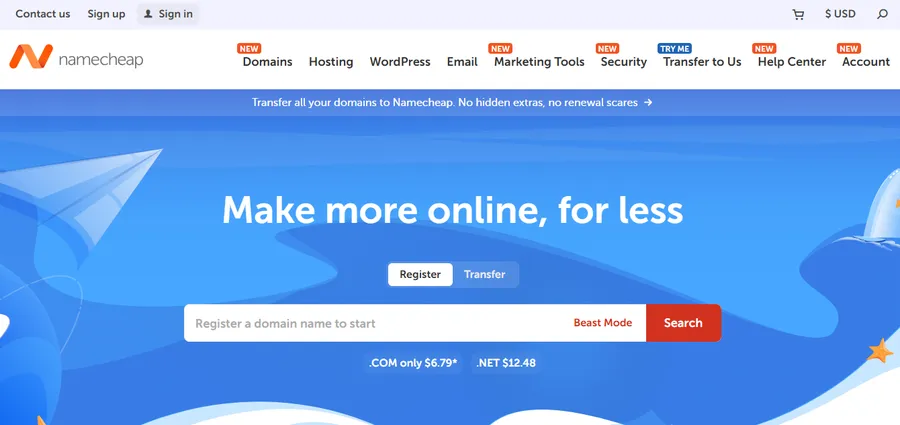
Namecheap is the most commonly recommended GoDaddy alternative for domain registration, and for most site owners it is the right choice.
The pricing is transparent, WHOIS privacy (WhoisGuard) is included at no extra cost, and the control panel is well organized without the upsell pressure that GoDaddy is known for.
Pricing and features
A .com domain at Namecheap runs approximately $9.98 for the first year and renews at around $13.98 per year as of 2026.
WhoisGuard privacy is included free for life, not just the first year.
Namecheap also includes two-factor authentication, free DNS management, and email forwarding at no additional charge.
The account dashboard shows your renewal dates clearly and lets you set domains to auto-renew individually. There are no pre-checked add-ons during checkout for basic domain registration.
Who it is best for
Namecheap works well for bloggers, freelancers, small agencies, and WordPress site owners who want lower renewal fees without switching to a more technical registrar.
If you are moving away from GoDaddy and want the process to feel familiar, Namecheap is the closest experience at roughly half the annual cost.
2. Cloudflare Registrar
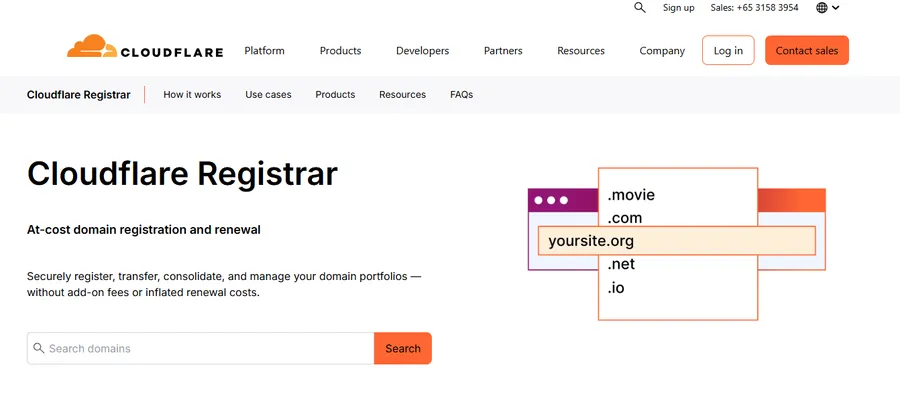
Cloudflare Registrar sells domains at wholesale cost, which means no markup above what Cloudflare pays ICANN and the domain registry.
A .com domain renews at approximately $9.15 per year, and Cloudflare does not charge separately for WHOIS privacy.
Pricing and features
Because Cloudflare passes through the exact wholesale registry price, .com renewals cost around $9 to $10 per year depending on the registry tier for that TLD.
There are no first-year promotions and no separate privacy fees. Cloudflare also integrates domain DNS directly with its CDN and security services, which is a meaningful advantage if you are already running your site on Cloudflare.
One important constraint: Cloudflare Registrar currently supports domain transfers in from other registrars, but you cannot register a brand-new domain directly through Cloudflare in all cases.
You register the domain elsewhere first, then transfer it to Cloudflare for cheaper renewals going forward. This is a deliberate business decision on Cloudflare’s part, not a technical limitation.
Who it is best for
Cloudflare Registrar is the best GoDaddy alternative for domain registrar transfer if you already use Cloudflare for DNS or CDN.
It is not ideal as a first-time domain registrar for beginners because the workflow requires an existing Cloudflare account and some comfort with DNS configuration.
3. Porkbun
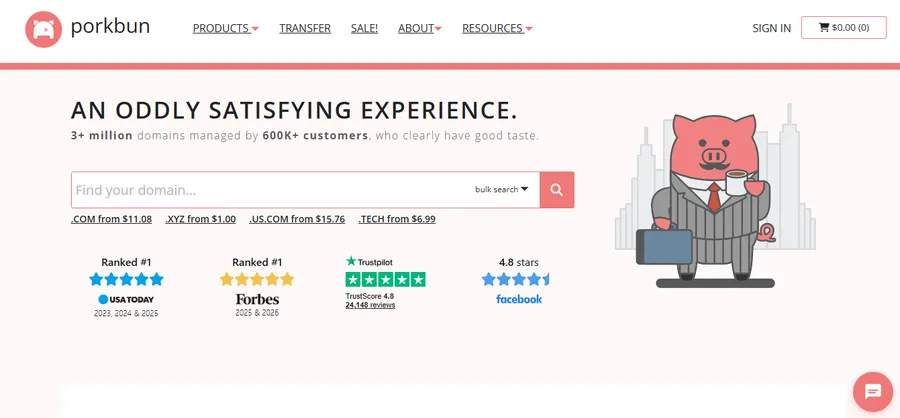
Porkbun is a newer registrar that has built a loyal following by keeping prices low across a wide range of TLDs.
The company is unusually transparent about pricing, listing both first-year and renewal prices side by side on every search result page so you know exactly what renewal will cost before you buy.
Pricing and features
A .com domain at Porkbun costs approximately $9.73 for the first year and renews at around $10.73 per year. WHOIS privacy is included for free.
Porkbun also includes free SSL certificates via Let’s Encrypt, free email hosting (up to three accounts for a limited period), and a simple URL redirect tool.
The control panel is clean and modern. Bulk domain management works well for anyone managing ten or more domains. DNS record editing is straightforward, and Porkbun supports DNSSEC for registrars that require it.
Who it is best for
Porkbun is an excellent GoDaddy alternative domain registration choice for developers, WordPress power users, and domain collectors who want consistently low prices across both common and newer TLDs like .io, .app, and .dev.
If you are registering a domain for the first time and do not want to land on a confusing checkout page, Porkbun’s clean UI is one of the best in the industry.
4. NameSilo
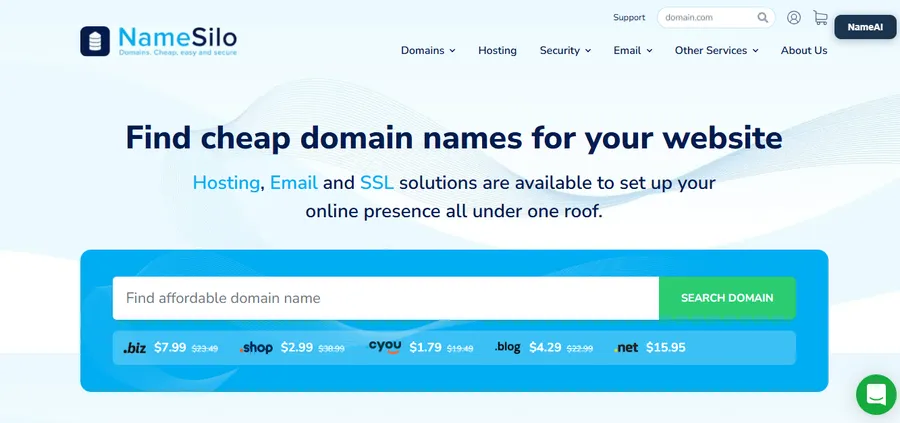
NameSilo takes a no-frills approach to domain registration. The prices are among the lowest in the industry for standard renewals, WHOIS privacy is free, and the company does not charge transaction fees for using PayPal or credit cards.
Pricing and features
A .com domain at NameSilo runs approximately $8.99 to $9.99 per year for both first-year registration and renewal. Privacy is included at no charge.
NameSilo supports bulk discounts for accounts managing 500 or more domains and has a coupon code system that brings individual .com registrations down further.
The control panel is functional but dated. It works correctly and loads quickly, but it does not have the polished interface that Namecheap or Porkbun offer.
For users who only need to register and park domains without frequent DNS changes, that trade-off is worth it for the price.
Who it is best for
NameSilo is the best GoDaddy renewal fee alternative for domain investors and anyone managing a large portfolio of domains.
The low flat renewal cost and free privacy make it one of the most cost-effective registrars available at scale. It is less ideal for beginners who want a clean, guided experience.
5. Squarespace Domains
Squarespace acquired Google Domains in 2023 and migrated most of Google’s domain customers to Squarespace’s domain platform by 2024.
The result is a registrar that combines Squarespace’s brand with the clean pricing model that made Google Domains popular.
Pricing and features
A .com domain at Squarespace Domains costs approximately $12 per year for both registration and renewal. WHOIS privacy is included.
The DNS management interface is clean and integrates naturally with Squarespace website builder plans, but you can also use Squarespace Domains as a standalone registrar and point DNS to any hosting provider, including WordPress hosts like Kinsta, WP Engine, or SiteGround.
Google Search Console integration and Google Workspace email setup are still streamlined through this registrar, which is a holdover benefit from the Google Domains era.
Who it is best for
Squarespace Domains is a solid GoDaddy alternative for domain registration for users who already use Squarespace for website hosting, or for Google Workspace customers who want an easy path from domain registration to business email setup.
The $12/year renewal is slightly higher than Porkbun or NameSilo but still meaningfully cheaper than GoDaddy.
6. Hover
Hover positions itself as the domain registrar for people who find other registrars confusing. The whole proposition is simple: the price you see includes everything, no upsells, no pre-checked boxes, and no separate privacy fee.
Pricing and features
A .com domain at Hover costs approximately $16.99 per year, which is higher than Porkbun or NameSilo but lower than GoDaddy when you factor in privacy.
WHOIS privacy is included in the base price. Hover also includes email forwarding, and the checkout experience is genuinely one of the cleanest in the industry.
Customer support is email and phone-based with a reputation for being responsive and helpful. Hover does not offer web hosting, email hosting, or website builder services, which keeps its focus squarely on domain management.
Who it is best for
Hover is the best GoDaddy alternative for non-technical users who want a reliable, straightforward domain registrar and are willing to pay a modest premium to avoid an overwhelming control panel.
Small business owners who just need to register a domain, point it to their WordPress host, and not think about it again will find Hover a good fit.
7. Gandi
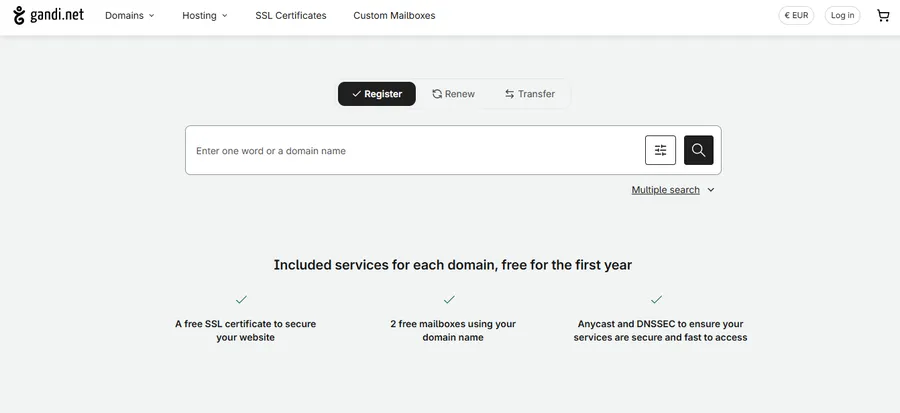
Gandi is a French registrar with a long history and a strong reputation in the European market. The company is known for ethical pricing, transparent terms, and including features that most registrars charge extra for.
Pricing and features
A .com domain at Gandi costs approximately $15.50 to $18 per year depending on the plan, with WHOIS privacy included.
Gandi historically included free email mailboxes with each domain, though the number of free mailboxes has been reduced in recent years as the company restructured its offerings.
DNS management is reliable, and Gandi supports DNSSEC and advanced DNS record types out of the box.
Gandi is fully GDPR-compliant and stores customer data within the EU, which matters for European site owners or businesses with EU data obligations.
Who it is best for
Gandi is a strong GoDaddy alternative for domain registration for European users, privacy-conscious buyers, and anyone who values a registrar with a track record of ethical business practices.
The pricing is not the cheapest on this list, but the combination of features, compliance posture, and reputation make it worth considering for business domains.
8. Dynadot
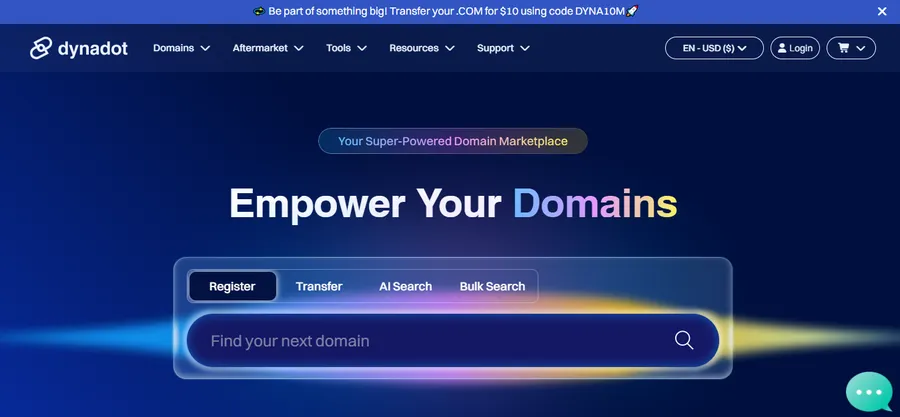
Dynadot is a California-based registrar that offers competitive pricing, a capable bulk management interface, and an integrated domain marketplace for buying and selling aftermarket domains.
Pricing and features
A .com domain at Dynadot costs approximately $8.99 to $10.99 per year depending on promotions, with WHOIS privacy included for free.
Dynadot’s control panel is more powerful than Namecheap’s for bulk operations, supporting CSV import for bulk registration, mass DNS updates, and a domain backorder service.
The registrar also runs a domain auction platform, which is useful for domain investors who want to buy expired or premium domains without going through a third-party broker.
Who it is best for
Dynadot is one of the better alternatives to GoDaddy domain registrar transfer options for domain investors and agencies managing ten or more domains.
The bulk tools are genuinely useful, the pricing is competitive, and the domain marketplace is a bonus for anyone actively buying or selling domains.
9. Name.com
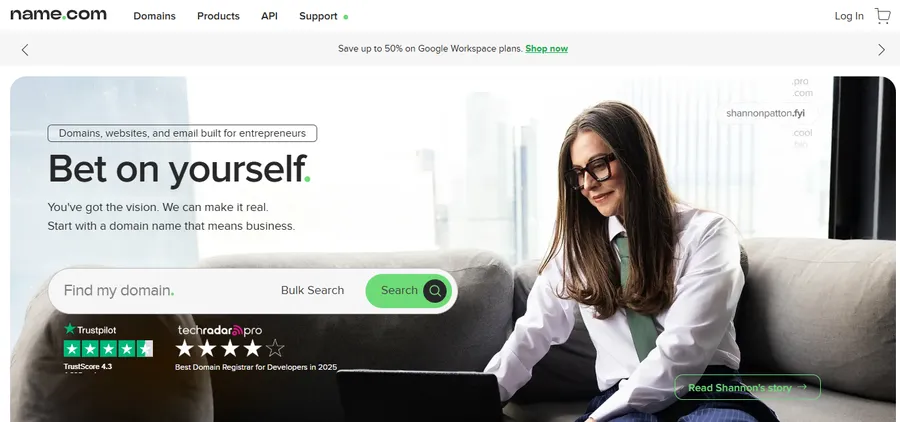
is a Denver-based registrar with a mid-range pricing structure and a clean, modern interface.
The company is owned by Donuts, one of the largest new gTLD registry operators, which gives Name.com access to a wide range of TLDs at competitive prices.
Pricing and features
A .com domain at Name.com costs approximately $12.99 per year for renewal. WHOIS privacy is available but may carry a small fee depending on the TLD. The control panel is well designed, DNS management is straightforward, and Name.com offers free basic web hosting (with limitations) on each domain.
Name.com also integrates with WordPress directly through its hosting plans, making it a reasonable one-stop option for someone who wants to register a domain and launch a WordPress site in the same place without the upsell chaos of GoDaddy.
Who it is best for
Name.com works well for small business owners and WordPress beginners who want a clean registrar experience with basic hosting included.
It is not the cheapest option on this list for pure domain registration, but the bundled features justify the price for users who would otherwise pay separately for them.
10. IONOS
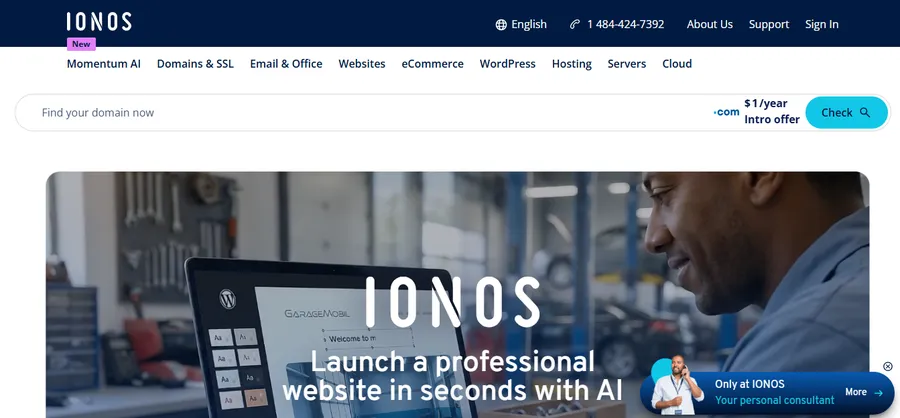
IONOS (formerly 1&1) is a German web services company with a large global presence. It is best known for aggressive first-year pricing and a wide range of hosting and email products.
Pricing and features
IONOS regularly offers .com domains for $1 for the first year, renewing at approximately $15 per year with privacy included.
The control panel is fully functional and includes DNS management, email forwarding, and a free SSL certificate.
IONOS also sells business email, WordPress hosting, and VPS plans, making it a viable option for users who want a single vendor for multiple services.
One caveat worth noting: IONOS customer support quality has been inconsistent in public reviews. Response times for technical issues can vary, and the support structure favors users who are comfortable resolving basic issues through a knowledge base before opening a ticket.
Who it is best for
IONOS is a reasonable GoDaddy renewal fee alternative for small businesses that want a first-year deal and plan to stay with the registrar long term.
The $15/year renewal is not the cheapest on this list, but the bundled privacy and included SSL make the effective cost competitive with GoDaddy’s much higher renewal rate.
11. Epik
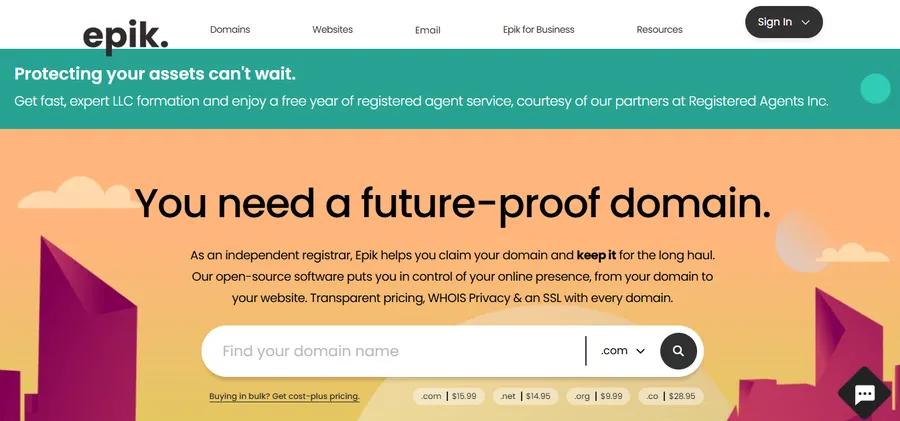
Epik is a US-based registrar that offers some of the lowest domain registration and renewal prices available, often below $9 per year for .com domains with privacy included.
Pricing and features
A .com domain at Epik costs approximately $8.98 per year for both registration and renewal, with WHOIS privacy included at no extra charge.
Epik also includes a basic website builder and free web forwarding on all domains. The control panel covers the essentials, and the registrar supports DNSSEC and advanced DNS record types.
Epik has faced some public controversy in recent years related to the types of content it was willing to host and register, which has led some users to avoid it for reputational reasons.
The technical product is functional, but it is worth researching the company’s current policies before committing.
Who it is best for
Epik is worth considering for budget-focused users who prioritize low renewal costs above all else and are comfortable researching the company’s current business practices before registering.
How to Transfer Your Domain from GoDaddy
Transferring a domain from GoDaddy to any of the registrars above follows the same process. The transfer takes between 5 and 7 days in most cases and does not affect your DNS settings or website availability if you keep your DNS records the same at the receiving registrar.
Here are the steps:
Step 1: Unlock your domain at GoDaddy.
Log in to your GoDaddy account, go to My Products, find the domain, and click DNS. Look for “Domain Lock” and set it to Unlocked. GoDaddy may add a 60-day transfer lock after certain account changes, so unlock the domain before initiating the transfer.
Step 2: Disable WHOIS privacy temporarily
GoDaddy requires WHOIS privacy to be disabled before it releases an authorization code. Go to Domain Settings and turn off privacy protection.
Step 3: Request your EPP/authorization code
GoDaddy calls this an “authorization code” or “transfer code.” Request it from the domain management page. GoDaddy sends it to the email address on file for the domain (not necessarily your GoDaddy login email), so verify the contact email first.
Step 4: Initiate the transfer at your new registrar
Go to your chosen registrar, use the “Transfer a domain” option, enter your domain name, and paste the EPP code when prompted. You will pay for one year of registration at the new registrar’s rate, which effectively extends your expiry date by one year.
Step 5: Approve the transfer
GoDaddy sends a confirmation email. Click the link to approve the outbound transfer. Without this approval, the transfer waits five days before proceeding automatically. Clicking the link speeds up the process significantly.
Step 6: Re-enable privacy at your new registrar
Once the transfer completes, turn on WHOIS privacy at your new registrar. At Namecheap, Porkbun, NameSilo, and Cloudflare, this is free and takes one click.
One important note: domains cannot be transferred within 60 days of initial registration or a previous transfer. If your domain was recently registered at GoDaddy, you may need to wait before moving it.
If you are new to website ownership and are unsure how domains interact with hosting services, see our guide on domain names and web hosting.
How to Choose the Right GoDaddy Alternative
The best registrar for your situation depends on three things: how many domains you manage, how comfortable you are with DNS configuration, and whether you prioritize the lowest possible renewal price or a better overall experience.
- For most individual site owners and bloggers with one to five domains, Namecheap is the right choice. The pricing is fair, the interface is clean, and WhoisGuard privacy is free without any tricks.
- For developers and agencies already using Cloudflare for DNS or CDN, transferring domains to Cloudflare Registrar gives you at-cost renewals around $9/year with no separate privacy fee and direct DNS integration.
- For domain investors or agencies managing large portfolios, NameSilo and Dynadot offer the most competitive bulk pricing with free privacy included.
- For non-technical users who want the simplest possible experience, Hover’s all-inclusive pricing and clean interface are worth the modest premium over the cheapest options.
- For European users or anyone with GDPR obligations, Gandi is the most credible option on this list from a compliance and data residency perspective.
FAQs
Is it safe to transfer a domain away from GoDaddy?
Yes. Transferring a domain from GoDaddy to another ICANN-accredited registrar is a standard, secure process that does not affect your website or email. As long as you keep the same DNS records at your new registrar, your site stays live throughout the transfer. The process takes 5 to 7 days in most cases, and GoDaddy is required by ICANN to release the domain once the transfer is initiated and approved.
Why does GoDaddy charge so much for domain renewal?
GoDaddy uses low promotional prices to attract new customers and relies on renewal revenue, upsells, and add-on services to generate profit. The $21.99 standard renewal rate for a .com is significantly above wholesale cost. WHOIS privacy, which most competitors include free, is an additional revenue line at GoDaddy. This pricing model is well-documented and is the primary reason many site owners look for a GoDaddy alternative domain registration option after their first renewal notice.
Can you transfer a domain from GoDaddy for free?
The transfer itself carries no fee from GoDaddy. However, the receiving registrar charges one year of registration at its standard rate to accept the transfer. At Namecheap, that is approximately $13.98 for a .com, which also extends your domain expiry date by one year. At Cloudflare, it is approximately $9.15. You are not paying a transfer fee; you are prepaying the next year of registration at a lower rate than GoDaddy would charge.
Do GoDaddy alternatives include domain privacy for free?
Most of GoDaddy’s main competitors include WHOIS privacy protection at no extra cost. Namecheap, Porkbun, Cloudflare Registrar, NameSilo, Dynadot, Hover, Gandi, and Squarespace Domains all include privacy as a standard feature with domain registration. This is a meaningful cost difference: at GoDaddy, privacy adds $9.99 per year per domain, which alone covers the cost of a full year’s registration at several of the registrars on this list.
Read more: What is a JavaScript library? A Complete Guide
Contact US | ThimPress:
Website: https://thimpress.com/
Fanpage: https://www.facebook.com/ThimPress
YouTube: https://www.youtube.com/c/ThimPressDesign
Twitter (X): https://x.com/thimpress_com