Spending hours crafting website content only to see competitors dominate the search results causes immense frustration. Online visibility is not about luck. It takes a strong grasp of search engines and consumer psychology. Website owners constantly ask how to rank on Google effectively to capture organic traffic and drive business growth.
To achieve sustainable online success, mastering search engine optimization (SEO) is mandatory. This comprehensive guide details the exact methodologies required to understand how to rank website on Google. By following these clear steps, digital publishers, business owners, and marketers can make their websites more visible.
Eduma – Education WordPress Theme
We provide an amazing WordPress theme with fast and responsive designs. Let’s find out!
Google’s Ranking System: Understand How to Rank Website on Google
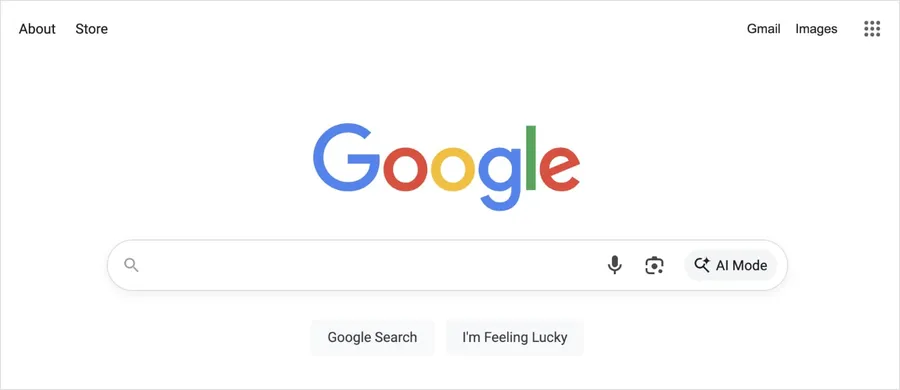
Before diving into steps for how to rank on Google, you must understand how the search engine works.
Google’s main goal is to give users accurate, reliable, and helpful information fast. It reviews billions of web pages using complex algorithms to find the best answers for each query.
To rank 1 on Google, align your site’s technical setup and content with these core goals.
The evaluation process relies on several critical pillars:
- Relevance: The content must directly address the user’s specific search query. Search engines analyze the text, headings, and overall context to determine if the page solves the user’s problem.
- Authority: The website must demonstrate industry credibility. This is primarily measured through the quality and quantity of external links pointing to the domain, acting as digital votes of confidence.
- User Experience (UX): The platform must be fast, secure, and easy to navigate. Sites that frustrate users with slow loading times or intrusive pop-ups receive significant ranking penalties.
- E-E-A-T Framework: Experience, Expertise, Authoritativeness, and Trustworthiness. Search engines heavily scrutinize these factors, especially for “Your Money or Your Life” (YMYL) topics such as finance, medicine, and legal advice. Content authored by verifiable experts consistently outperforms generic articles.
Step 1: Master Keyword Research
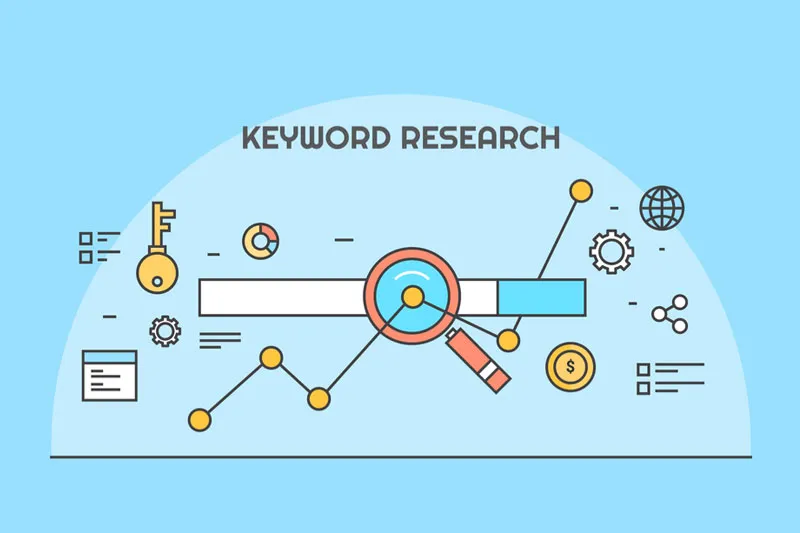
Keywords form the critical bridge connecting user search queries with relevant website content. Without proper keyword research, content creators risk writing about topics nobody is searching for. Mastering this step is the first requirement for those wondering how to rank on Google successfully.
The Importance of Search Intent
Understanding the psychology behind a search query is known as search intent. Keywords fall into four primary categories:
- Informational: The user wants to learn something (e.g., “how to rank website on Google”).
- Navigational: The user is looking for a specific website (e.g., “Google Search Console login”).
- Transactional: The user intends to make a purchase (e.g., “buy SEO software”).
- Commercial Investigation: The user is comparing options before buying (e.g., “best SEO tools”).
Content must match the exact intent behind the targeted keyword. If users search for an informational guide, presenting them with a transactional product page will result in high bounce rates and lost rankings.
Tools for Keyword Analysis
Accurate data collection requires professional software. Several industry-standard tools provide deep insights into search volumes and competition levels:
- Google Keyword Planner: A foundational, free tool that provides exact data straight from the source. It is excellent for discovering broad concepts and search volume estimates.
- Ahrefs and SEMrush: Premium platforms offering granular data on keyword difficulty, competitor analysis, and historical search trends.
- Google Autocomplete: Typing partial phrases into the search bar reveals what real users are currently looking for.
If you are on a tight budget but still want accurate data, you can explore some of the best free keyword research tools to kickstart your journey. Furthermore, integrating the best free Google SEO tools into your daily workflow will provide official performance metrics straight from the source.
Focusing on Long-Tail Keywords
Targeting broad terms like “shoes” is highly inefficient for new websites. Instead, focus on long-tail keywords. These are specific phrases with three or more words. For example, “comfortable running shoes for flat feet.” These phrases have lower search volume overall. However, they face much less competition. They also convert better because the user intent is very specific.
Strategic Keyword Placement
Once identified, keywords must be woven into the content naturally. Forced insertion, known as keyword stuffing, triggers severe algorithmic penalties. Keywords should be logically placed within:
- The main article title.
- The introductory paragraph.
- Header tags to establish a content hierarchy.
- The conclusion.
Step 2: Fine-Tune On-Page Elements
On-page optimization refers to the practice of optimizing individual web pages to rank rank 1 on Google and earn more relevant traffic. This involves refining both the visible content and the HTML source code. When attempting to rank 1 on Google, meticulous attention to on-page details separates average sites from industry leaders.
Titles and Meta Descriptions
The title tag and meta description serve as the digital storefront. They appear directly in the search results and dictate whether a user decides to click the link.
- Title Tags: Must remain between 50 to 60 characters to prevent truncation in the results. The primary keyword should appear as close to the beginning of the title as possible.
- Meta Descriptions: Must remain under 160 characters. While meta descriptions do not directly influence rankings, a compelling summary drastically improves the Click-Through Rate (CTR). High CTR signals to search engines that the content is highly relevant, indirectly boosting positions.
Proper Use of Header Tags
Header tags (H1, H2, H3, etc.) provide architectural structure to a document. They guide search engine crawlers through the logic of the article.
- H1 Tag: The main title of the page. There should strictly be only one H1 tag per page, and it must contain the primary keyword.
- H2 Tags: Serve as the main chapters or sections of the article.
- H3 and H4 Tags: Used for sub-sections within the H2 chapters.
- Maintaining a strict hierarchy (never skipping from an H1 directly to an H3) ensures maximum readability for both users and automated crawlers.
URL Structure Optimization
Web addresses must be clean, descriptive, and easy to read. A confusing URL containing random numbers and symbols harms user trust and search visibility.
- Poor URL: website.com/p=12345&xyz
- Optimized URL: website.com/how-to-rank-on-google
- Use hyphens to separate words and strictly avoid capital letters in the URL string.
Image Optimization
Visual media drastically enhances the reading experience but often causes severe loading delays if improperly managed.
- Compression: All images must be compressed using modern formats. Understanding the differences between AVIF vs WebP will help you choose the best file format to reduce size without sacrificing visual fidelity.
- Alt Text: Search engines cannot visually “see” images. Alternative text (alt text) provides a written description of the image content. Including descriptive alt text ensures the media is properly indexed in image search databases.
Step 3: Perfect the Technical Foundation
Technical SEO focuses on the backend architecture of a platform. Even if a website contains the best content in the world, it will fail to achieve high visibility if search engines cannot crawl and index its pages. Mastering technical aspects is a fundamental requirement when determining how to rank website on Google securely.
Maximize Page Speed and Performance
In the modern digital environment, users expect instant information delivery. A delay of just three seconds increases abandonment rates exponentially. Search engines utilize Core Web Vitals to measure the real-world user experience regarding loading performance, interactivity, and visual stability.
- Optimize Server Response Times: To avoid slowdowns, it is crucial to choose the best WordPress hosting providers that offer dedicated, rapid data delivery.
- Implement Caching: Caching stores copies of the website’s files locally on the user’s browser or on intermediate servers, drastically reducing load times for returning visitors.
- Minify Code: Removing unnecessary spaces, characters, and comments from HTML, CSS, and JavaScript files reduces the overall weight of the webpage.
Ensure Crawlability and Indexability
Automated bots must navigate the site structure efficiently.
- Robots.txt: This file acts as a traffic director, explicitly telling search engine bots which pages they are allowed to crawl. For a deeper dive into technical settings, review our guide to optimizing WordPress robots.txt for SEO.
- XML Sitemaps: A sitemap is a digital map listing all important pages on the domain. Submitting this file through Google Search Console guarantees that the search engine is aware of all available content.
- Fixing Broken Links: Internal links pointing to deleted pages (404 errors) waste the “crawl budget” and frustrate users. Regular site audits are required to identify and repair broken pathways.
Implement Structured Data (Schema Markup)
Structured data is a standardized format for providing information about a page and classifying its content. By adding specific code to the website backend, administrators help search engines understand the data’s exact context.
For example, schema markup can label text as a recipe, a product review, or an upcoming event. This often leads to rich snippets in search results. These snippets can show star ratings, images, or pricing information. They can greatly boost click-through rates to rank 1 on Google.
Step 4: Create Comprehensive, High-Quality Content
Content remains the most critical variable in the ranking equation. Search algorithms exist solely to connect users with the most accurate and comprehensive answers. Therefore, producing exceptional material is the most direct path regarding how to get on the top of Google.
The content must transcend basic explanations and provide deep, authoritative value. For beginners, grasping exactly what is content marketing is an essential step before writing a single word.
Aligning with E-E-A-T Standards
To establish dominance in a specific niche, the content must project profound expertise.
- Experience: Content should demonstrate first-hand experience with the subject matter. Theoretical knowledge is less valuable than practical application.
- Expertise: Authors must possess verifiable credentials in their field.
- Authoritativeness: The overall website must be recognized as a leading voice within the industry, often achieved through external citations and brand mentions.
- Trustworthiness: Factual accuracy, secure browsing (HTTPS), and transparent business information are mandatory.
The “10x Content” Strategy to rank 1 on Google
The goal is not to create content that is slightly better than the current top-ranking page, but rather content that is ten times superior. This involves:
- Providing unique data sets, original research, or case studies.
- Addressing questions that competitors ignore.
- Using highly professional formatting, including custom graphics and charts.
- Ensuring the tone is authoritative yet accessible.
Formatting for Readability
Large walls of text intimidate readers and cause them to leave the site immediately. Content must be structured for easy scanning.
- Use short paragraphs (maximum three to four sentences).
- Incorporate bulleted and numbered lists to break down complex information.
- Utilize bold text to highlight critical concepts.
- Include relevant multimedia to visually support the written claims.
Content Refreshing Strategies
Information becomes outdated rapidly. A page that currently holds the top position will eventually fall if the information is not maintained. Establishing a routine schedule to audit and update older articles ensures the website remains relevant. Updating statistics, adding new industry developments, and improving formatting signals to the algorithm that the site is actively maintained.
Step 5: Optimize the User Experience (UX)
Search engines have evolved to measure how human beings interact with web pages. If an algorithm notices that users click a link, spend thirty seconds reading, and then immediately return to the search results (a metric known as “pogo-sticking”), it interprets this as a failure to satisfy the query.
Conversely, long dwell times signal high quality. If the objective is to learn how to rank on Google sustainably, optimizing the user journey is non-negotiable.
Streamlined Navigation Architecture
The website structure must be completely logical. Users should never require more than three clicks to reach any specific page from the homepage.
- Main Menus: Must be categorized logically, using clear, universally understood terminology rather than confusing industry jargon.
- Breadcrumbs: Implement breadcrumb navigation paths at the top of pages (e.g., Home > Blog > SEO > Link Building). This allows users to easily understand their location within the site hierarchy and navigate backward efficiently.
Internal Linking Strategies
Developing a robust internal linking strategy for SEO helps search engines discover your pages faster and distributes “link equity” throughout the domain. They serve two vital purposes:
- They help users discover related content, increasing the total time spent on the website.
- They provide contextual clues to the algorithm. Anchor text for internal links should be highly descriptive of the destination page.
Enhancing Accessibility
A website must be usable by all individuals, including those with disabilities. Implementing strict web accessibility standards ensures a broader reach and positively impacts rankings.
If you use a CMS, installing the best WordPress accessibility plugins can help automate tasks like contrast checking and keyboard navigation enhancement.
- Maintain high color contrast between text and backgrounds.
- Ensure the website is fully navigable using only a keyboard.
- Provide accurate transcripts for all audio and video content.
- Use scalable fonts that remain readable on all devices.
Step 6: Prioritize Mobile-First Indexing

The majority of global internet traffic now originates from mobile devices. In response, Google transitioned entirely to mobile-first indexing. This means the search engine strictly uses the mobile version of a website for indexing and ranking purposes.
If a site looks perfect on a desktop computer but fails to load correctly on a smartphone, it will suffer massive ranking penalties. For those focused on how to rank website on Google, mobile optimization is a fundamental requirement.
Responsive Web Design
The industry standard for mobile compatibility is responsive design.
A responsive website automatically detects the user’s screen size and dynamically adjusts the layout to fit perfectly. Selecting from the best WordPress mobile themes guarantees your platform caters flawlessly to smartphone users without requiring manual code adjustments.
Optimizing Mobile Interactions
Mobile users interact with websites using touch, which fundamentally changes design requirements.
- Touch Targets: Buttons and links must be large enough to be easily tapped with a thumb without accidentally clicking adjacent elements. The recommended minimum touch target size is 48×48 pixels.
- Legible Typography: Font sizes must be large enough to read comfortably without requiring the user to manually zoom in. A baseline size of 16 pixels is generally recommended for mobile reading.
- Eliminate Intrusive Interstitials: Pop-ups that cover the main content of the screen immediately upon landing are highly penalized. If data capture forms are necessary, they must be unobtrusive and easily dismissible.
Mobile Loading Speeds
Mobile networks (such as 4G or 3G connections) are often significantly slower than home broadband. Therefore, optimizing file sizes is even more critical for mobile visitors. Compressing images, minimizing heavy scripts, and utilizing Content Delivery Networks (CDNs) ensure that the site loads instantly, preventing mobile user abandonment.
Step 7: Execute Strategic Link Building
Search engines operate on a foundation of digital trust. Links pointing from an external website to your domain act as independent votes of confidence. The algorithm assumes that if numerous high-quality platforms reference a specific page, that page must contain valuable information.
Mastering the acquisition of these “backlinks” is the most challenging, yet most rewarding, aspect for those seeking to rank 1 on Google.
Understanding Link Quality vs. Quantity
Historically, webmasters manipulated rankings by generating thousands of artificial links from spam directories. Modern algorithms are highly sophisticated and heavily penalize such tactics.
Today, a single link from a highly respected, globally recognized news outlet holds exponentially more value than thousands of links from irrelevant, low-quality blogs.
Effective Outreach and Guest Publishing
Building relationships within the industry is the most sustainable method of link acquisition. This involves reaching out to editors of respected publications and offering to write high-quality, original articles for their platforms.
In exchange for the free content, the author is typically permitted to include a link back to their own website within the author biography or naturally within the article body. The content provided must be exceptionally valuable; otherwise, editors will reject the submission.
The Broken Link Building Method
This highly effective strategy involves analyzing authoritative websites within the relevant industry to find links that currently point to dead pages (404 errors).
Once identified, the webmaster contacts the site owner, politely informs them of the broken link, and suggests replacing it with a link to a similar, high-quality resource on their own site.
Creating Linkable Assets
The most natural way to acquire backlinks is to produce content that naturally demands citation. These “linkable assets” typically include:
- Original industry research and data surveys.
- Comprehensive, visually appealing infographics.
- Free digital tools or calculators.
- In-depth ultimate guides.
- When a website consistently publishes undeniable value, other creators will naturally reference and link to the material.
Step 8: Dominate Local SEO to Rank 1 on Google
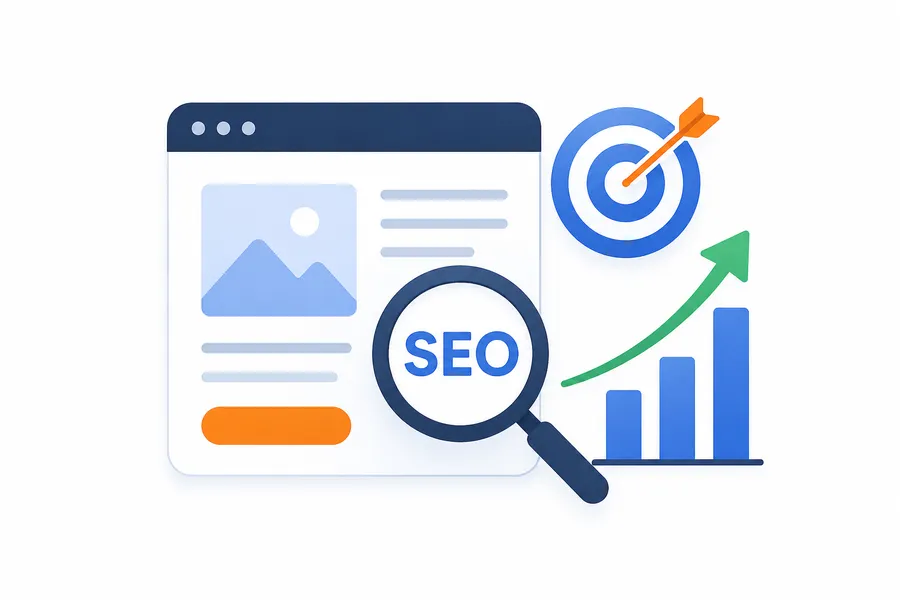
For businesses that operate physical storefronts or serve specific geographic territories, competing on a global scale is unnecessary and inefficient. Instead, the strategy must pivot to Local SEO. This specialized optimization ensures the business appears prominently when users search for services within their immediate vicinity. Understanding local algorithms is crucial for brick-and-mortar operations asking how to get on the top of Google locally.
Leveraging Niche Themes for Local Dominance
Having a website designed specifically for your local industry drastically improves geographic targeting. For instance, if you operate a property agency, utilizing the best real estate WordPress themes equipped with local maps and agent directories is a massive advantage. Similarly, educators can use specialized systems like Eduma – Education WordPress Theme.
Google Business Profile Optimization
The cornerstone of local visibility is the Google Business Profile (GBP). This free listing dictates appearance in Google Maps and the highly coveted “Local Pack”—the block of three local businesses that appears at the top of localized search results.
- Accurate Information: The profile must be filled out entirely. This includes exact operating hours, categories, high-resolution photographs of the premises, and a detailed description of services.
- Consistency: The Name, Address, and Phone Number (NAP) must remain exactly consistent across all internet directories. A discrepancy (such as using “St.” on the website but “Street” on the business profile) confuses search engines and reduces local trust.
Managing Online Reviews
Local search algorithms heavily factor the quantity, quality, and velocity of customer reviews. Businesses must proactively encourage satisfied clients to leave positive feedback on their Google profile. Furthermore, the business owner must respond professionally to every single review, both positive and negative. Resolving negative experiences publicly demonstrates excellent customer service and builds trust with future prospects viewing the profile.
Step 9: Adapt to Algorithm Updates
The search engine landscape is never static.
Engineers constantly refine the core algorithms to improve the quality of search results and combat new manipulation tactics. A strategy that produces excellent results today might trigger penalties tomorrow if it violates new guidelines.
Therefore, continuous education and adaptability are strict requirements for maintaining visibility and learning how to rank on Google long-term.
Monitoring Broad Core Updates
Several times a year, search engines release major adjustments known as “Broad Core Updates.” These updates do not target specific niches or specific rule violations; rather, they adjust the overall weighting of ranking factors across the entire system.
During these periods, websites may experience sudden fluctuations in traffic. It is critical not to panic or make immediate, drastic changes. Webmasters must wait for the update to fully roll out, analyze the data objectively, and adjust the overarching strategy to align with the new quality thresholds.
Focusing on the “Helpful Content” Directives
Recent algorithm changes now favor “Helpful Content.” This rule aims to lower content made only for search engines. It also boosts content made for real human readers.
Algorithms now crack down on unedited AI content with no unique value. The best long-term plan is to publish original, valuable content often. This content should truly help the reader.
Staying Educated
Professionals must monitor official communications from search engine developers. Reading Google Search Central Blog, following search liaisons on professional networks, and participating in respected SEO forums provides early warnings regarding upcoming shifts in technology or policy.
Step 10: Leverage AI in SEO Strategies
The integration of Artificial Intelligence (AI) has fundamentally altered the digital marketing landscape.
While human oversight remains strictly necessary, utilizing AI tools drastically improves efficiency and data analysis capabilities to learn how to rank on Google sustainably. Professionals who understand how to rank website on Google in the modern era effectively blend human creativity with machine efficiency.
Accelerating Content Research and Outlining
Deploying the best AI SEO tools for WordPress websites can streamline everything from keyword tracking to competitor analysis.
AI language models are exceptional at processing vast amounts of information rapidly. Marketers can utilize these tools to analyze top-ranking competitors, identify content gaps, and generate comprehensive article outlines.
However, the actual writing and injection of personal expertise must remain a human endeavor to satisfy E-E-A-T requirements to rank 1 on google.
Automating Technical Audits
Advanced AI tools seamlessly crawl massive enterprise websites to identify technical flaws that human auditors might miss. These systems can automatically flag orphaned pages, detect complex redirect loops, and suggest schema markup implementations based on the context of the page.
This automated monitoring ensures the technical foundation remains flawless without requiring constant manual review.
Predictive Data Analysis
Machine learning algorithms excel at identifying patterns within massive datasets. By connecting AI analytics platforms to search console data, administrators can predict upcoming search trends, track the exact ROI of specific keywords, and understand user behavior patterns on a granular level. This allows for proactive strategy adjustments rather than reactive troubleshooting.
Conclusion
Understanding how to rank on Google is not a one-time task. It is an ongoing process of optimization, adaptation, and refinement.
Ranking #1 on Google takes patience. It also needs steady, high-quality content. You must also build a strong, technically sound foundation.
Utilizing premium resources, such as highly optimized WordPress themes from ThimPress, can significantly streamline these complex technical requirements, allowing creators to focus on strategy. For any person or group that wants to rank 1 on Google, the main focus should be on giving real value to users.
Start using these key strategies today to learn how to rank on Google. Drive steady organic traffic and build long-term online success.
Frequently Asked Questions (FAQs): How to Rank on Google
1. How long does it realistically take to see a new website rank 1 on Google?
Achieving the top position is a long-term endeavor. For a brand new domain, it typically takes between six to twelve months of consistent, high-quality optimization to build enough digital authority to compete for meaningful keywords. Existing websites with established authority can often rank new, well-optimized content within a few weeks. Patience and strict adherence to best practices are required.
2. Does purchasing paid advertising (Google Ads) improve organic SEO rankings?
No. Search engines maintain a strict separation between paid advertising and organic search results. Purchasing advertisements will guarantee immediate visibility in the sponsored sections, but it has absolutely zero direct algorithmic impact on how a website performs in the organic listings.
3. Is it possible to rank highly without acquiring external backlinks?
While exceptionally rare, it is theoretically possible to rank without backlinks if the keyword possesses zero competition and the content is flawless. However, for any search term with commercial value or moderate competition, acquiring high-quality backlinks is an absolute requirement to signal authority and trust to the search algorithms.
4. How often should website content be updated to maintain search visibility?
Content should be reviewed and updated the moment the information becomes outdated or inaccurate. For fast-moving industries like technology or finance, content may require monthly updates. For evergreen topics, a comprehensive annual review is generally sufficient to ensure statistics remain accurate and formatting meets current standards.
5. What is the most critical factor when figuring out how to get on the top of Google?
If forced to isolate a single factor, it is fulfilling Search Intent. If a web page perfectly answers the exact question a user is asking, provides an exceptional reading experience, and demonstrates clear expertise, it establishes the foundation for top-tier rankings. Technical SEO and backlinks serve to amplify this foundational relevance.
Read more: Top 13 Completely Free Sites to Sell Products Online
Contact US | ThimPress:
Website: https://thimpress.com/
Fanpage: https://www.facebook.com/ThimPress
YouTube: https://www.youtube.com/c/ThimPressDesign
Twitter (X): https://x.com/thimpress_com